SOLD! for $1,024.00.
(Note: Prices realized include a buyer's premium.)
If you have items like this you wish to consign, click here for more information:
Selling with Case- Low Estimate: $400.00
- High Estimate: $500.00
- Hammer Price: $800.00
- Share this:
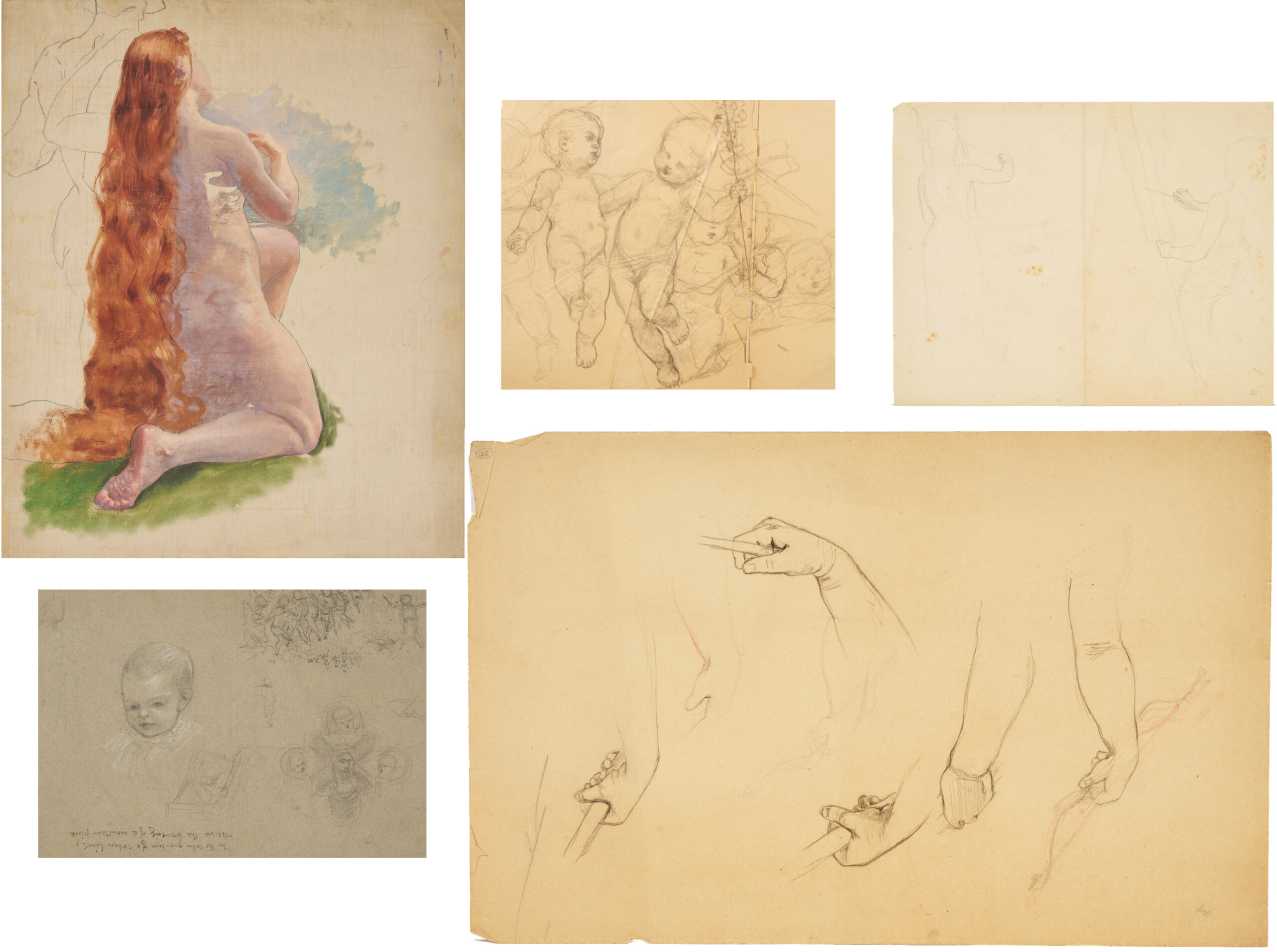
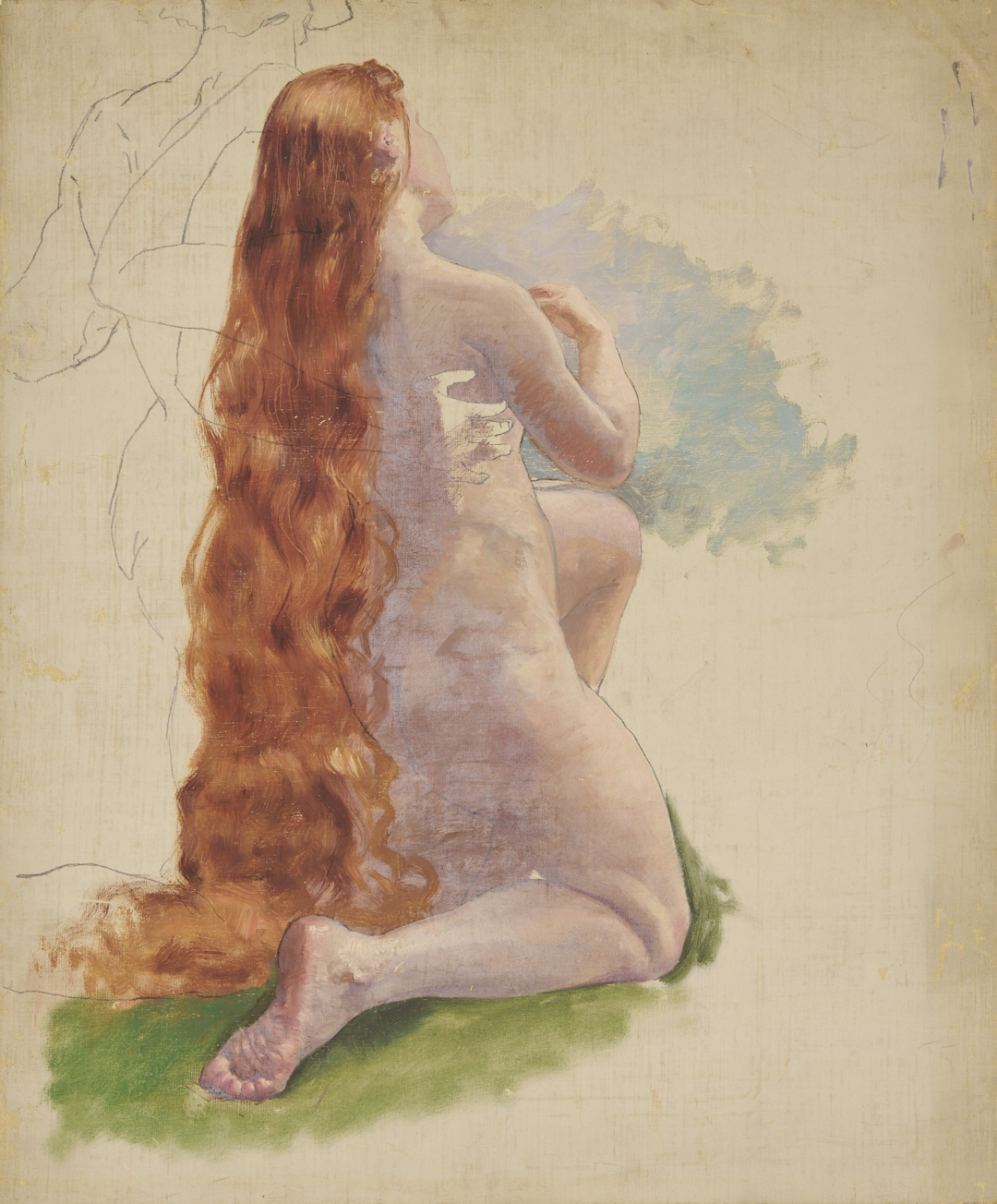
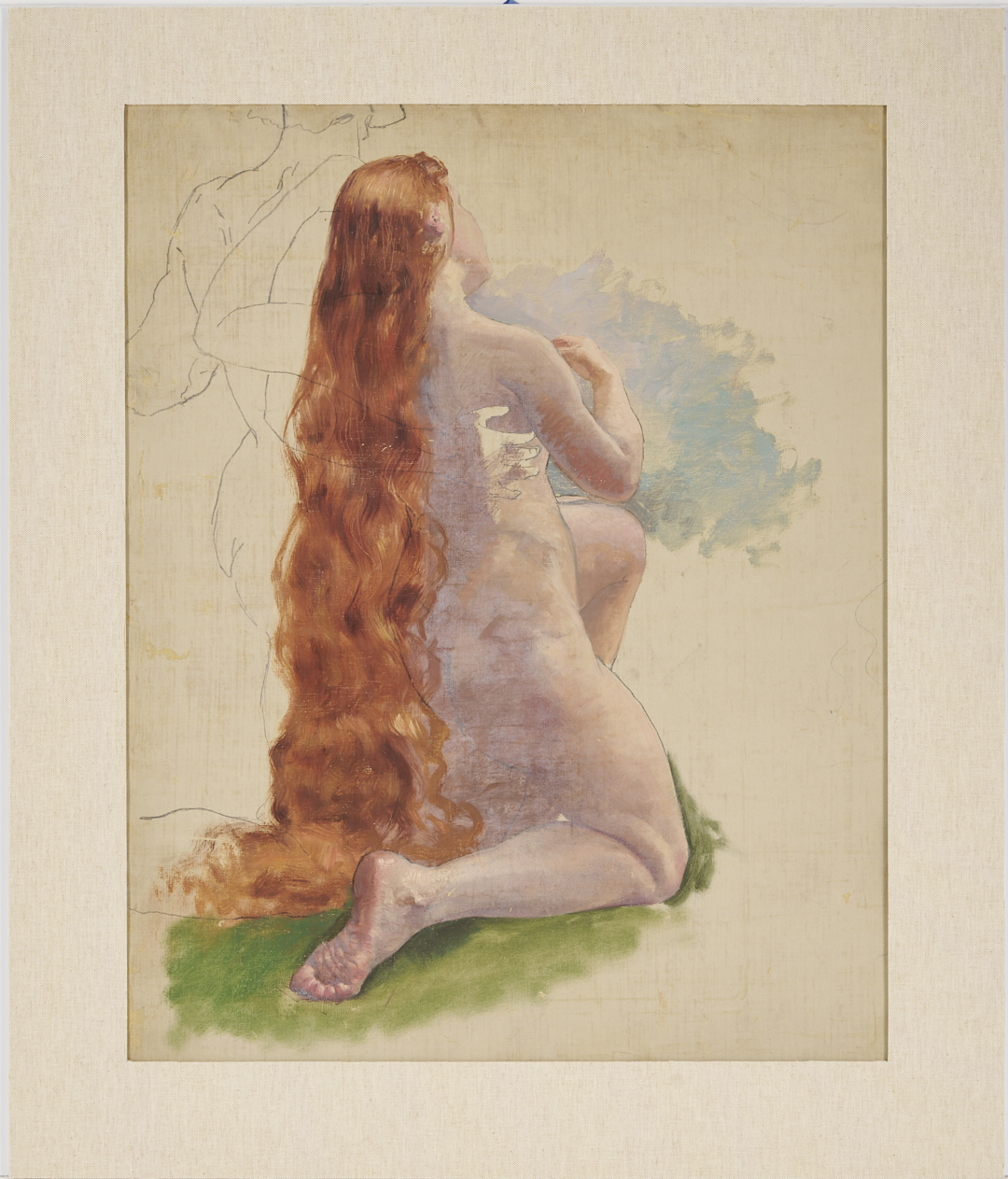
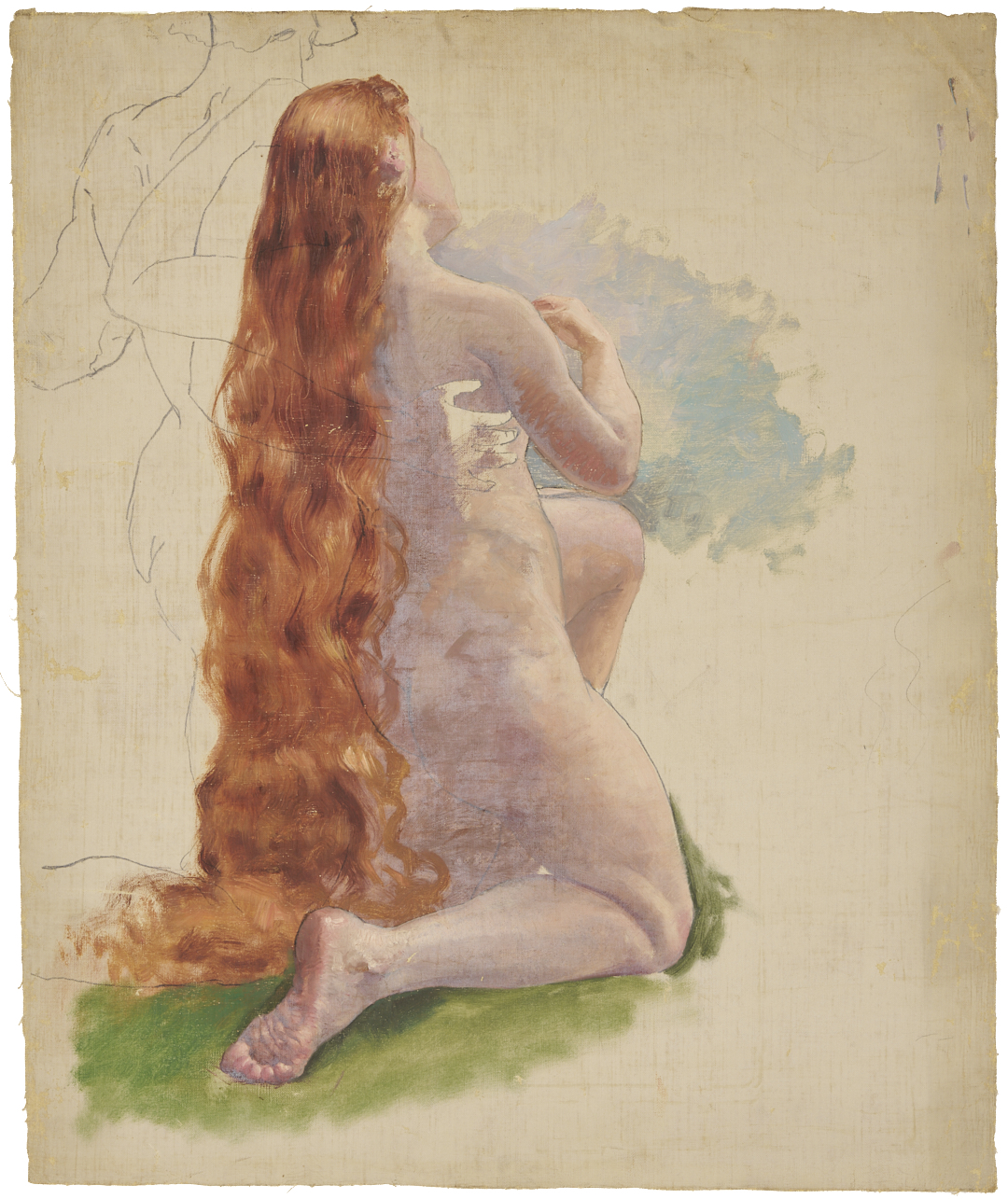
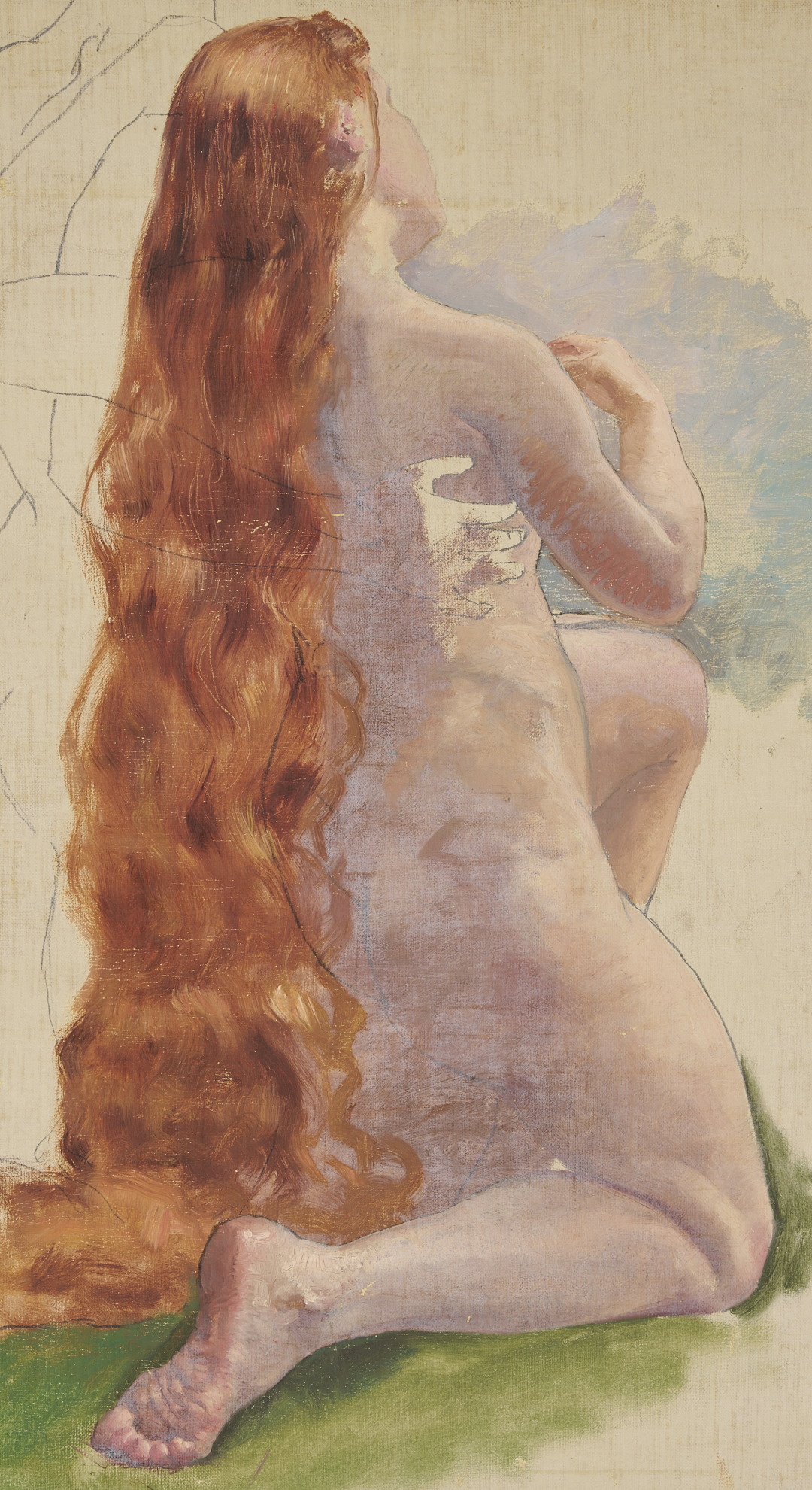
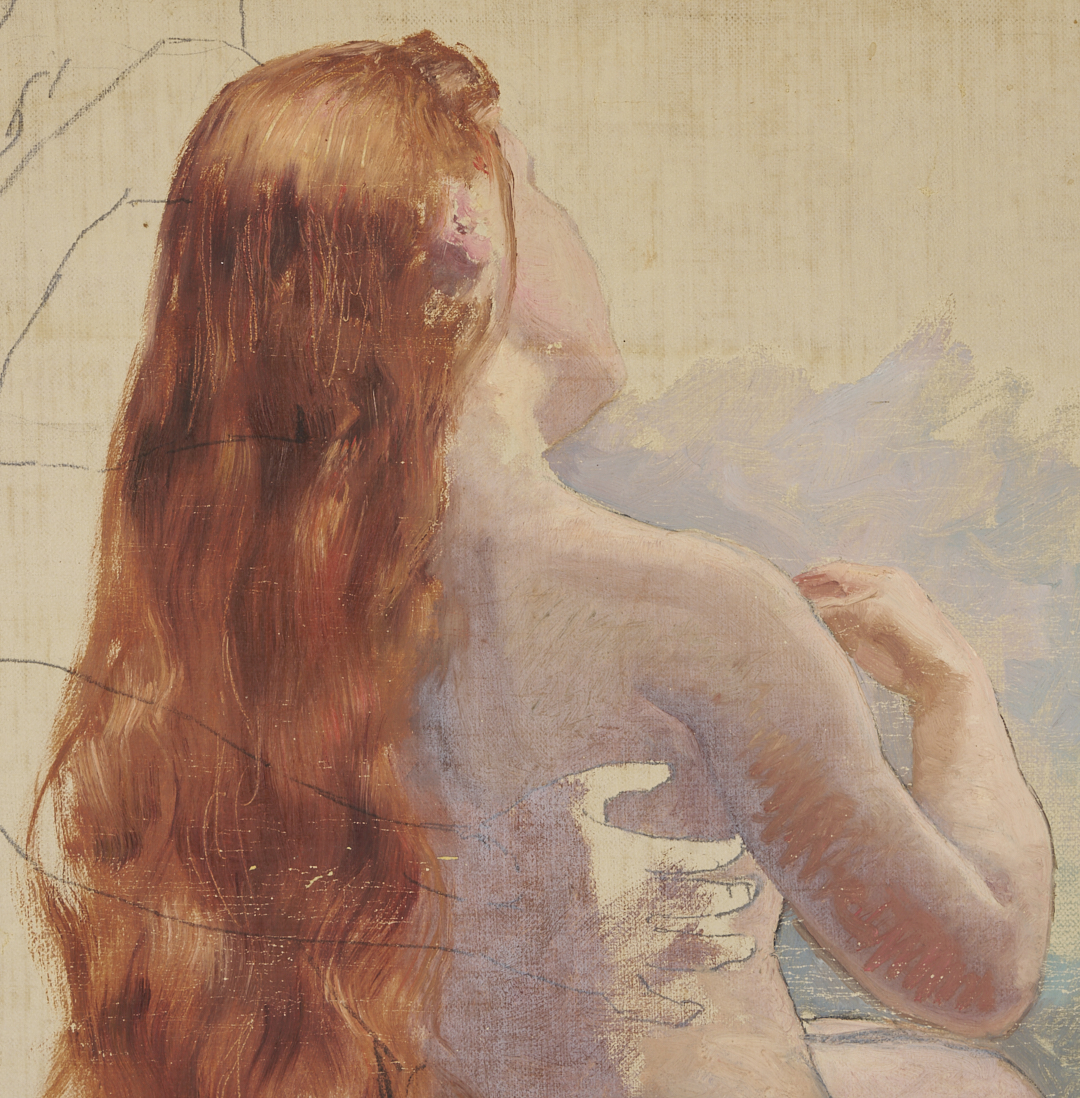
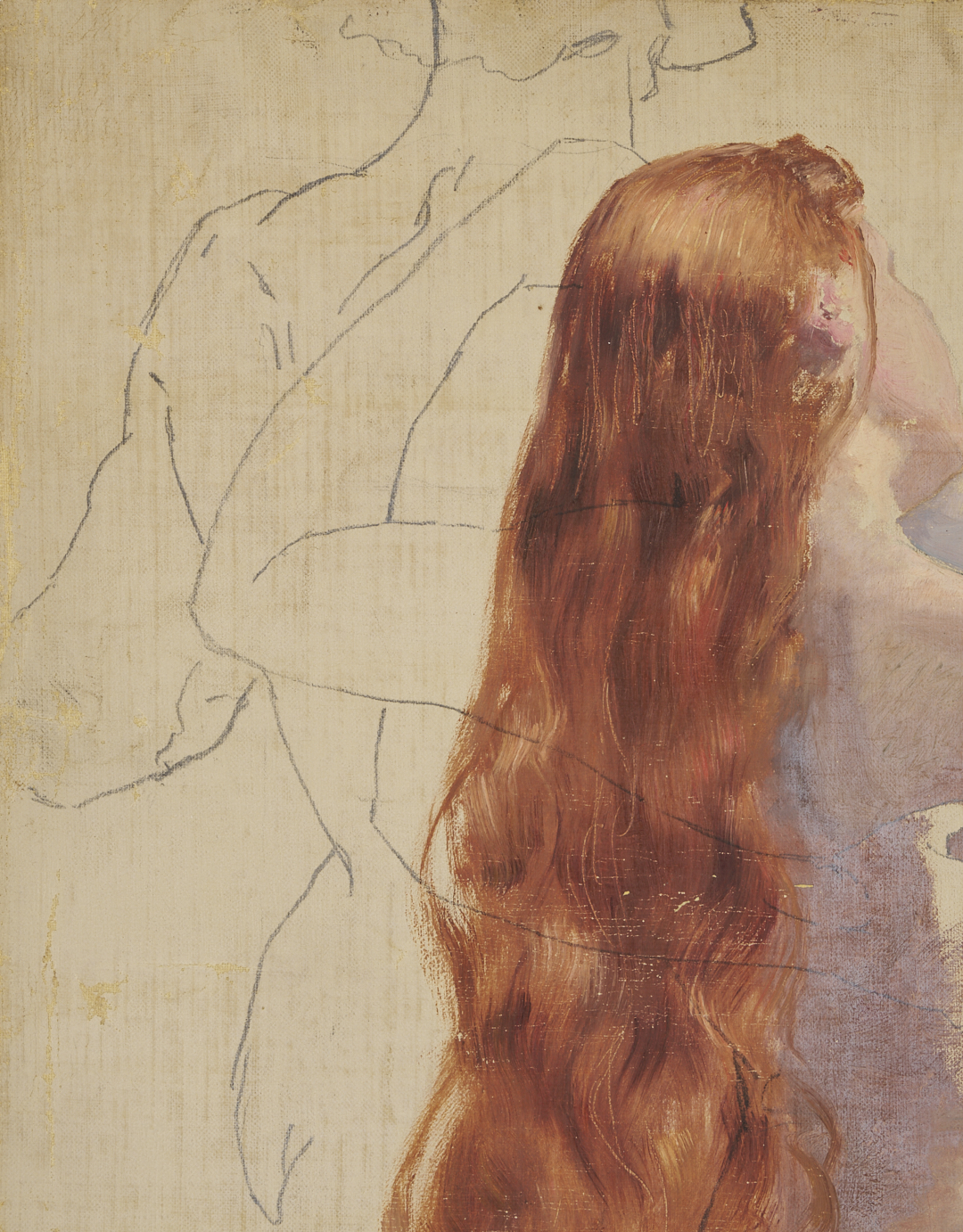
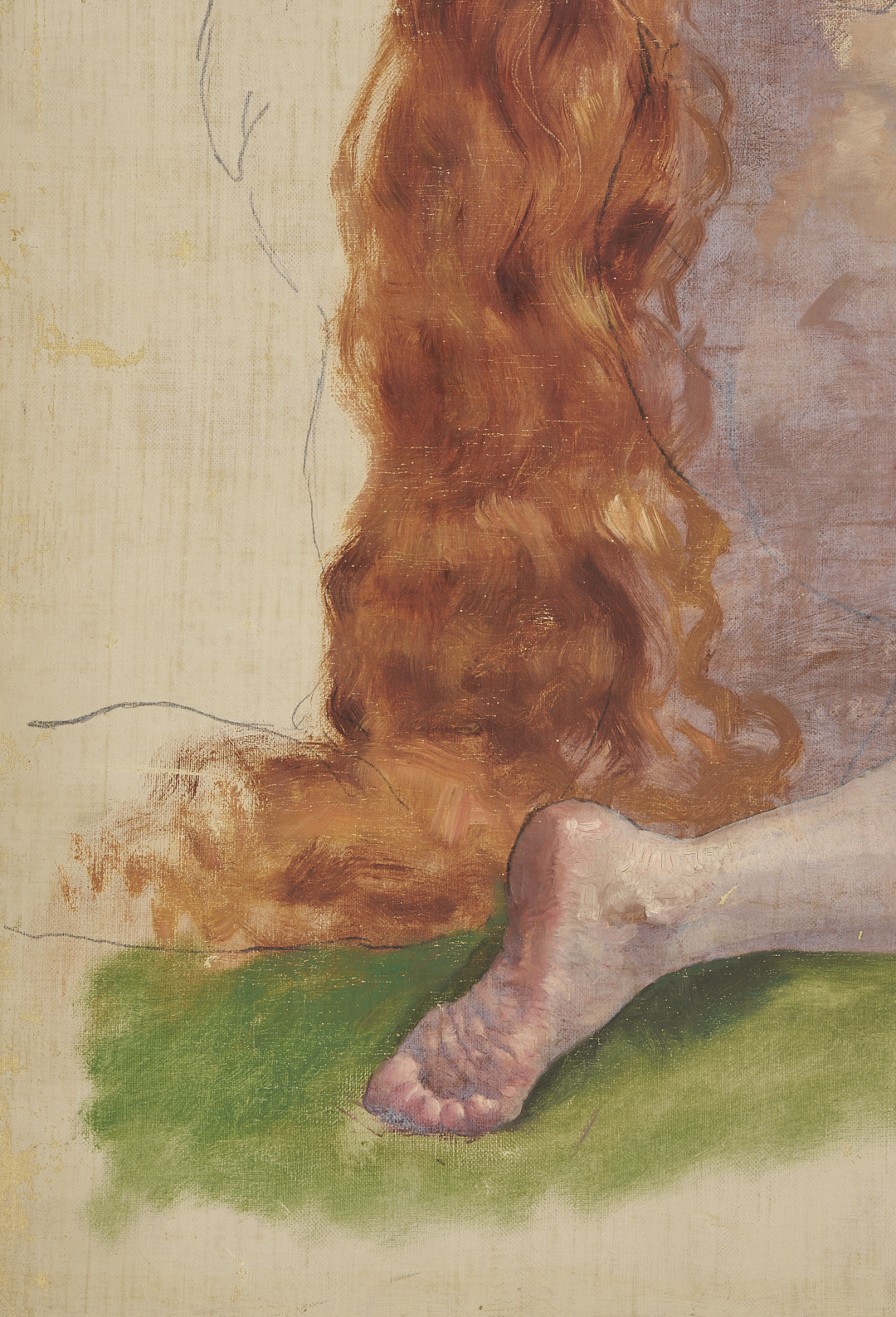
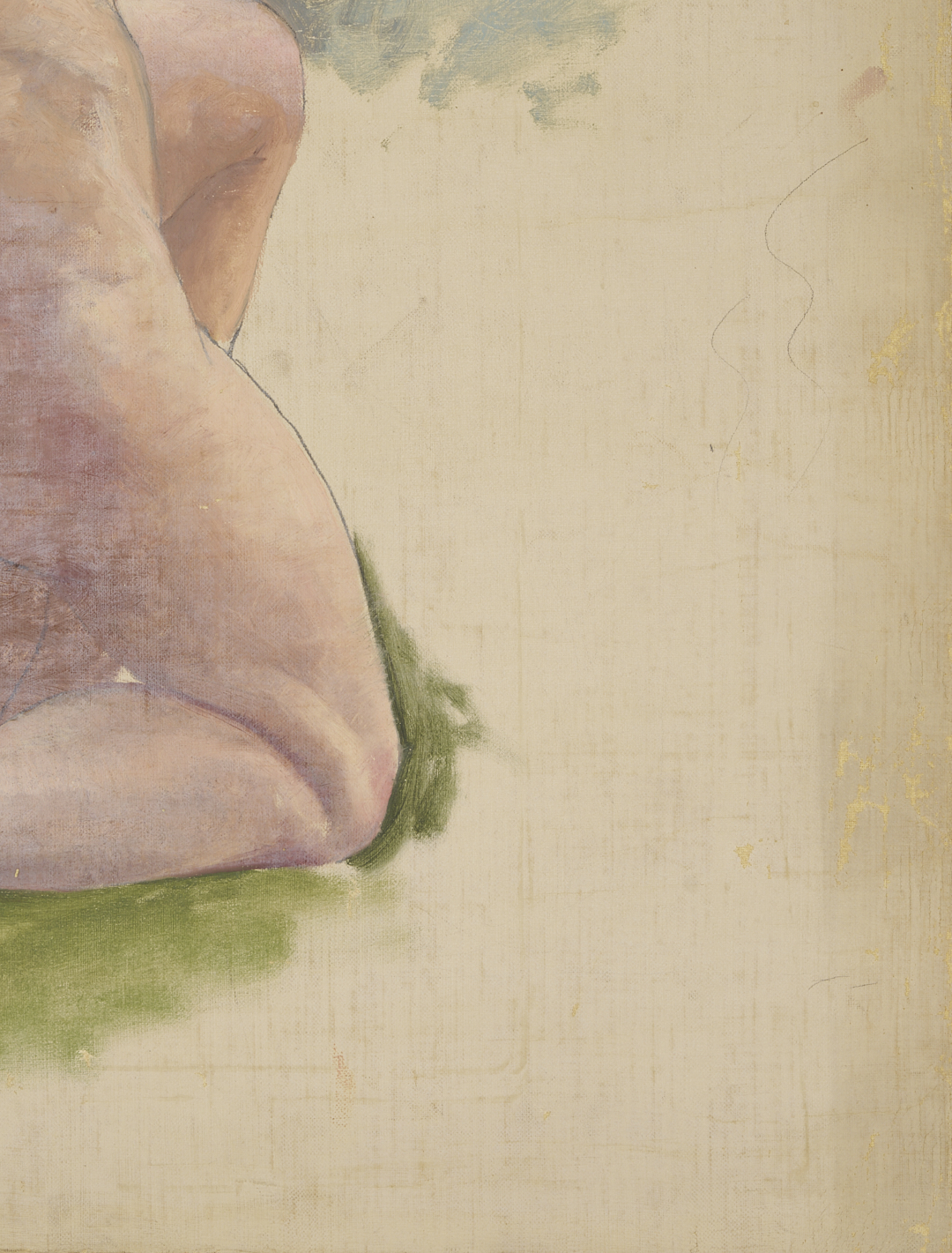
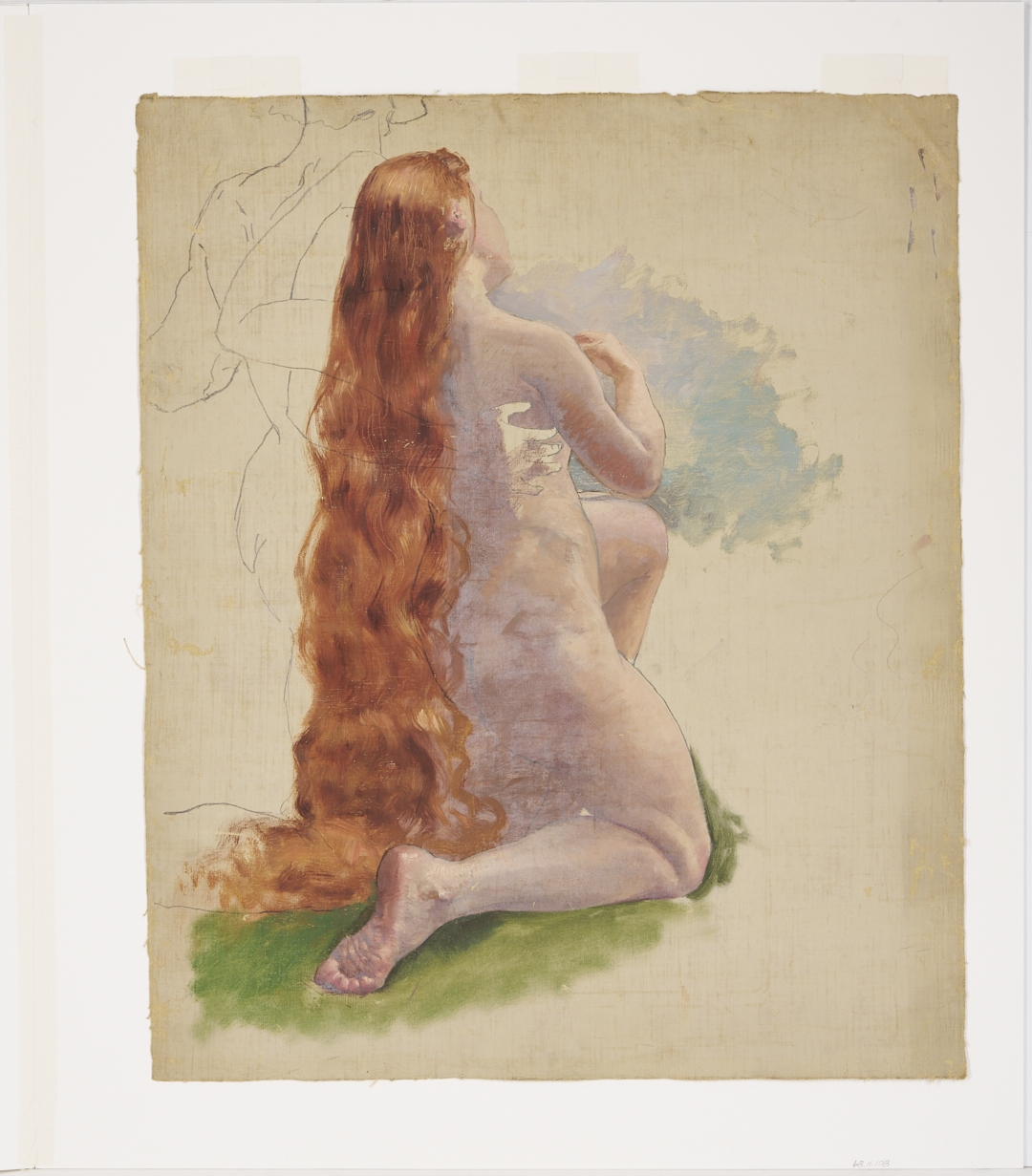
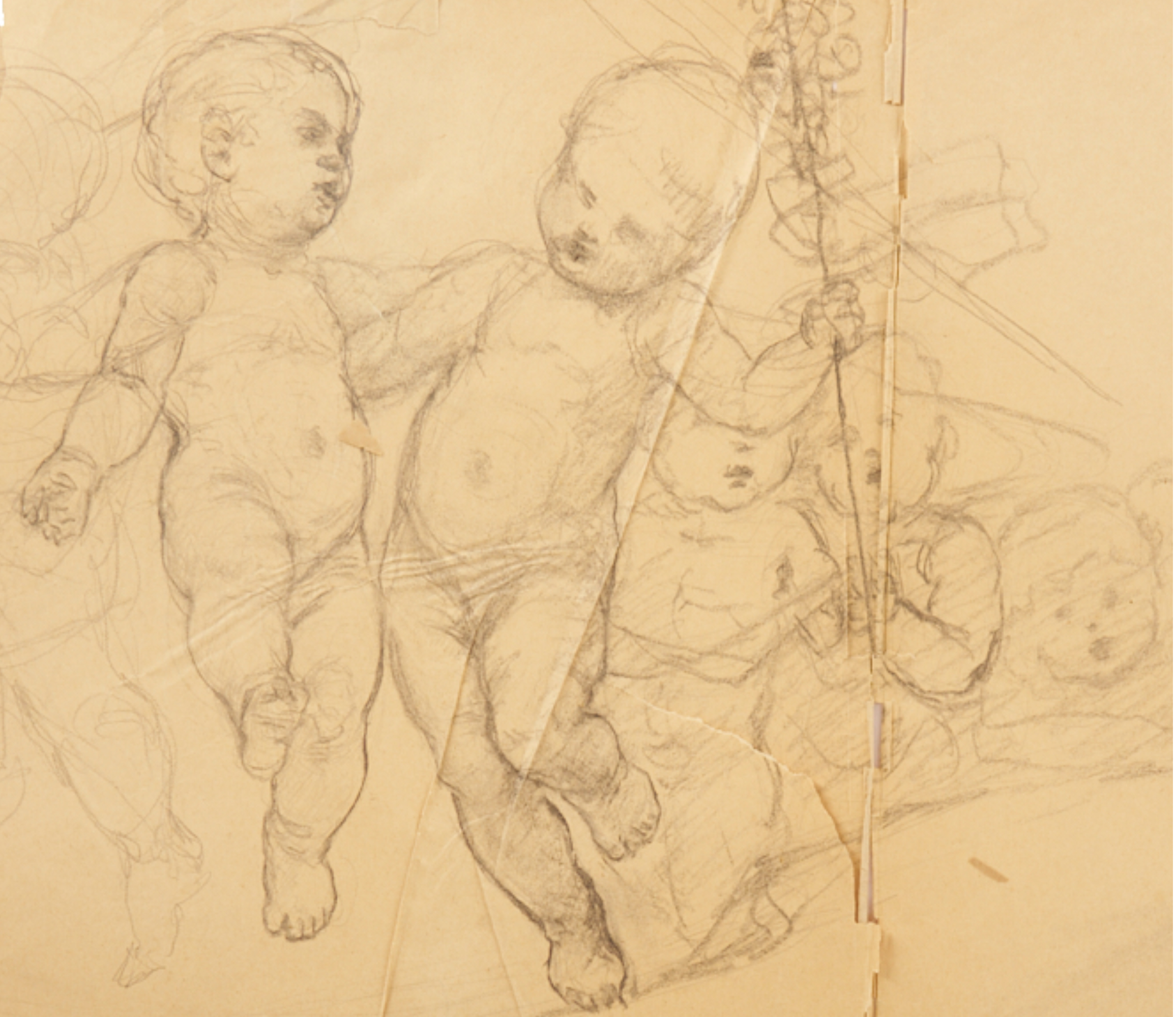
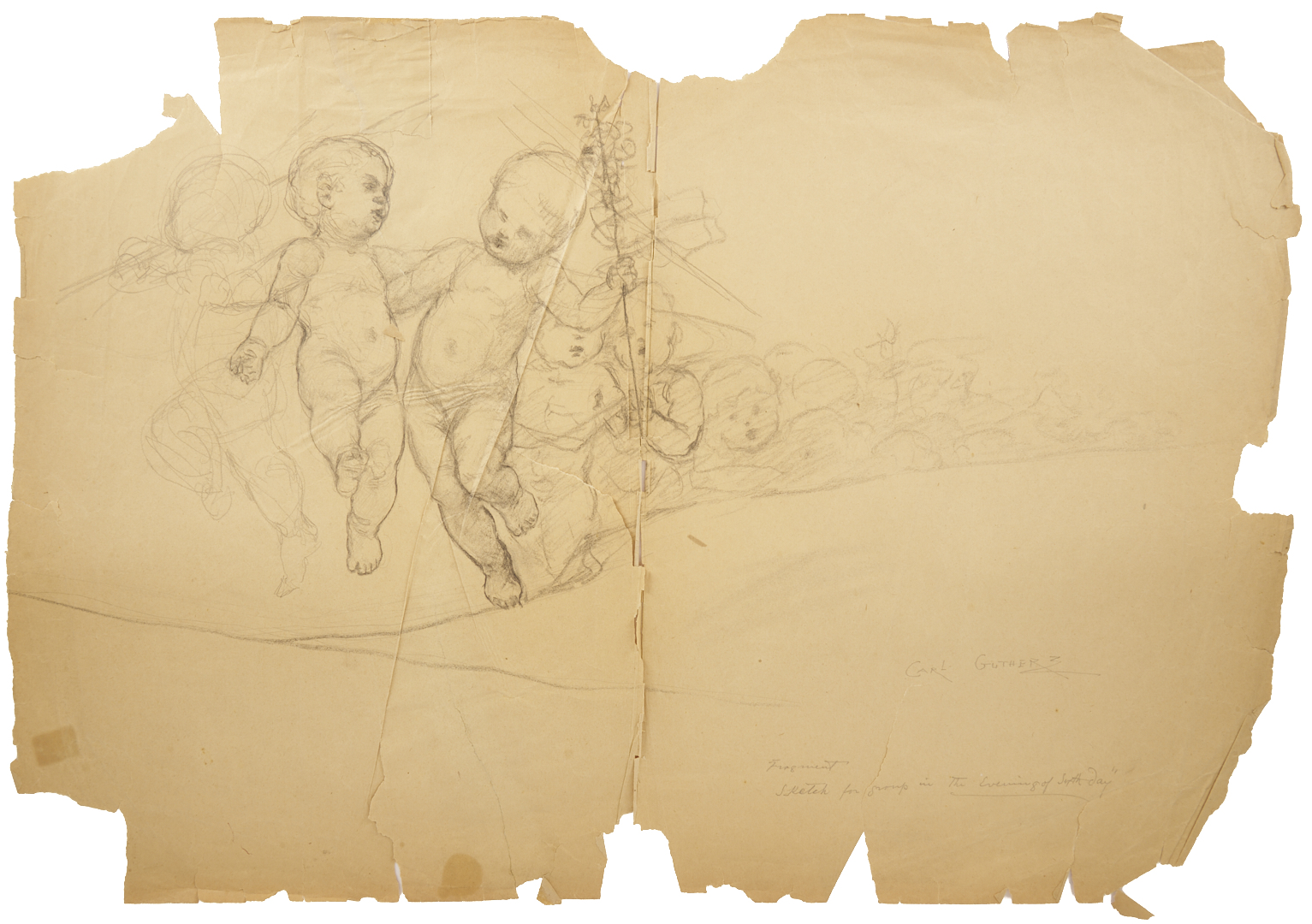
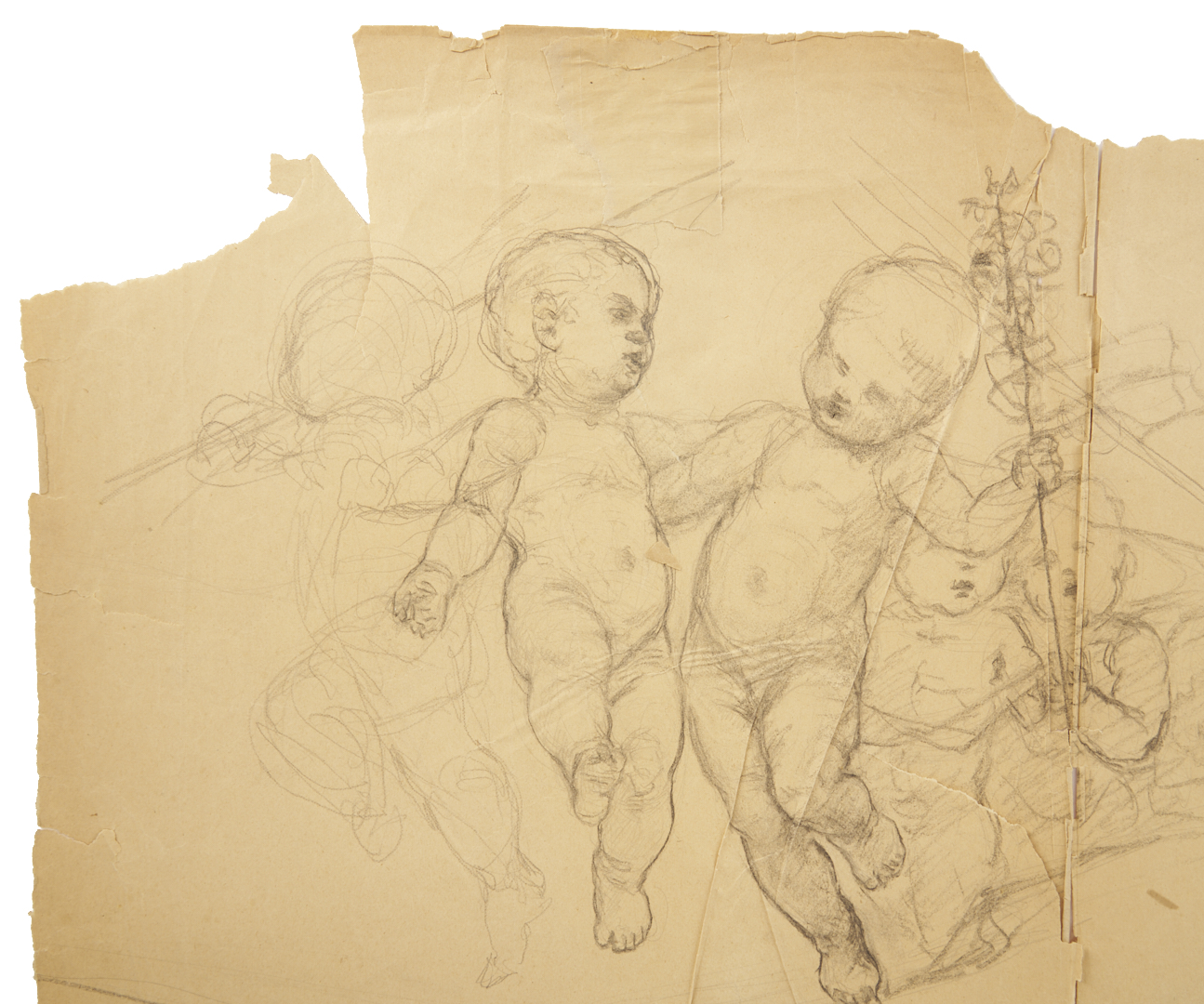
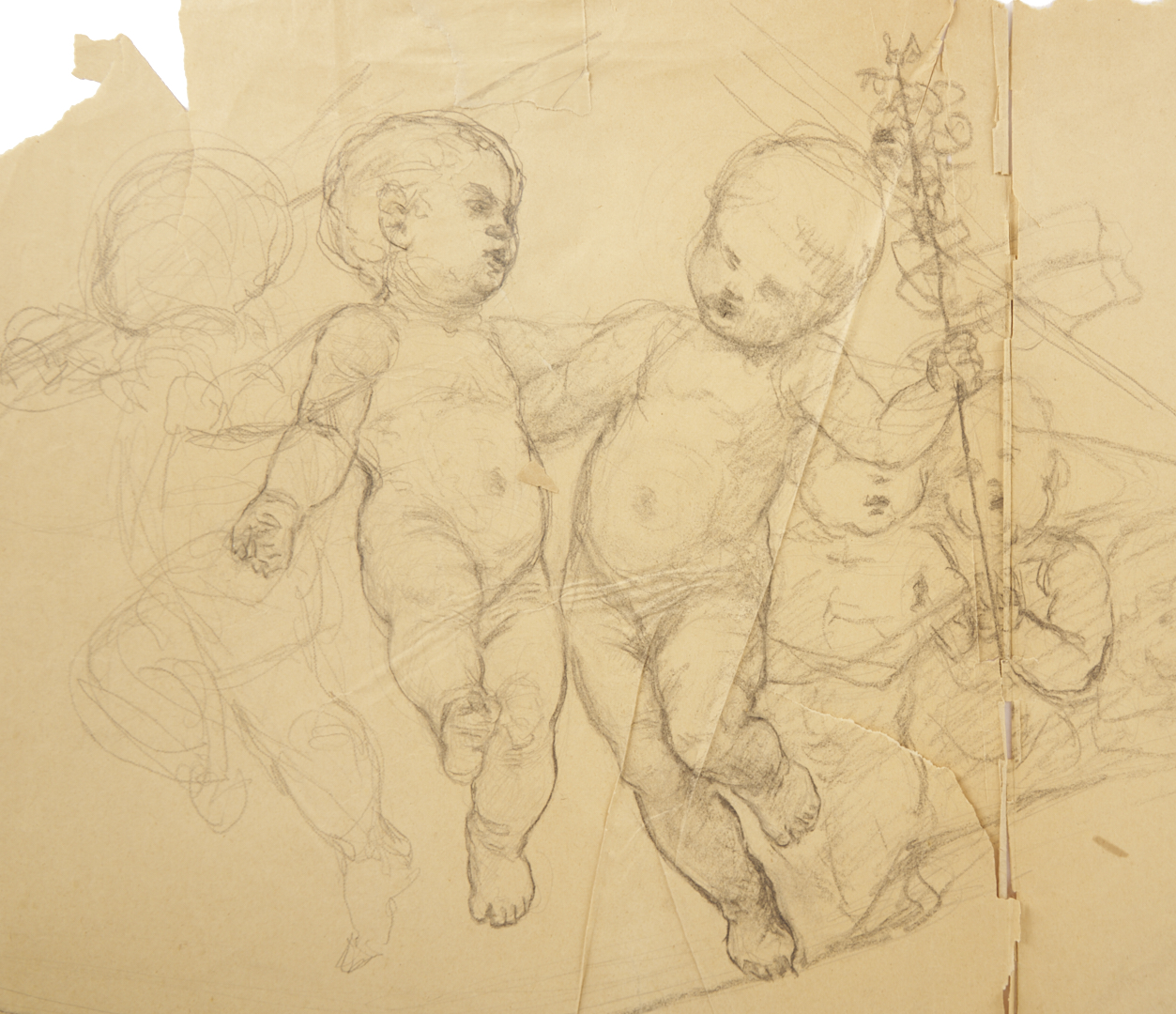
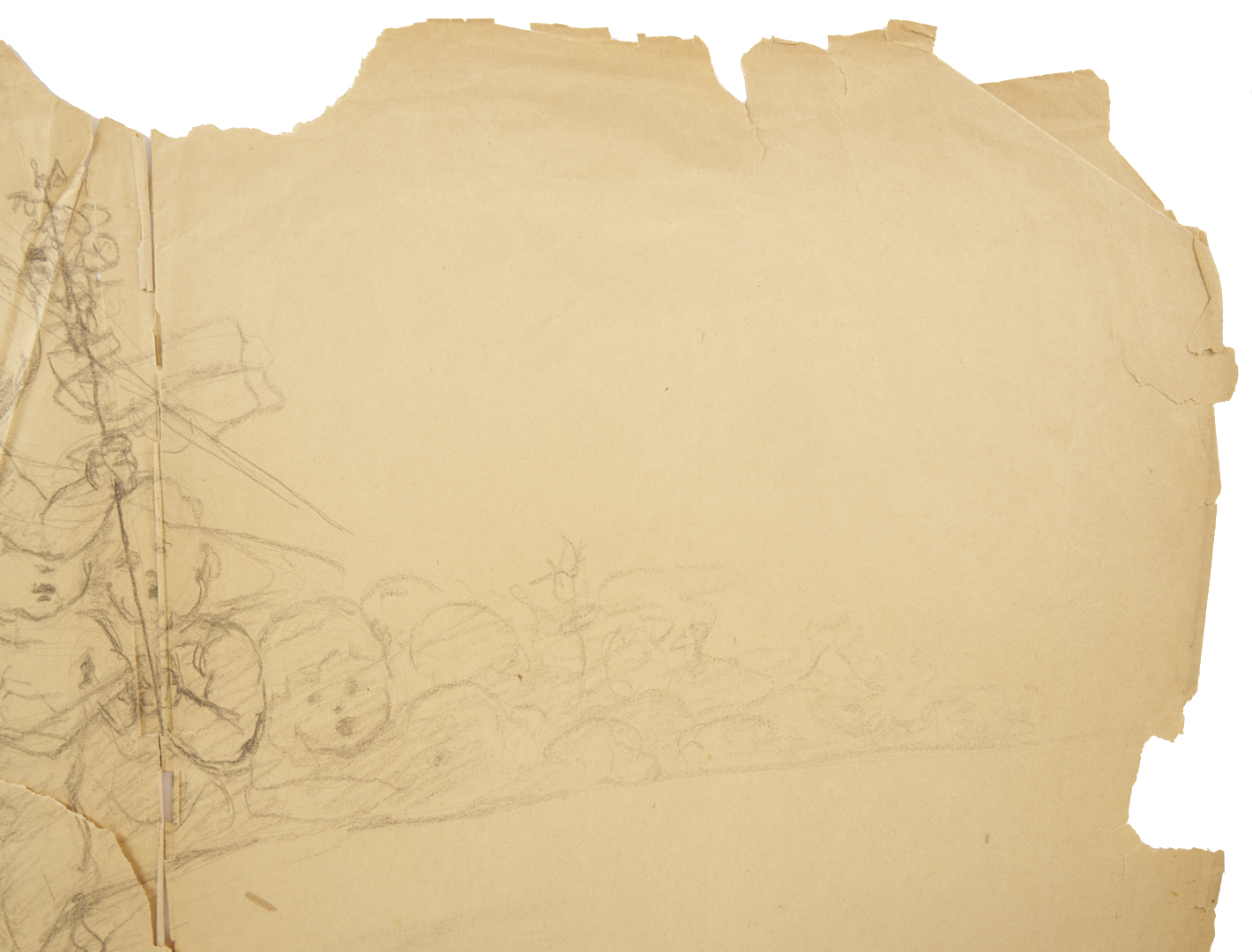
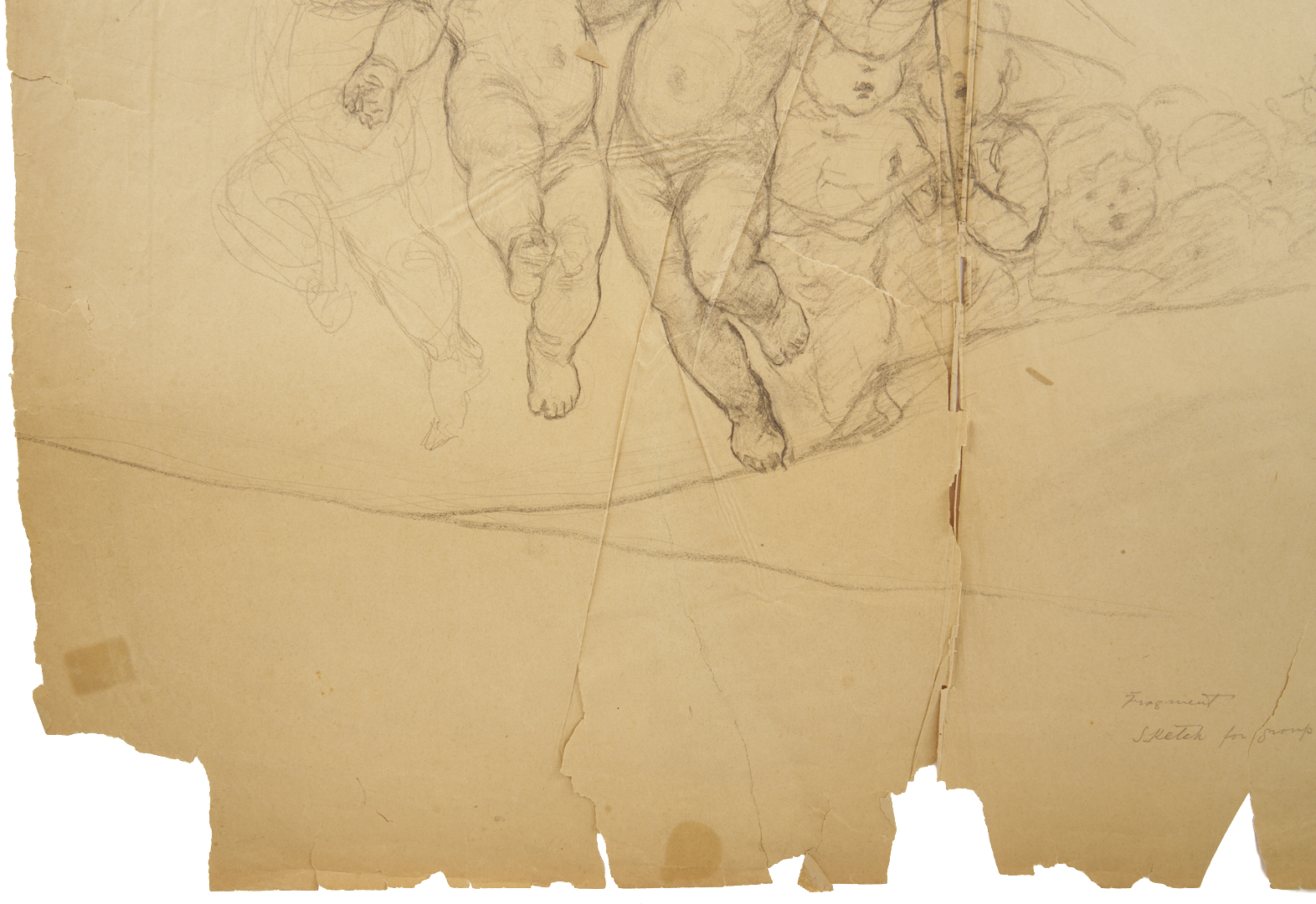
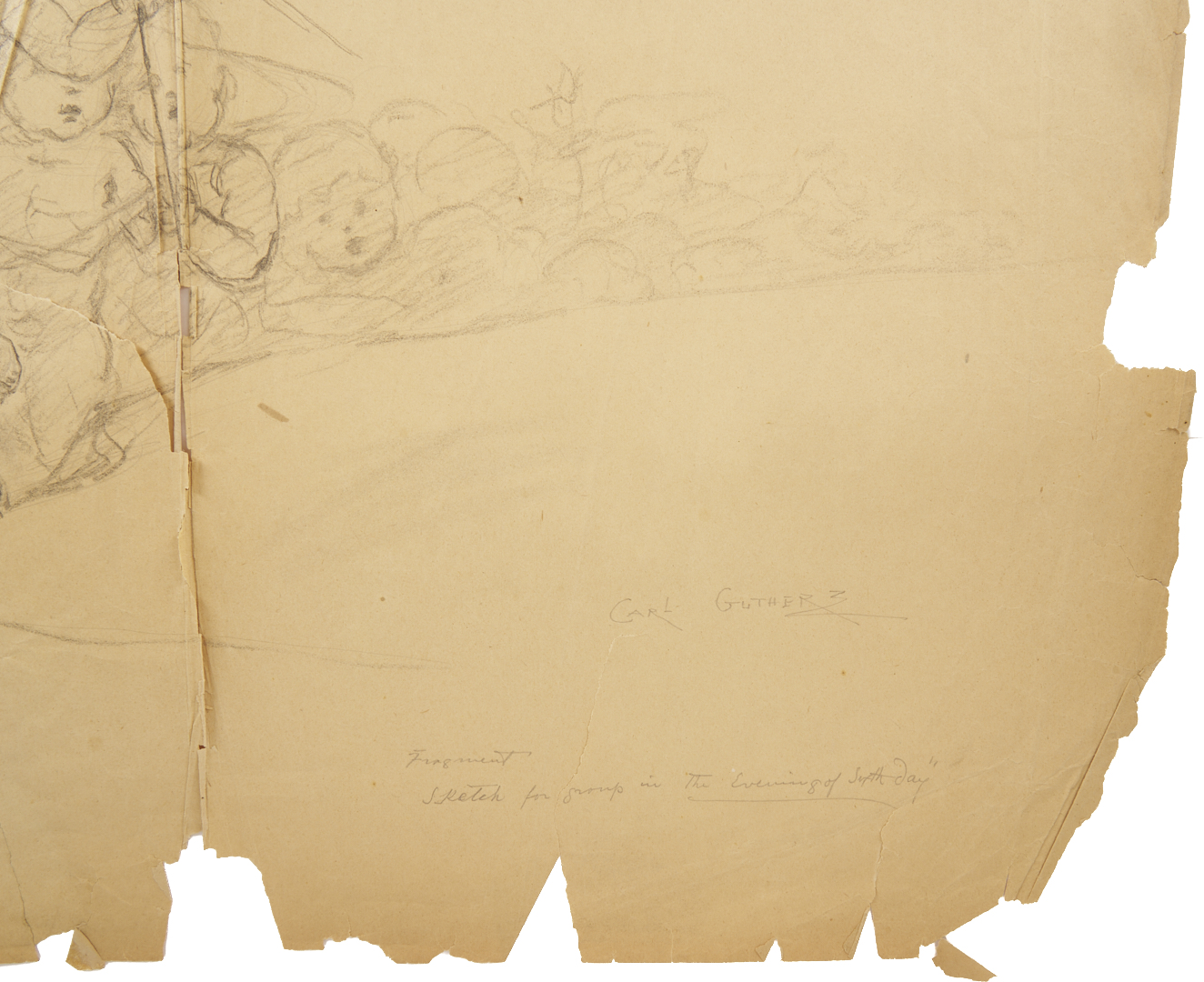
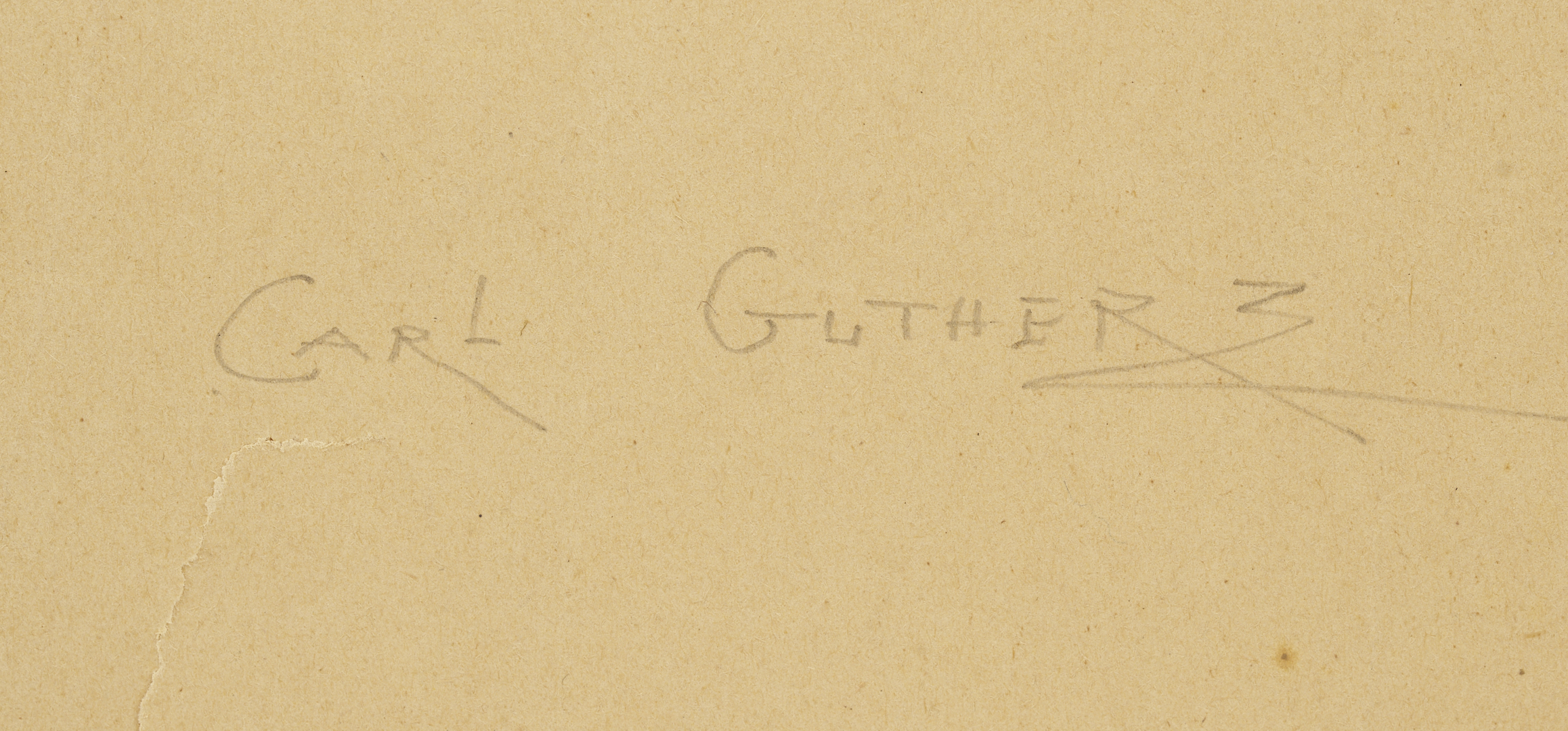
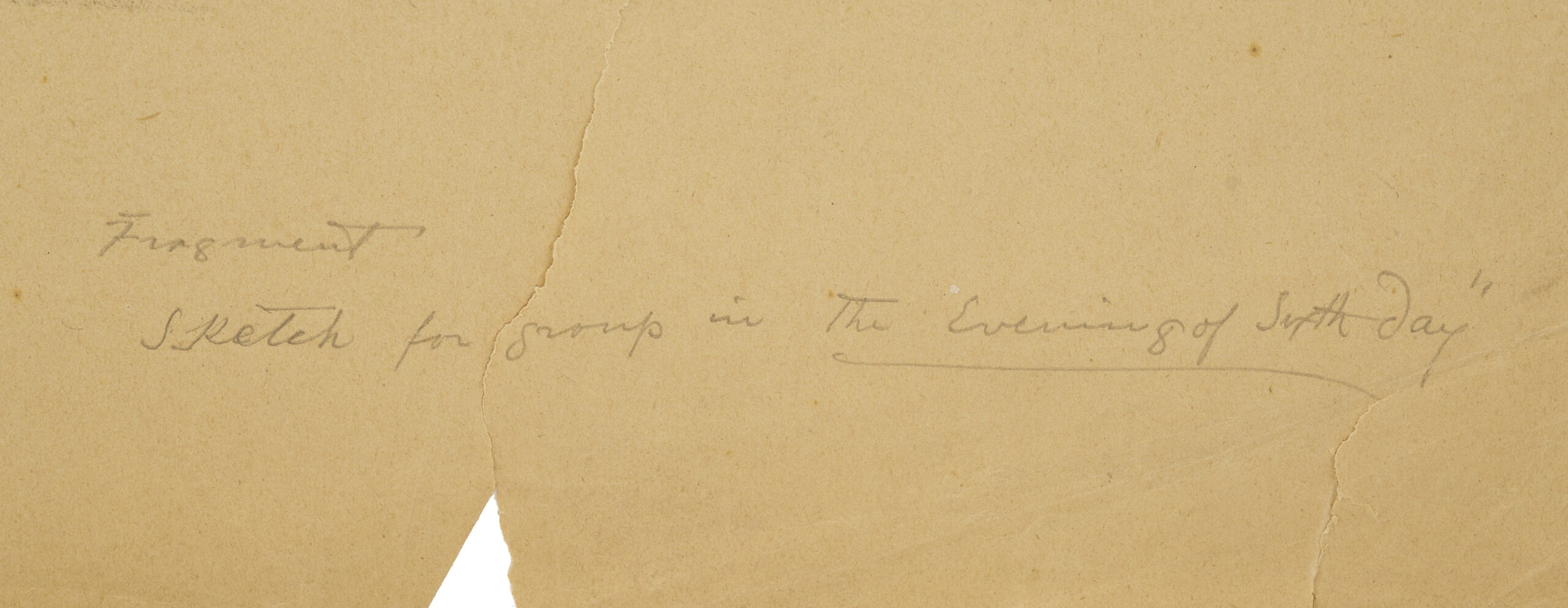
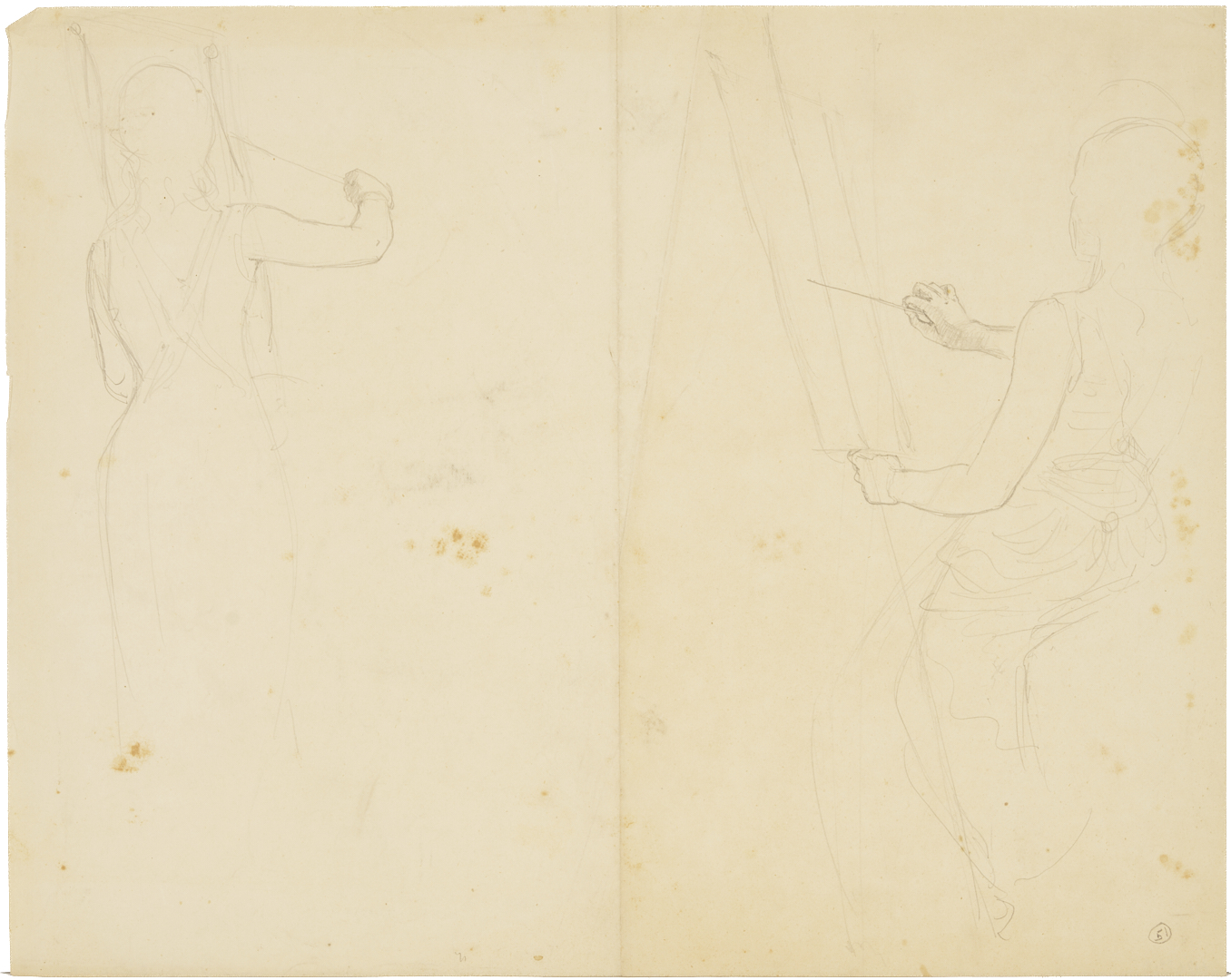
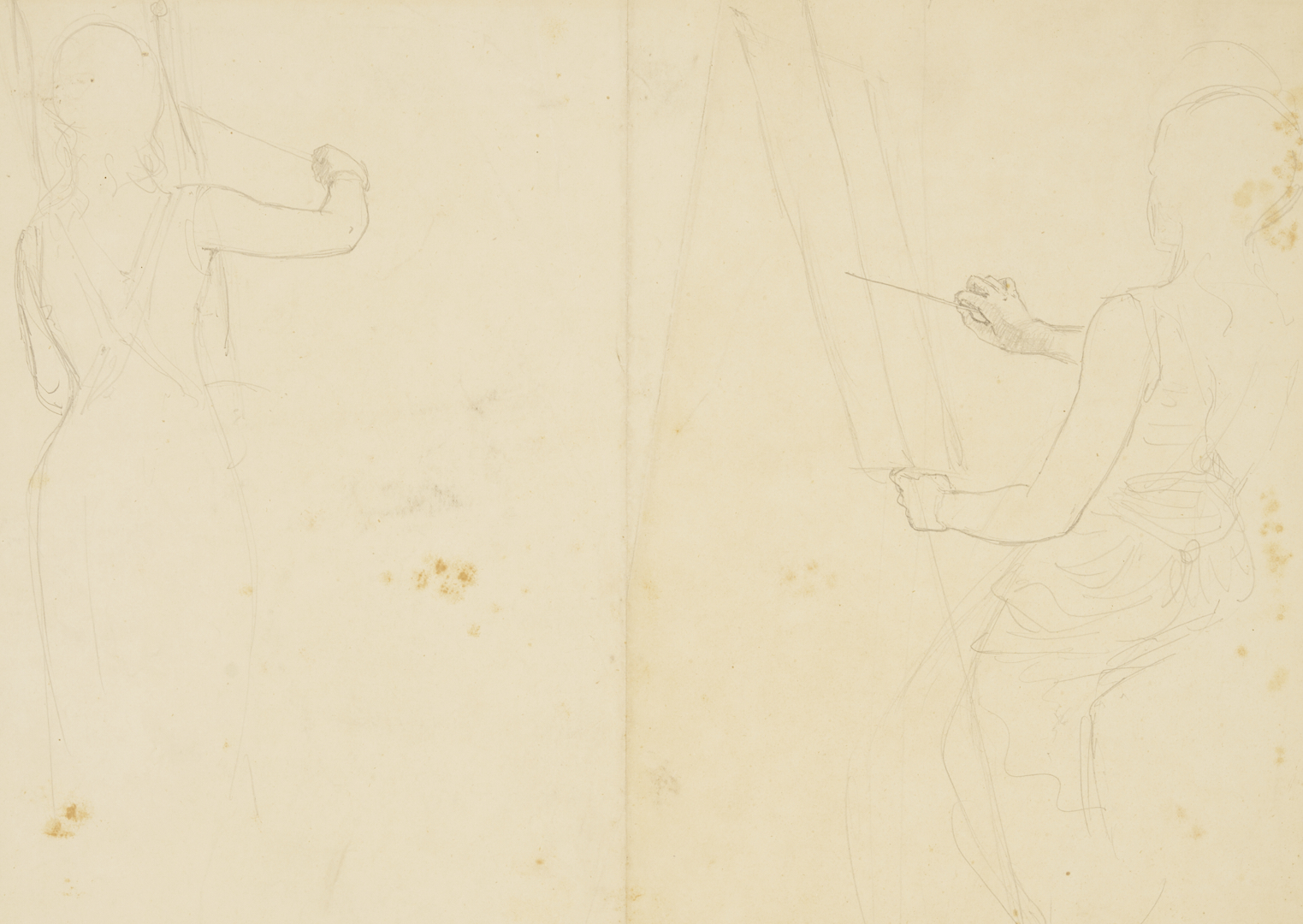
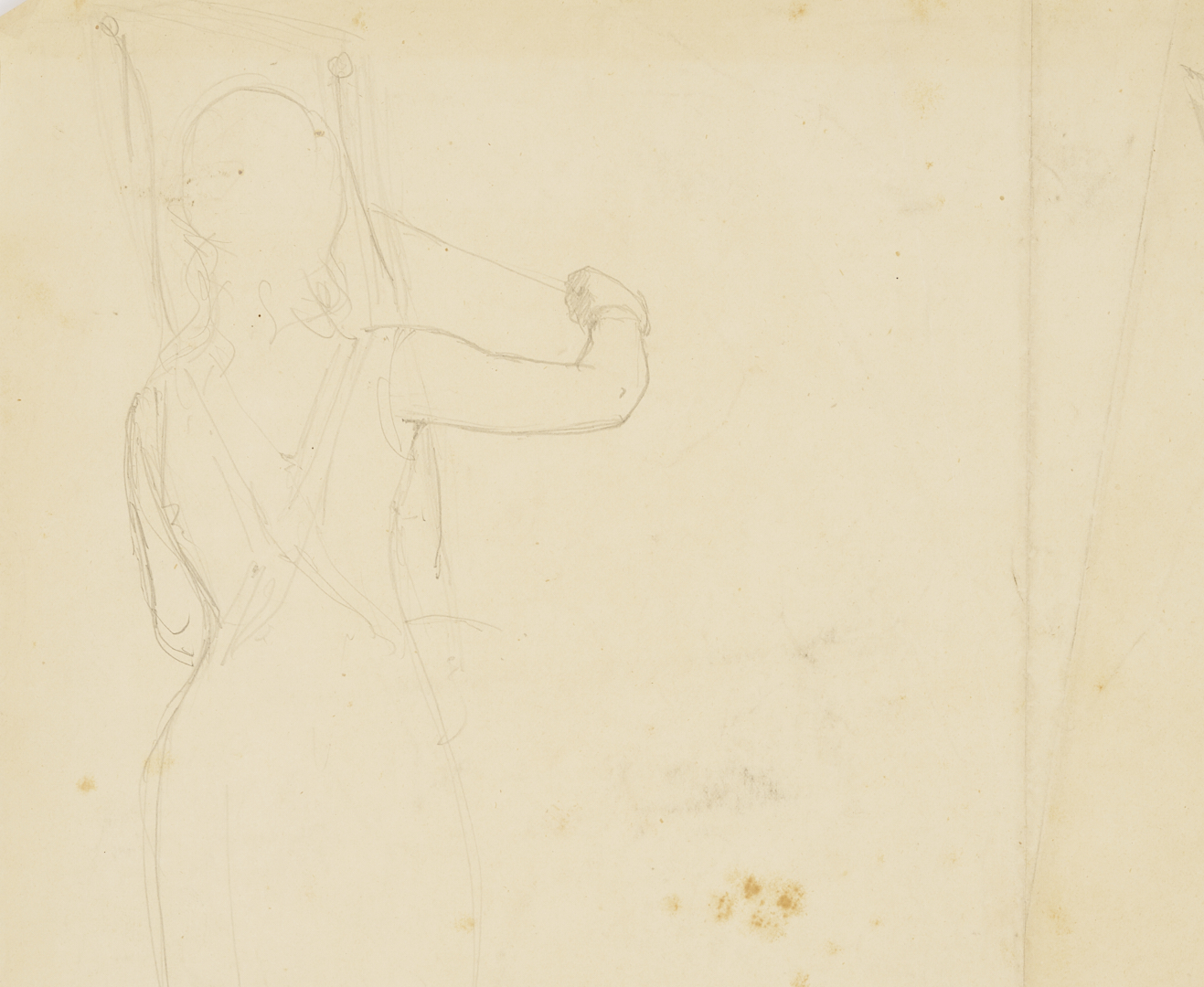
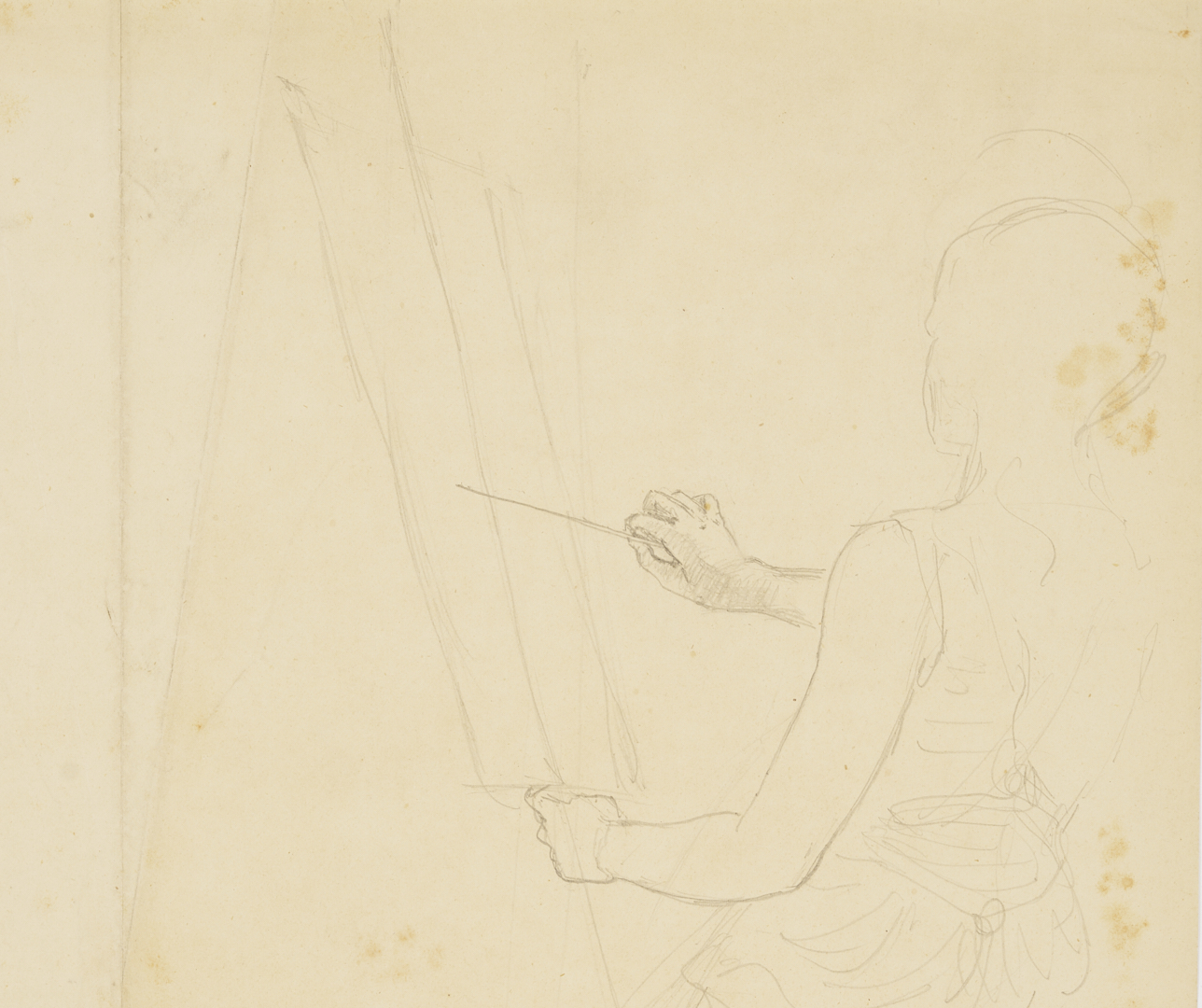
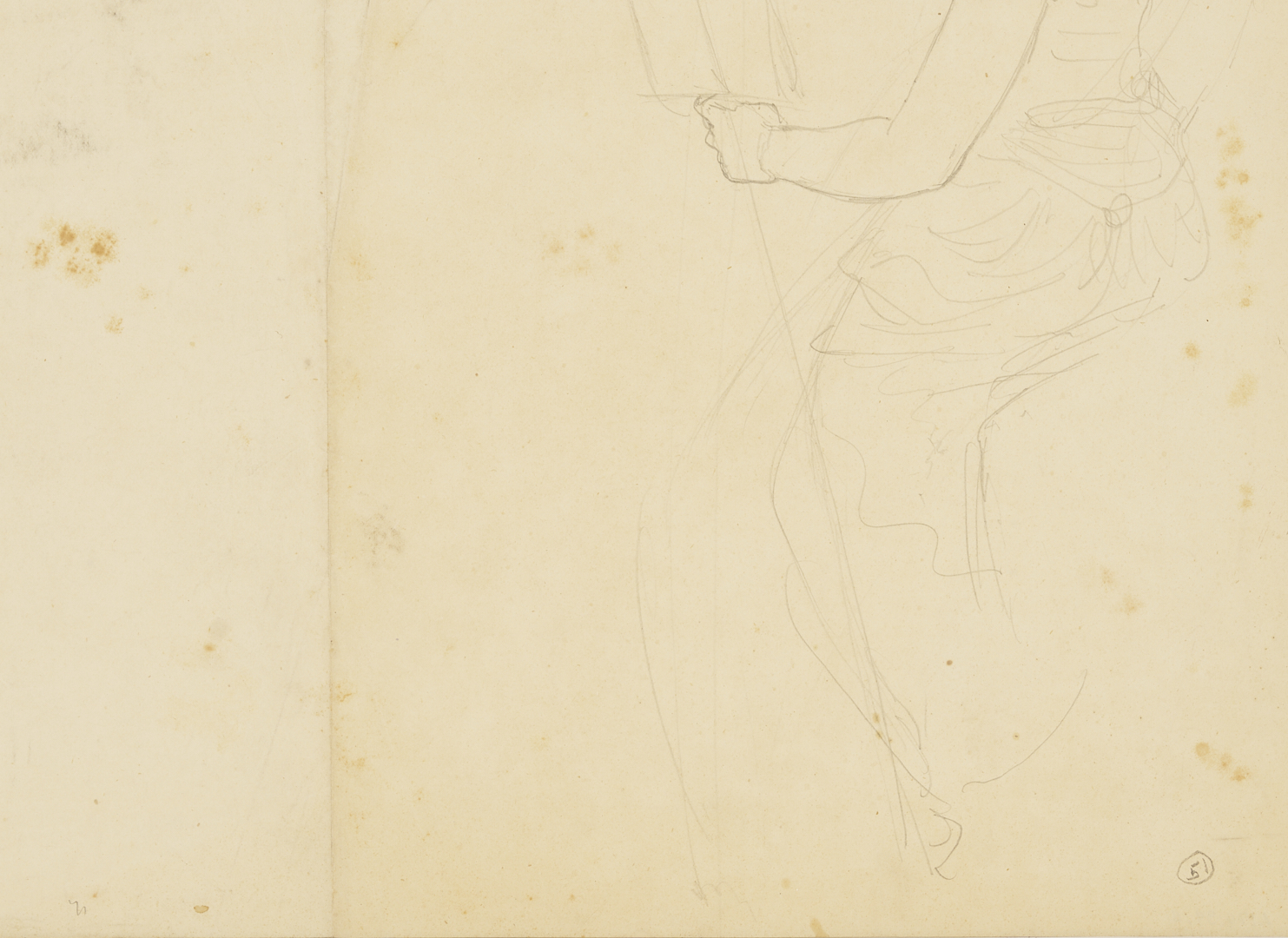
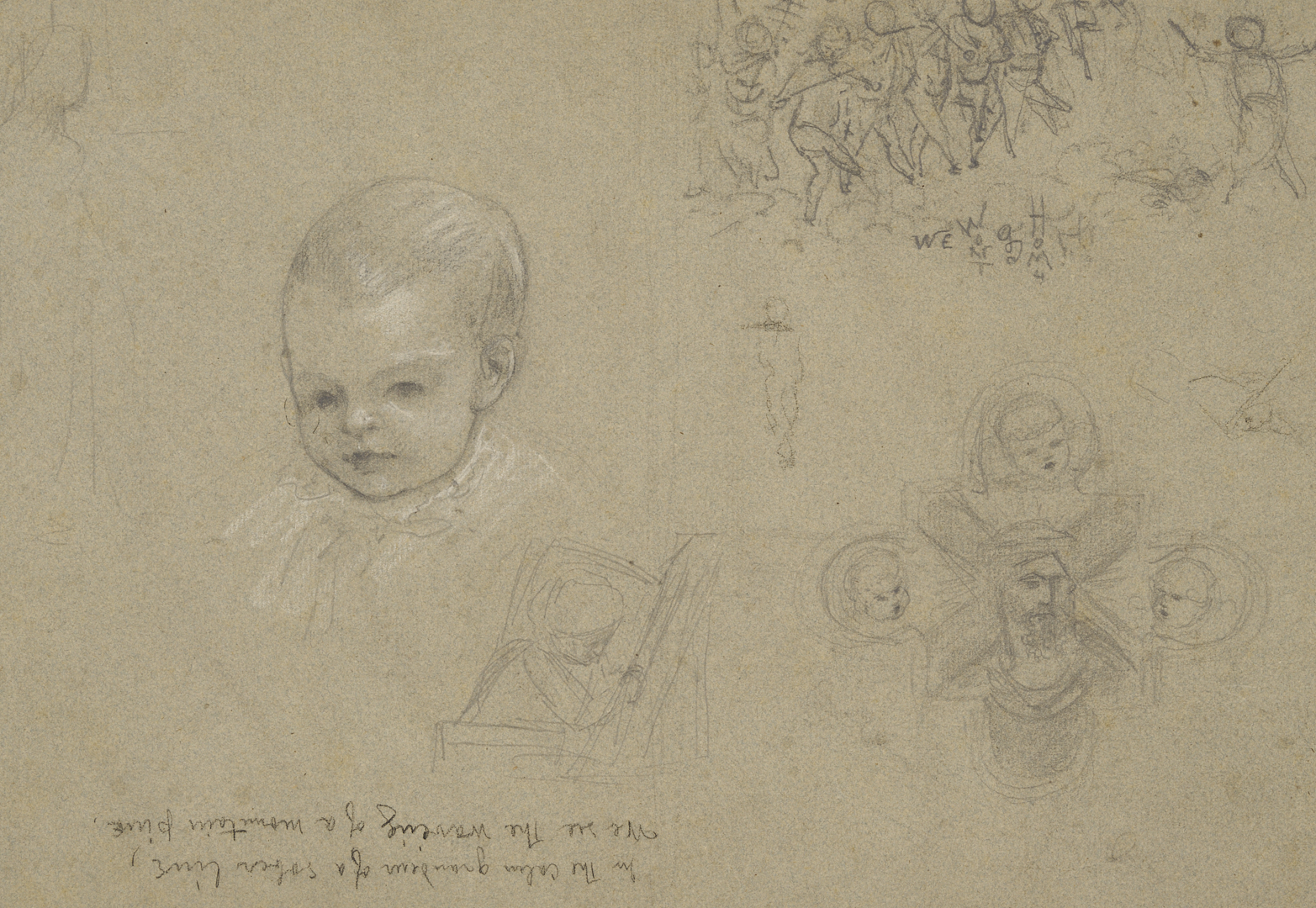
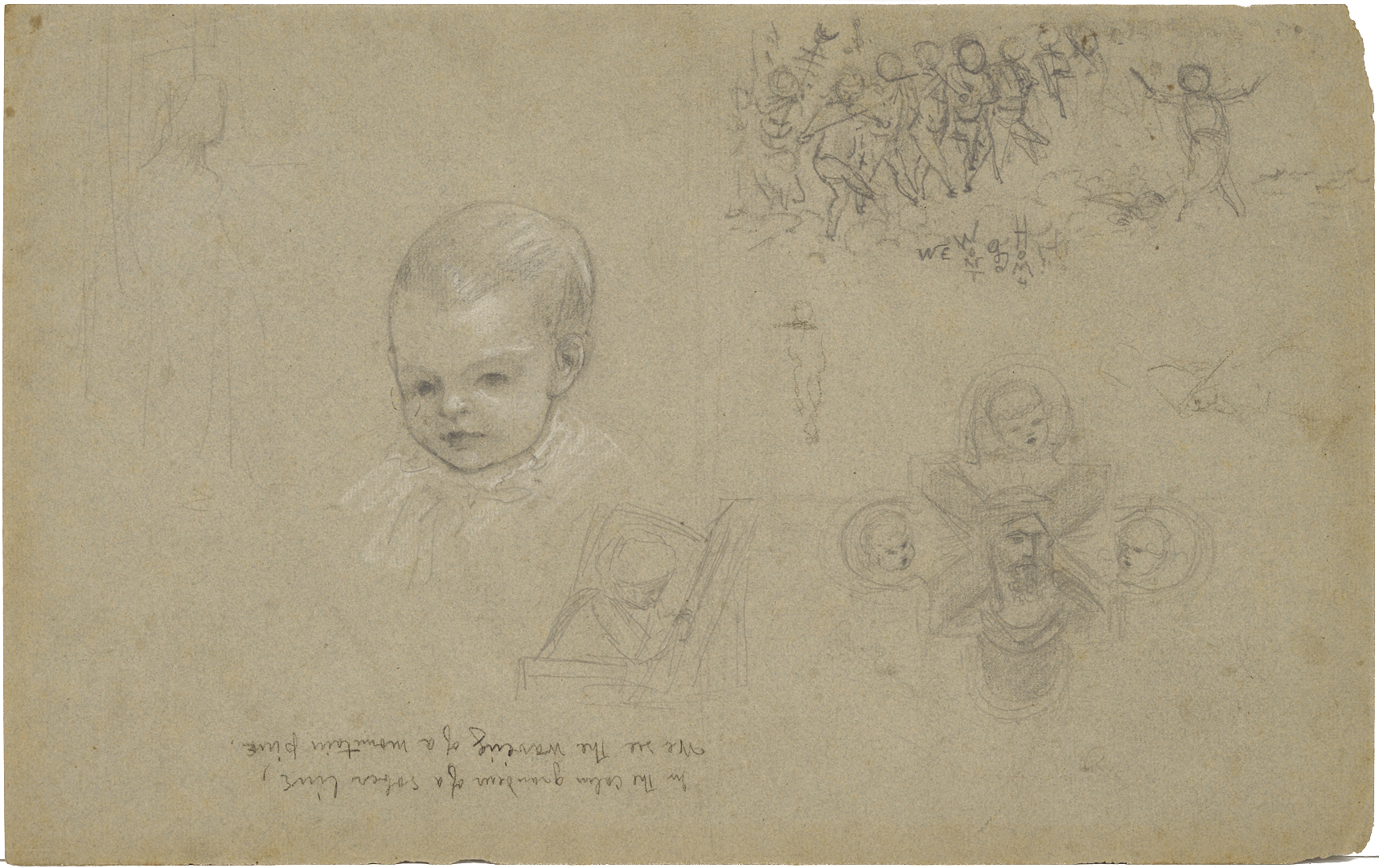
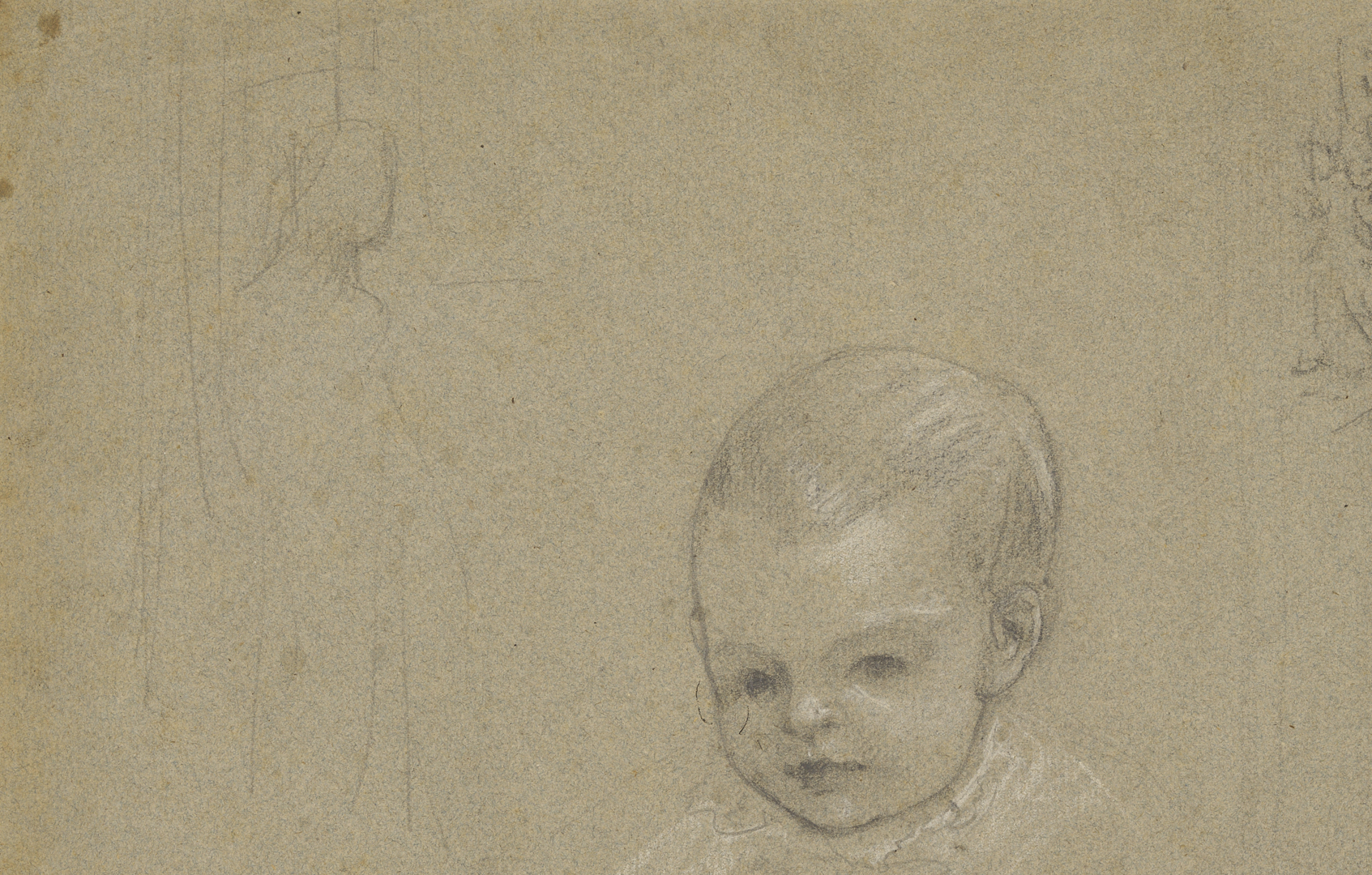
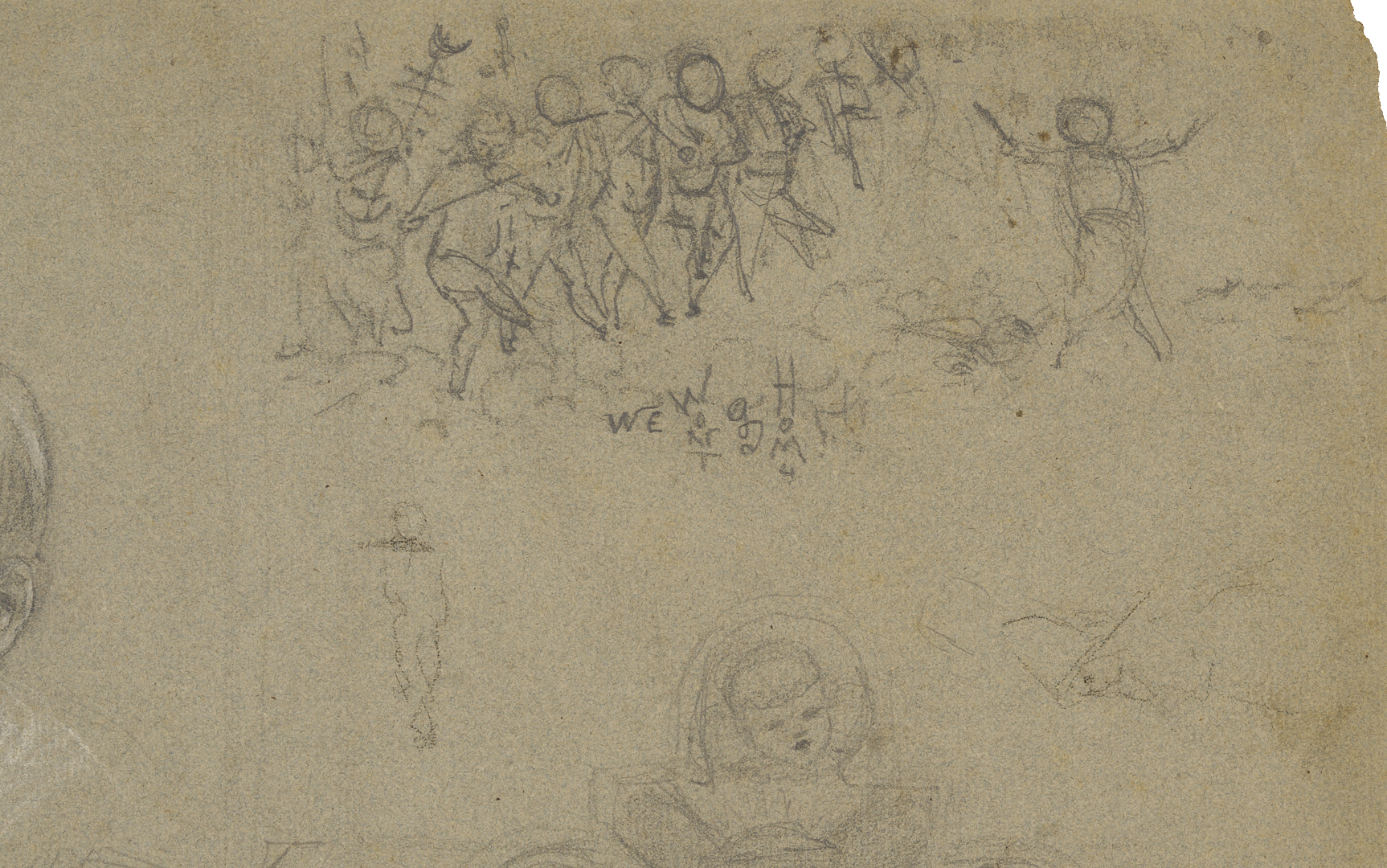
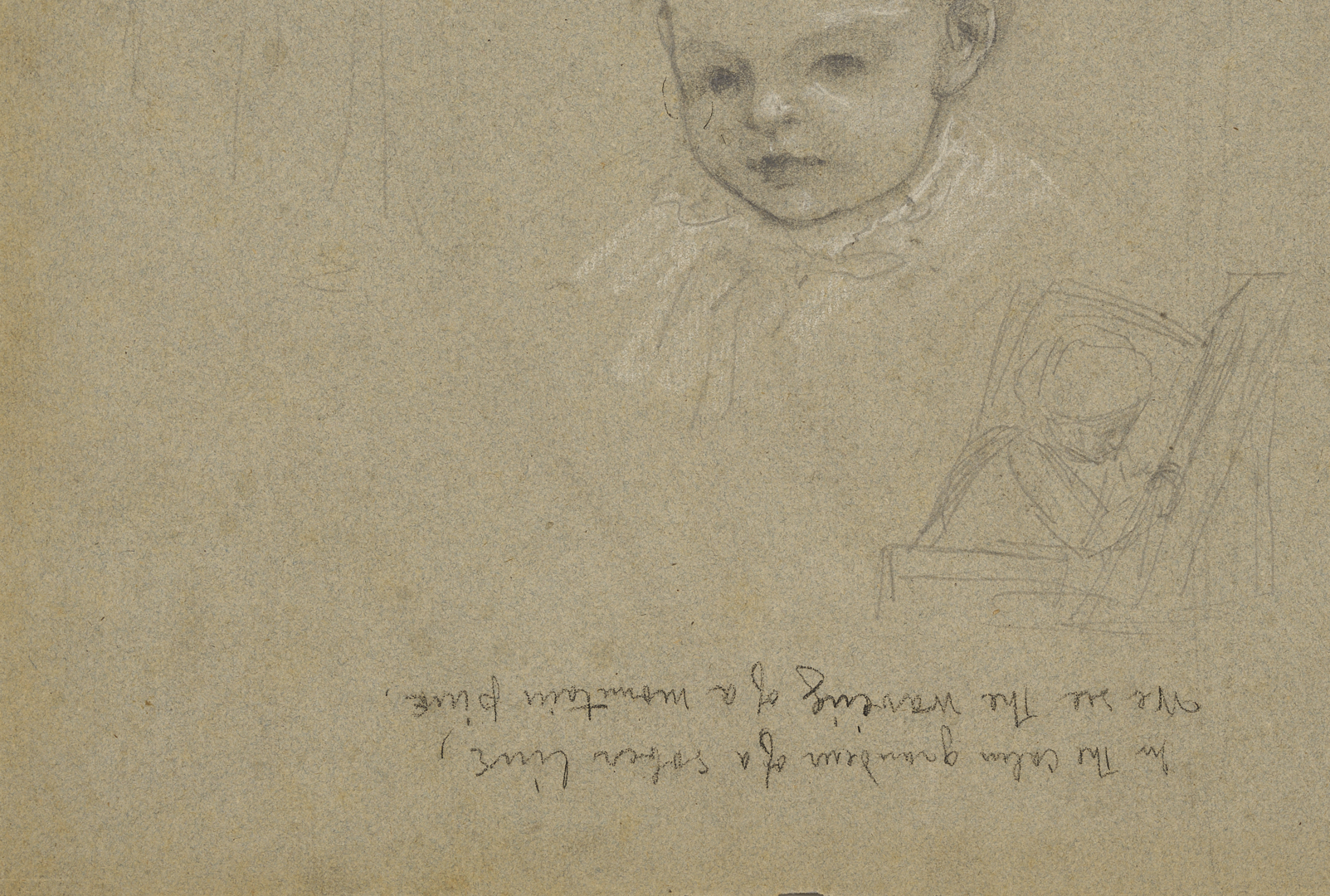
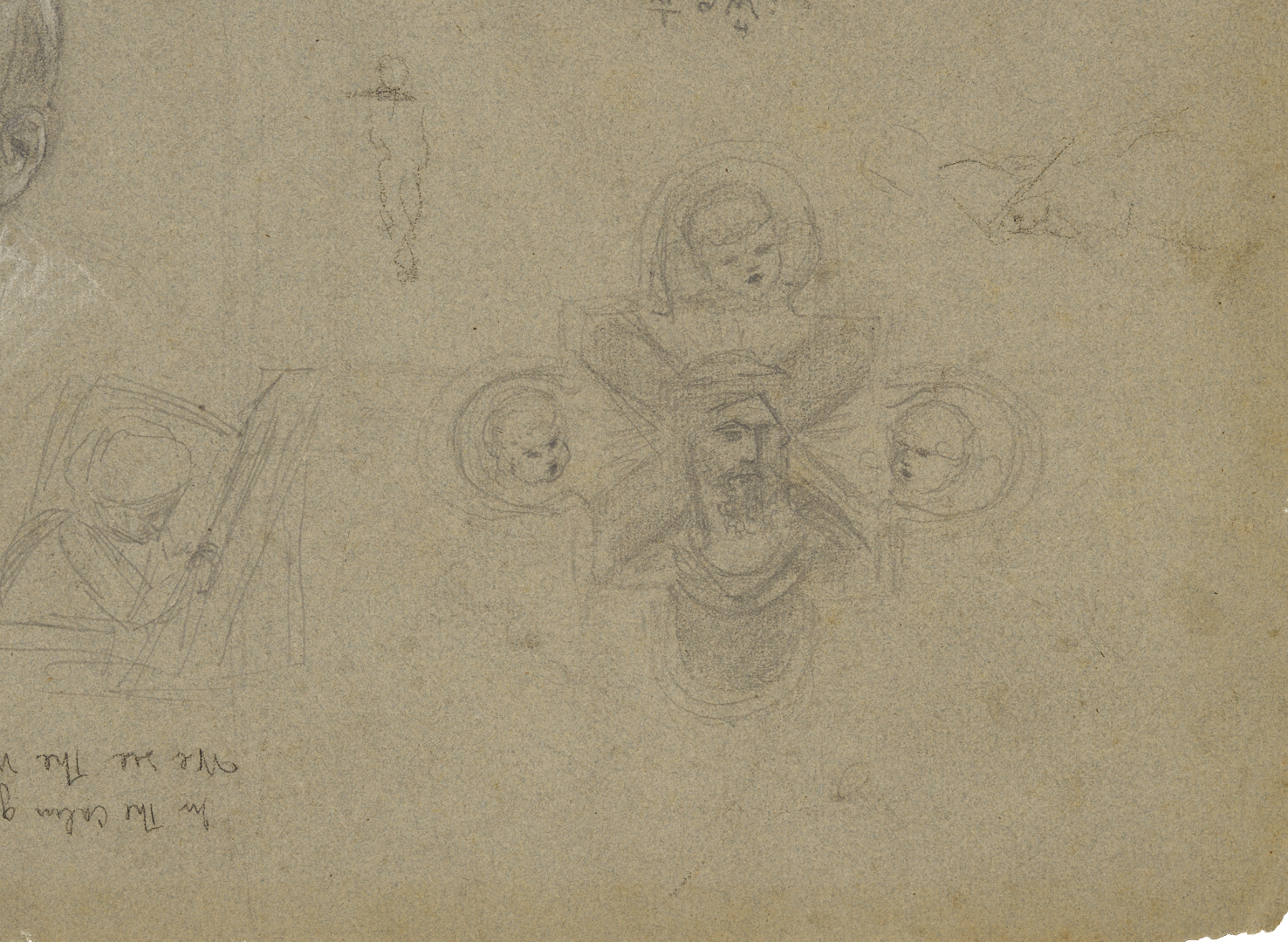
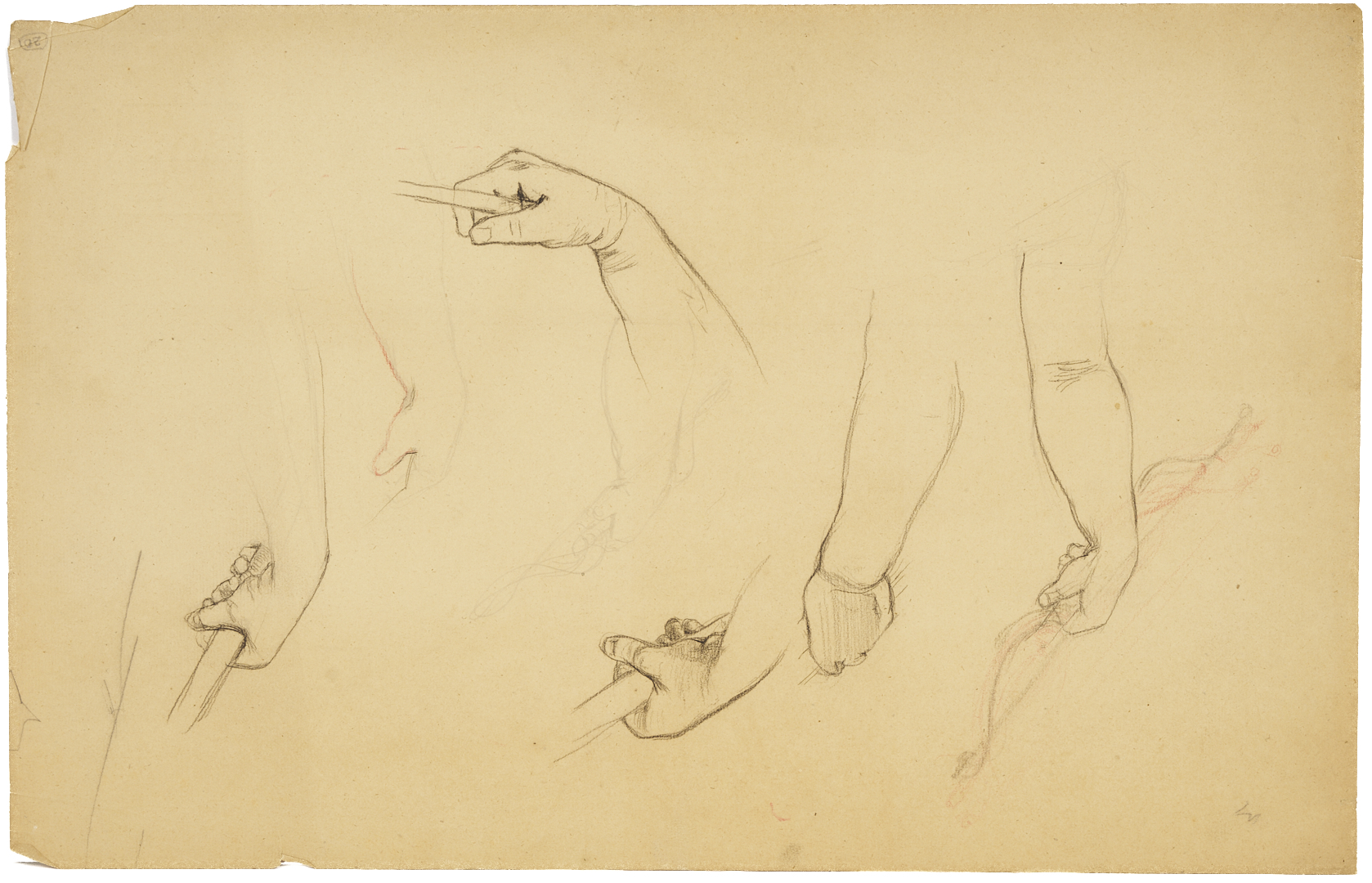
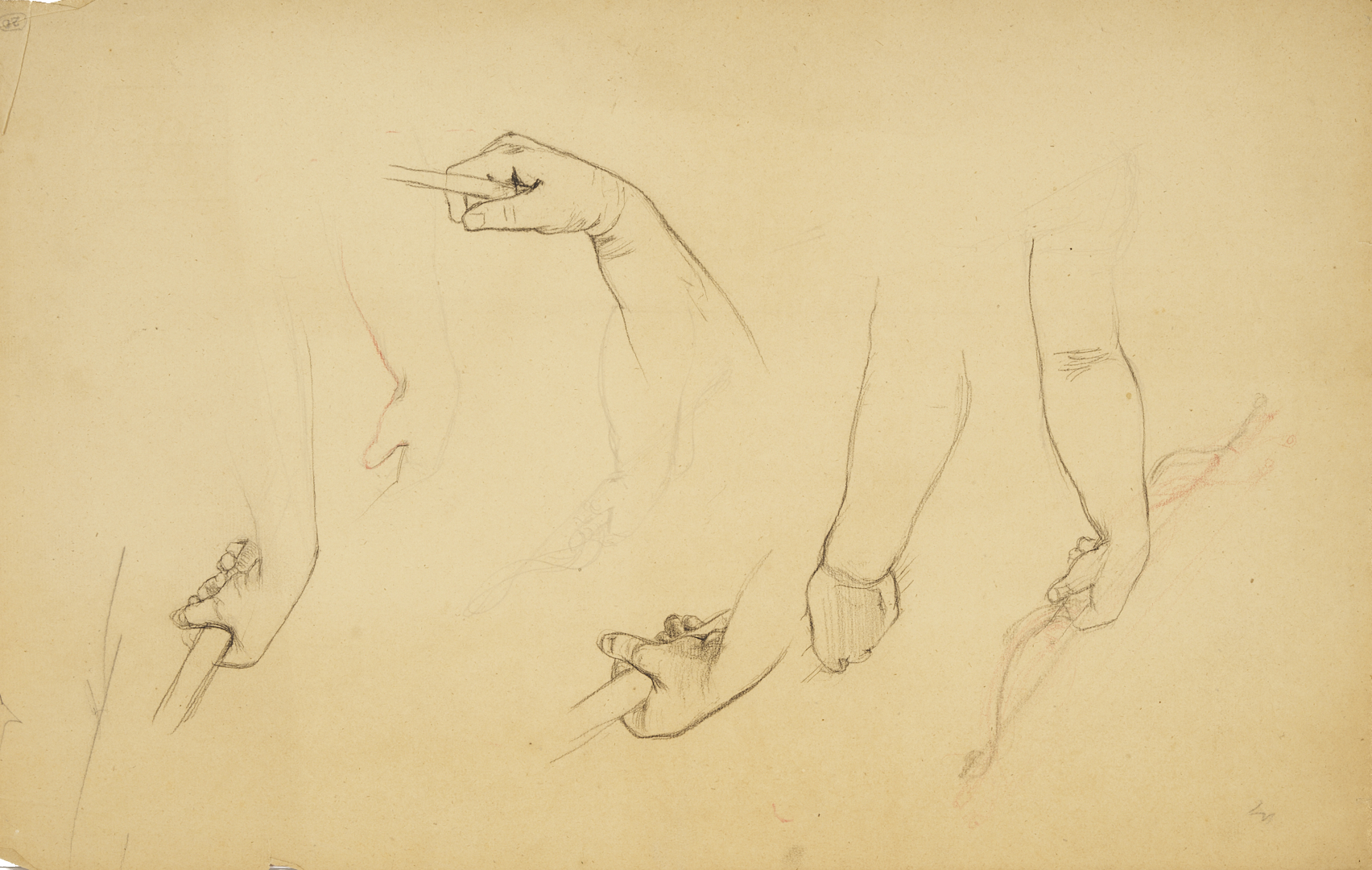
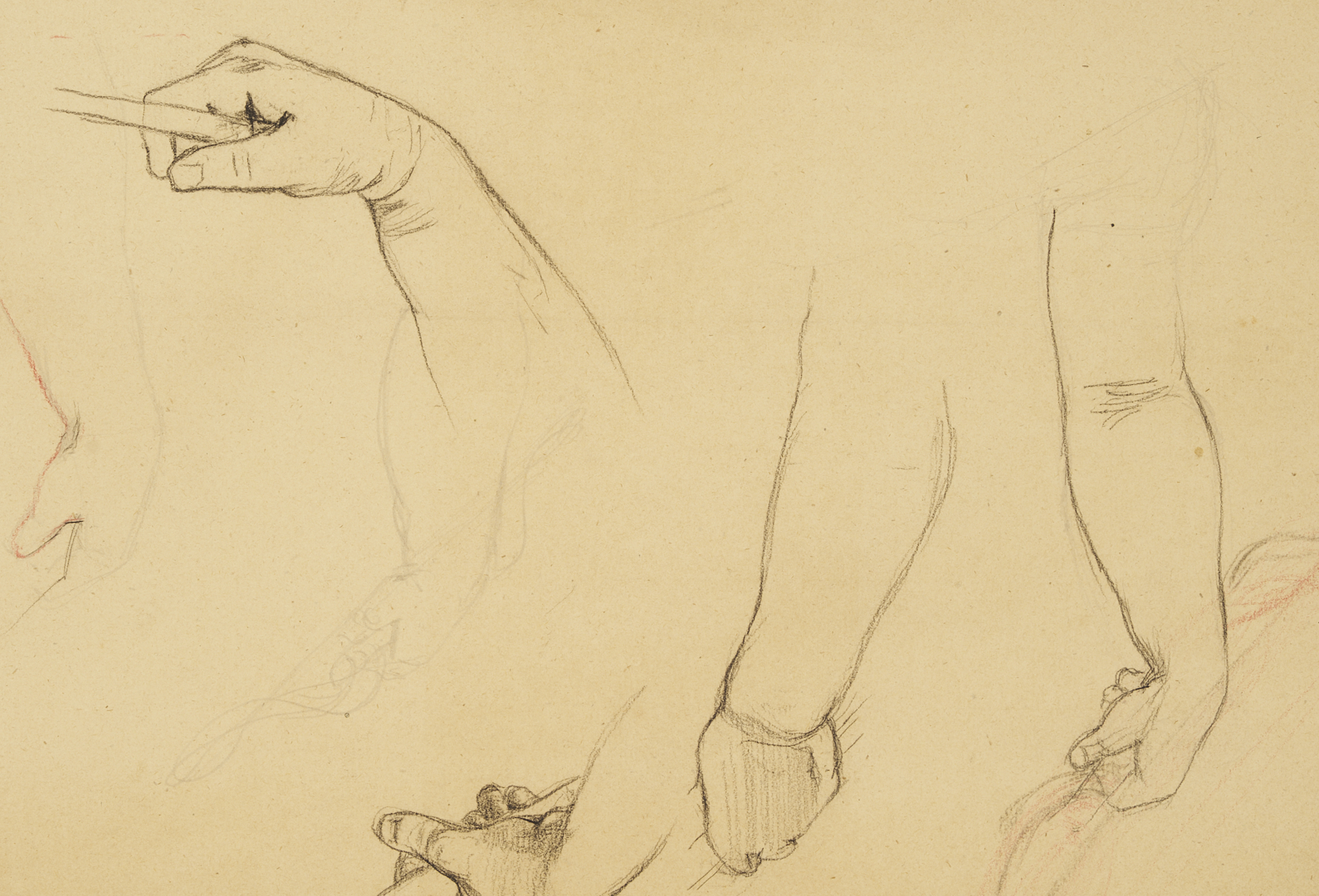
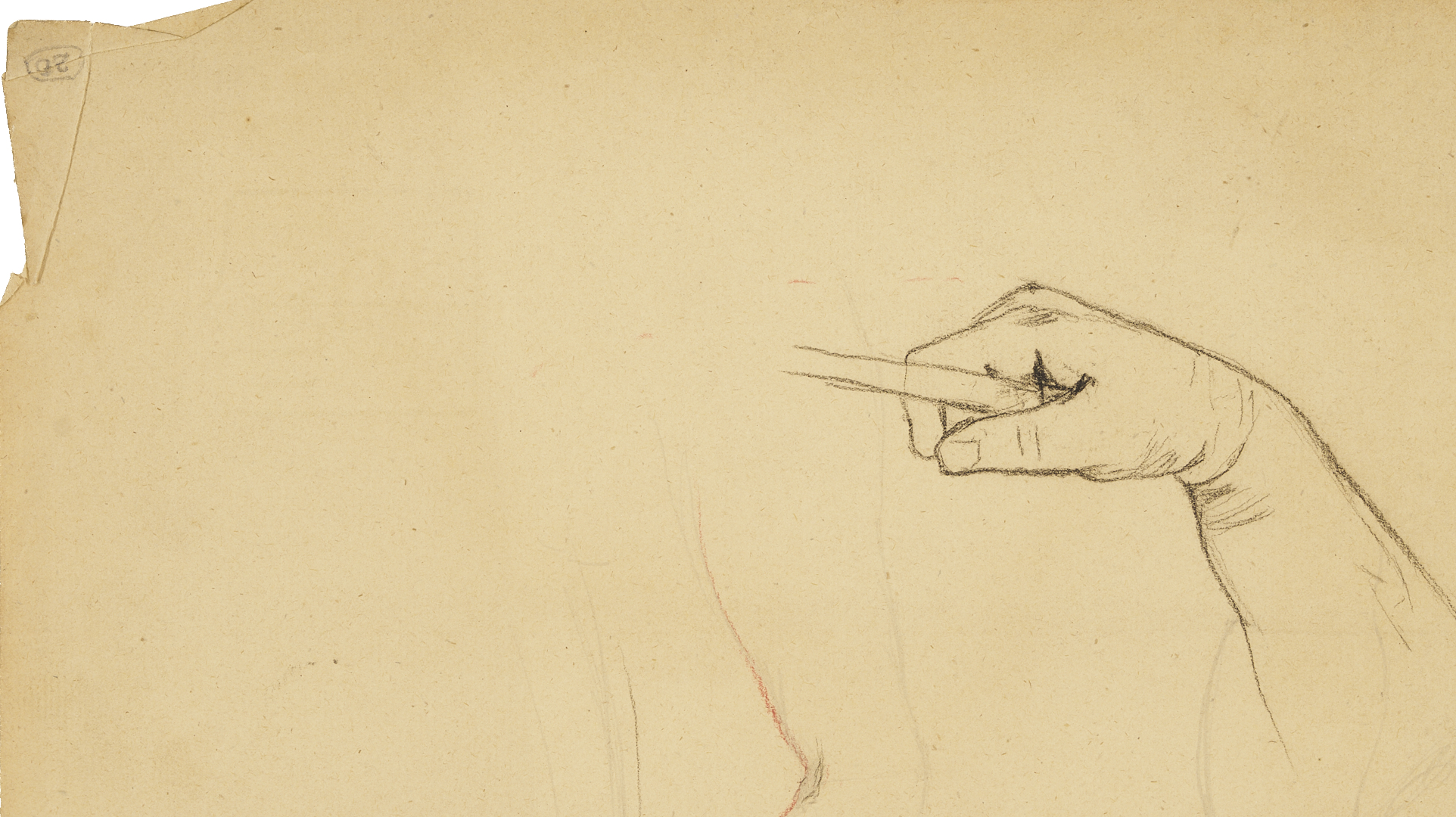
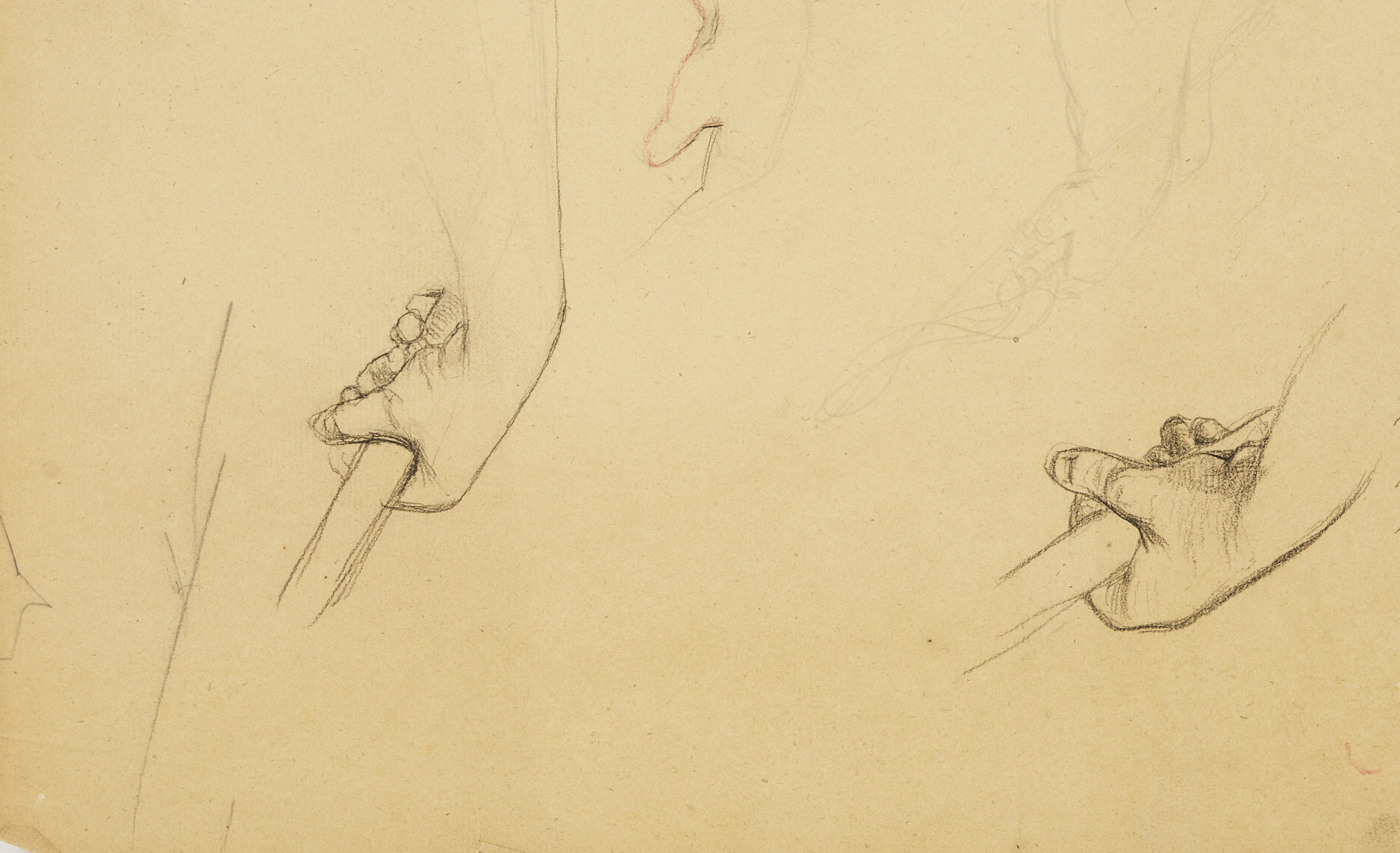
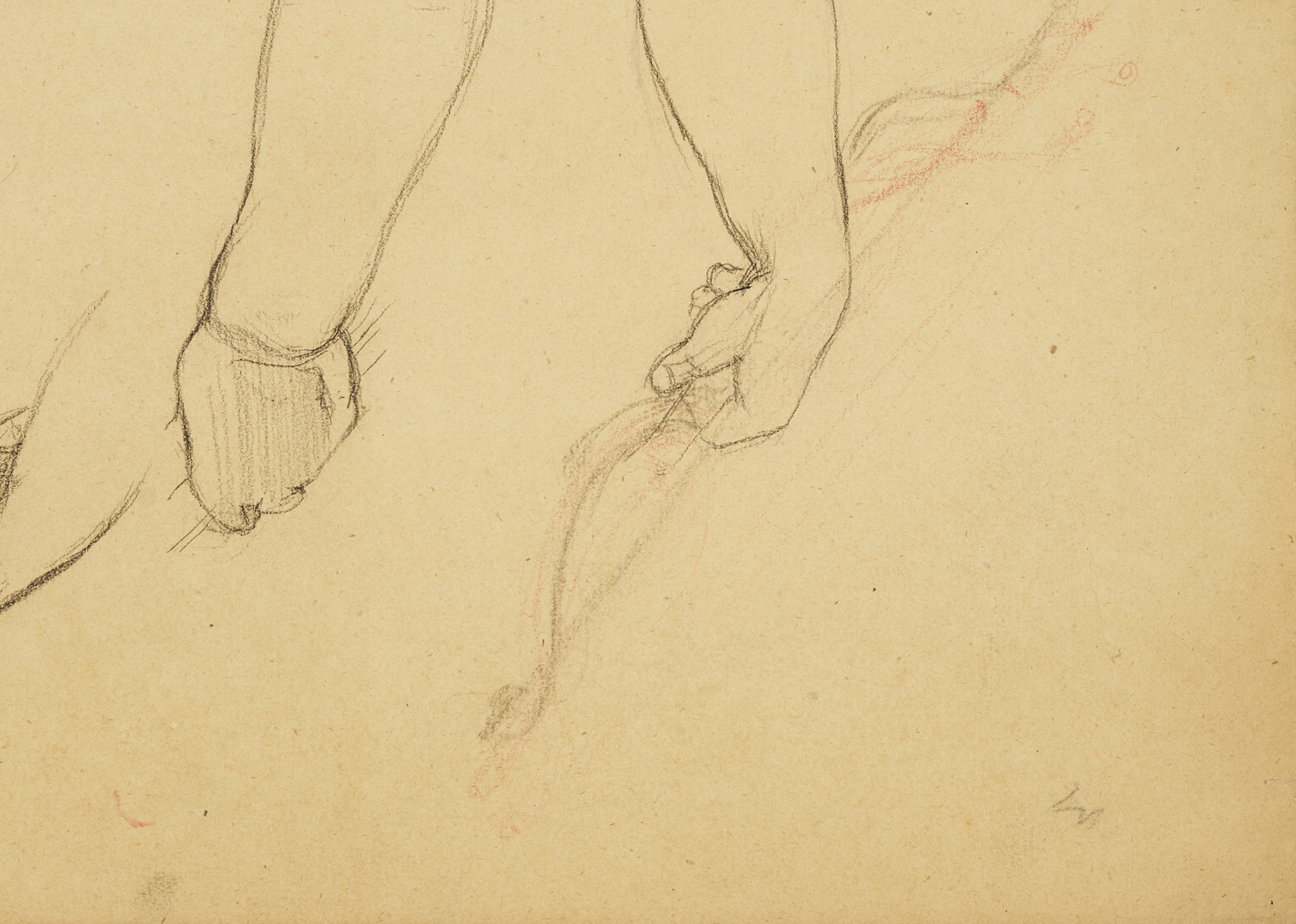
Five (5) Carl Gutherz or Guthers (Tennessee/Missouri, 1844-1907) figure studies for the artist’s monumental 1893 painting “The Evening of the Sixth Day.” Item 1: Oil on canvas with pencil painting, a study for “Evening of the Sixth Day,” that depicts a nude woman with long red hair, Eve, who kneels beside a man outlined with pencil, Adam. Housed in a tan textile window mat. Canvas: 23 3/8 in. H x 21 in. W. Mat: 30 in. H x 25 1/2 in. W. Item 2: Pencil on paper study for “Evening of the Sixth Day” that depicts two putti who dance together while others recede into the distance behind them. Signed and inscribed “Fragment / Sketch for group in The Evening of the Sixth Day.” 22 in. H x 31 1/2 in. W. Item 3: Two pencil on paper studies for “Evening of the Sixth Day” on one sheet that depict women who play lyres, both shown from behind. 12 5/8 in. H x 15 3/4 in. W. Item 4: Pencil and white chalk drawing on blue laid paper with head of Christ, study for “Cupid Band,” drawing of a boy with white highlights, and several additional sketches. Poem written along lower edge reads “In the calm grandeur of a sober line, we see the waving of a mountain pine.” 11 in. H x 17 3/8 in. W. Item 5: Red and black chalk with pencil drawing with seven studies of an arm, one of which holds a bow, from “Cupid Band.” 22 in. H x 31 1/2 in. W. Literature: The Evening of the Sixth Day is the focus of Kristin Schwain’s essay “Carl Gutherz’s Esoteric Art” in CARL GUTHERZ: POETIC VISION AND ACADEMIC IDEALS, eds. Marilyn Masler and Marina Pacini (Memphis, TN: Memphis Brooks Museum of Art, 2009) pp. 56-83. Artist Biography: “Gutherz, who was born in Switzerland, emigrated as a child to the U.S. in 1851. He lived with his family in Memphis, Tennessee, through the Civil War and then studied at the Ecole des Beaux Arts in Paris and the Academie Julian, as well as in Munich, Brussels, and Rome. In 1875 he moved to St. Louis, Missouri, where he taught at Washington University and helped establish the St. Louis School and Museum of Fine Arts. Guthers continued to take portrait commissions from Memphis, however, and even designed costumes and floats for the annual Memphis Mardi Gras. In 1884 he returned to Paris, where he studied with Gustave Boulanger and Joseph LeFevre. Here, he became associated with the Symbolist movement and produced his most successful paintings including large allegorical works, often featuring Christian imagery. Back in the U.S. he was hired to create murals for institutions including the Library of Congress, the People’s Church of St. Paul Minnesota, and the Allen County (Indiana) Courthouse. A year before his death, he produced a design for an arts and sciences pavilion which was the basis for the development of the Brooks Memorial Art Gallery, later the Memphis Brooks Museum of Art.” (Source: The Tennessee Encyclopedia)
PROVENANCE: Deaccessioned by the Memphis Brooks Museum of Art to benefit the acquisitions fund.
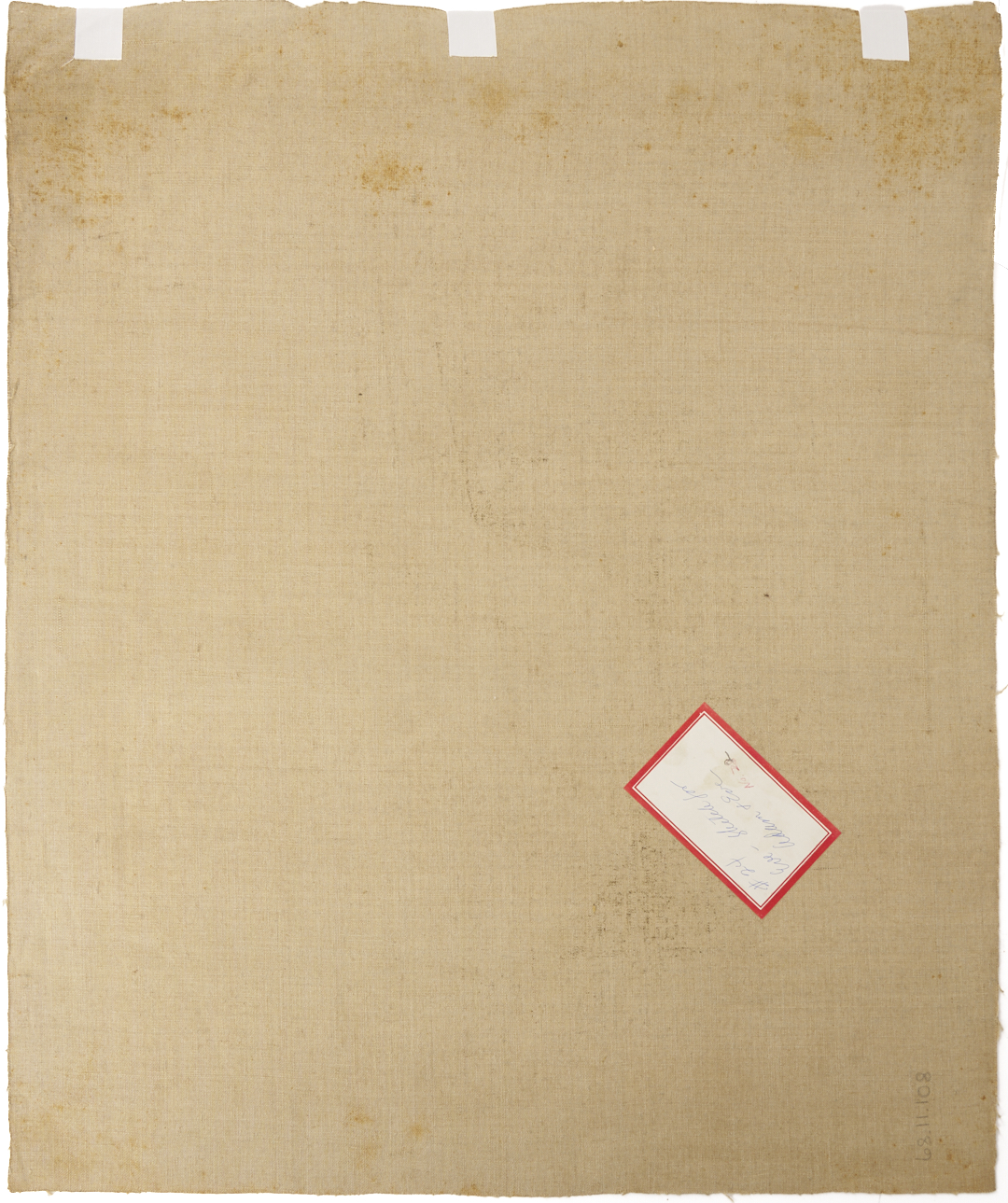
CONDITION: Each with museum accession numbers en verso. Item 1 in overall very good condition, hinge-mounted to mat with archival tape affixed en verso. Pinpoint punctures to upper edge. Item 2 with tears and losses to all edges plus creasing. Central, vertical fold line has separated but remains attached along upper edge. Old tape stains and accretions to left and lower edges. Item 3 with foxing and central, vertical fold line plus dog ear crease to upper left corner. Items 4-5 with staining and creasing plus minor losses to edges.