If you have items like this you wish to consign, click here for more information:
Selling with Case- Low Estimate: $5,000.00
- High Estimate: $5,400.00
- Share this:
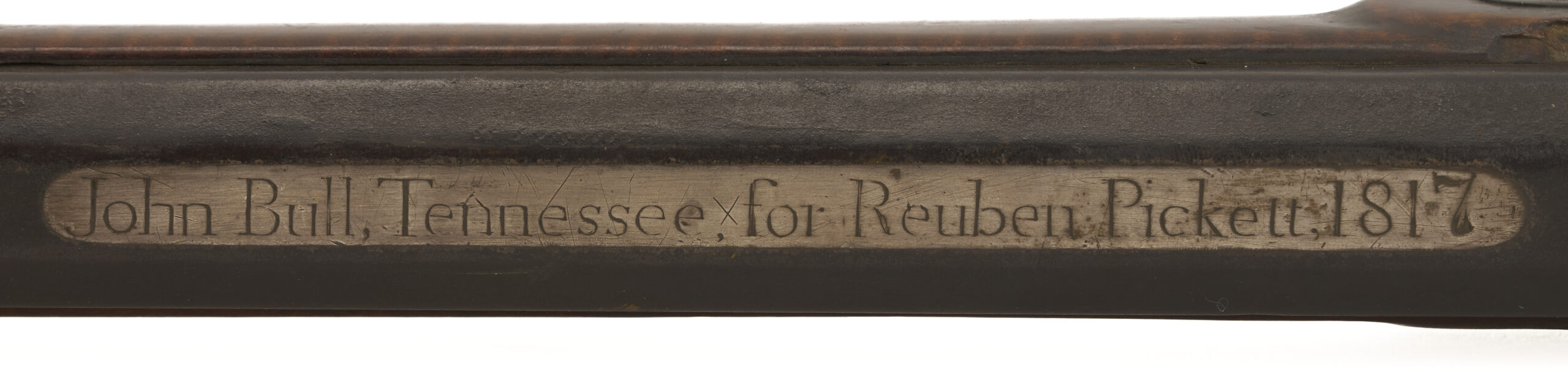
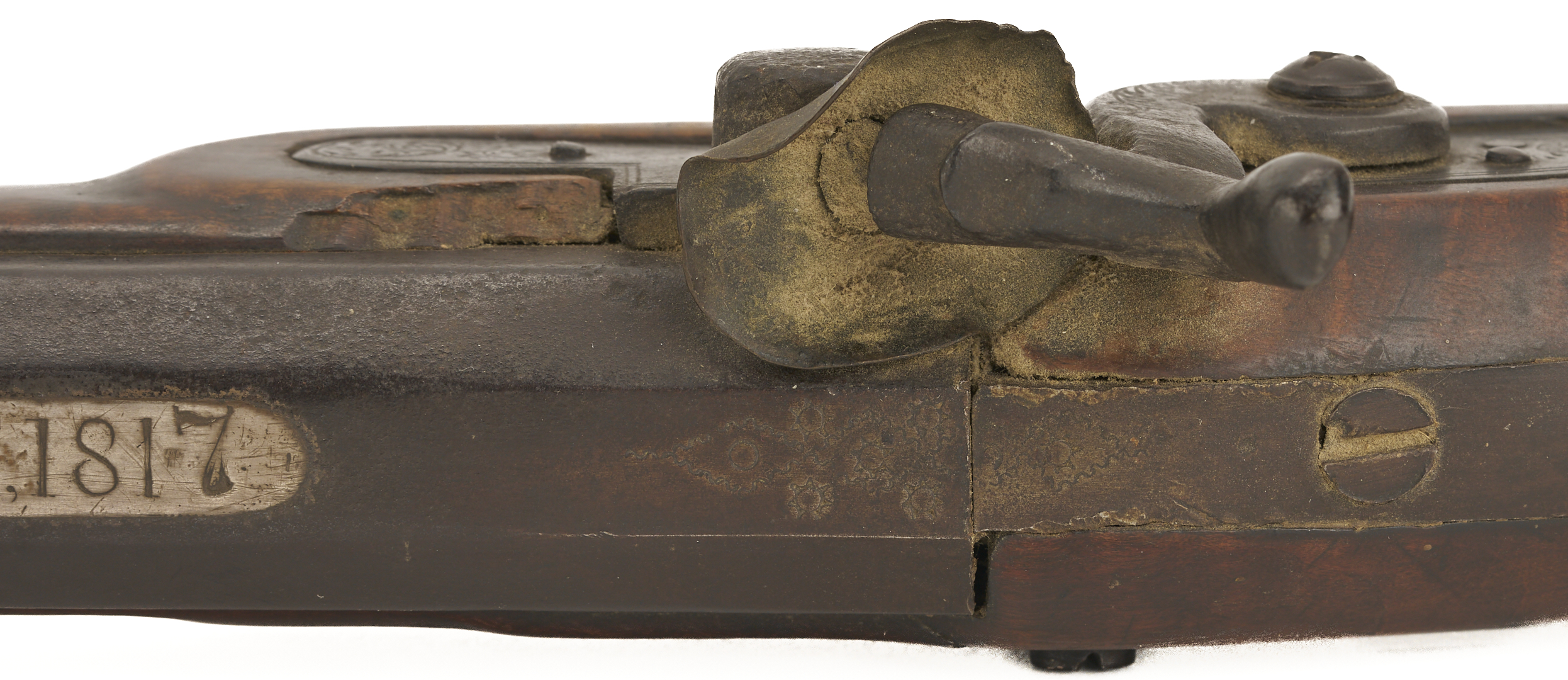
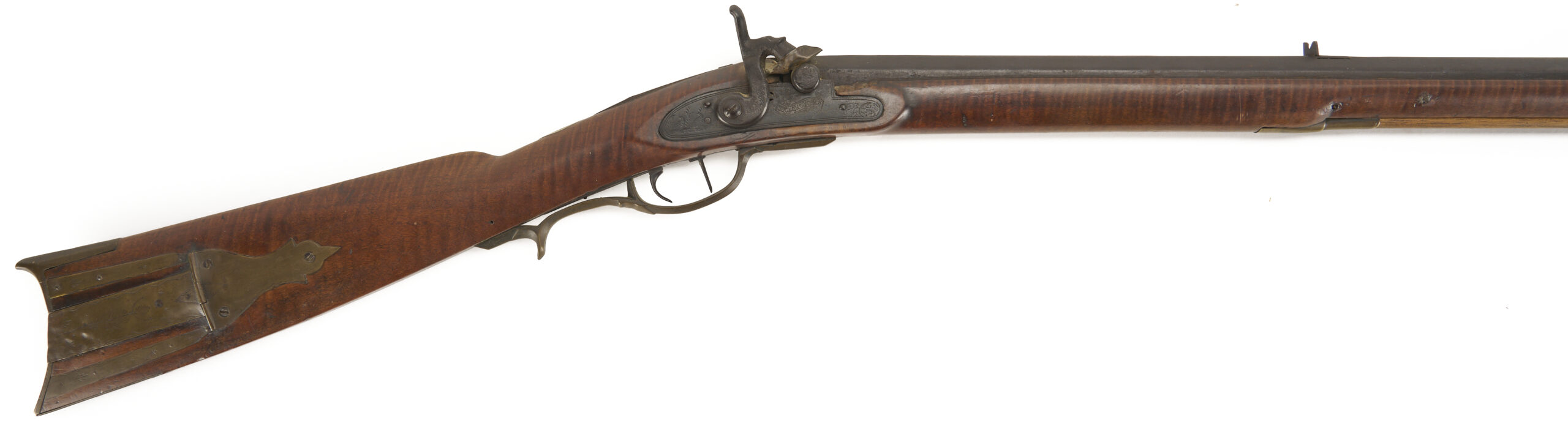
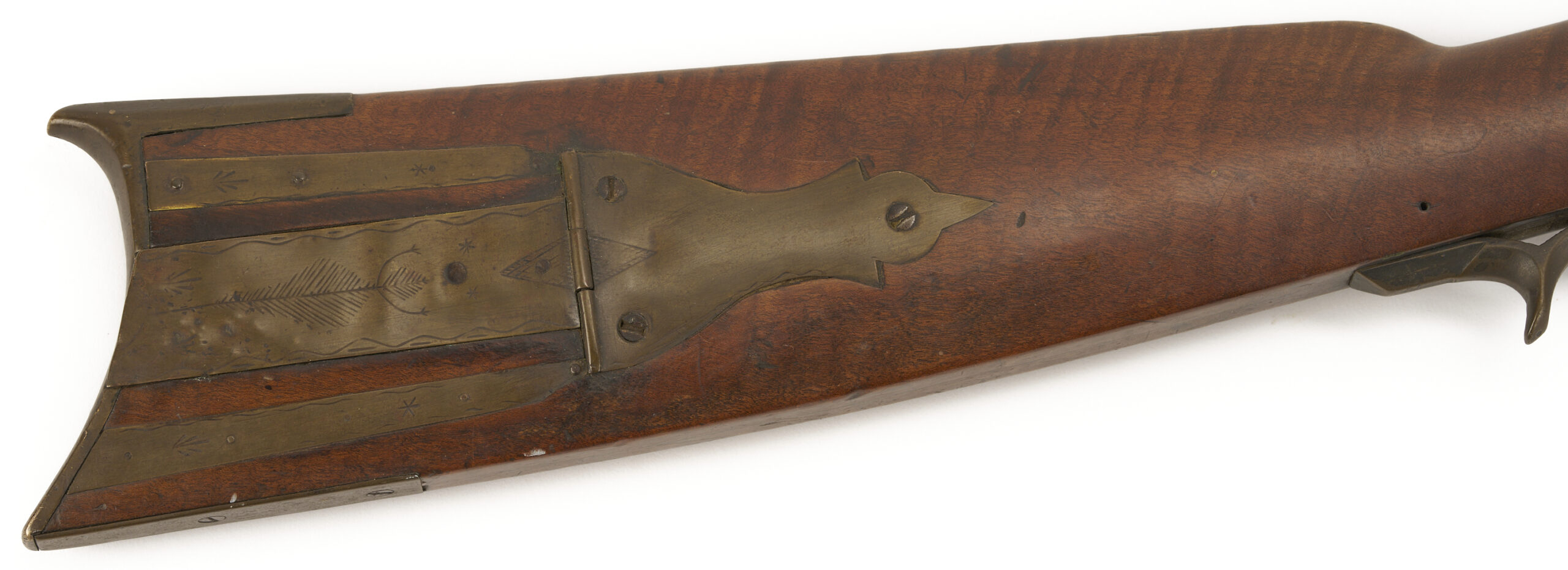
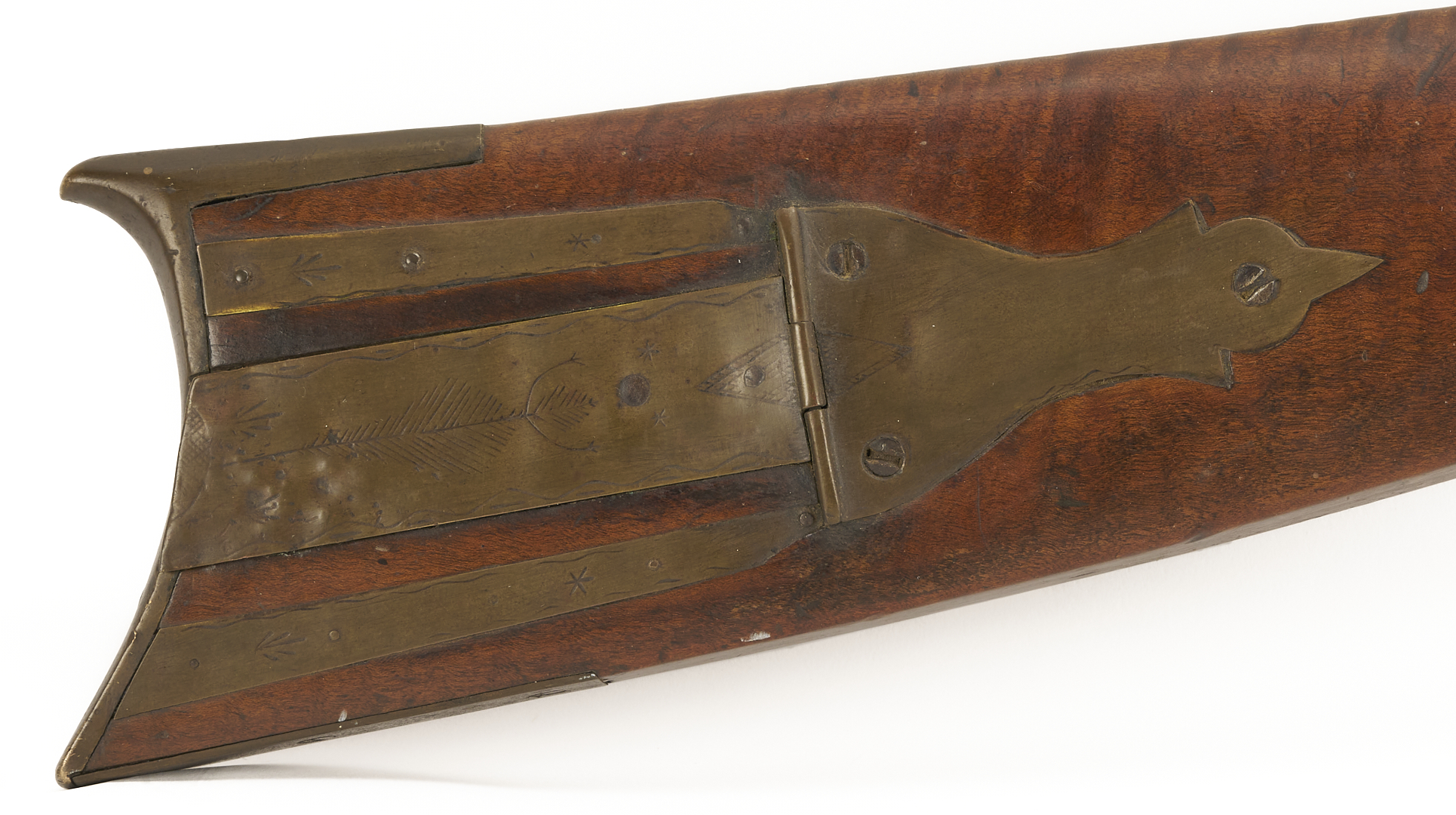
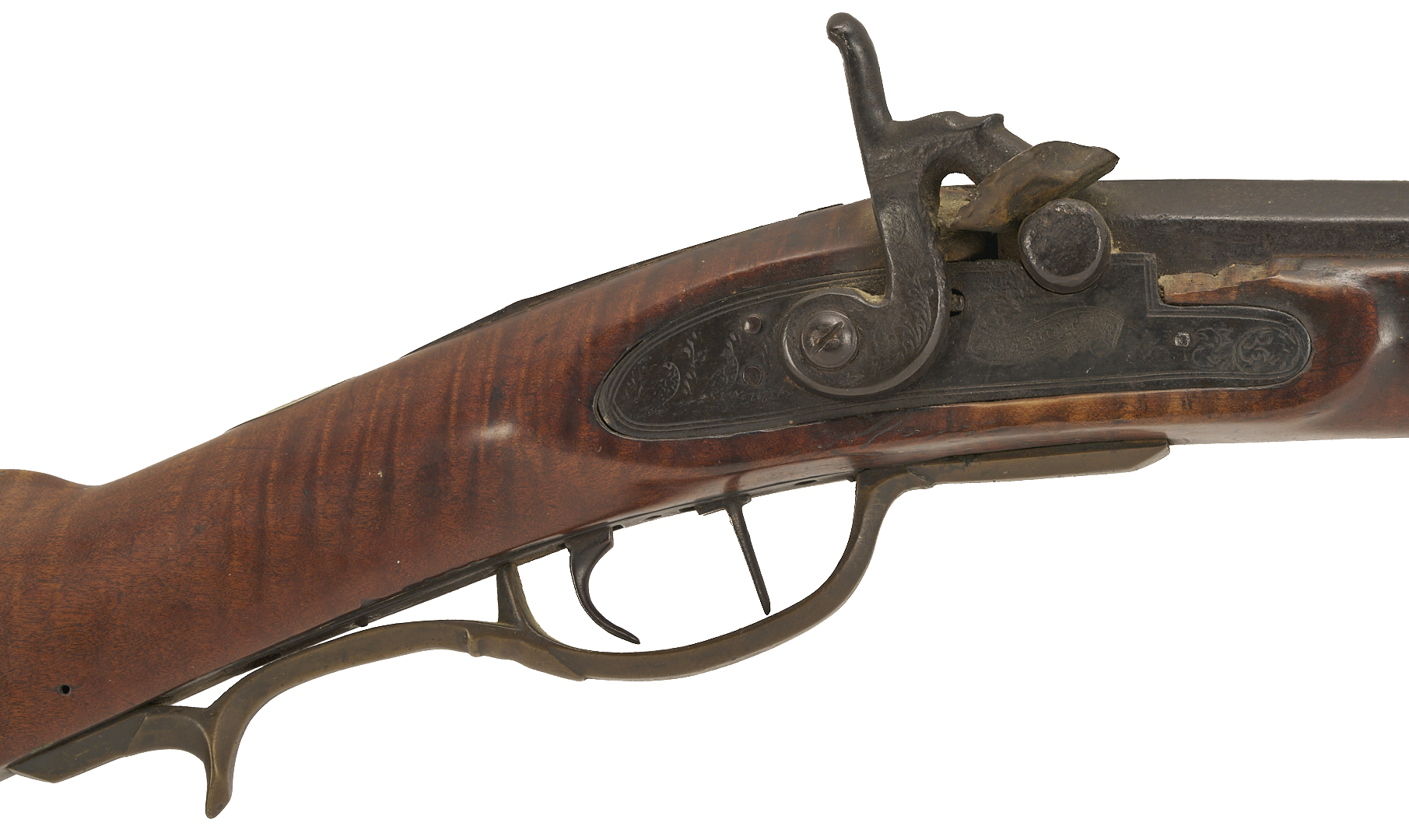
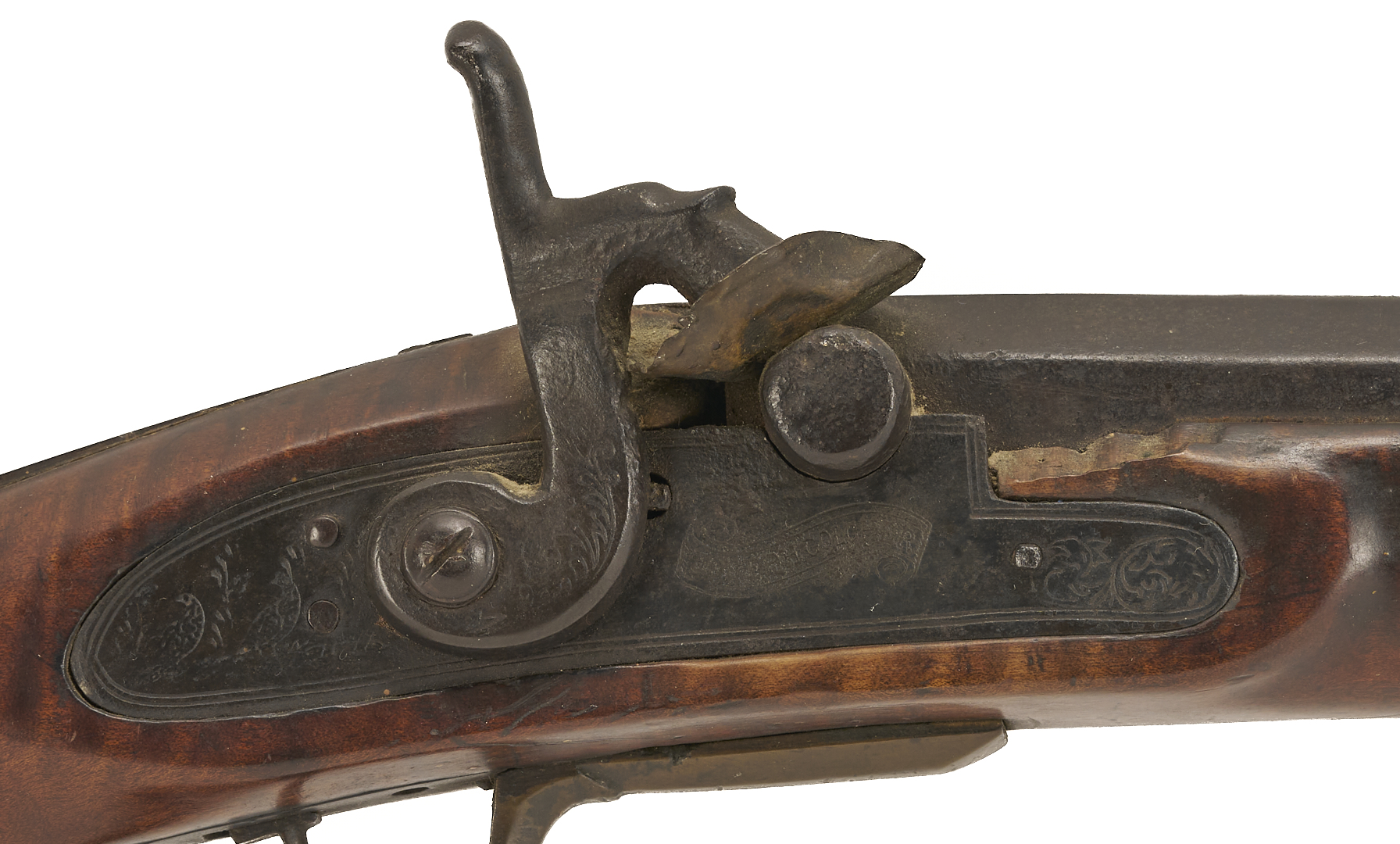
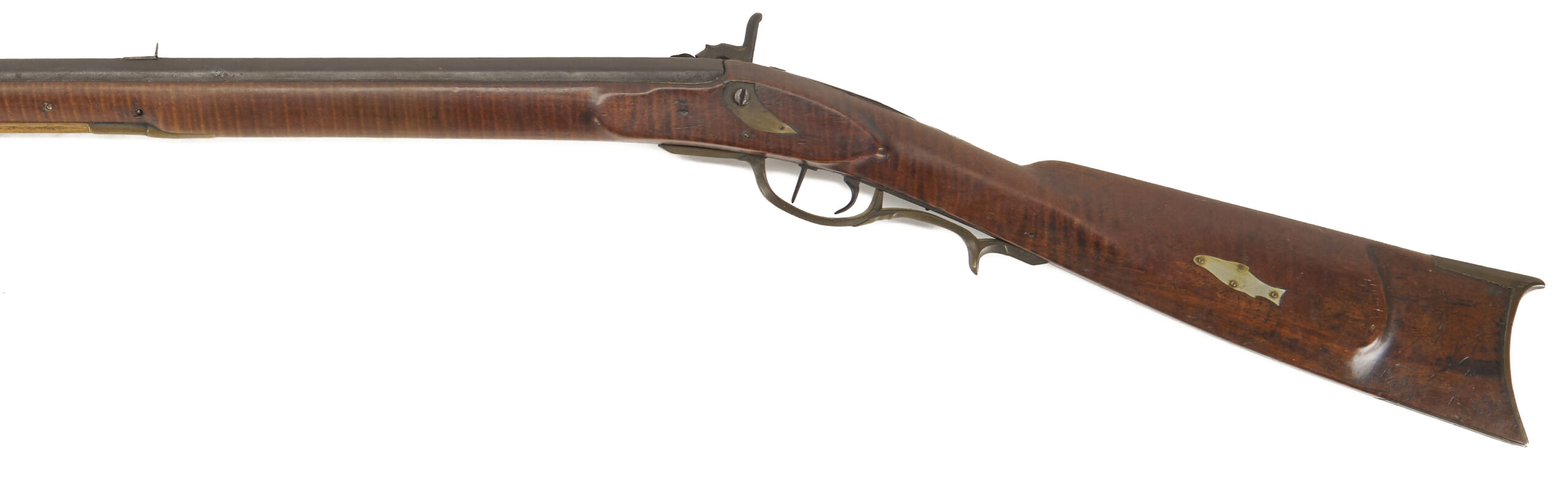
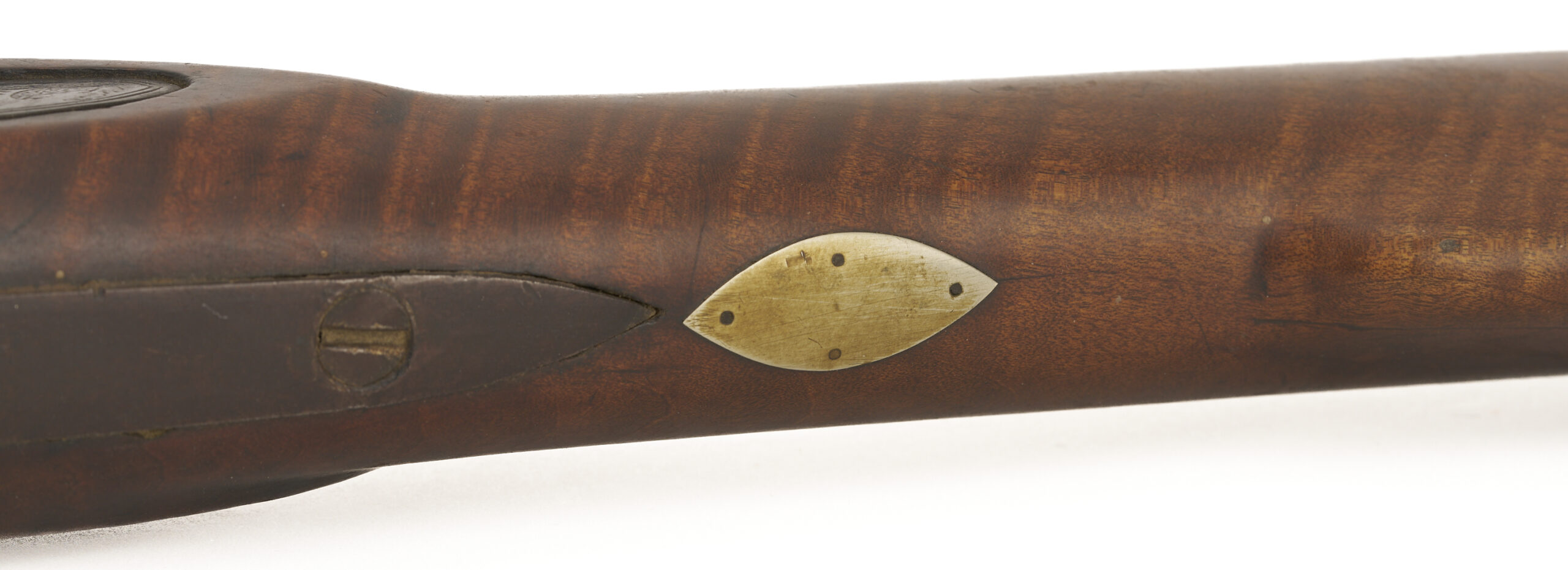
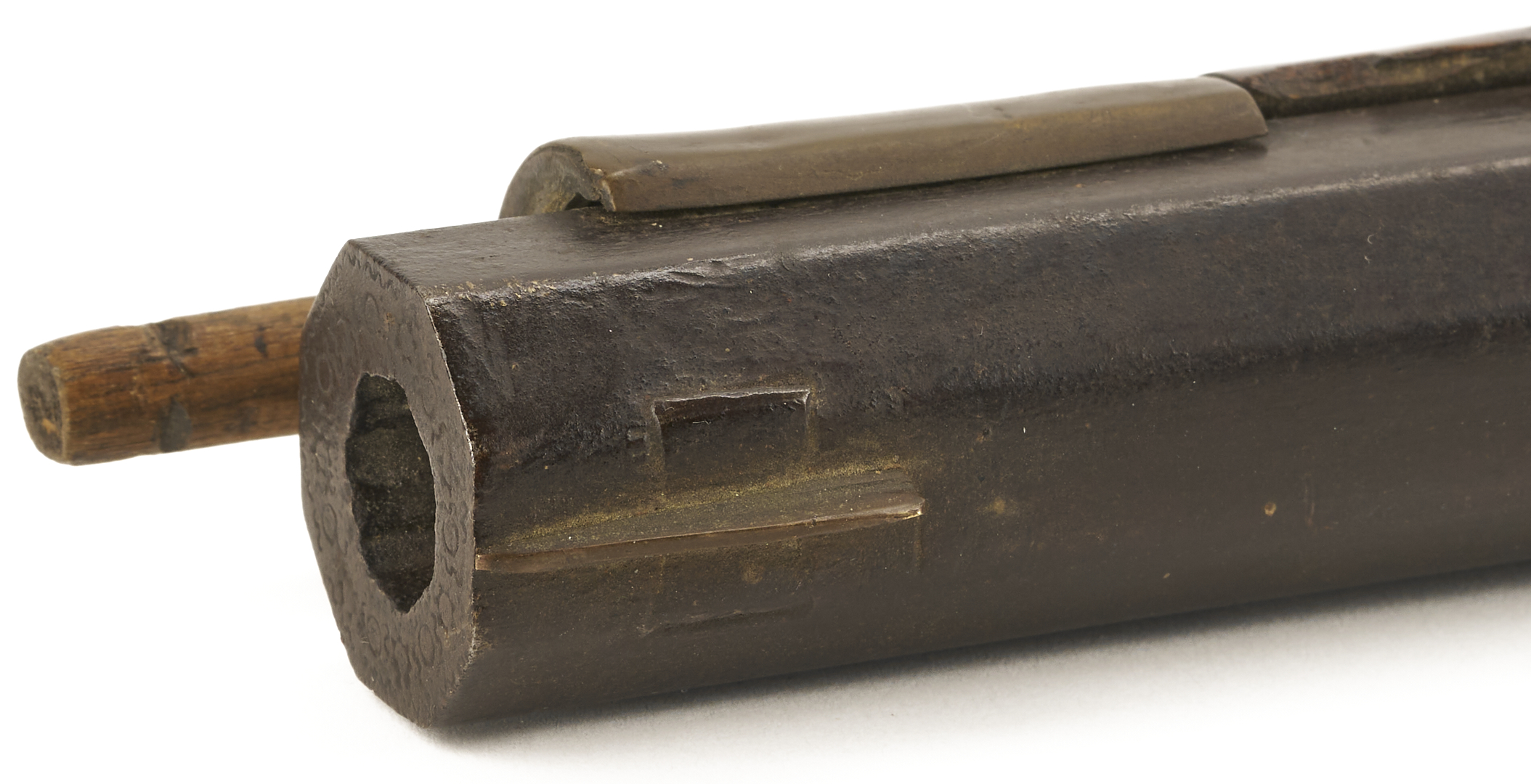
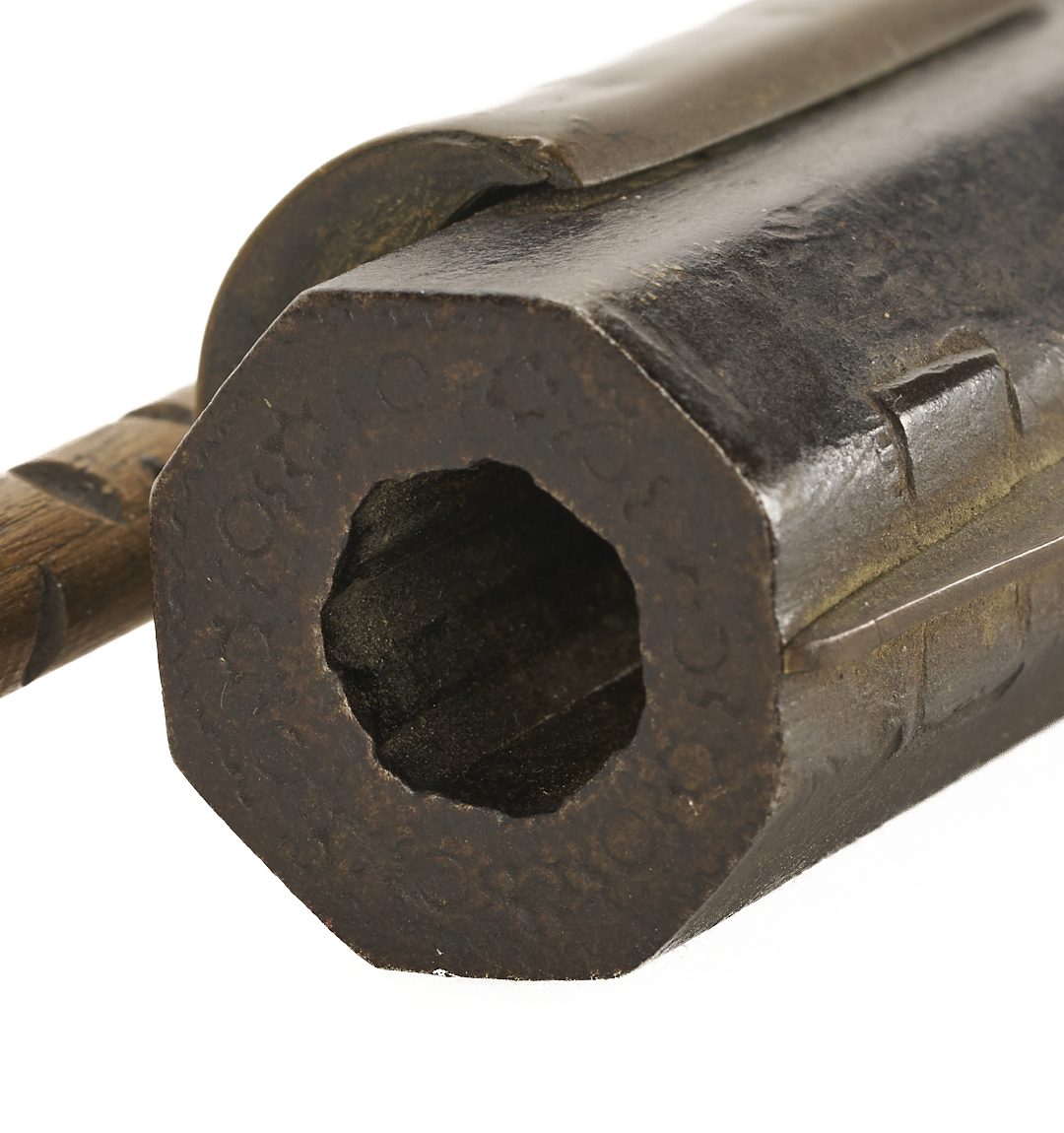
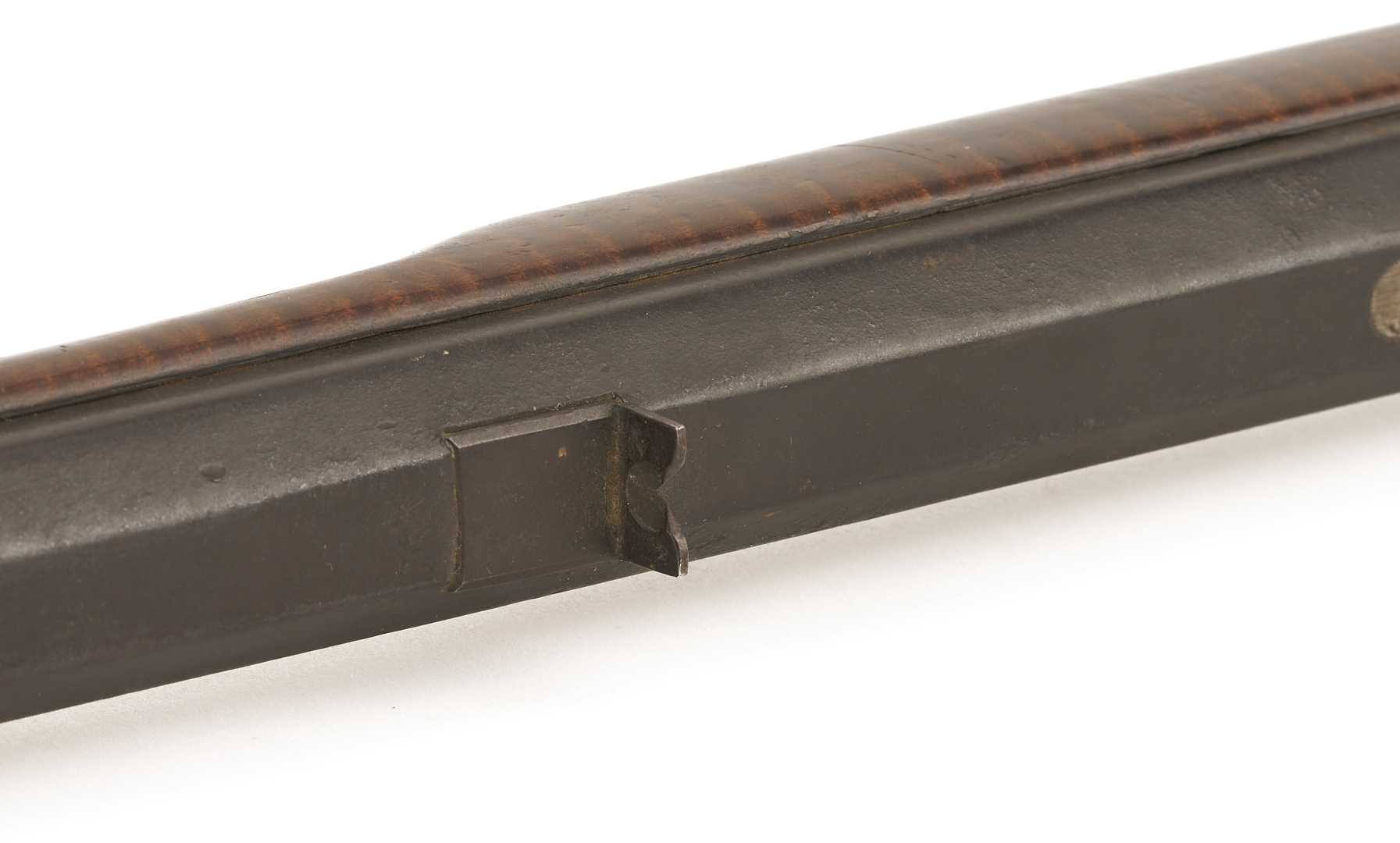
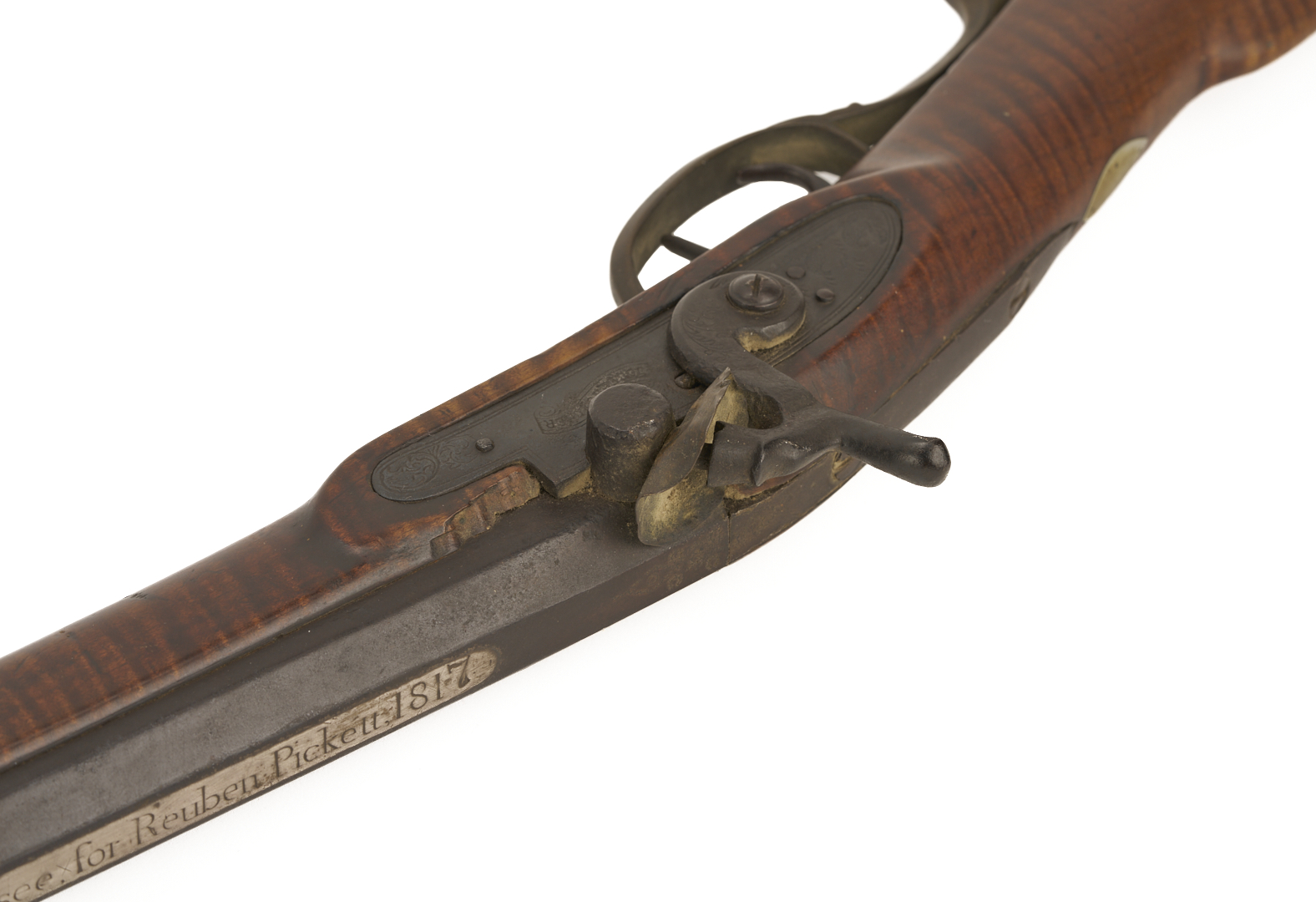
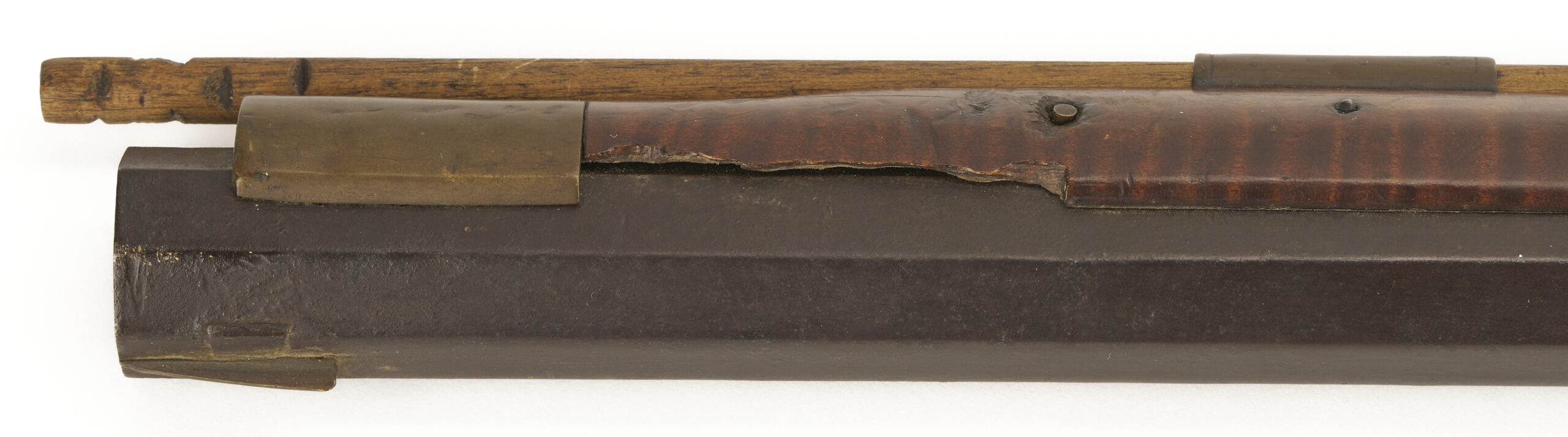
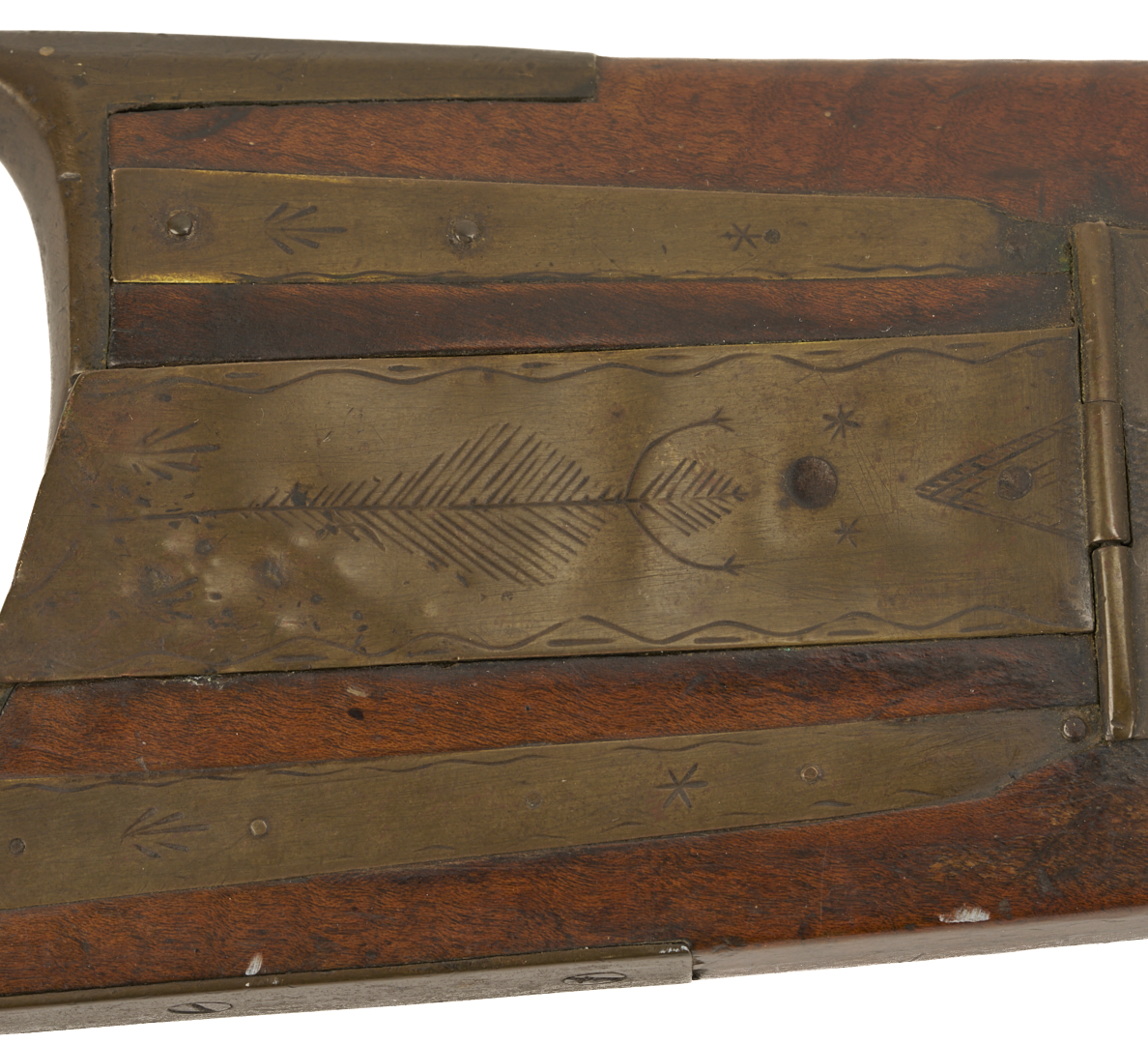
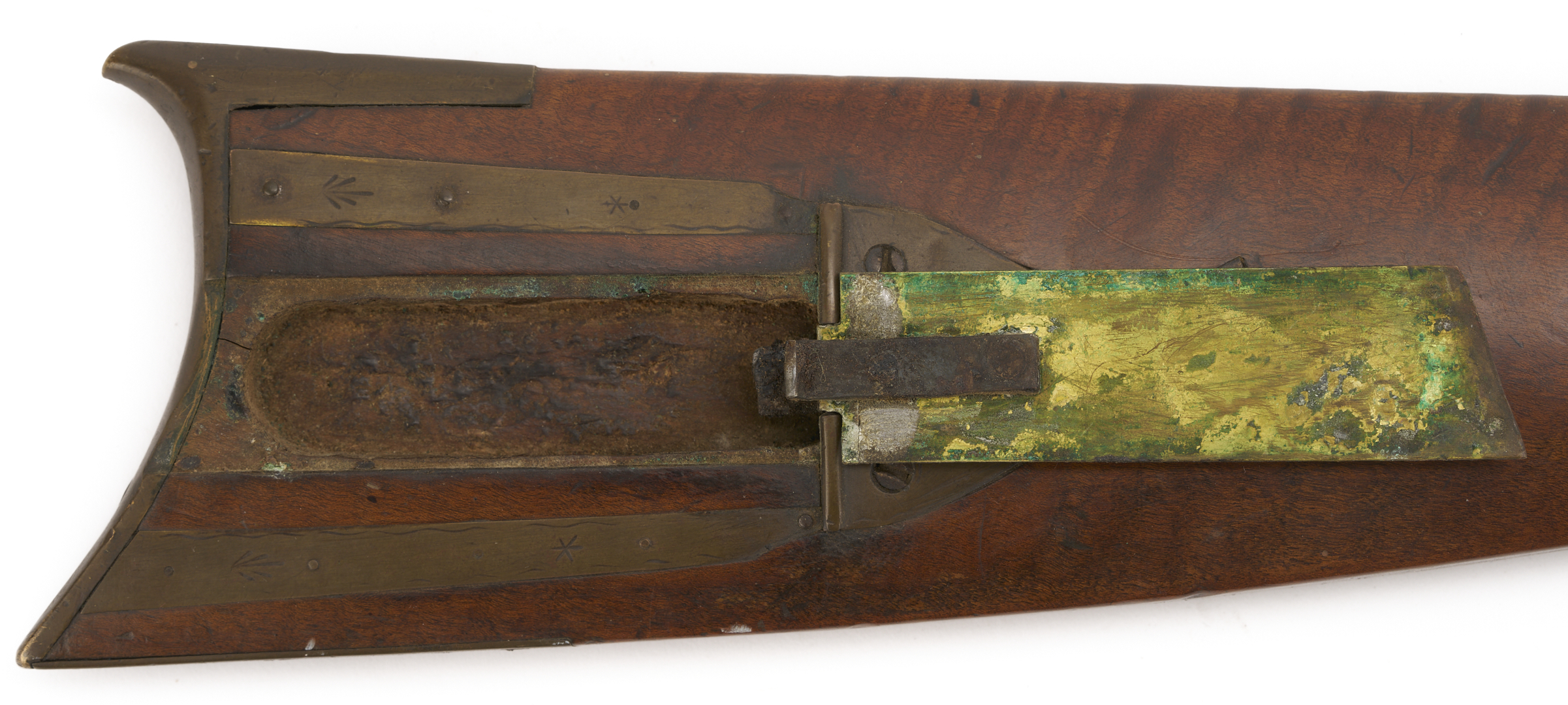
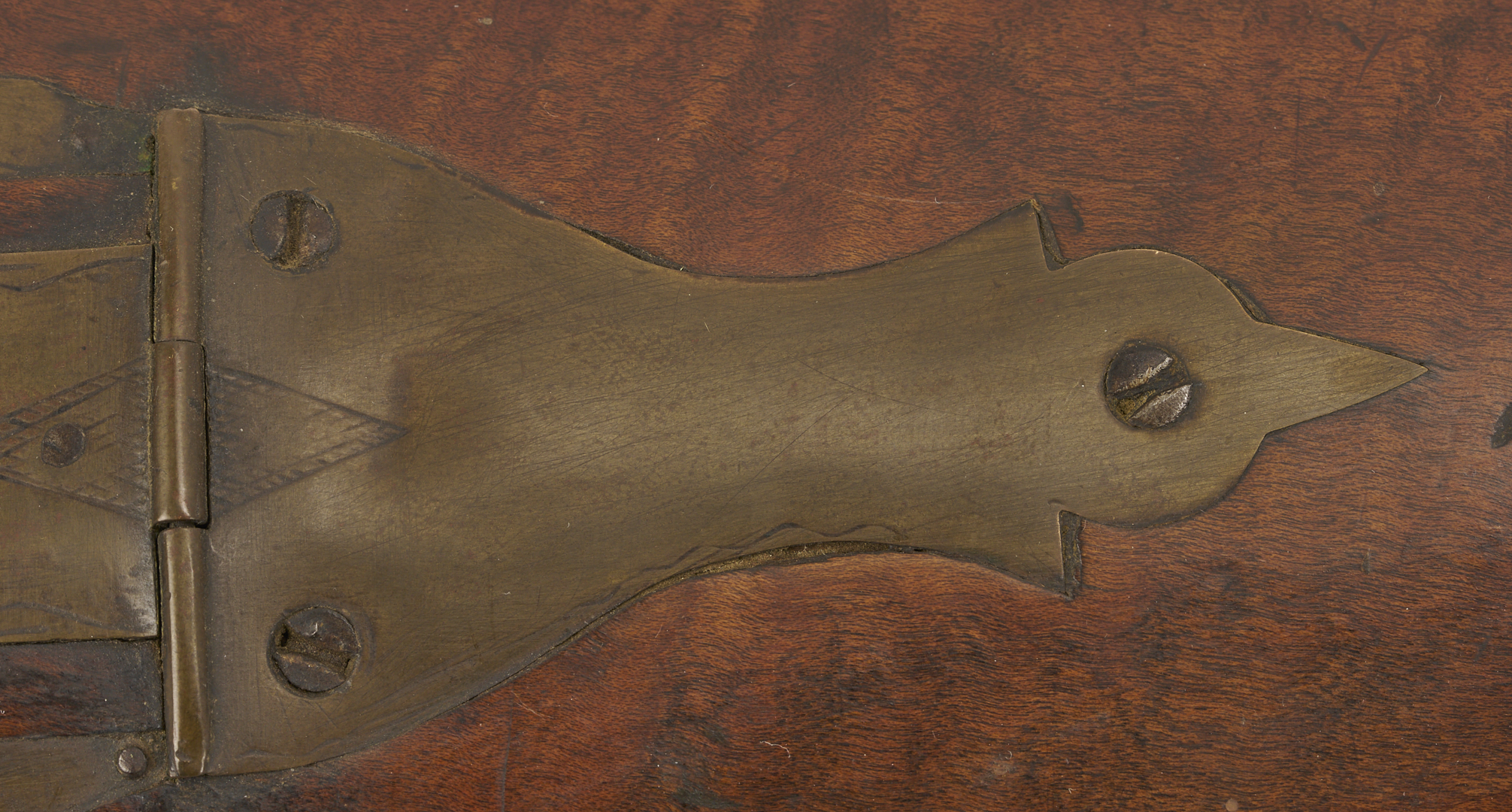
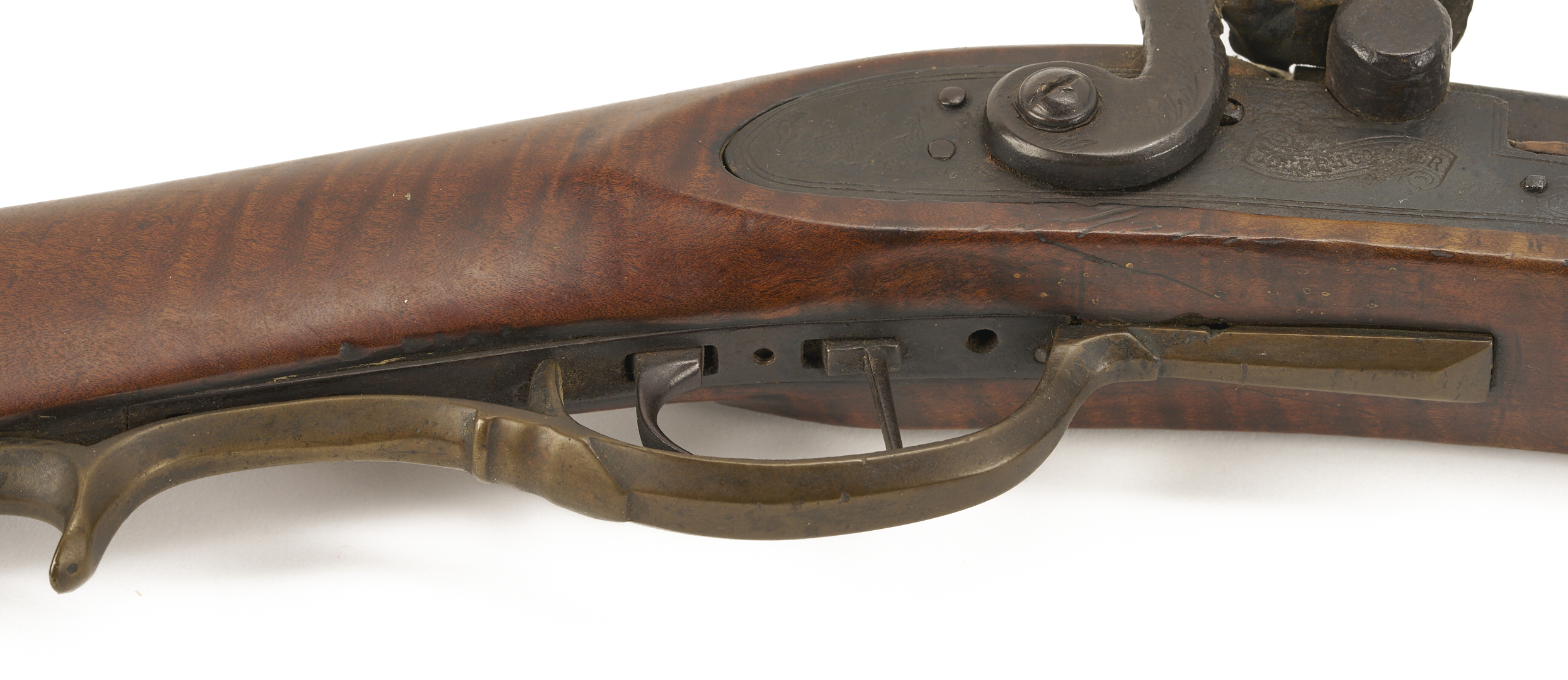
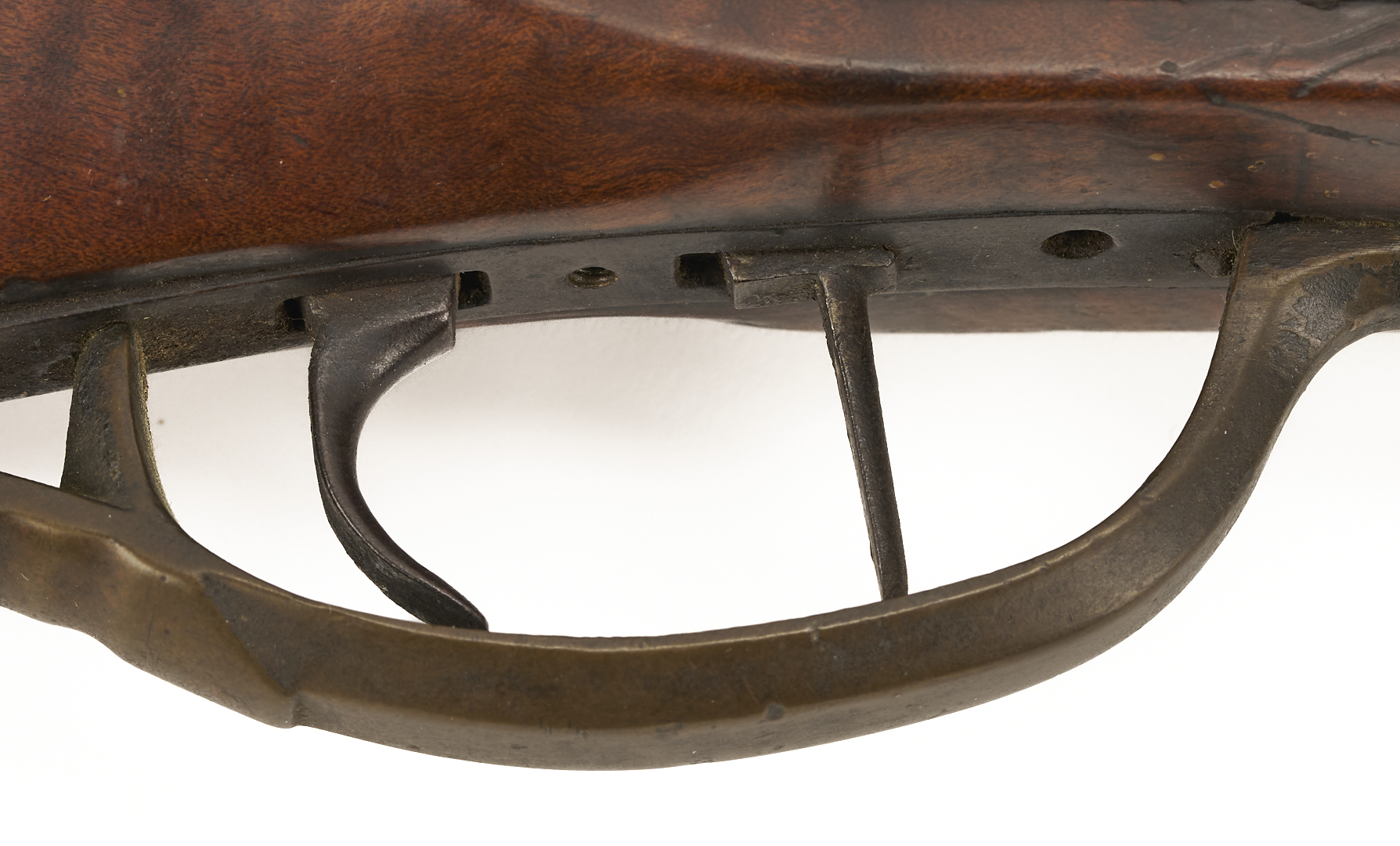
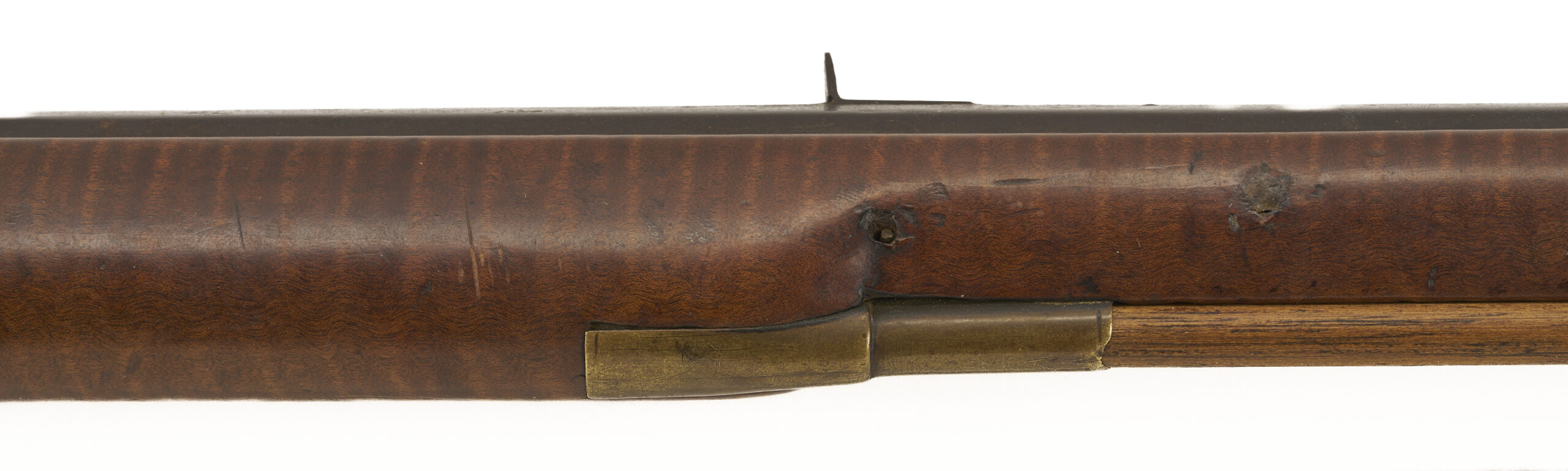
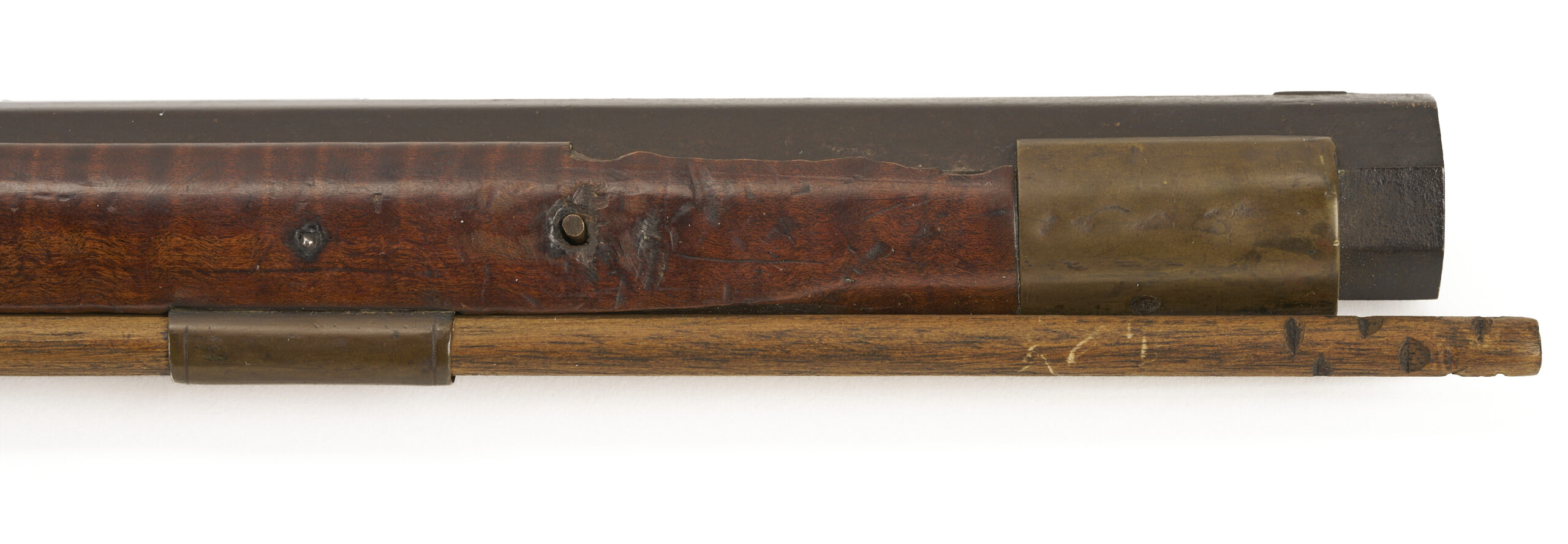
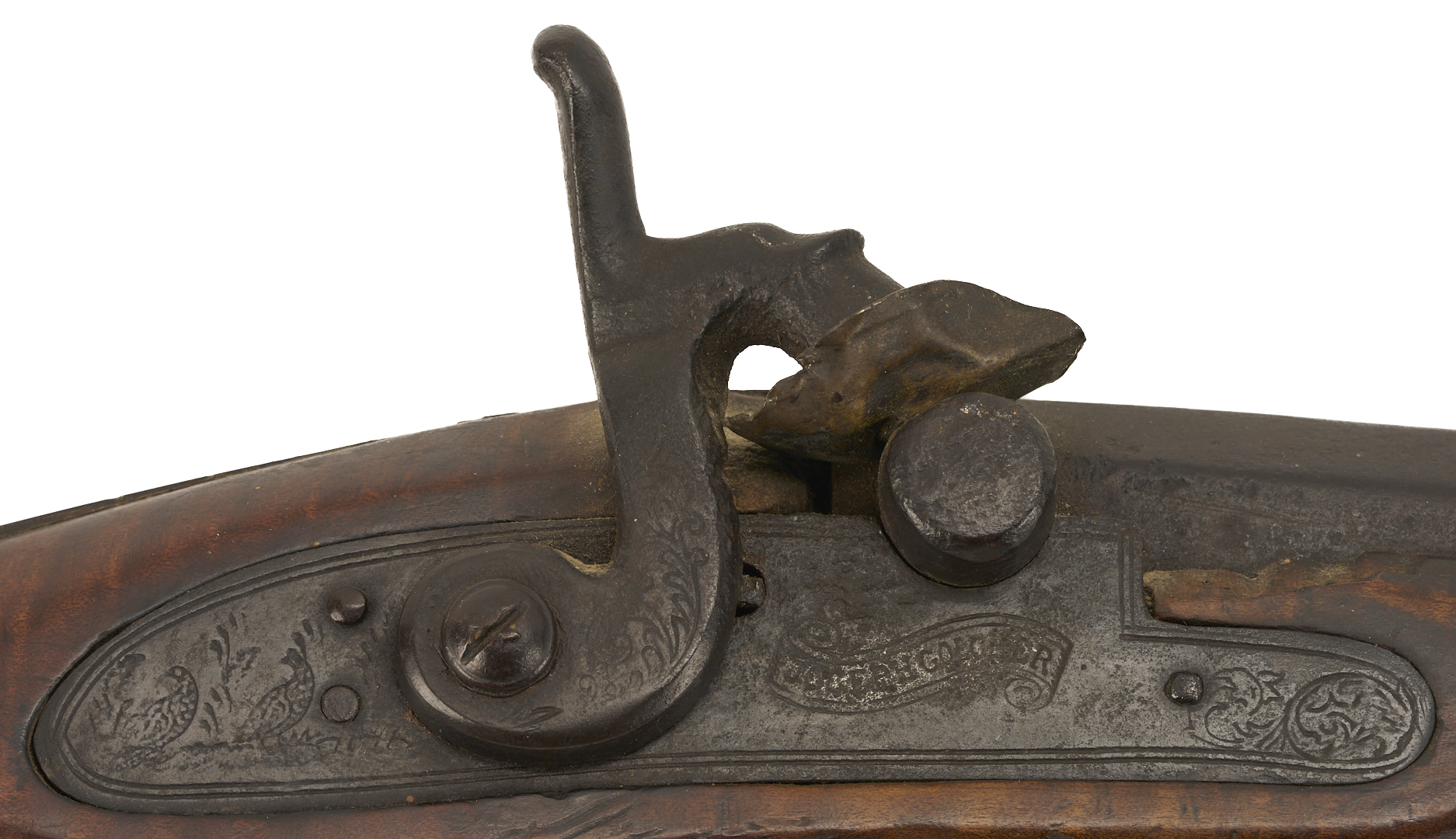
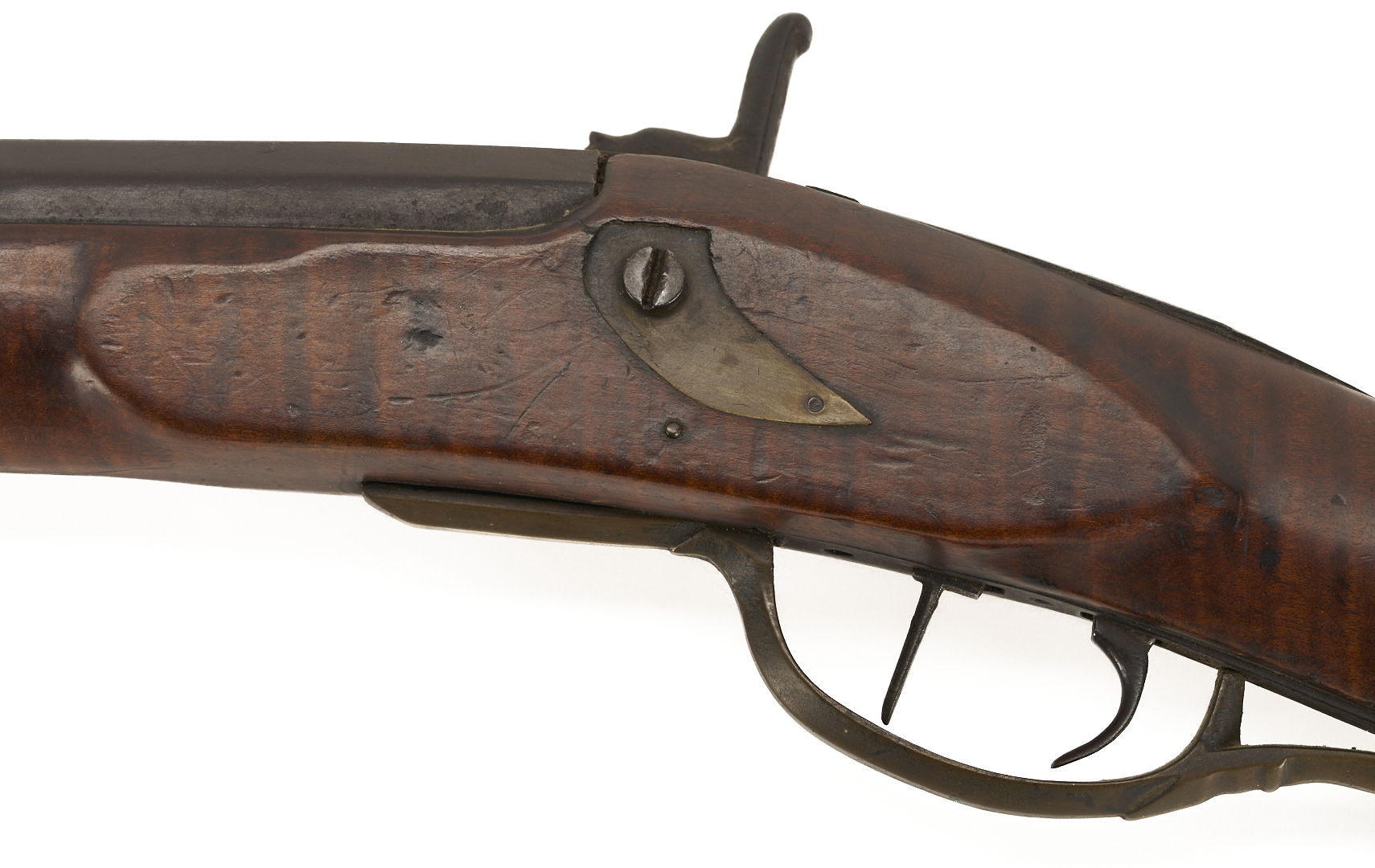
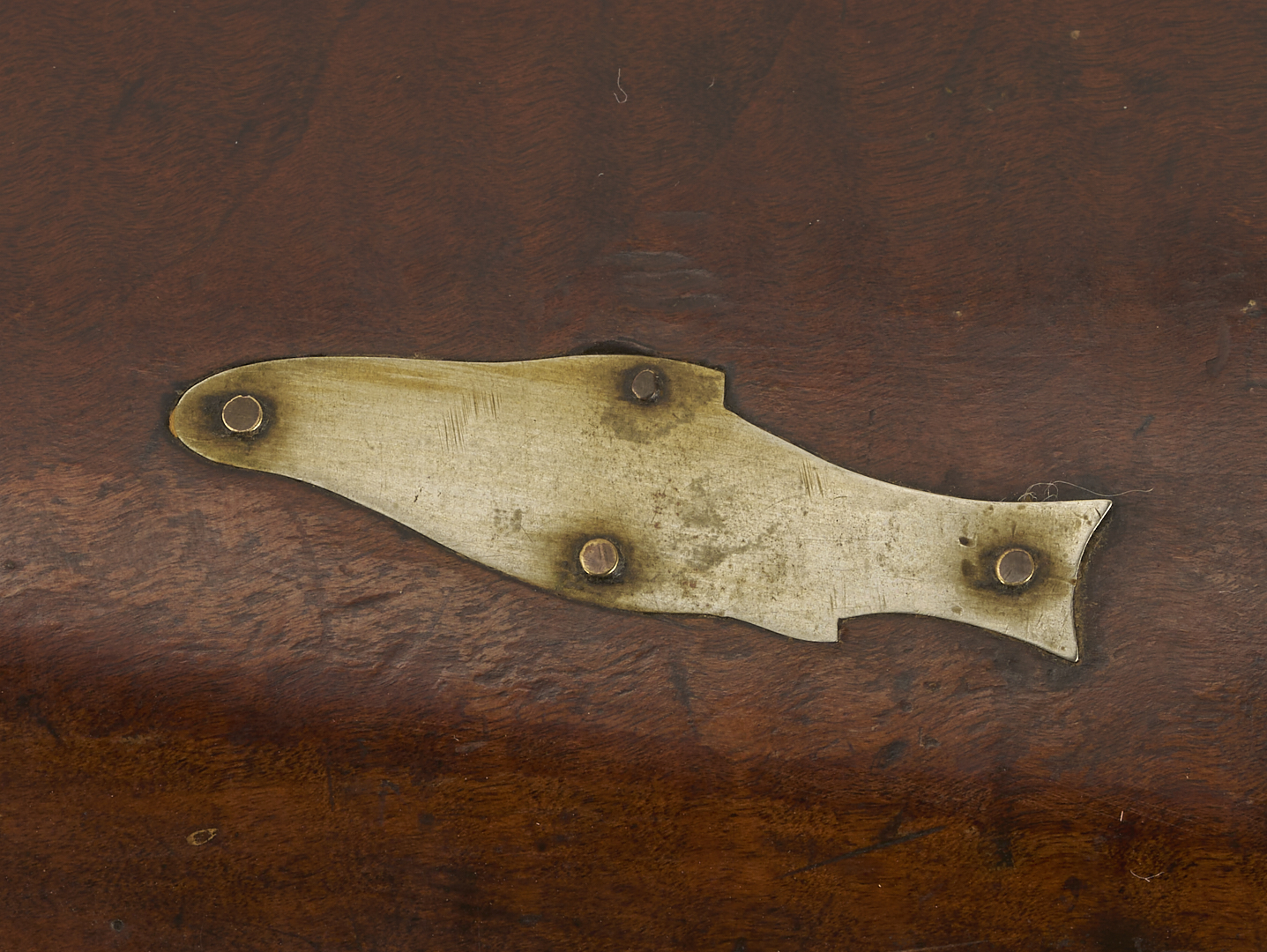
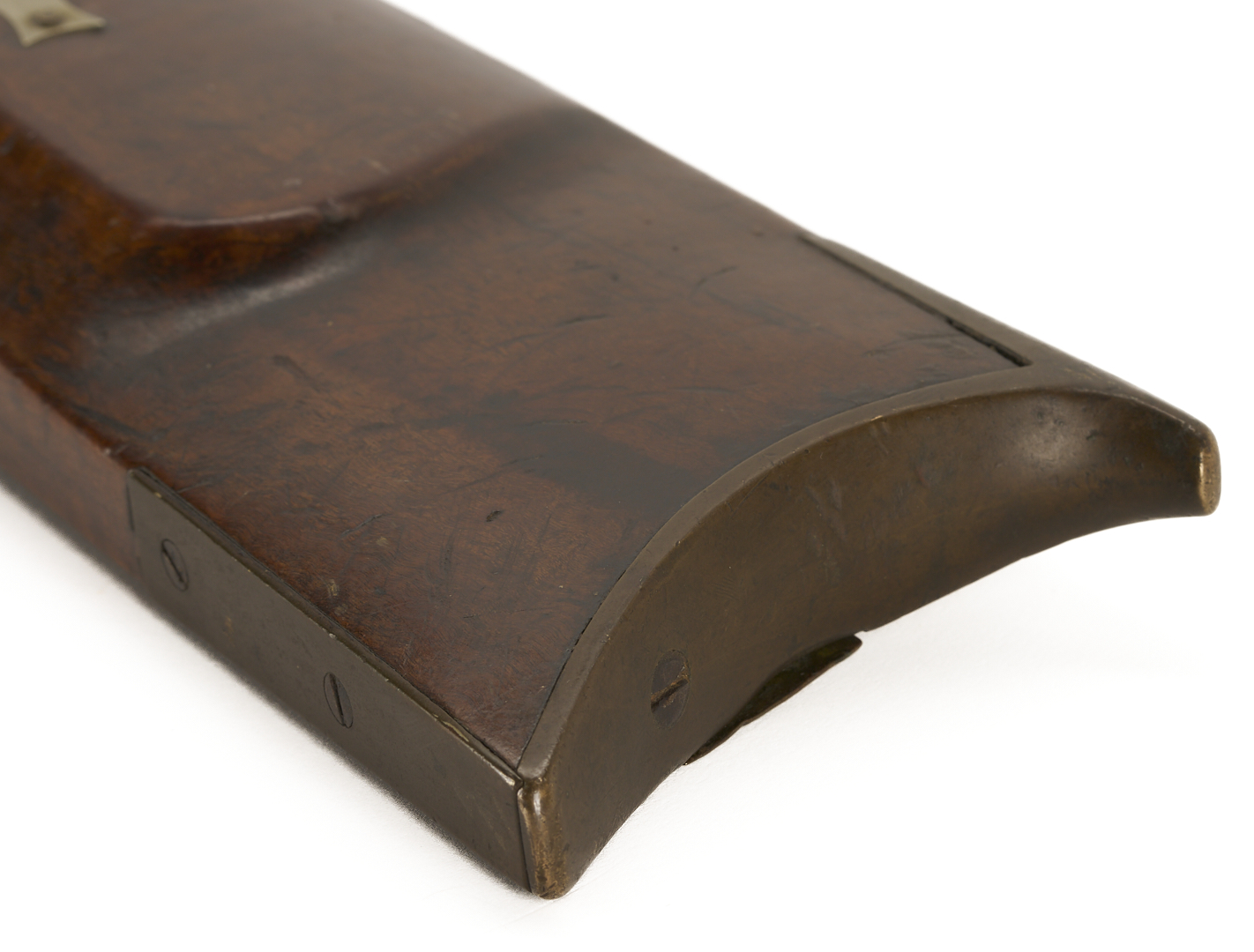
Black Powder rifle with 1817 John Bull made barrel, 50 cal. Marked on a silver lozenge inlaid into top barrel flat “John Bull, Tennessee, for Reuben Pickett 1817”; 39 3/4 in. octagonal barrel with dovetailed brass blade front sight, V-notch rear sight. Restocked mid-19th Century, and fitted with percussion lock with mark of Joseph Golcher, w/ double set trigger system. Tiger-striped hardwood stock with German silver inlaid fish to left side; with brass trigger guard, patchbox, monogram plate behind upper tang, ramrod pipes, and 2-piece buttplate. Overall 55 3/4 in. L; barrel 39 3/4 in.
Note: John Valentine Bull was born in Maryland on February 14, 1777 and apprenticed as a gunsmith before relocating in the late 18th Century to what is now eastern Tennessee. By 1800, he was living and making rifles in Bull’s Gap, a strategic stagecoach stop named after his uncle, John Bull. In 1806, Bull married gunmaker William Bean’s granddaughter Fetnah, uniting the region’s two most prominent gunsmithing families. He continued in Tennessee until the early 1820s, when he moved his family to Alabama, where Bull died on October 21, 1840. Note: Joseph Golcher was a smith and flintlock/percussion lock maker working in Philadelphia during the early to mid 19th century, selling locks to gunsmiths all over the country.
Additional Note: Possibly Virginia / North Carolina minister Reuben Pickett (1752 – 1823). A section of the Daughters of the American Revolution proceedings from 1915 notes a new DAR chapter named for Reverend Reuben Pickett, saying: “The battle of Kings Mountain, North Carolina, fought the evening of September 7, 1780, “turned the tide of battle in favor of the American Colonies.” The Rev. Reuben Pickett, a staunch patriot at all times, was holding a prayer meeting in the valley. In the midst of a prayer, he heard the roar of battle and rose from his knees, saying, “Brethren, this is no time to pray; fight. Get your guns; we must fight.” And led his congregation to battle.” Source: DAR Proceedings of the Continental Congress, Vol 24 (1915), p. 757.
CONDITION: Barrel likely shortened at breech; 1 in. x 1/4 in chip in stock right side above lock; Lock is semi-functional; bore is dark with slight pitting, but clearly visible lands and grooves.