SOLD! for $84,000.00.
(Note: Prices realized include a buyer's premium.)
If you have items like this you wish to consign, click here for more information:
Selling with Case- Low Estimate: $50,000.00
- High Estimate: $75,000.00
- Hammer Price: $70,000.00
- Share this:
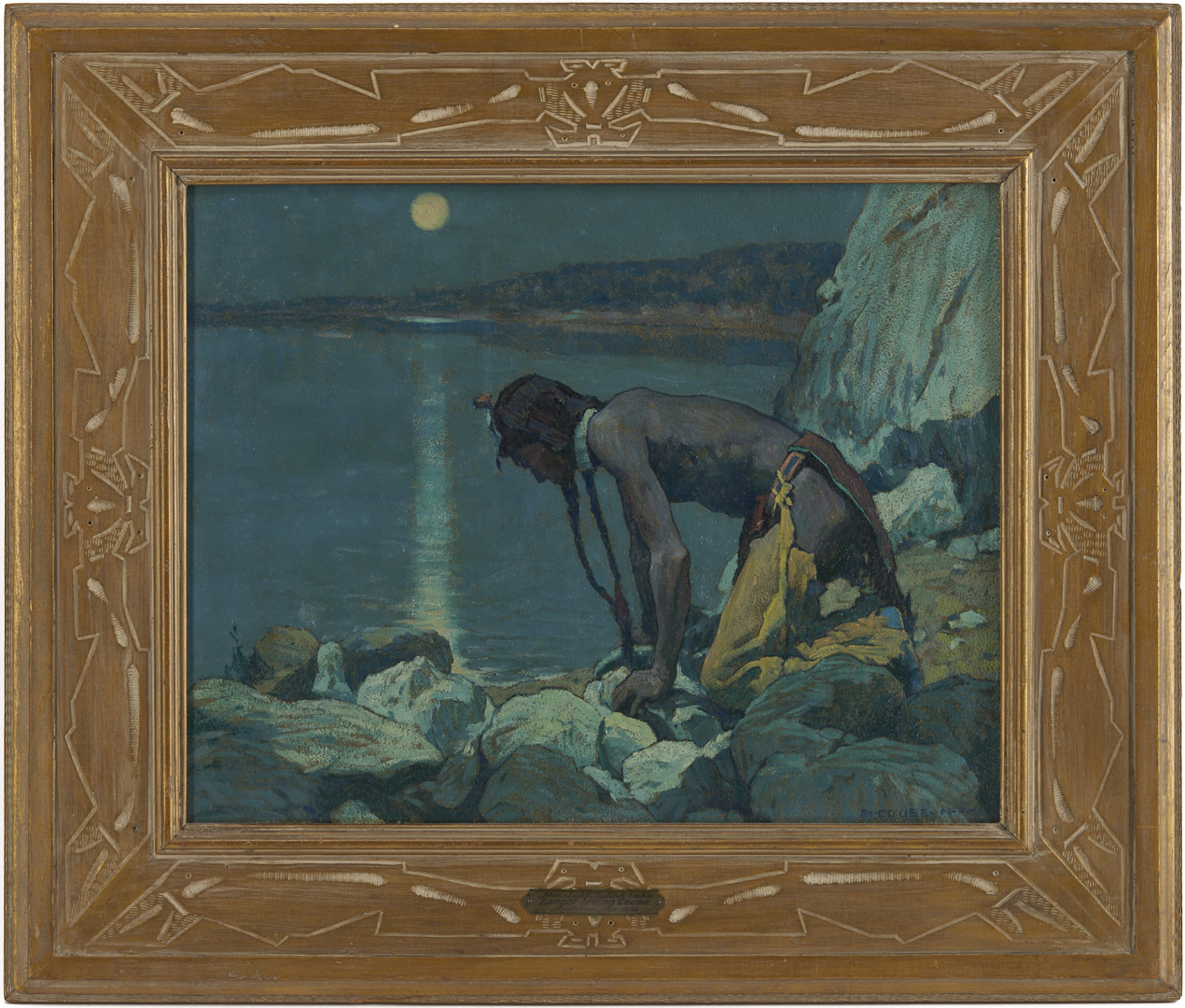
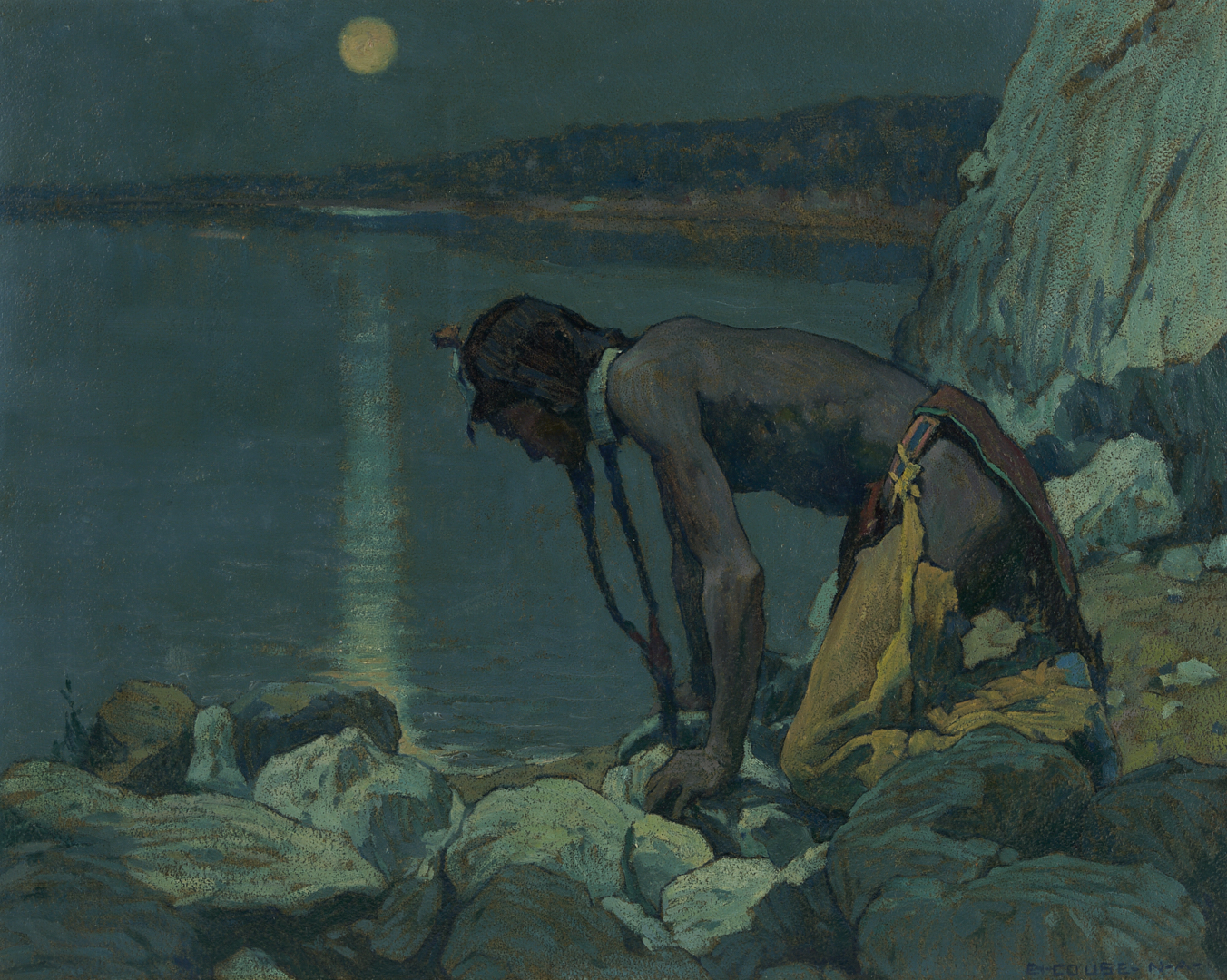
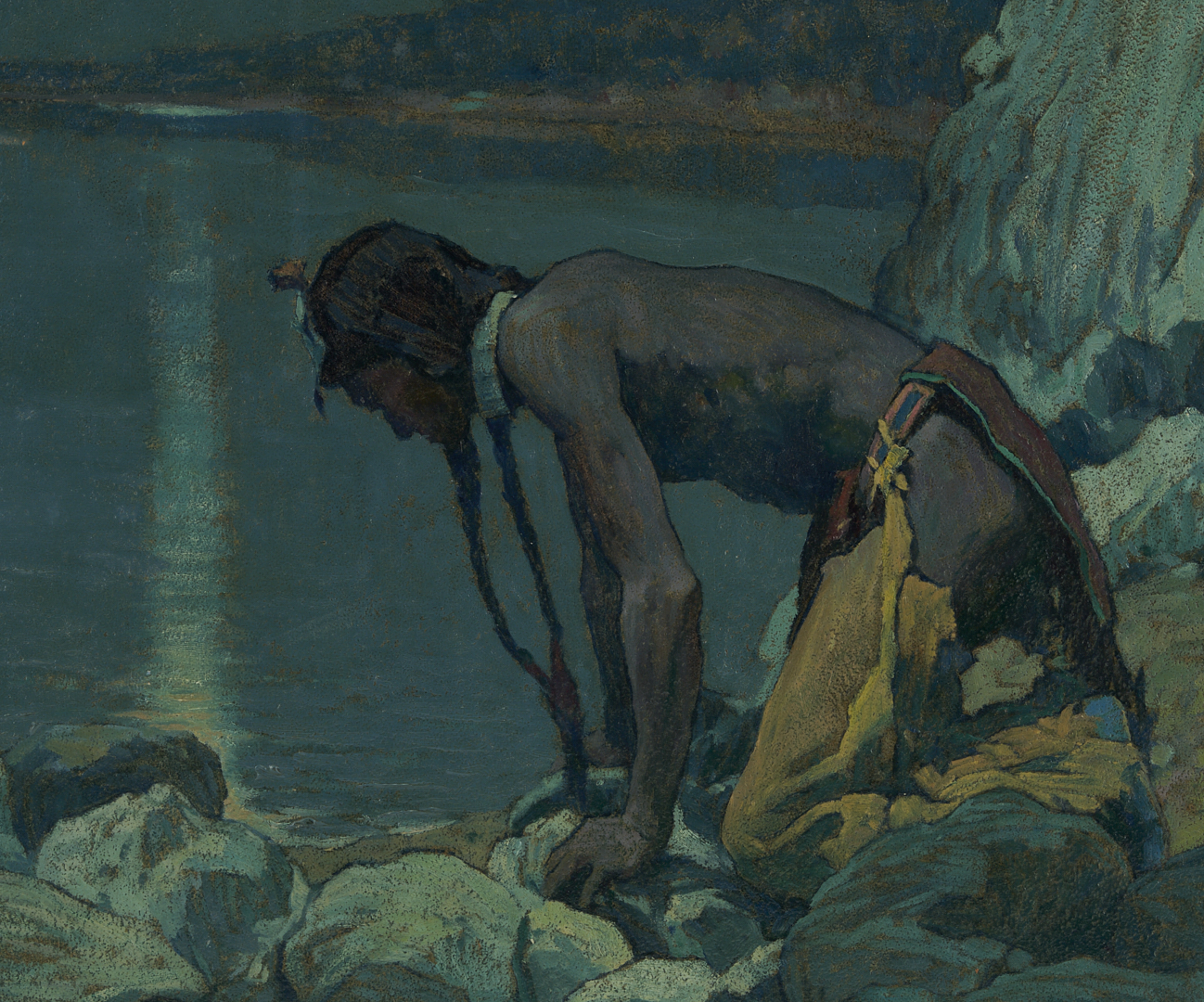
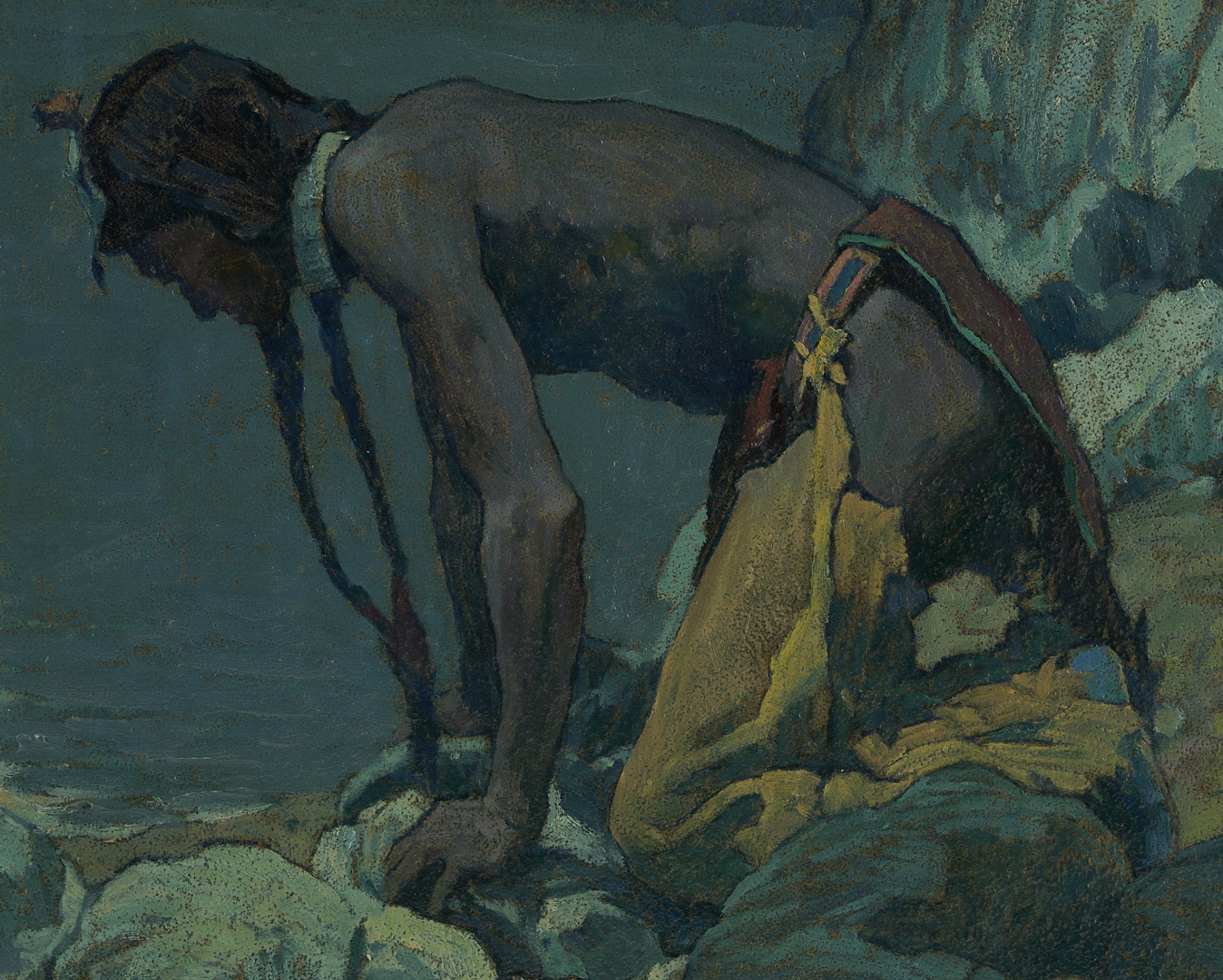
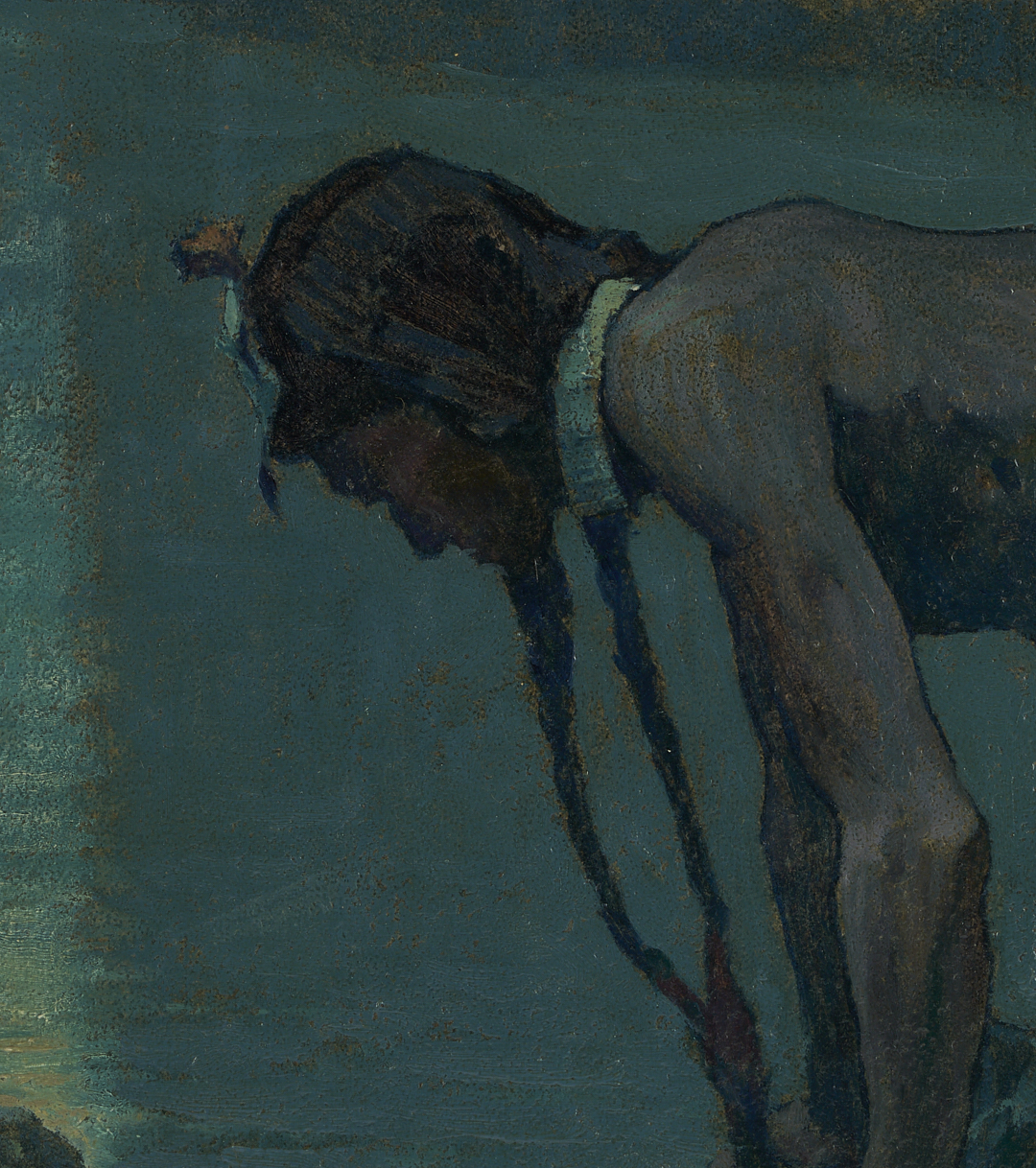
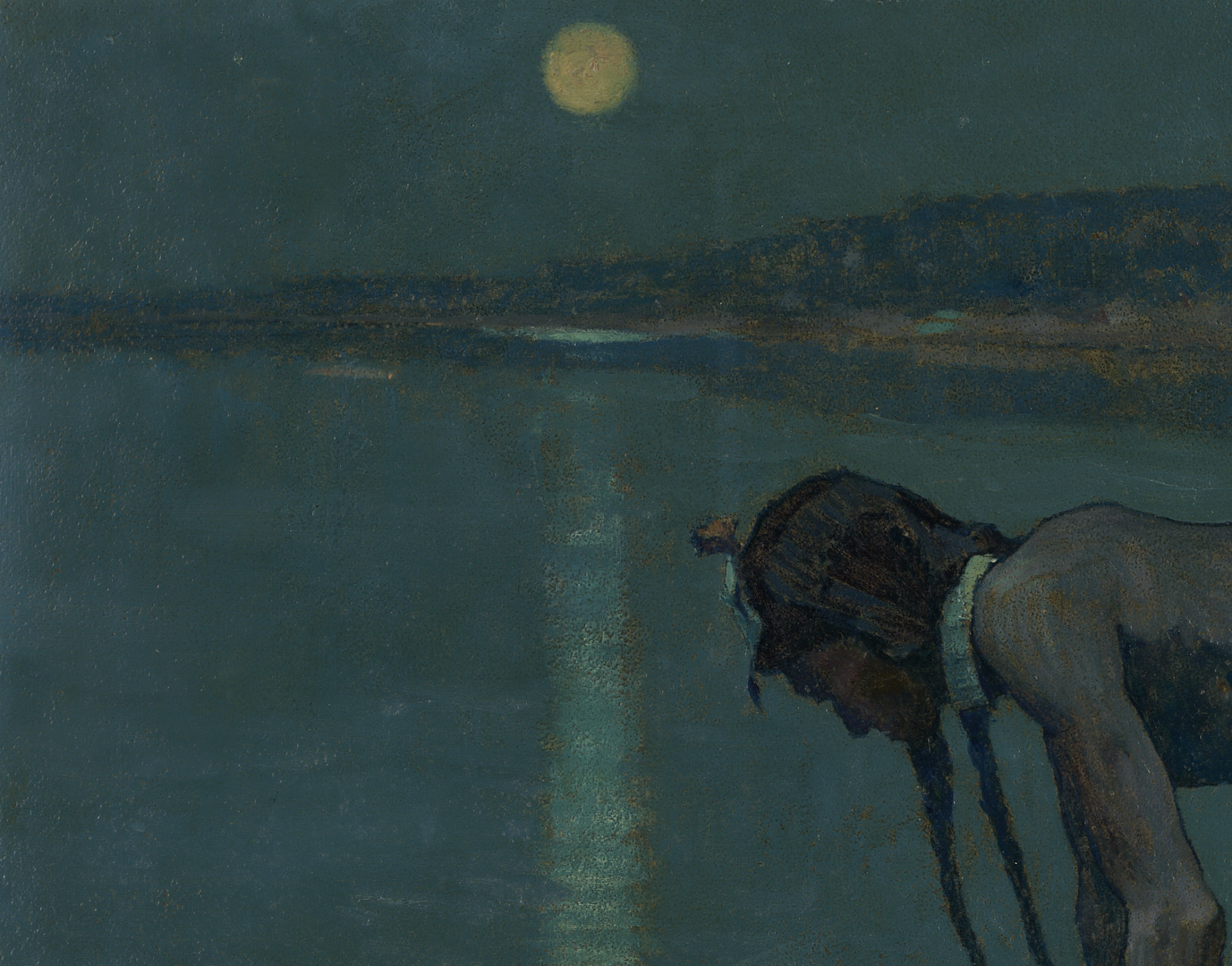
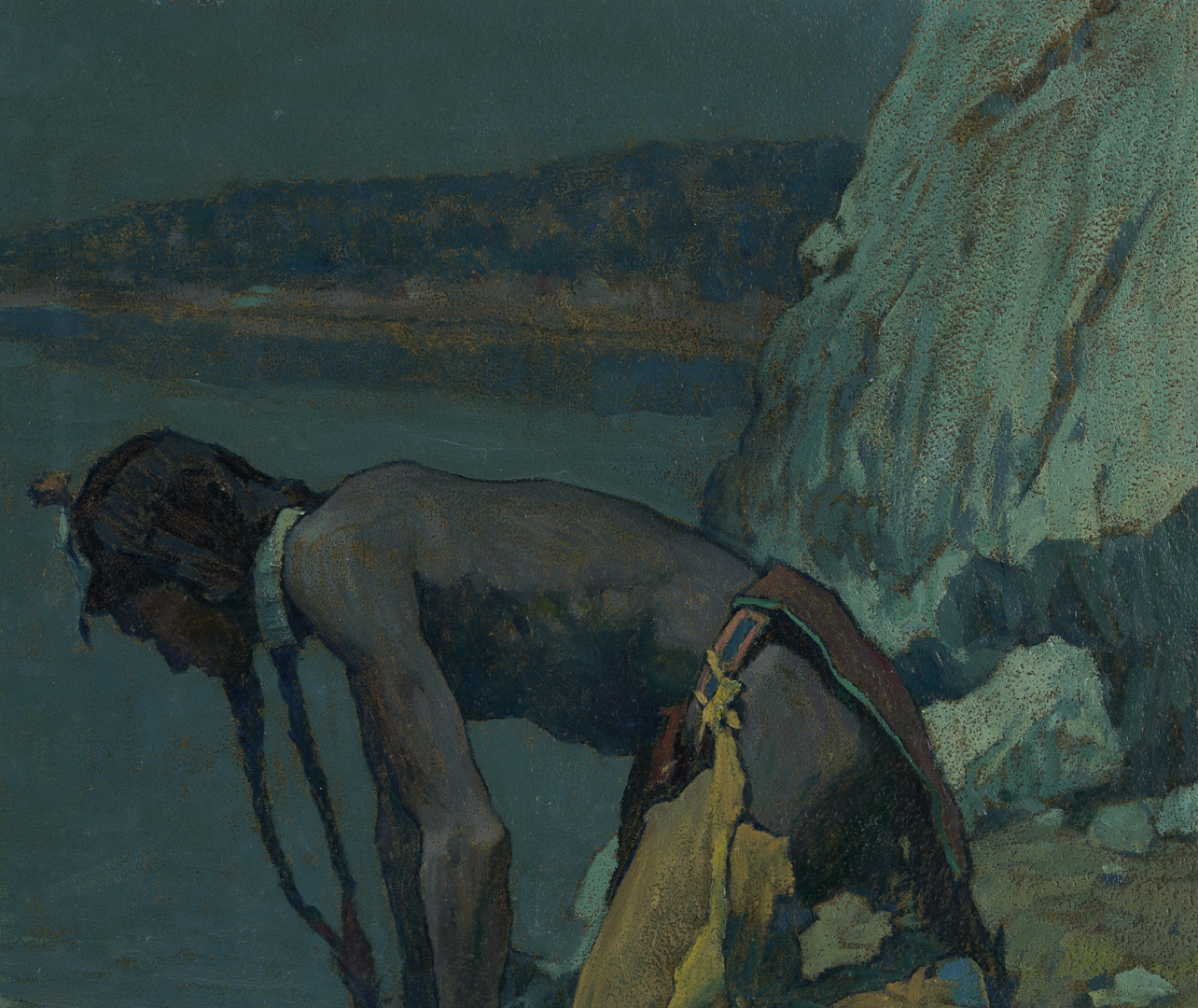
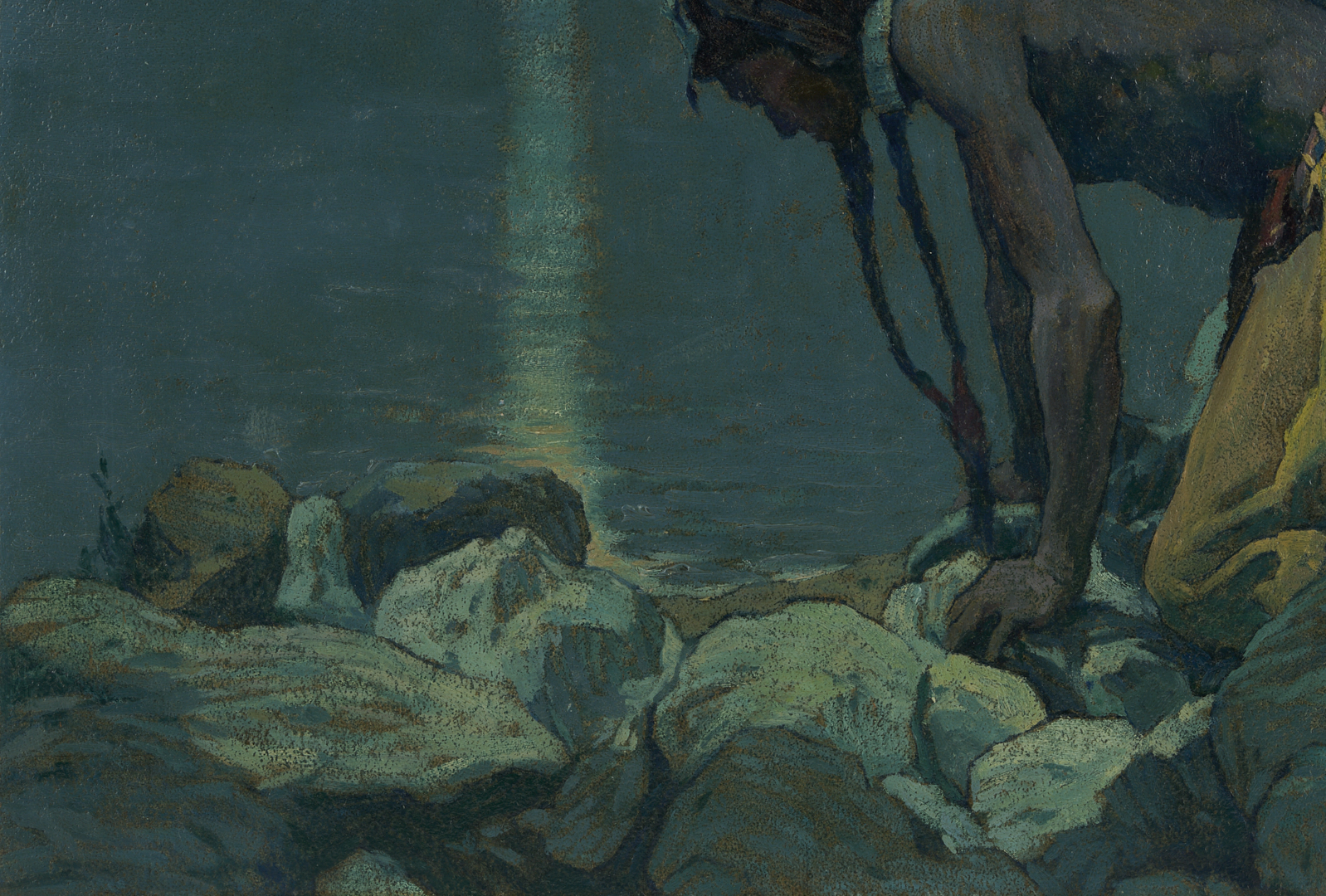
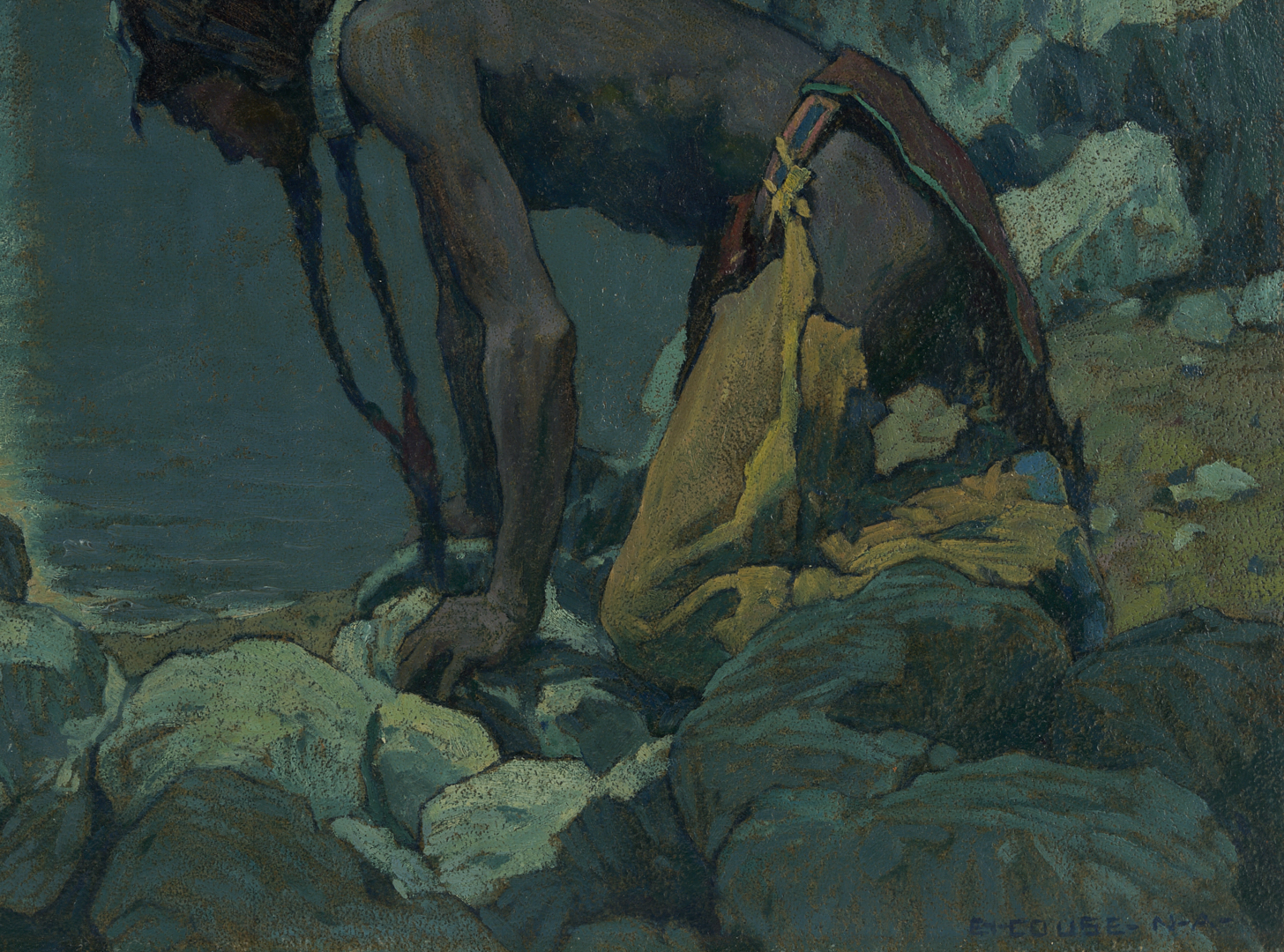
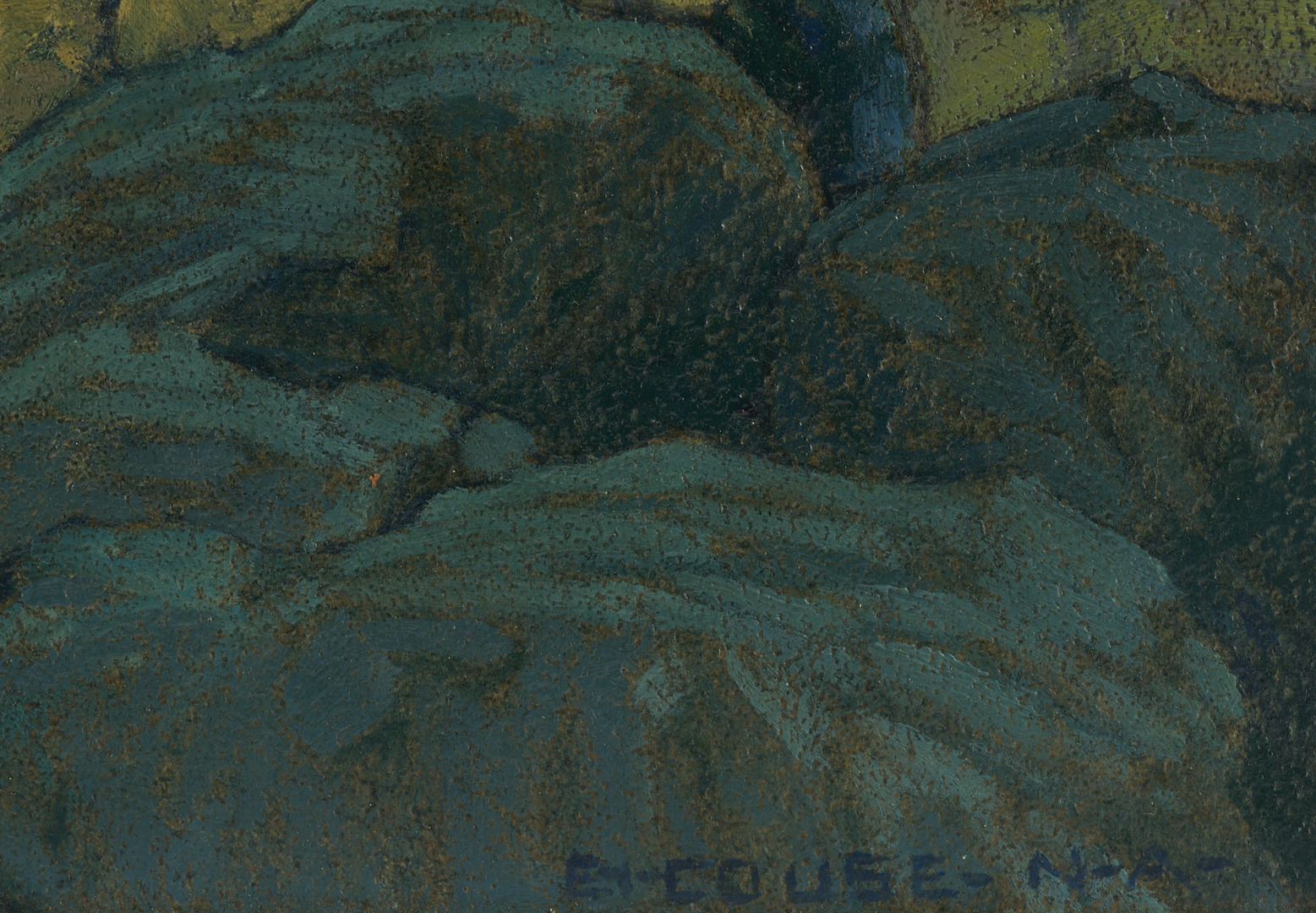
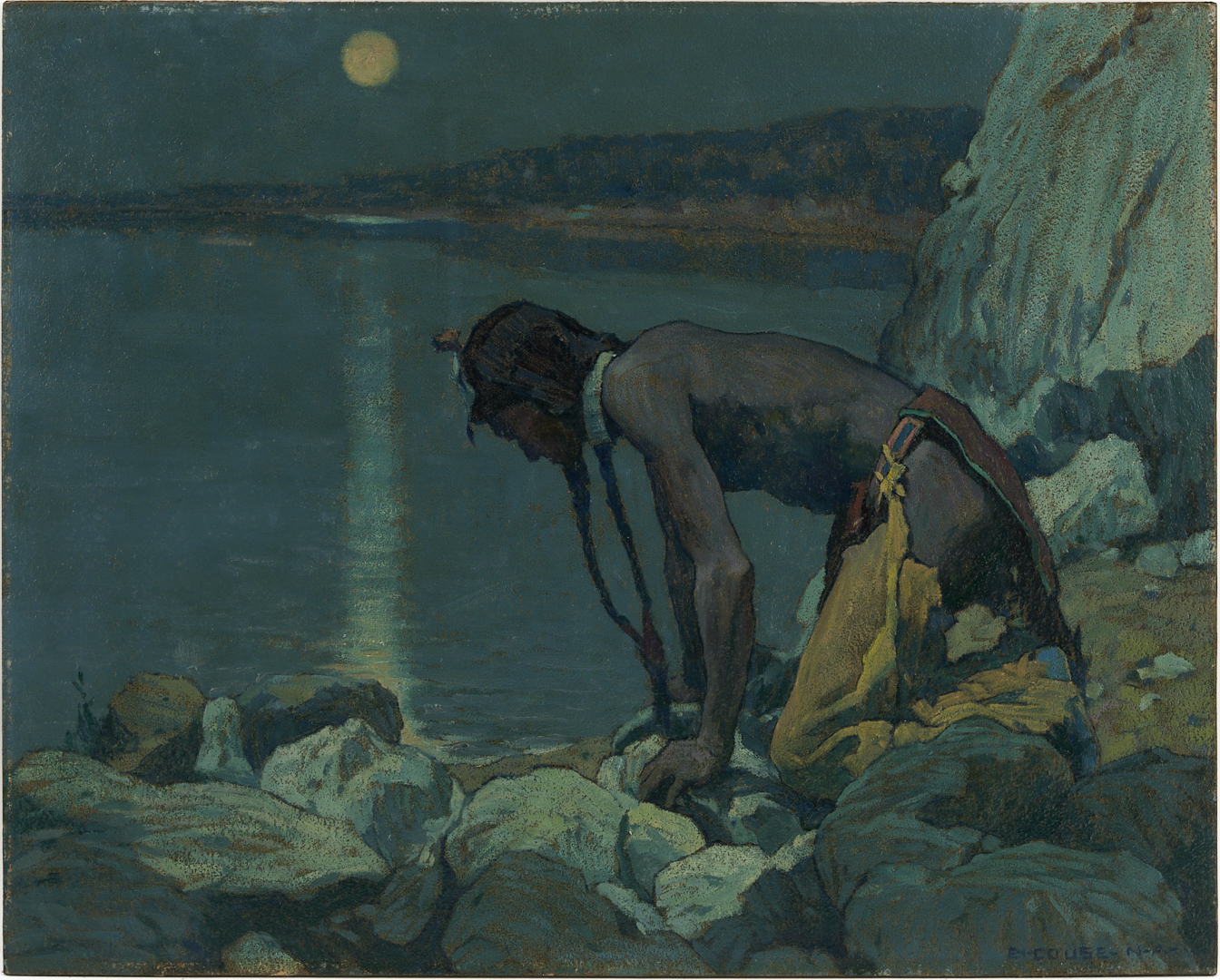
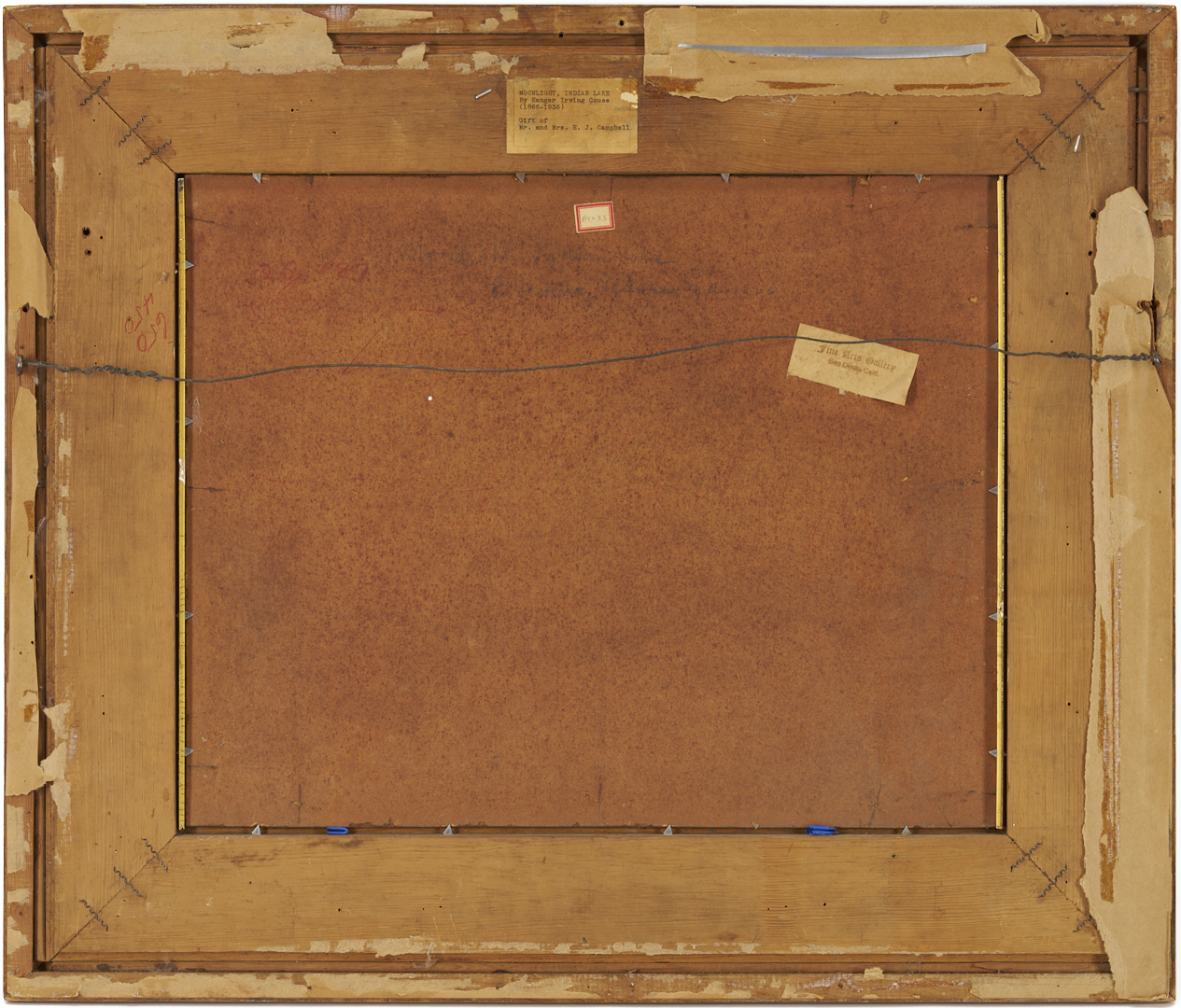
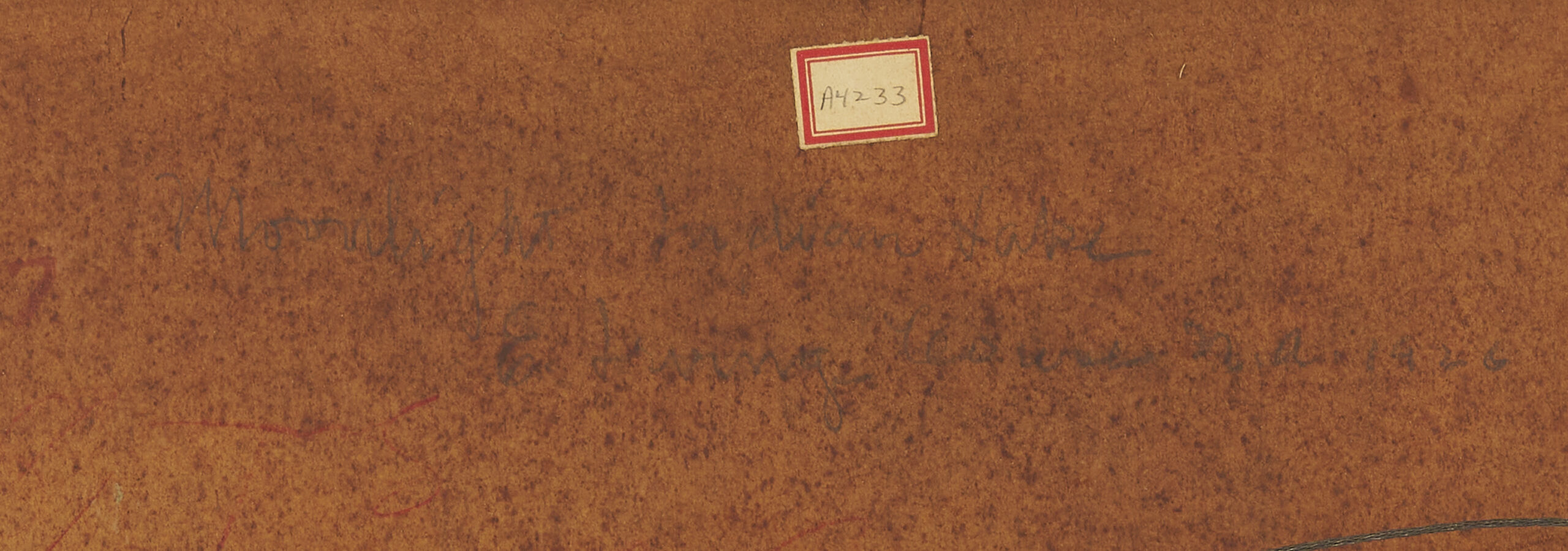
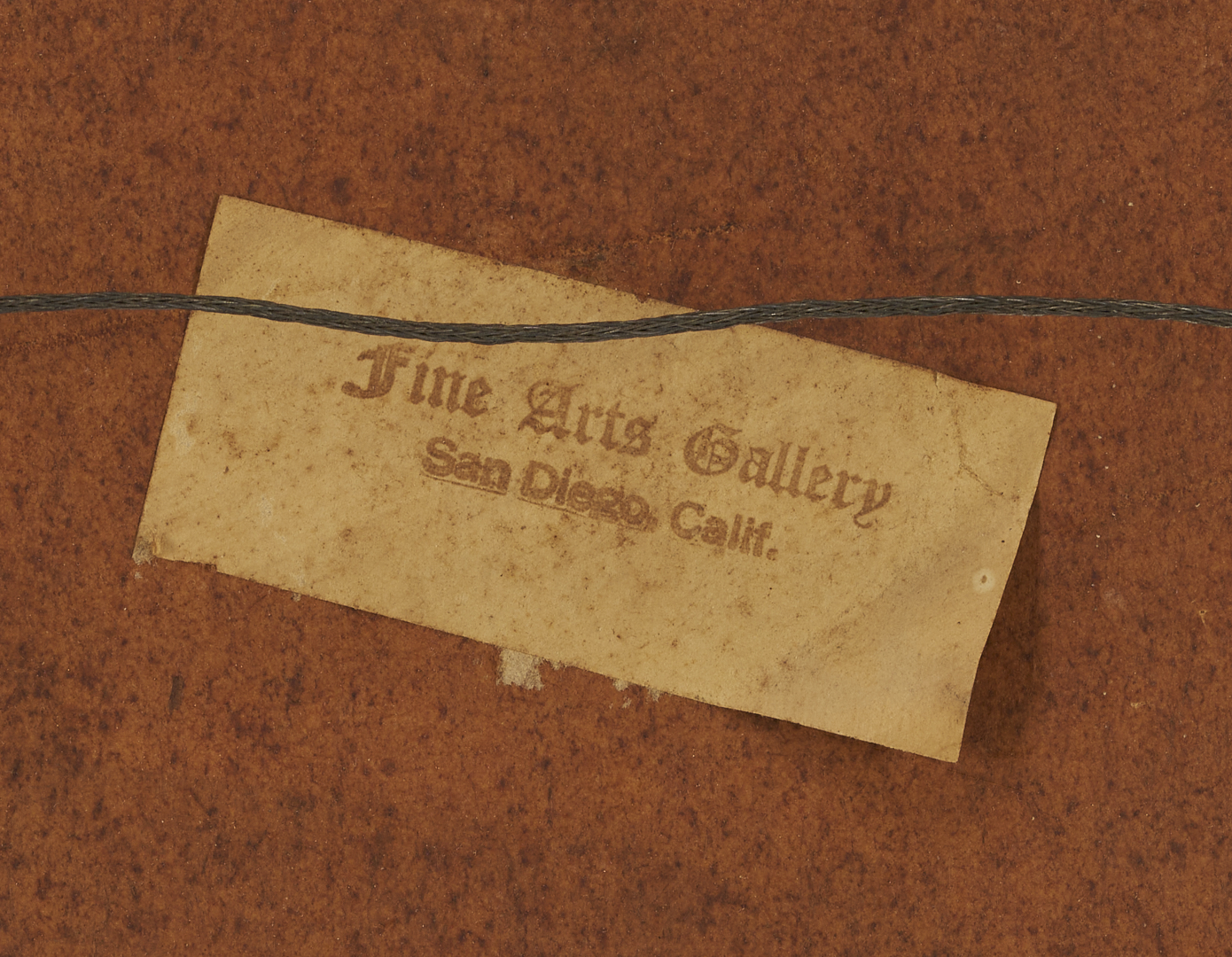
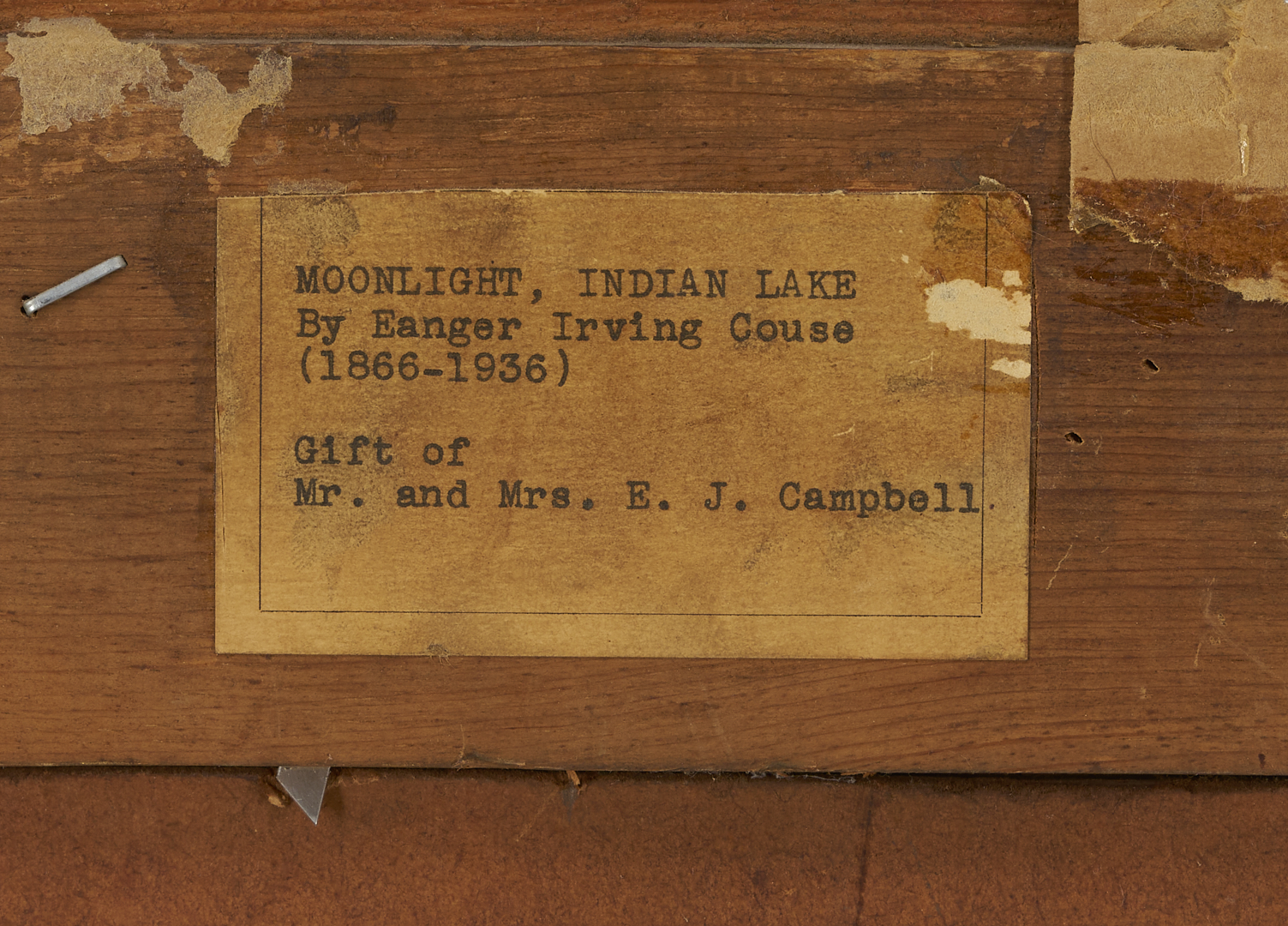
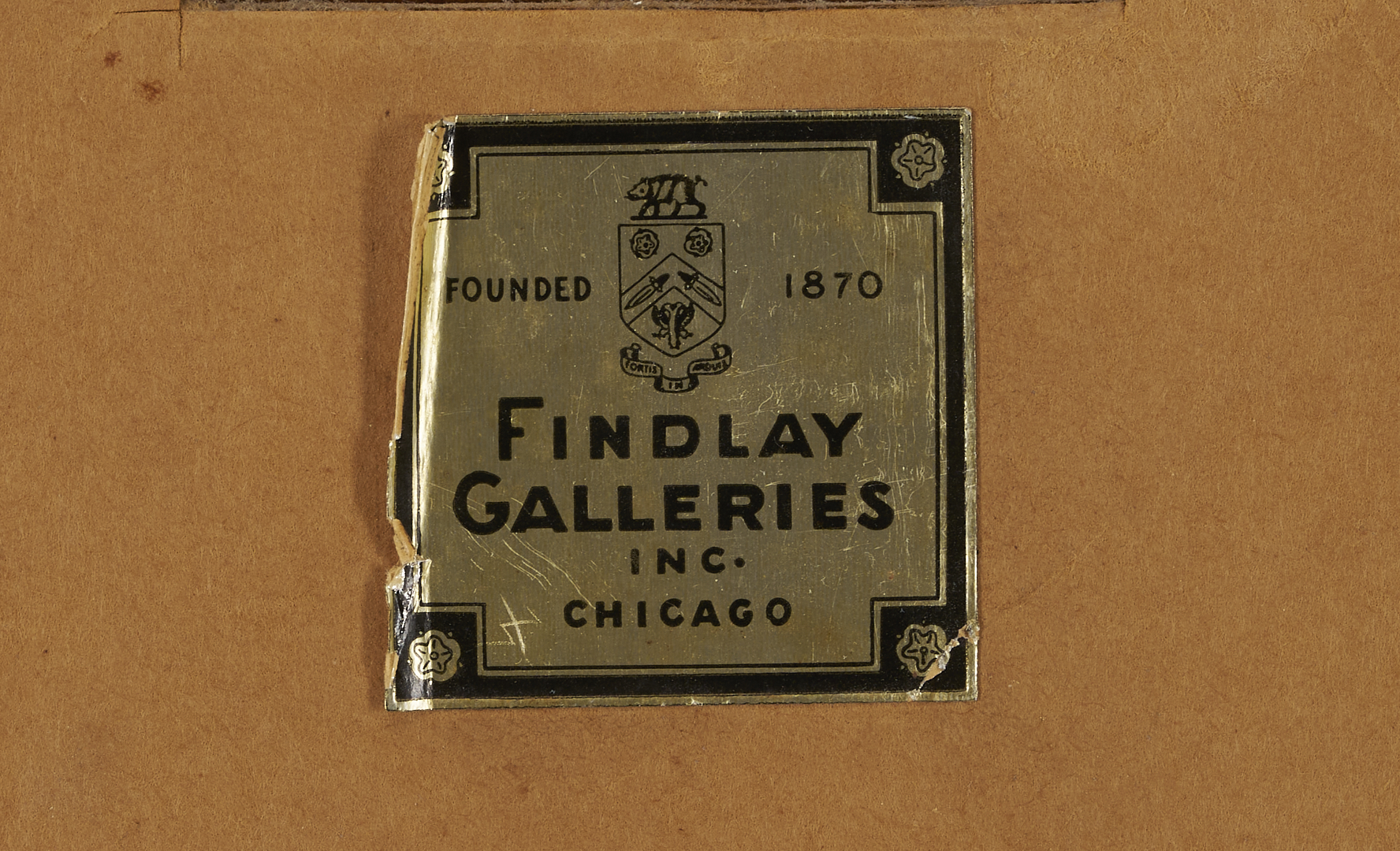
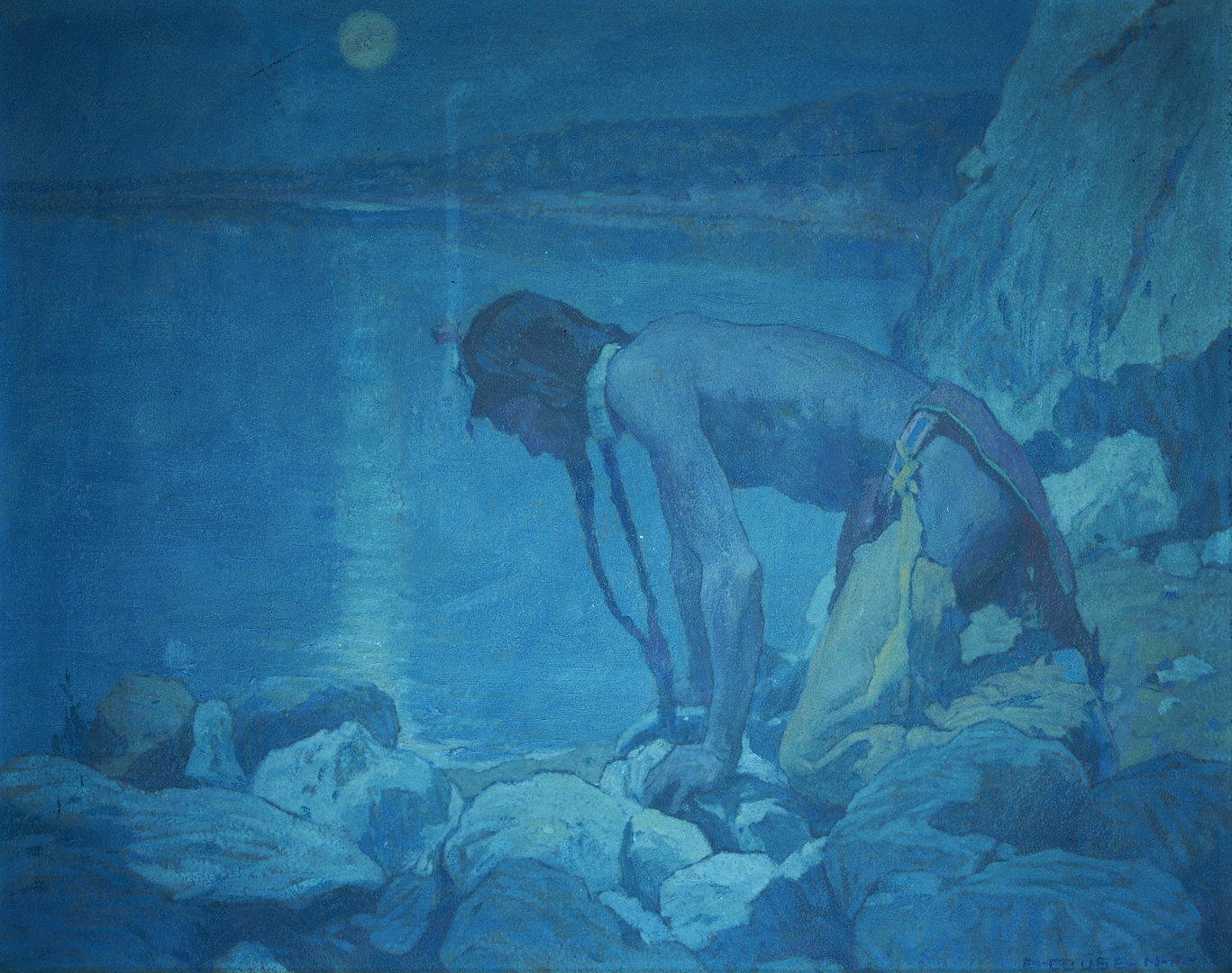
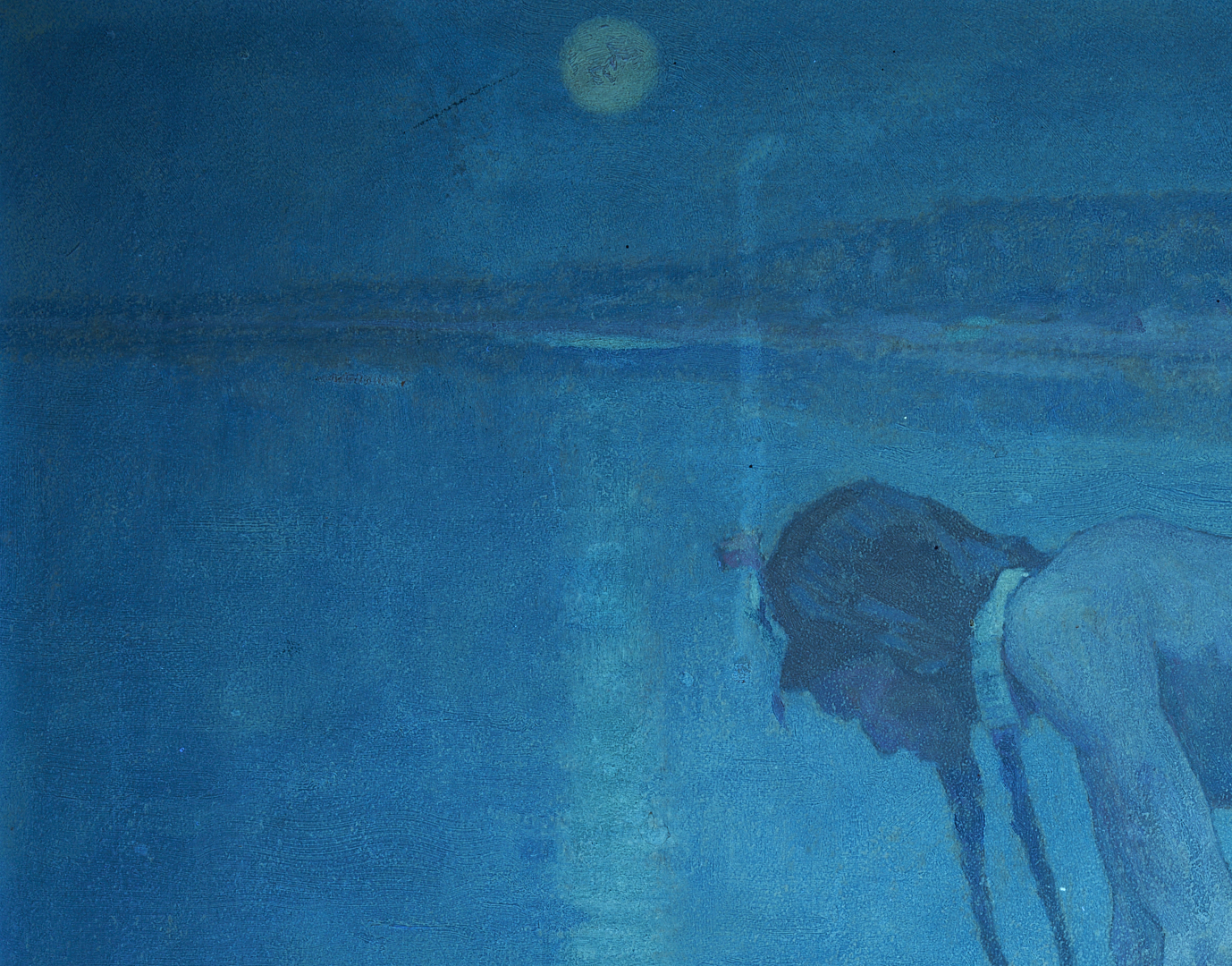
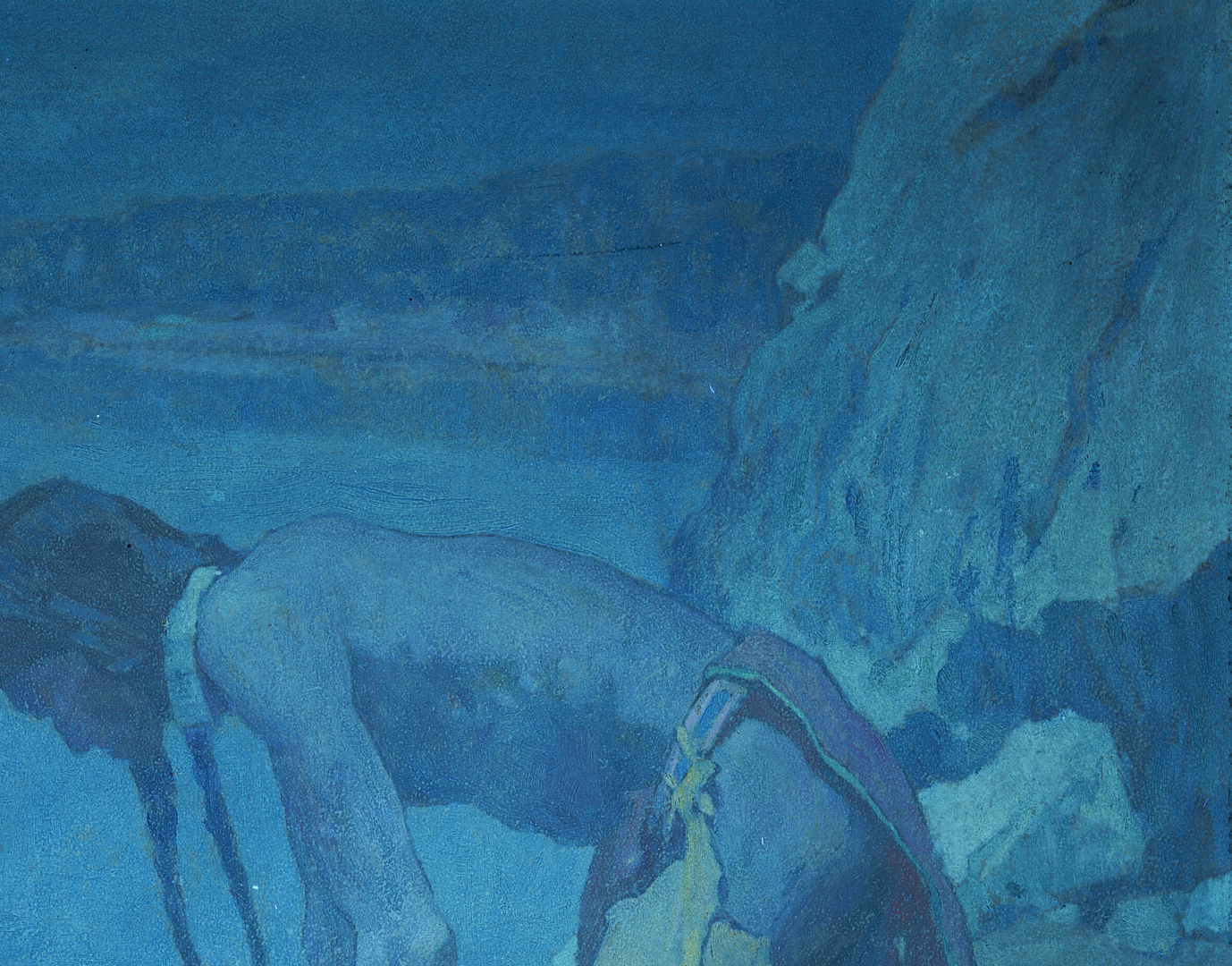
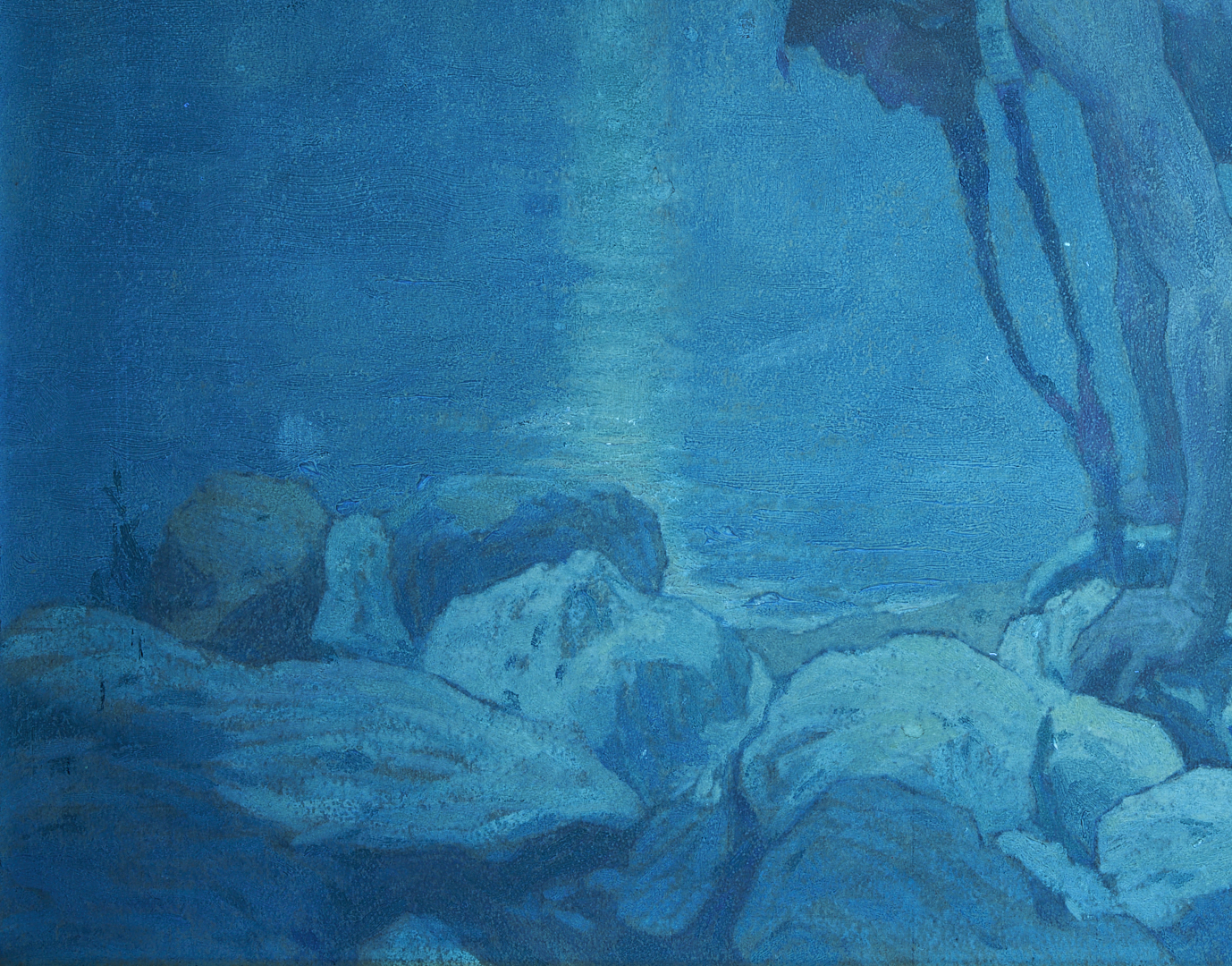
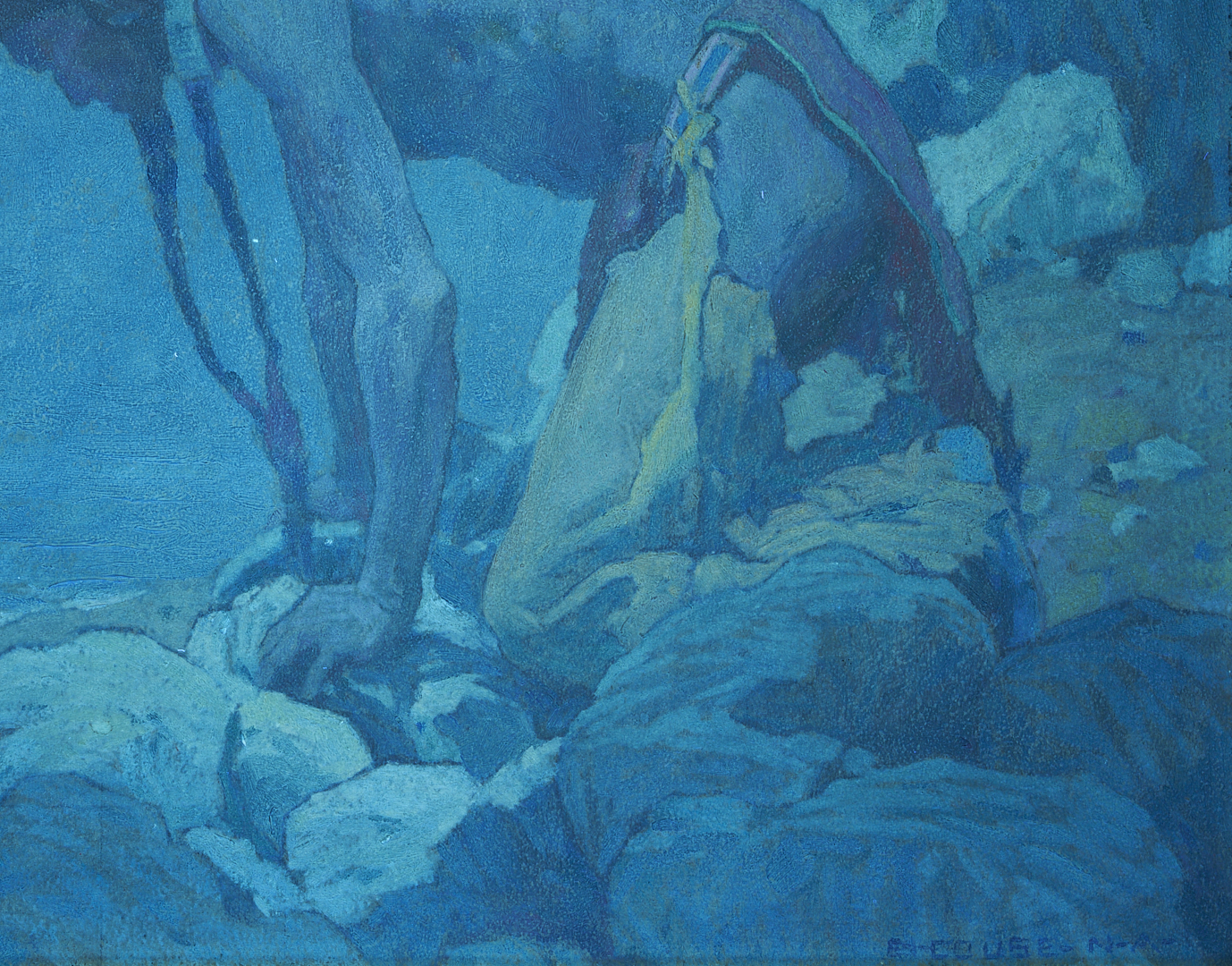
Eanger Irving Couse (American, 1886-1936) oil on board painting, “Moonlight, Indian Lake.” A Native American man kneels and gazes into a pool of water while the moon illuminates the night sky above and casts a beam of yellow moonlight onto the water’s surface. Signed lower right. Additionally titled, signed, and dated in pencil en verso along with inscribed Fine Arts Gallery of San Diego (now San Diego Museum of Art) accession number 1926.187. Findlay Galleries, Chicago label to backing. Fine Arts Gallery, San Diego plus collection of Mr. and Mrs. E.J. Campbell labels affixed to back of frame and to verso. Housed in a likely original carved giltwood wooden frame with brass nameplate. Board: 16 in. H x 20 in. W. Sight: 15 3/4 in. H x 19 3/4 in. W. Framed: 21 1/2 in. H x 28 3/4 in. W. 1926. PRE-APPROVAL IS REQUIRED TO BID ON THIS LOT. PLEASE CONTACT CASE AUCTIONS, INC. FOR DETAILS. (865) 558-3033 or BID@CASEAUCTIONS.COM.
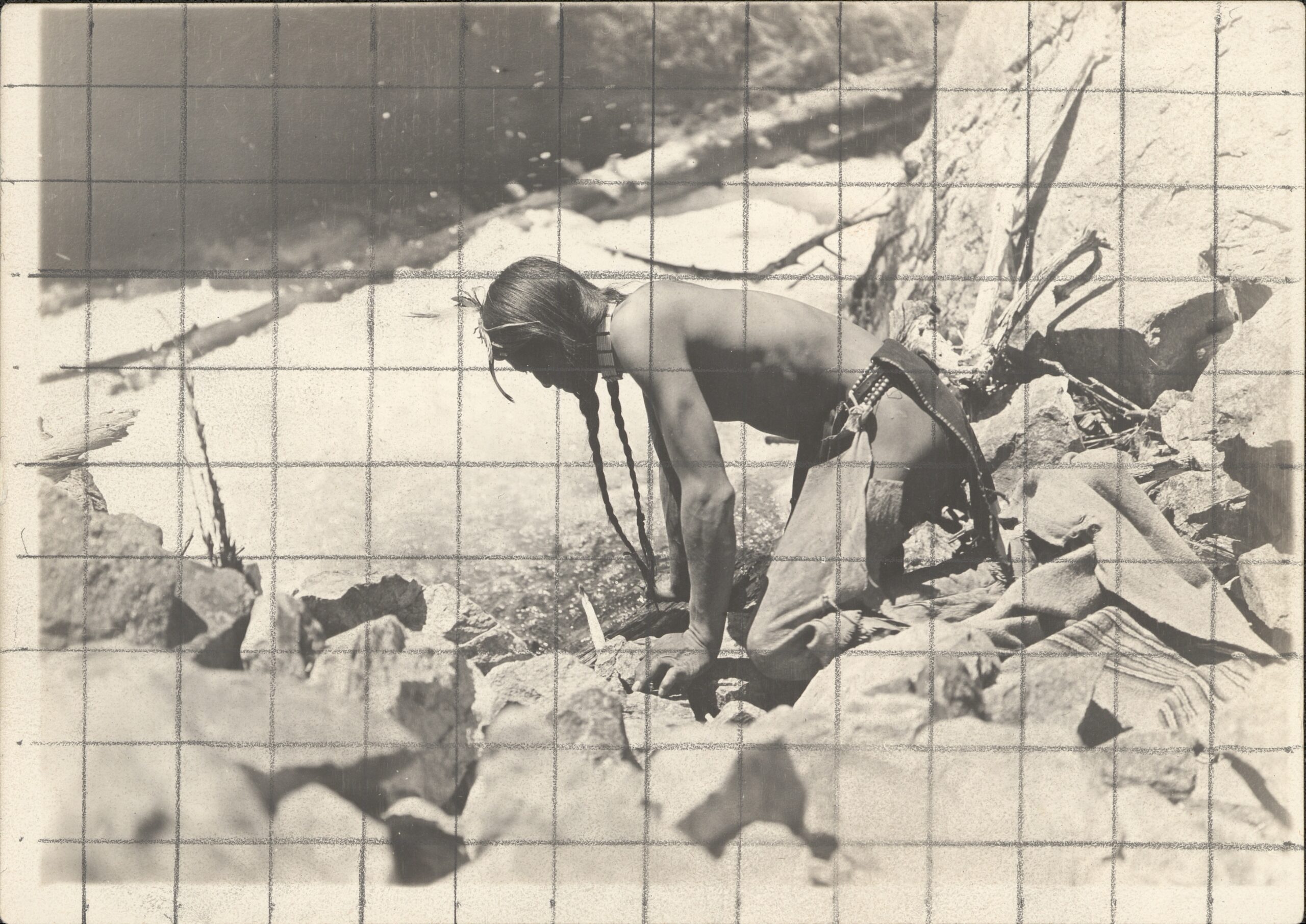
Note: This painting will be included in Couse-Sharp Historic Site’s forthcoming catalogue raisonne of the artist’s work under cat. no. 1054. A scan of Couse’s 1926 photo study for this painting is included in our photograph sequence. The photo study features Juan Concha AKA Eagle Star, one of the artist’s recurring models. (Photo credit: Couse Family Photo Collection. Courtesy of Lunder Research Center, Couse-Sharp Historic Site, Taos, NM).
Artist Biography: Irving Eanger Couse is primarily known for his paintings of Native American subjects. Growing up in a poor family in Saginaw, Michigan, he lived among members of the Chippewa tribe, who became the subject of his sketches. He enrolled at the Art Institute of Chicago and later the National Academy of Design, often returning to Michigan to do odd jobs such as house painting to support himself. In 1887, he went to Paris to the Academie Julian where he was influenced by the draftsmanship and classical techniques of William Adolphe Bouguereau. Couse returned to Paris many times, but remained fascinated by Native Americans as subject matter.
In 1902, at the suggestion of his friend Joseph Henry Sharp, he visited Taos, New Mexico for the first time. When the Taos Society of Artists was formed in 1912, he was elected its first president, and in 1927, Couse and his family moved there permanently. His models for most of his New Mexico Indian figure painting were Taos residents Ben Lujan and Geronimo Gomez. The typical tone of his paintings has been called poetic and peaceful, reflecting a civilization at peace with itself. Usually the squatting Indian figures were engaged in domestic activity such as preparing food, with their physiques accentuated by moonlight.
Beginning in 1914, Couse’s paintings were used on calendars by the Santa Fe Railway and became the basis for the company’s comprehensive Southwest art collection. Sources: Michael David Zellman, “300 Years of American Art”; Peggy and Harold Samuels “Encyclopedia of Artists of the American West”.
PROVENANCE: Private Collection, Chicago; Findlay Galleries, Chicago; San Diego Art Museum, San Diego [Fine Arts Gallery, San Diego], 1926 (purchase), deaccessioned in 1948; Collection of Mr. And Mrs. Erskine J. Campbell, purchased November 15, 1926.
CONDITION: Overall very good condition, with negligible frame abrasions.