SOLD! for $1,320.00.
(Note: Prices realized include a buyer's premium.)
If you have items like this you wish to consign, click here for more information:
Selling with Case- Low Estimate: $700.00
- High Estimate: $900.00
- Hammer Price: $1,100.00
- Share this:
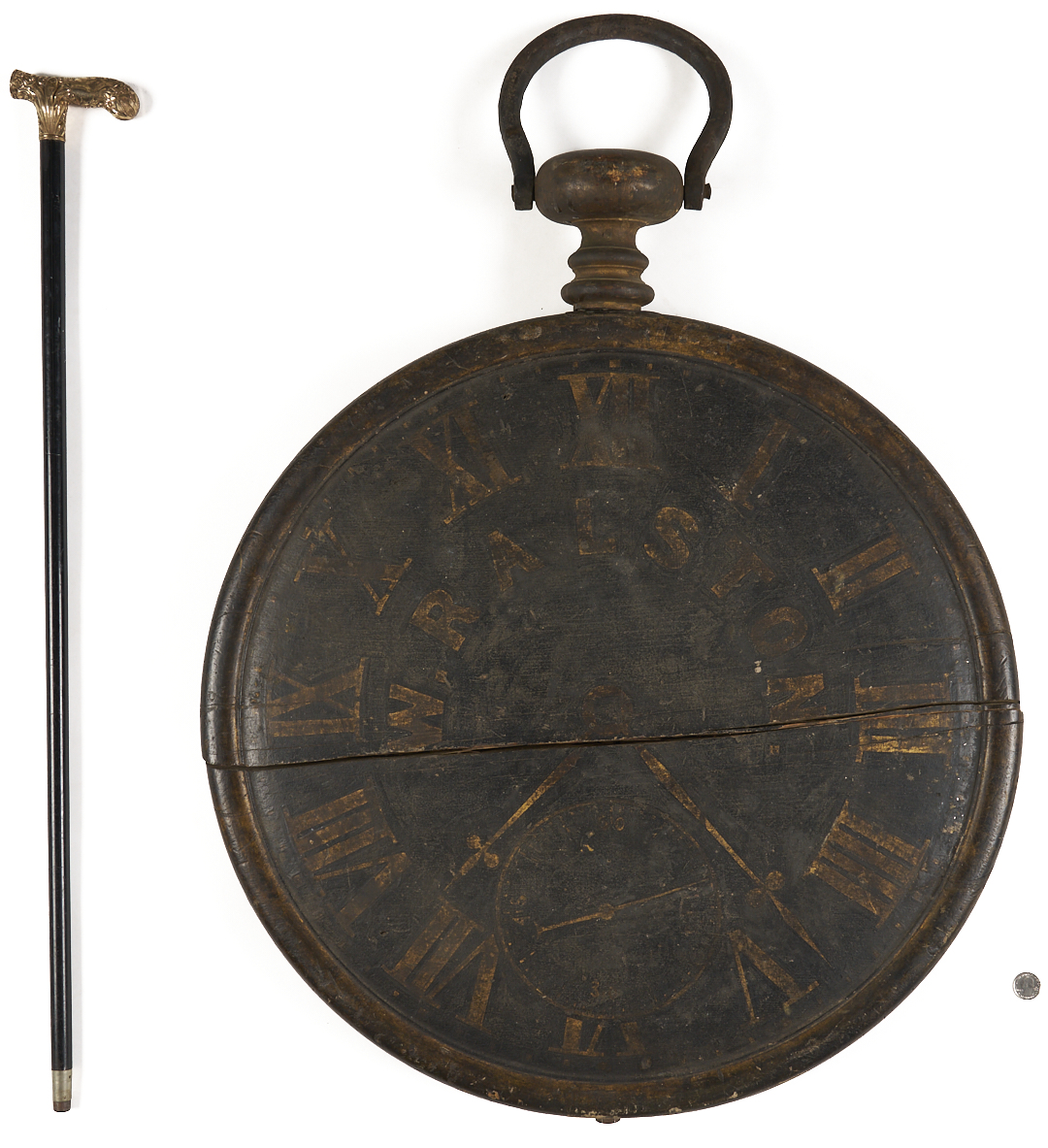
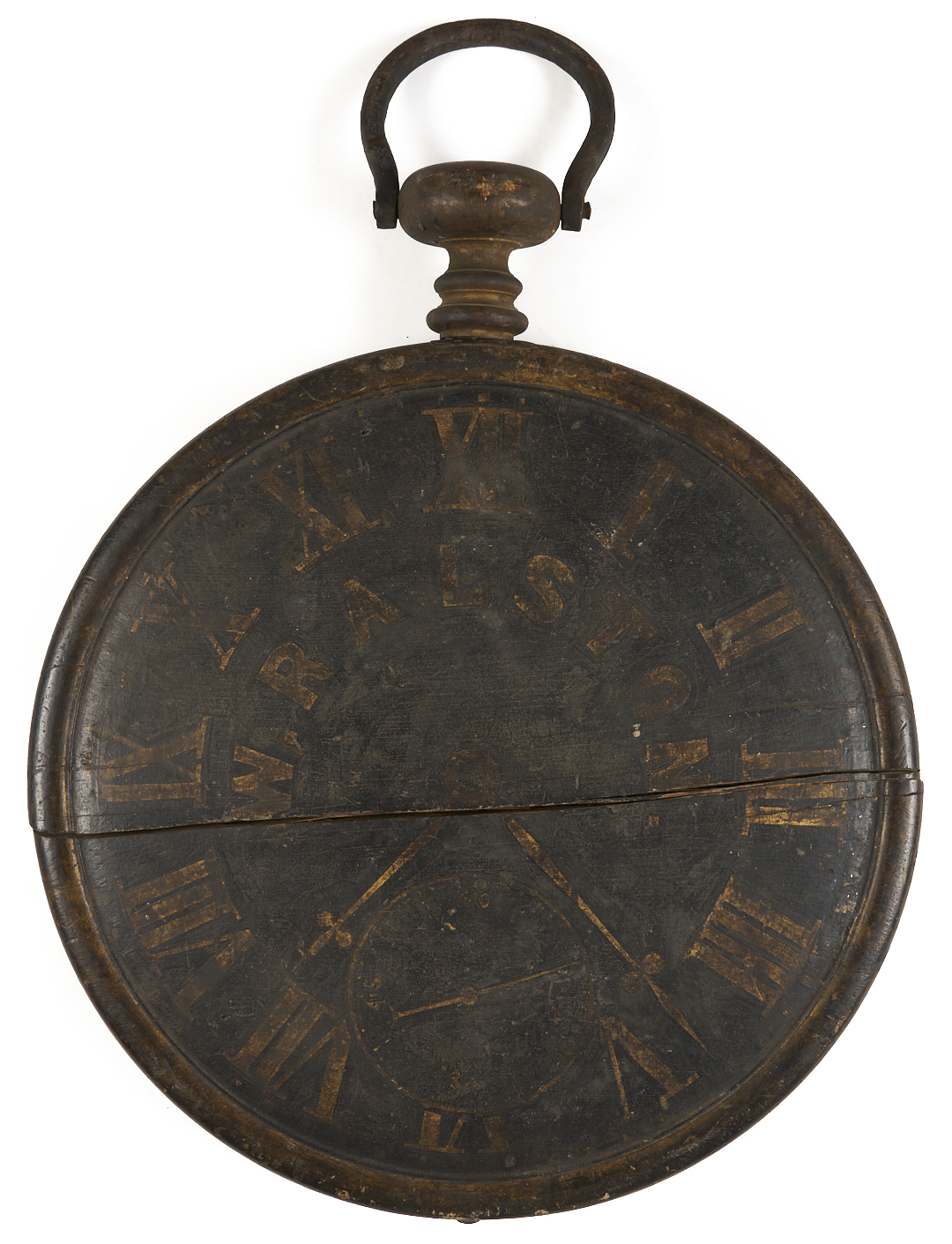
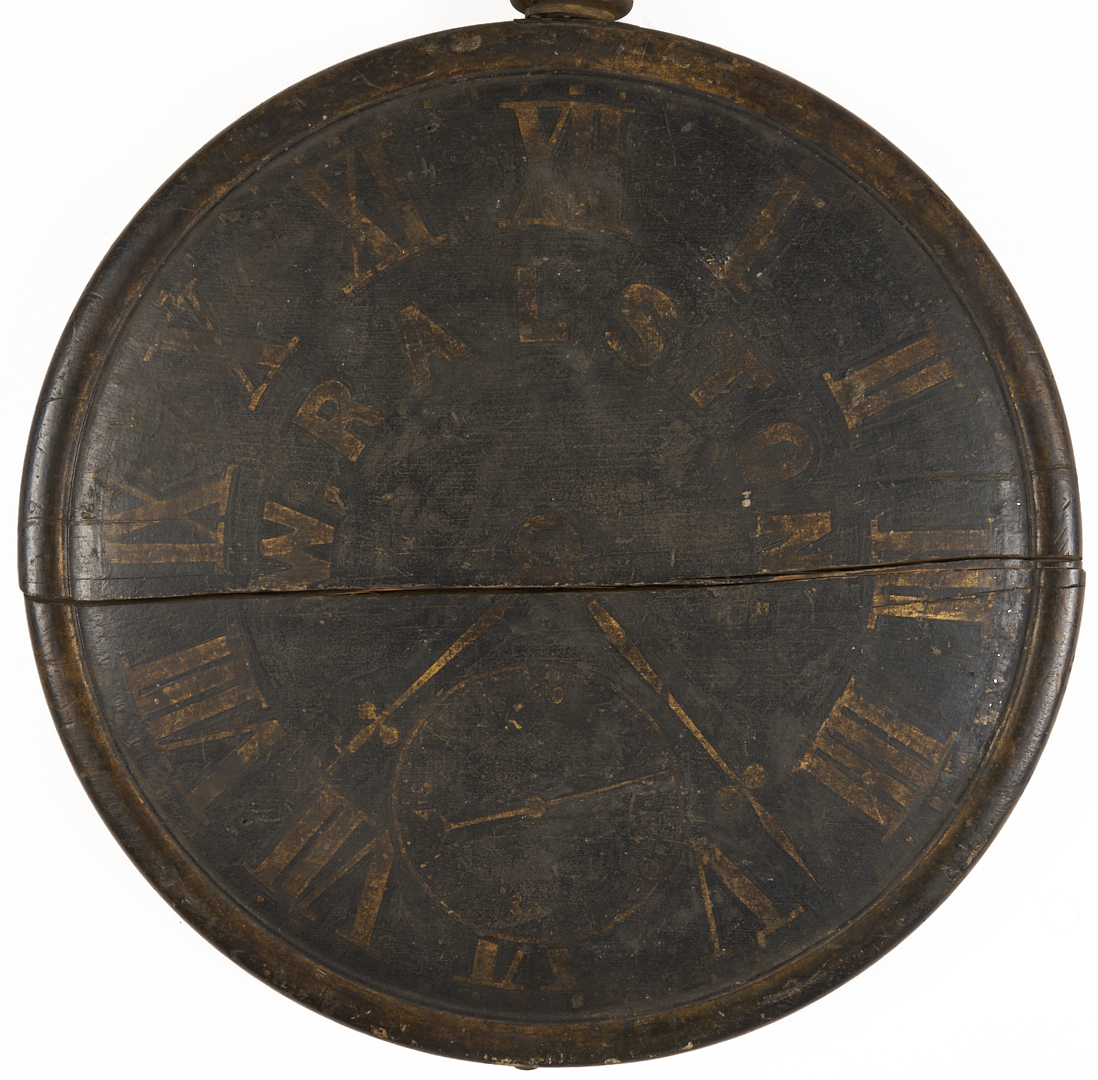
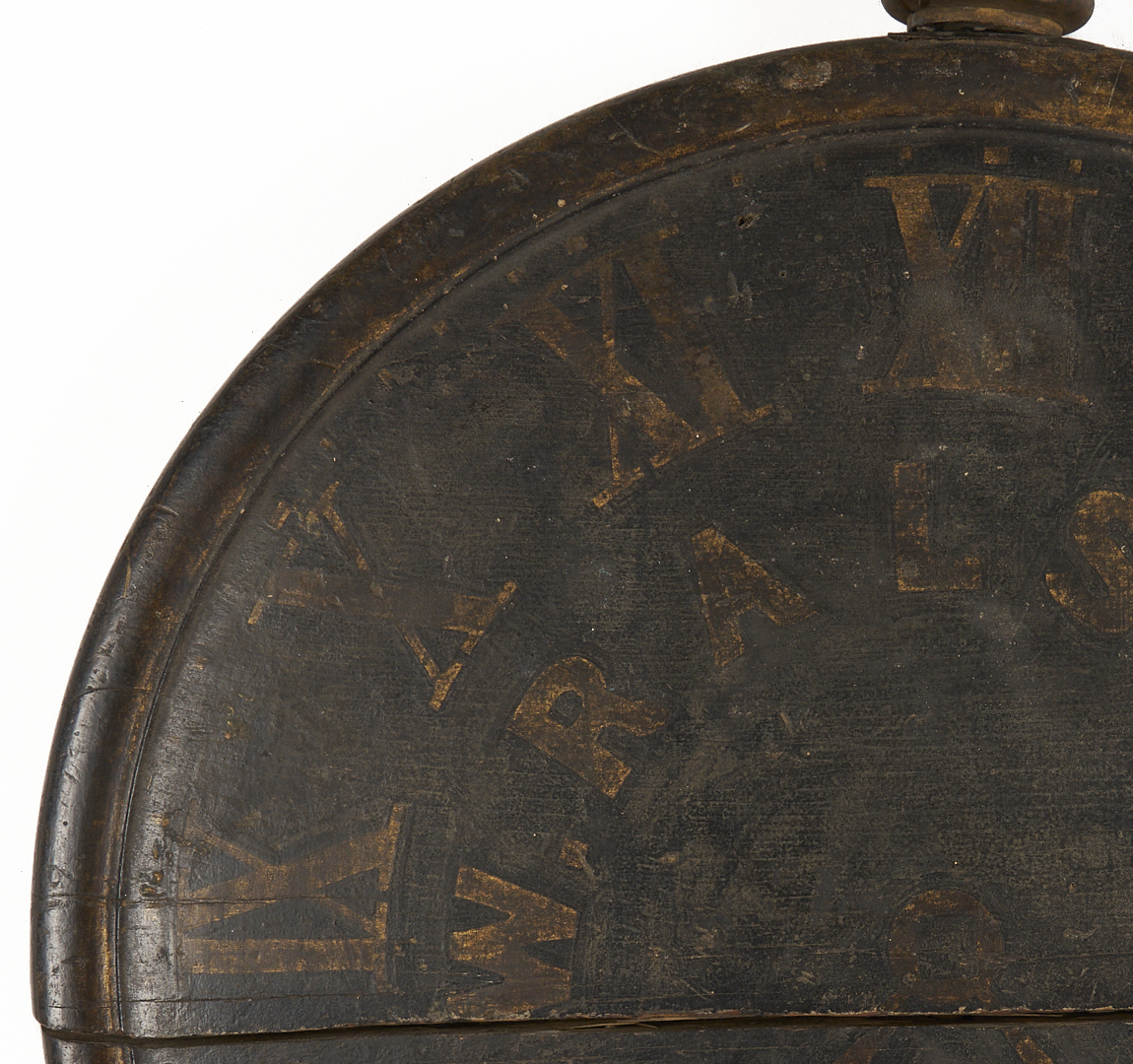
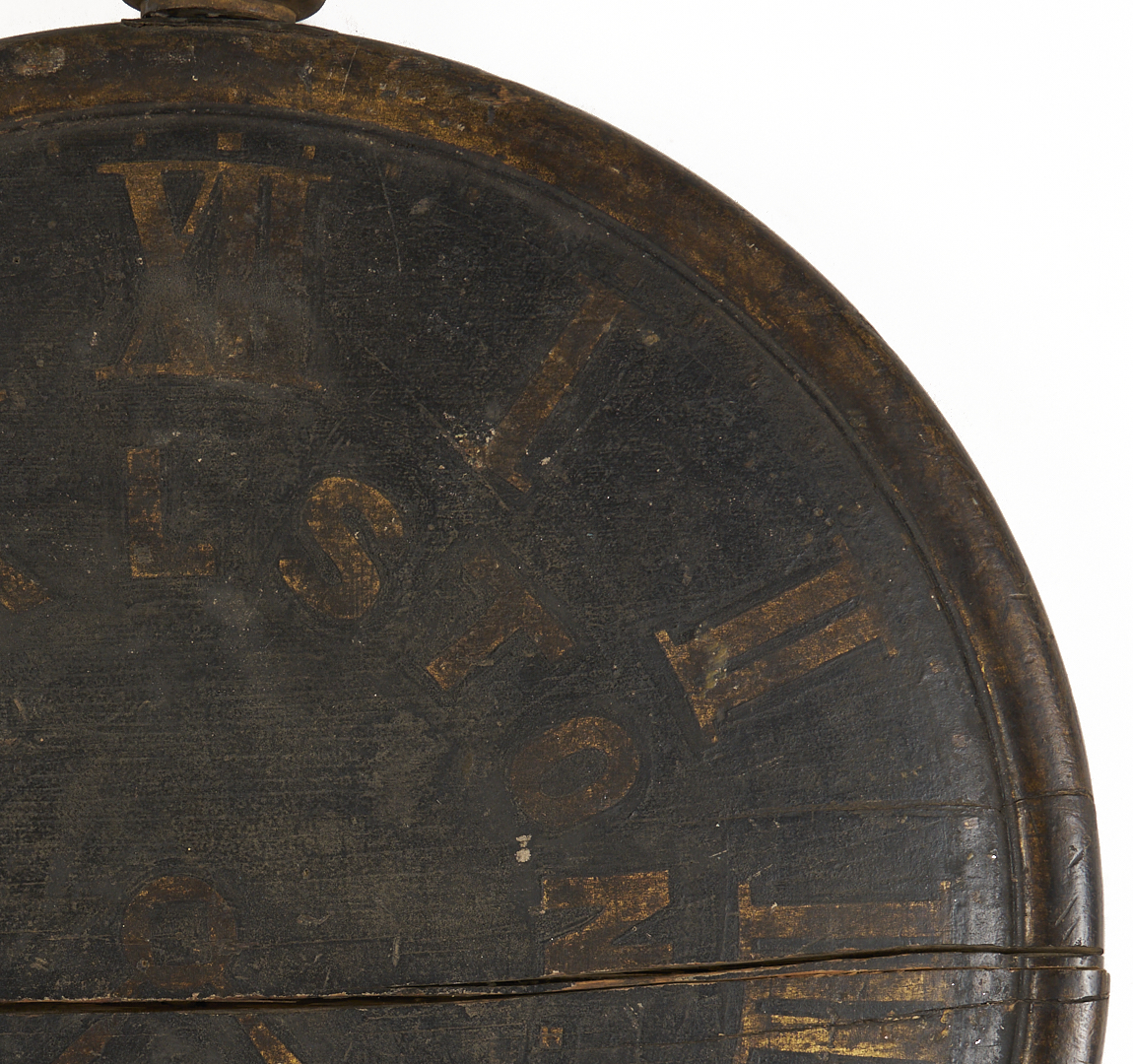
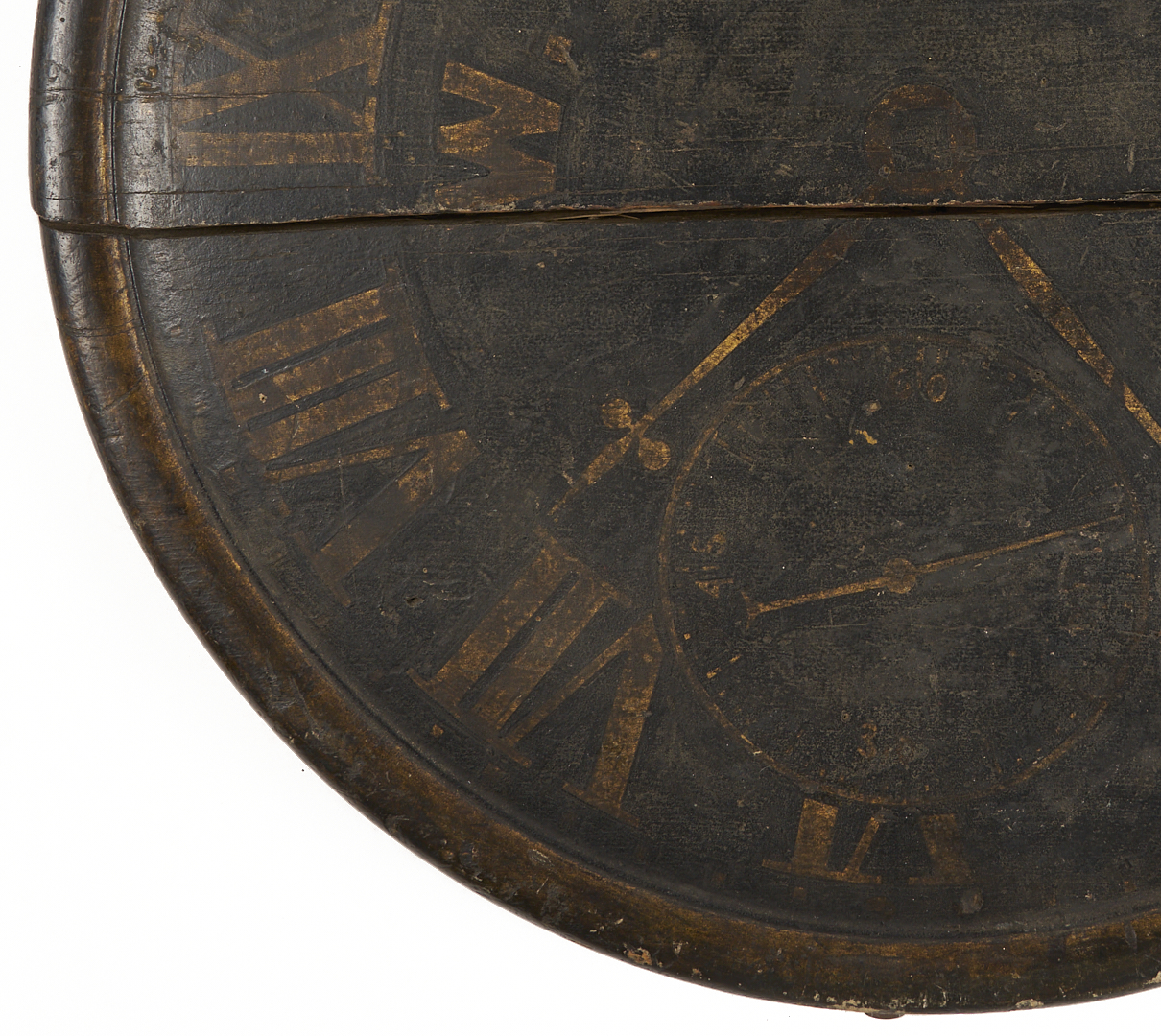
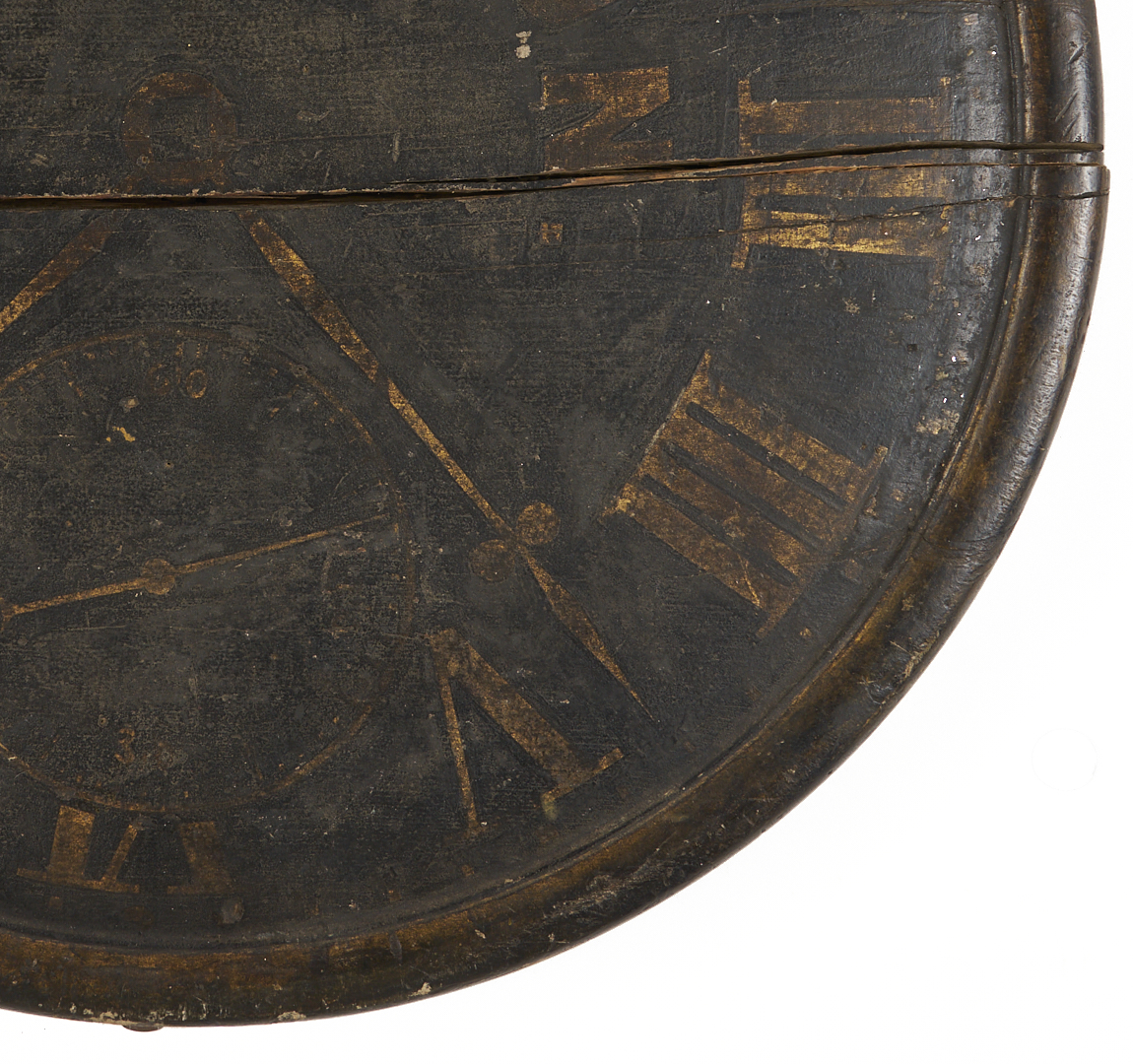
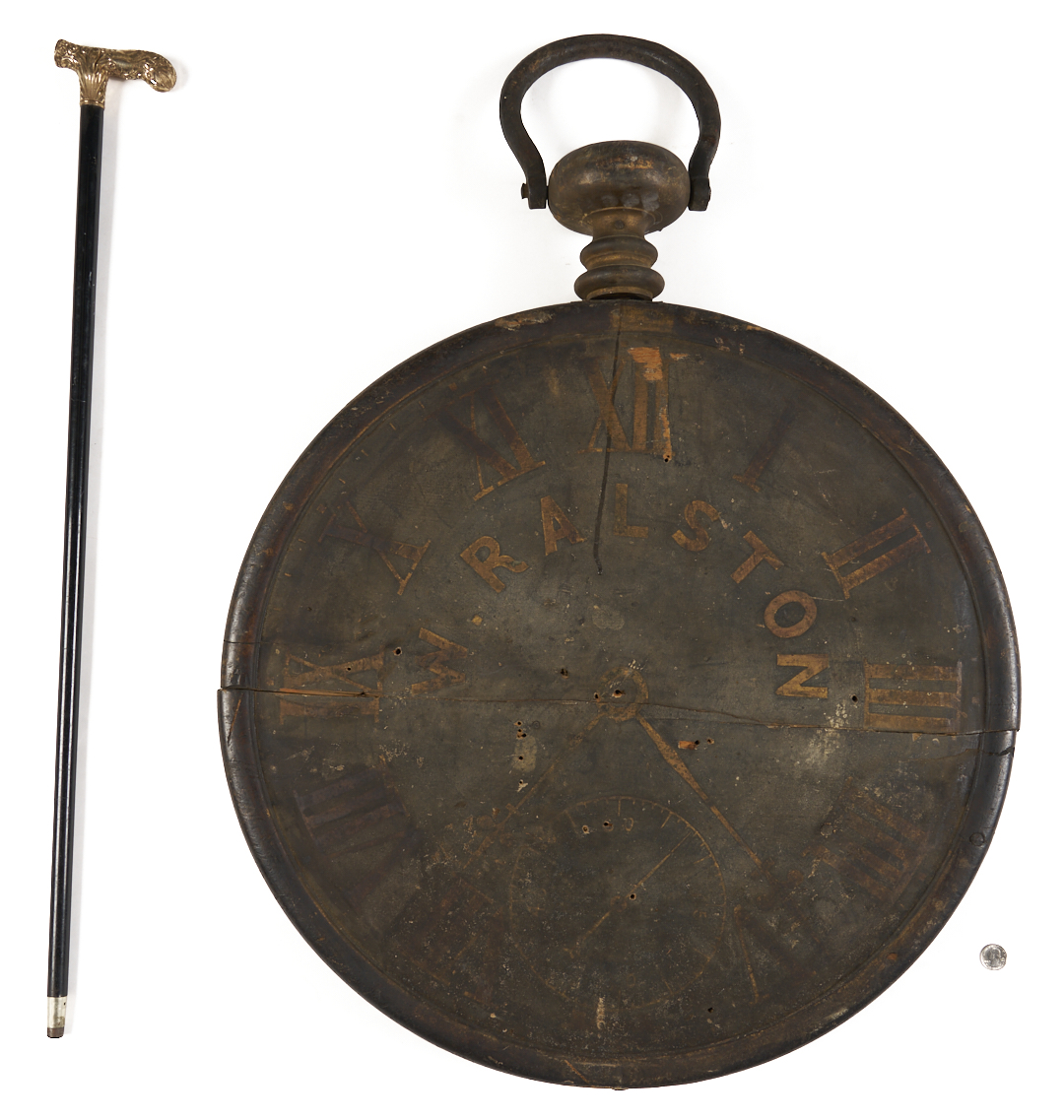
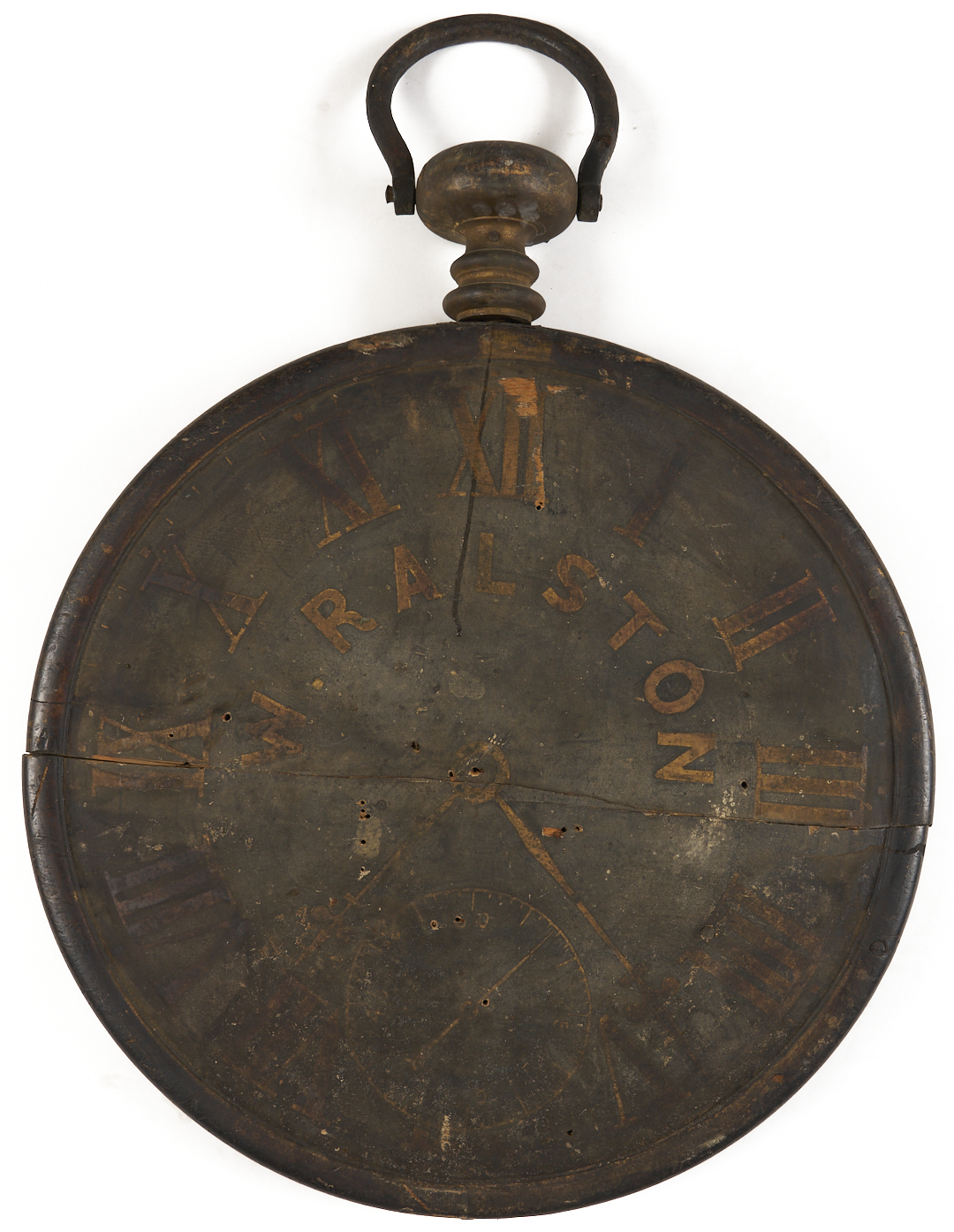
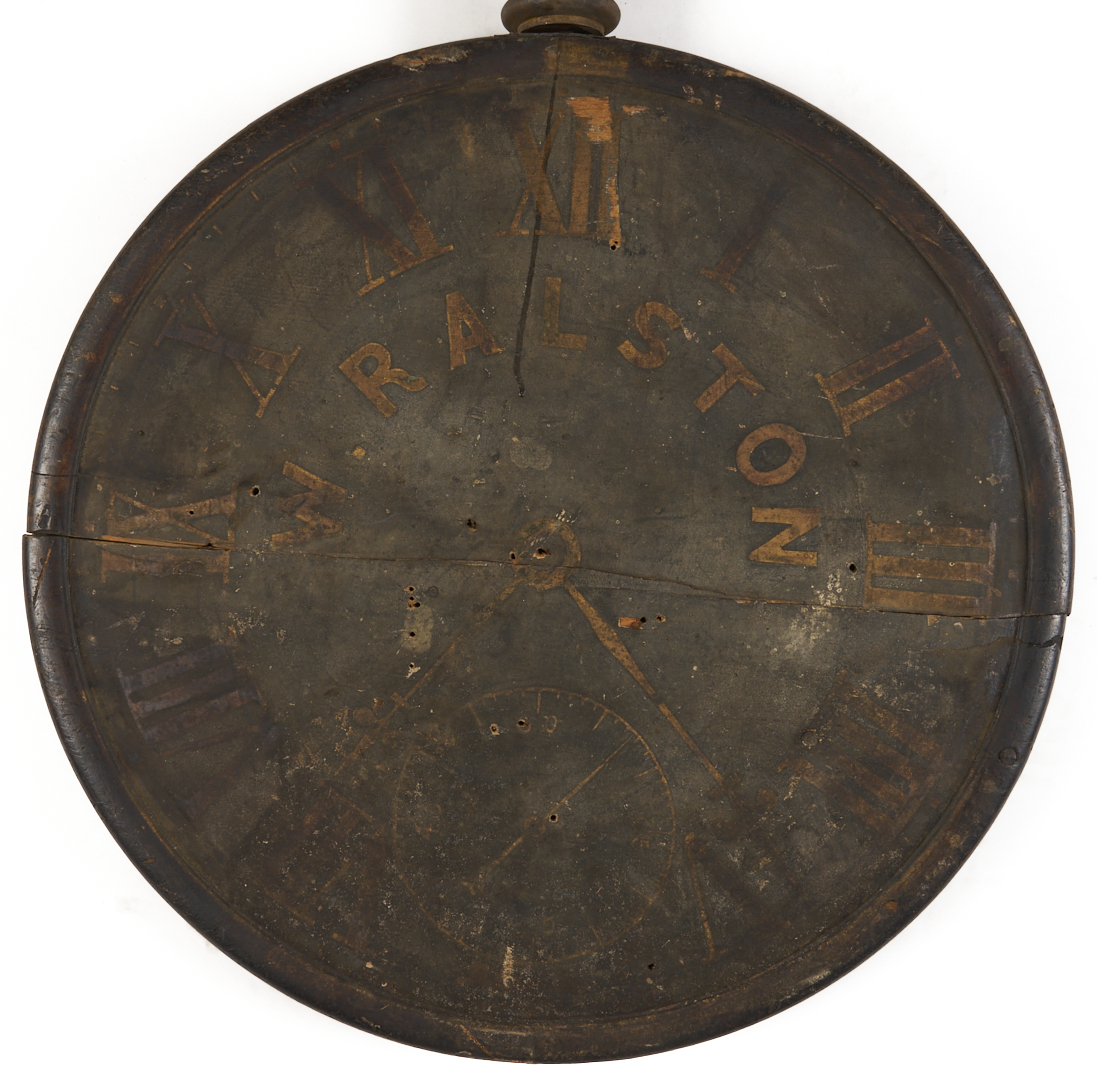
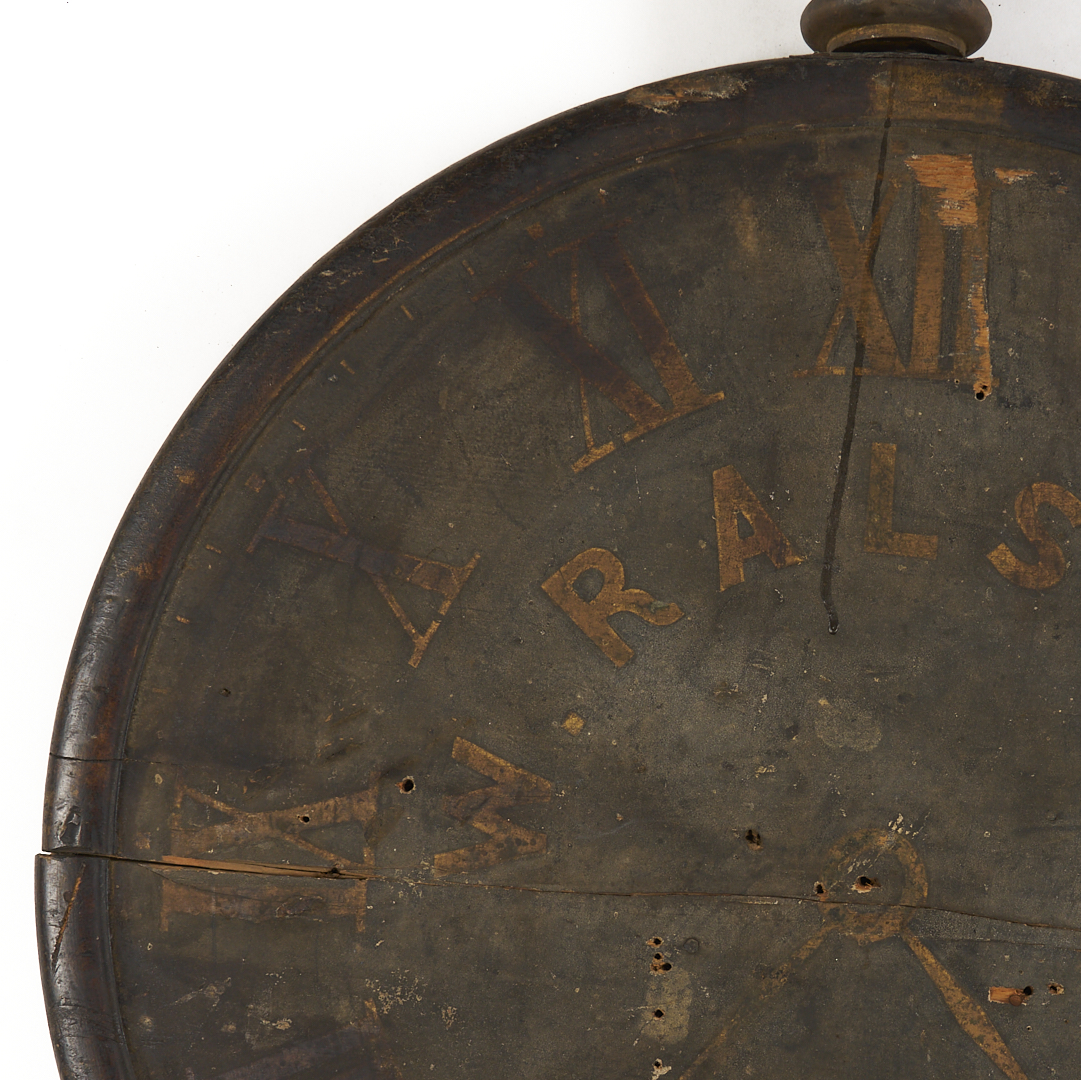
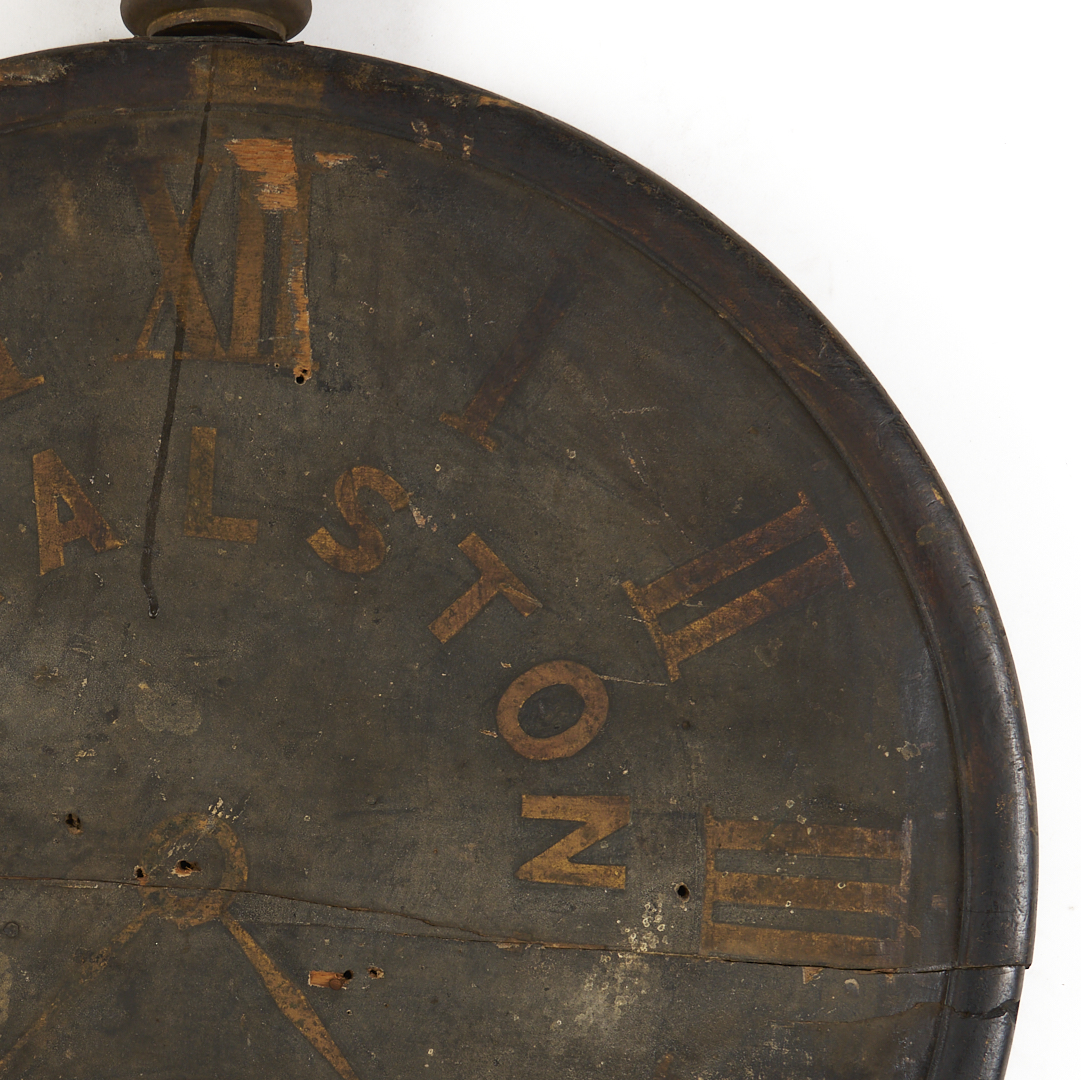
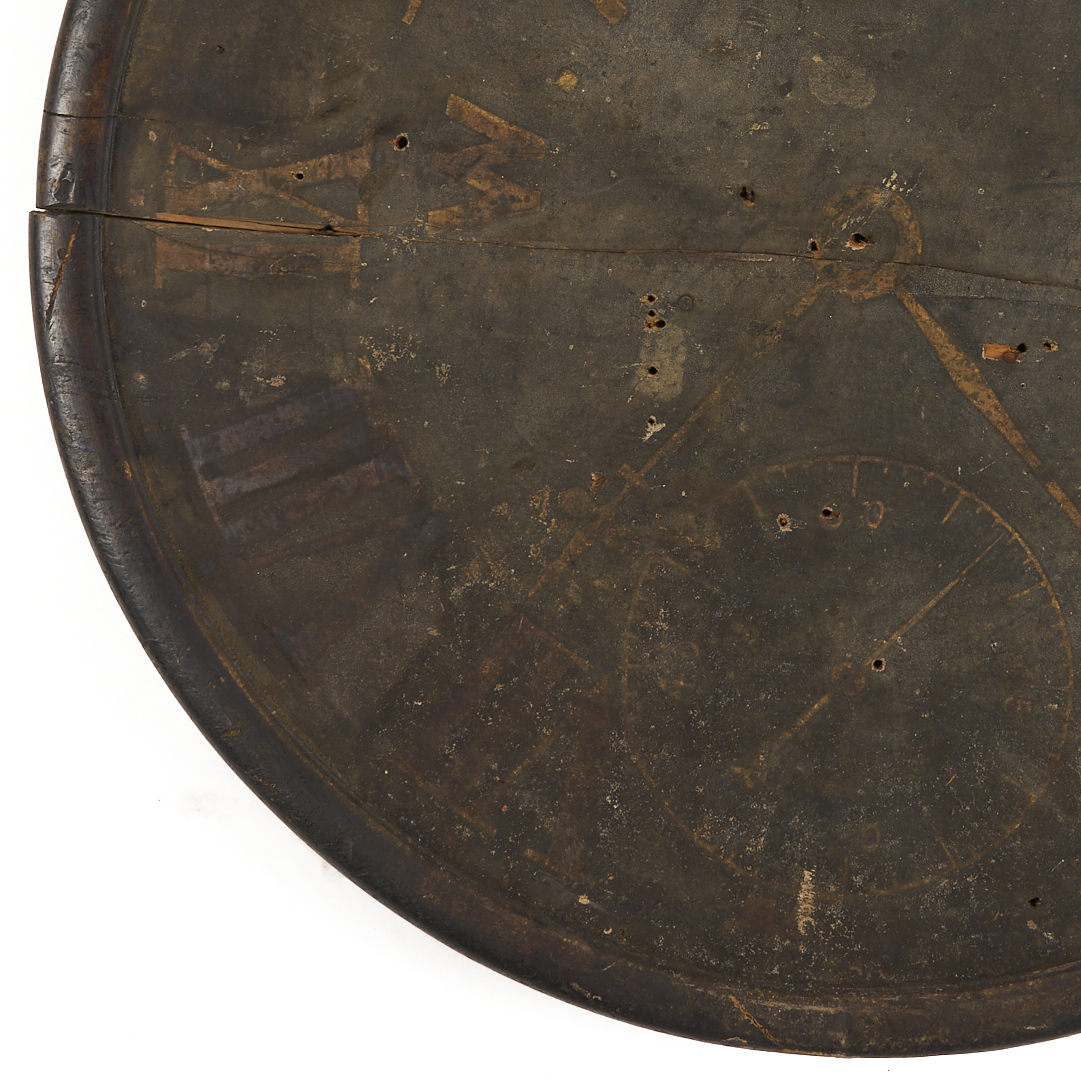
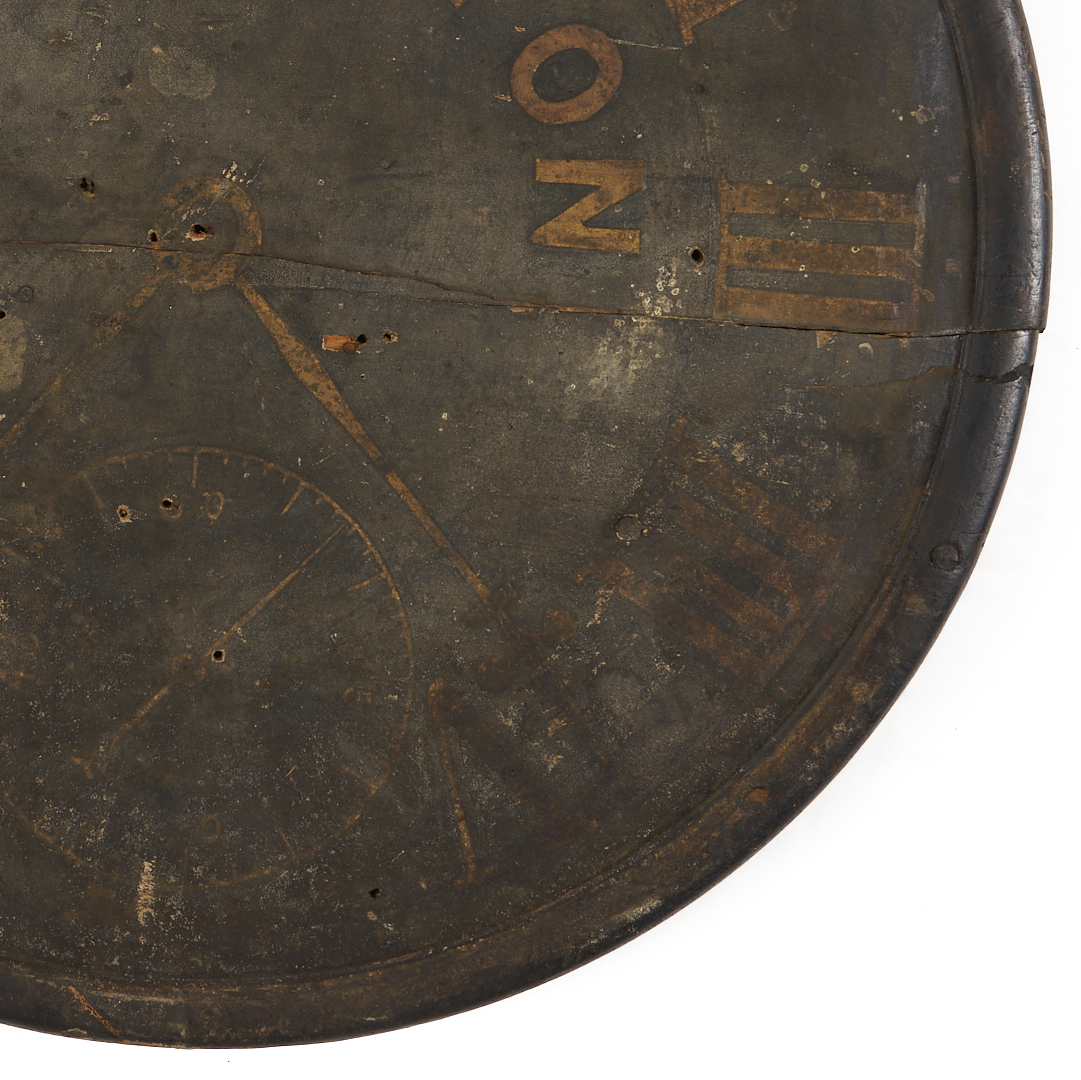
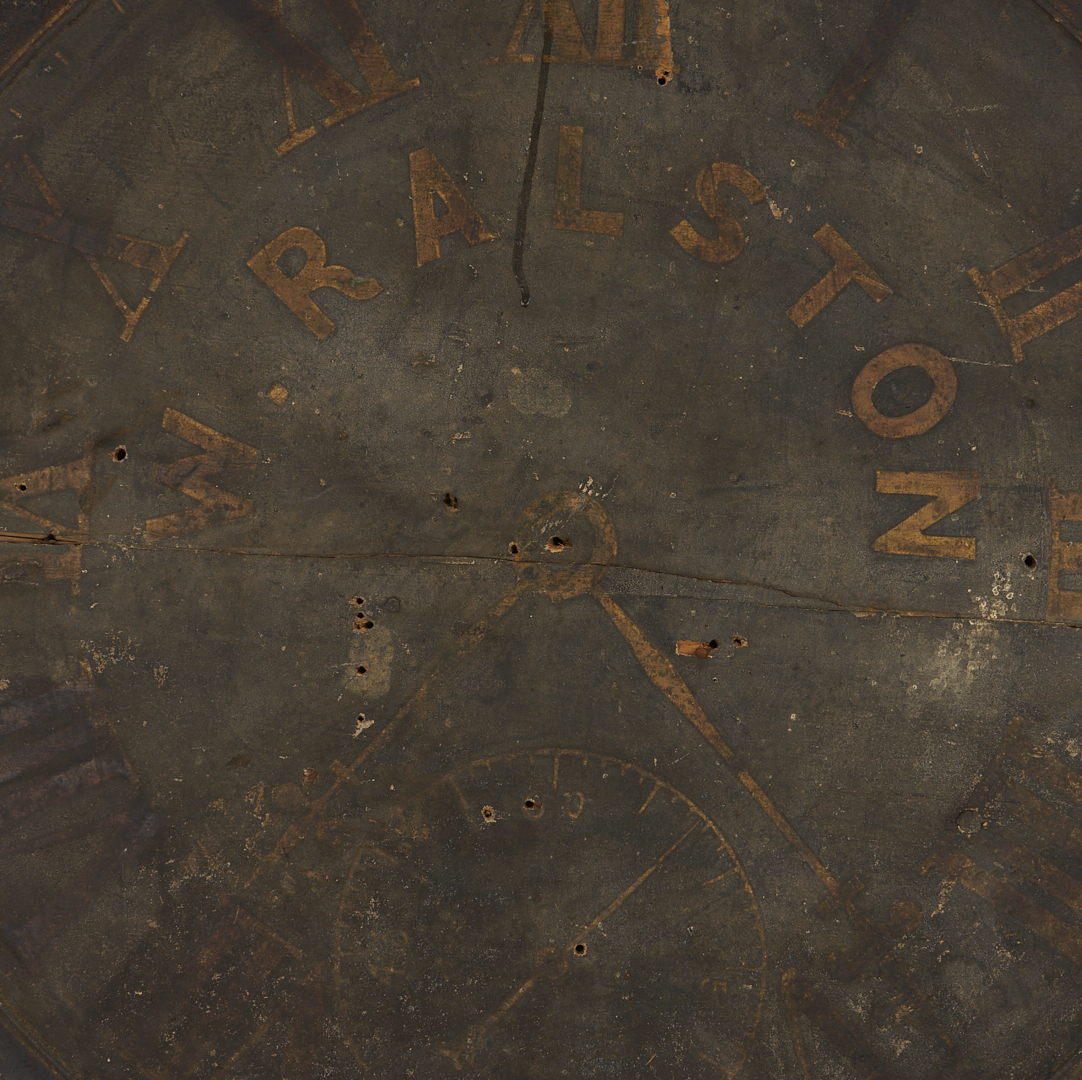
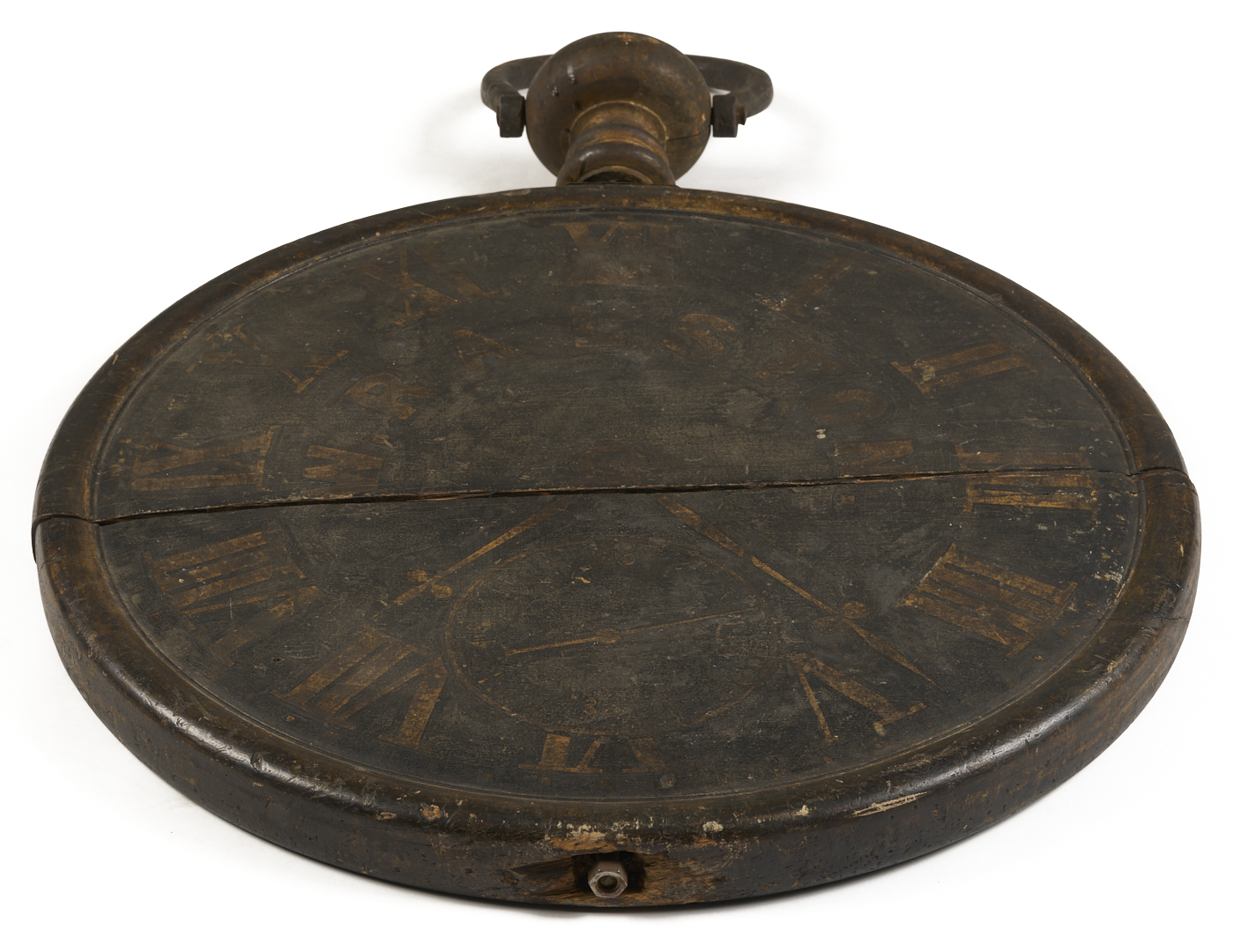
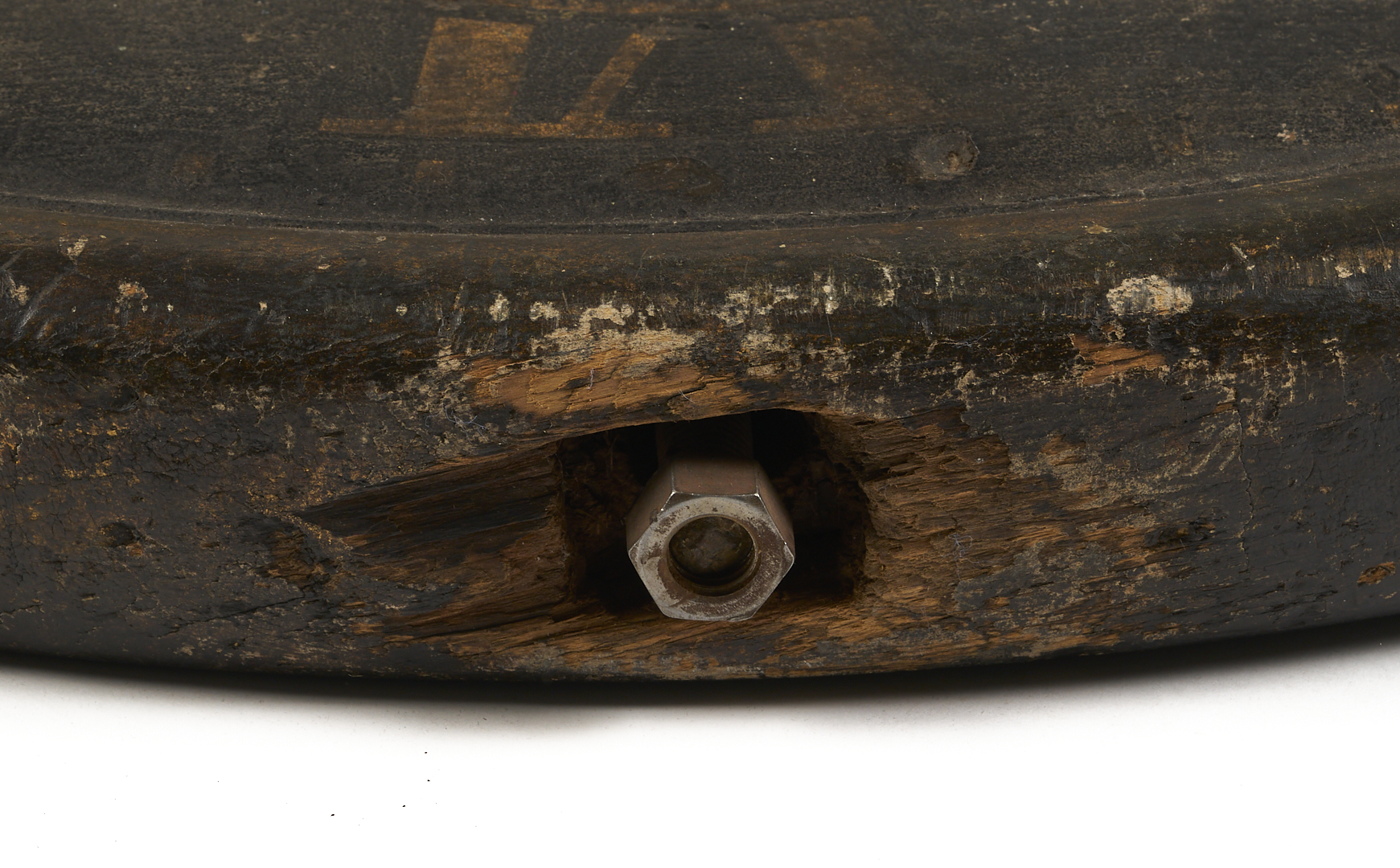
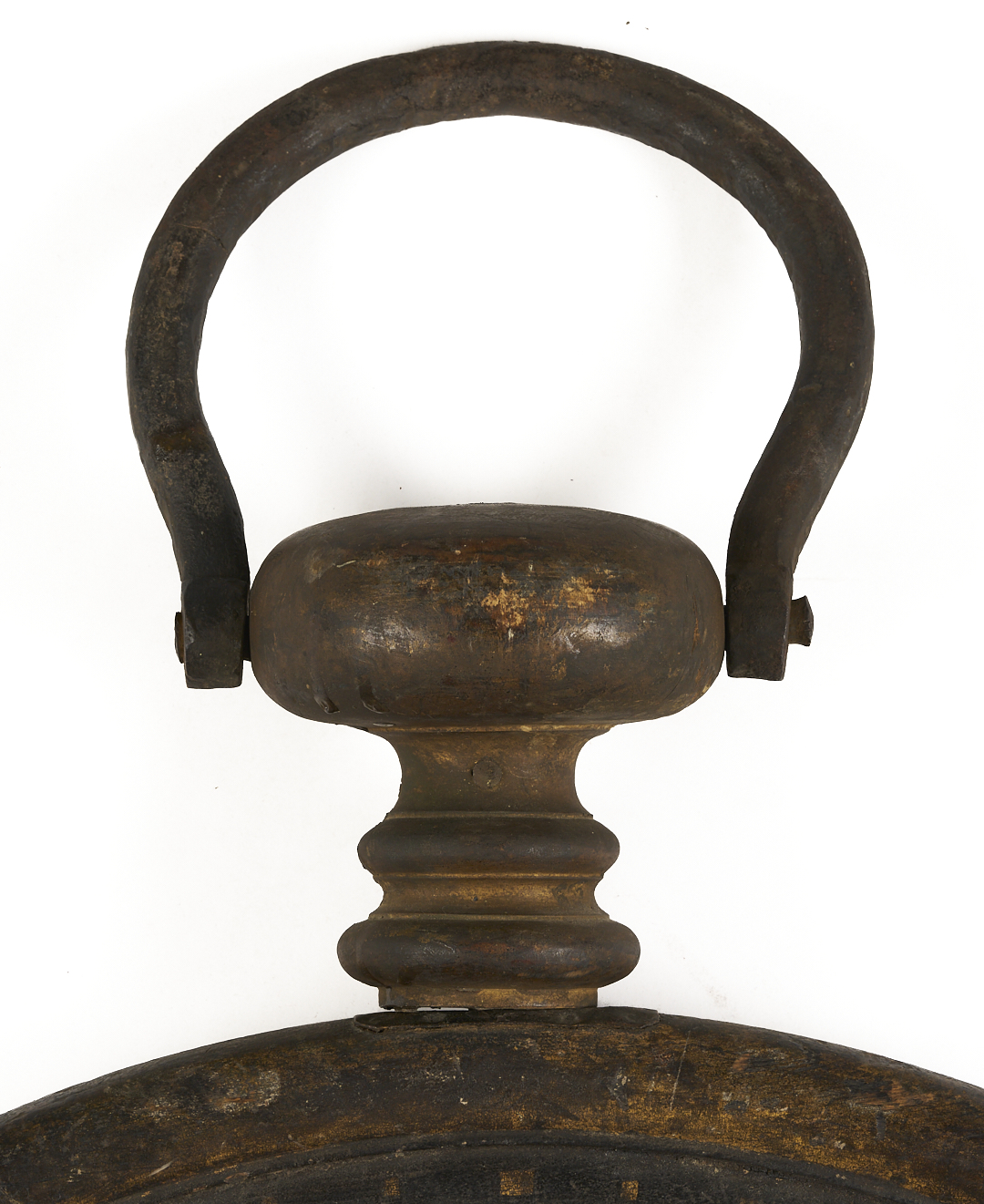
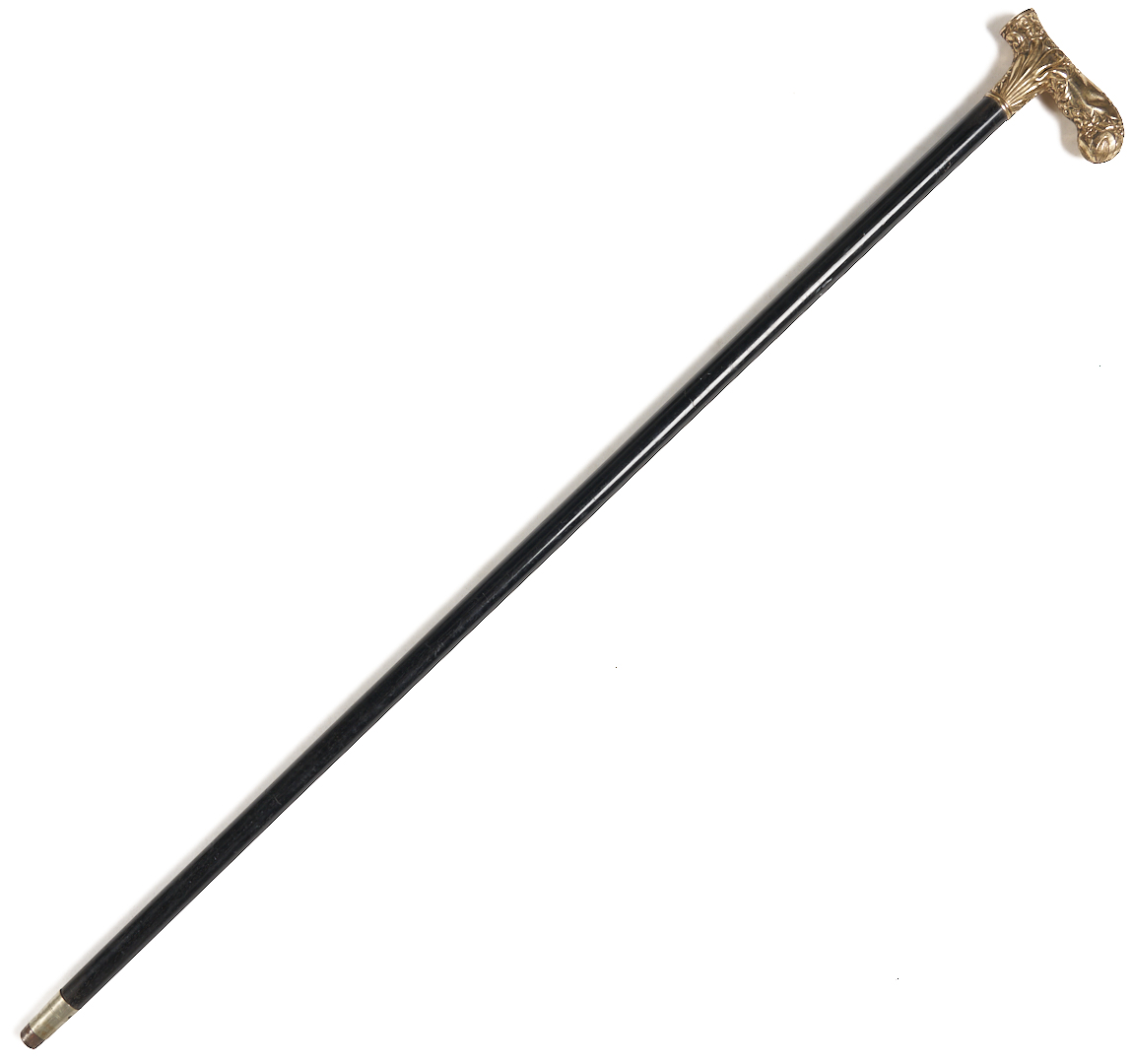
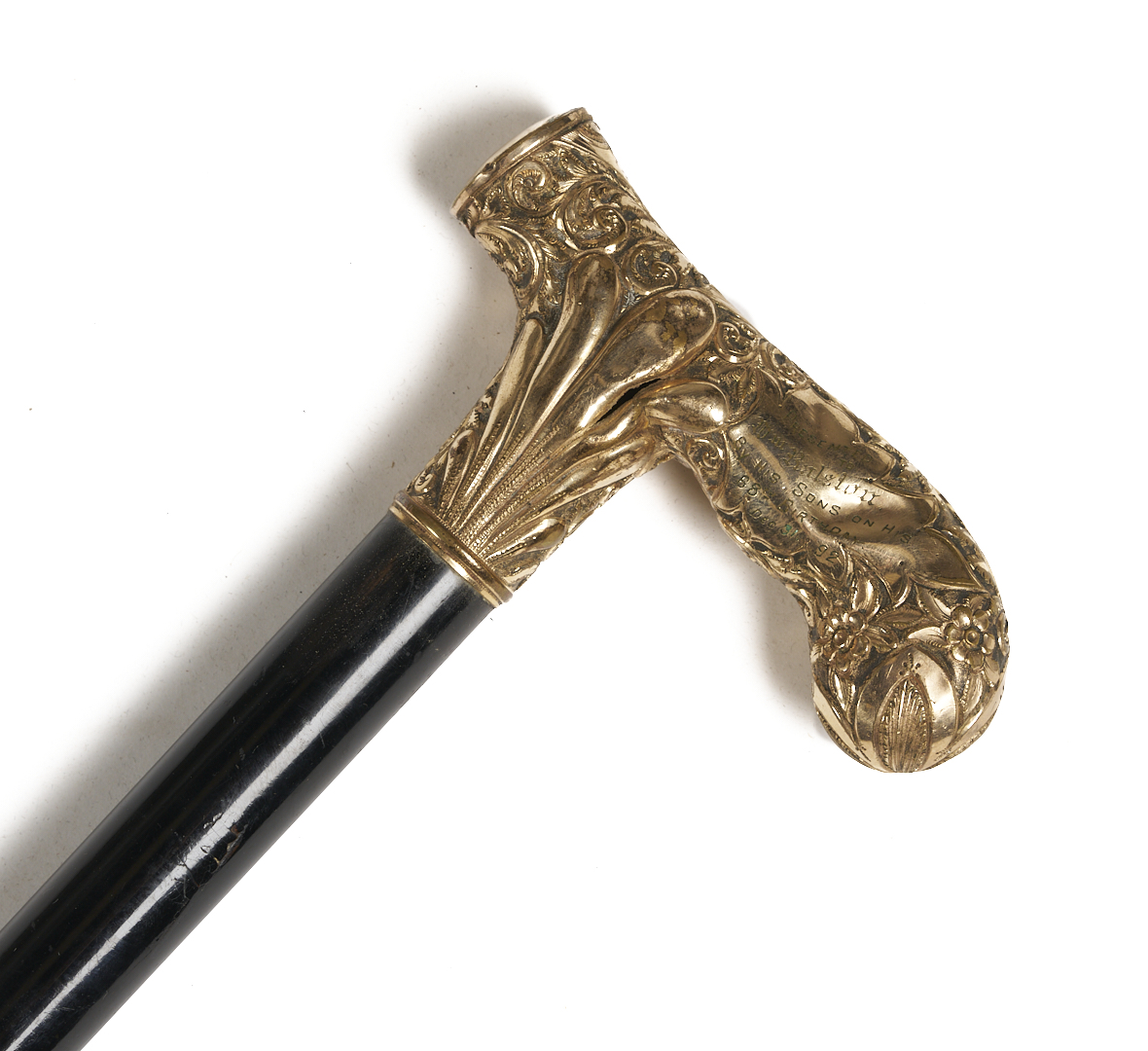
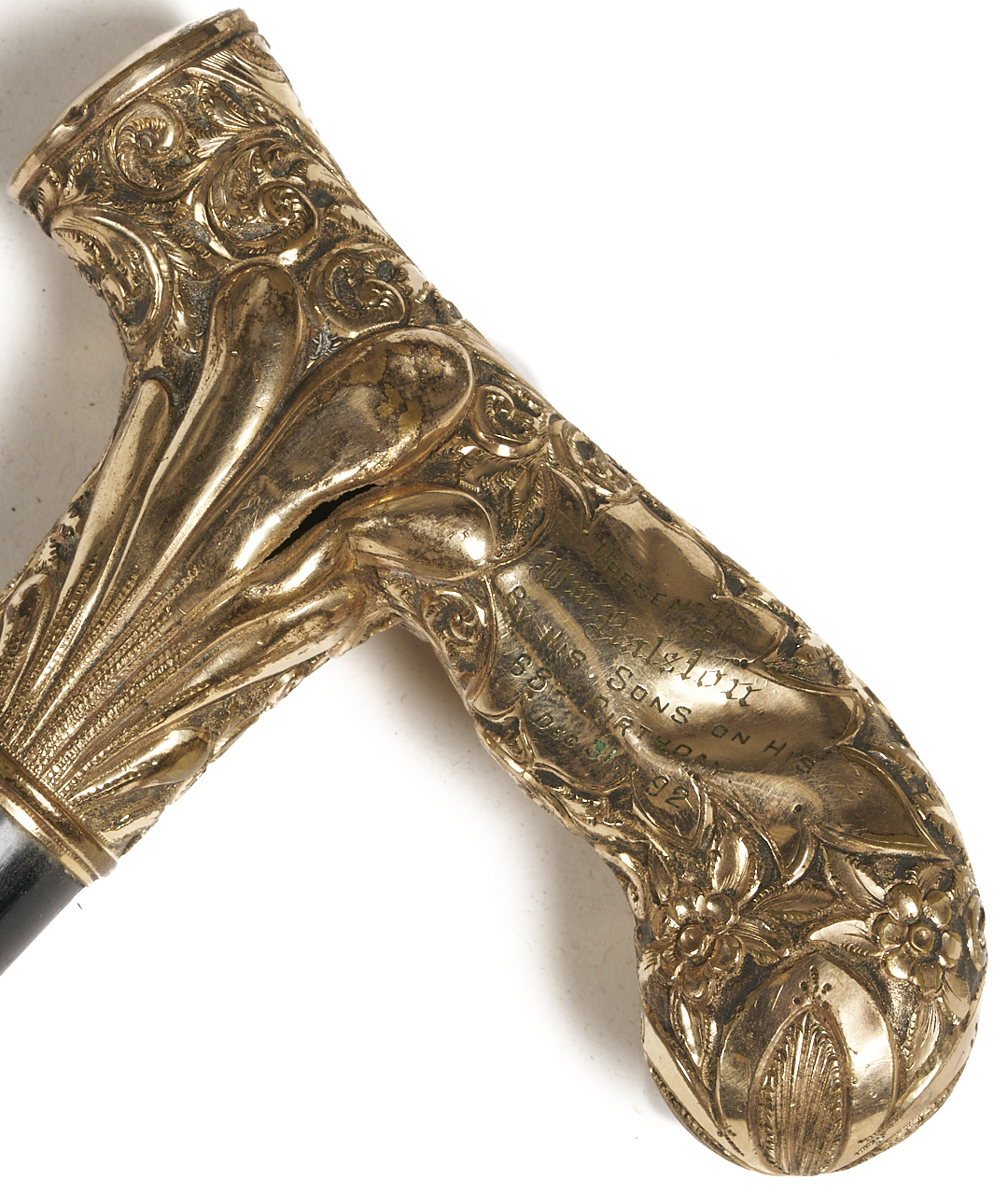
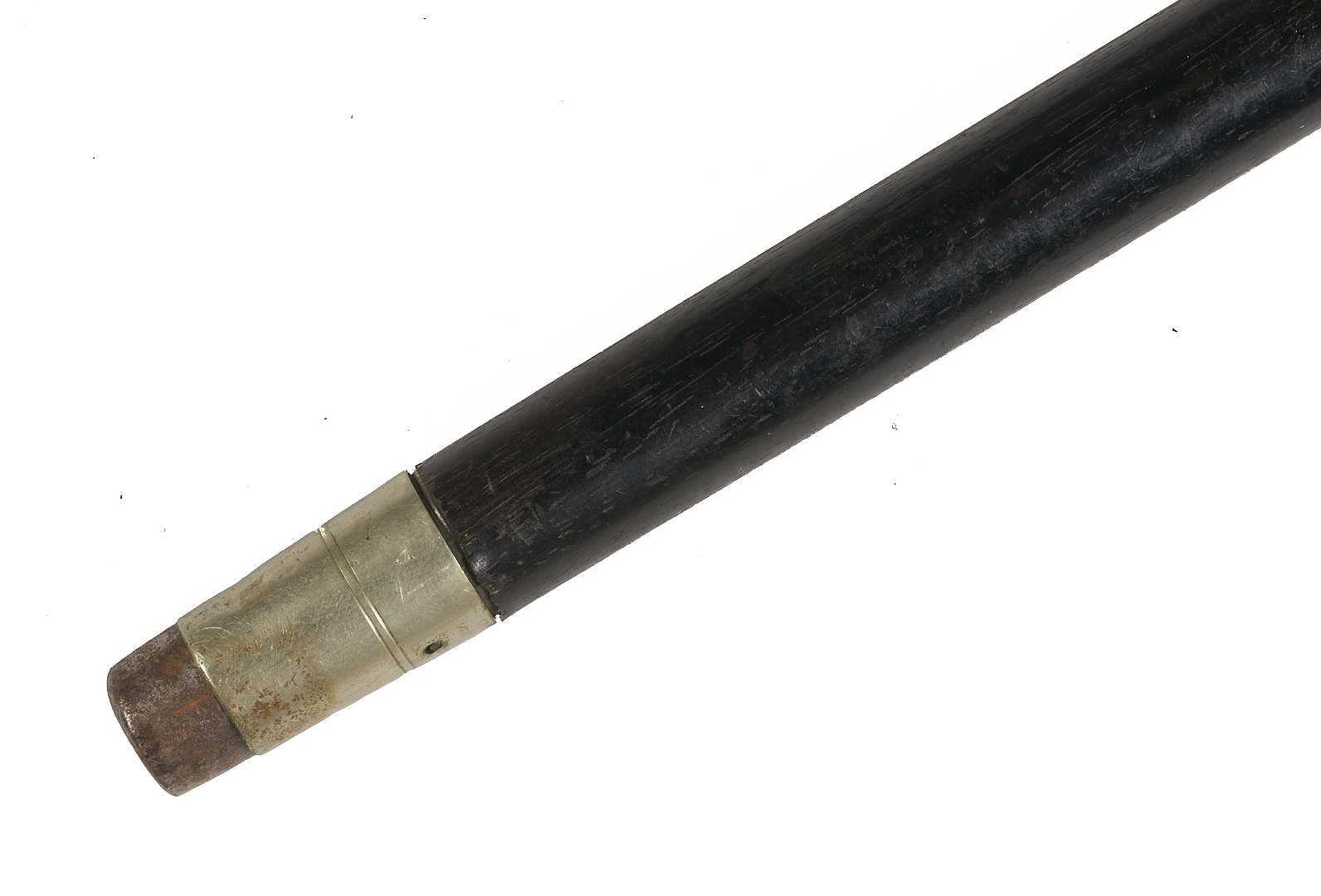
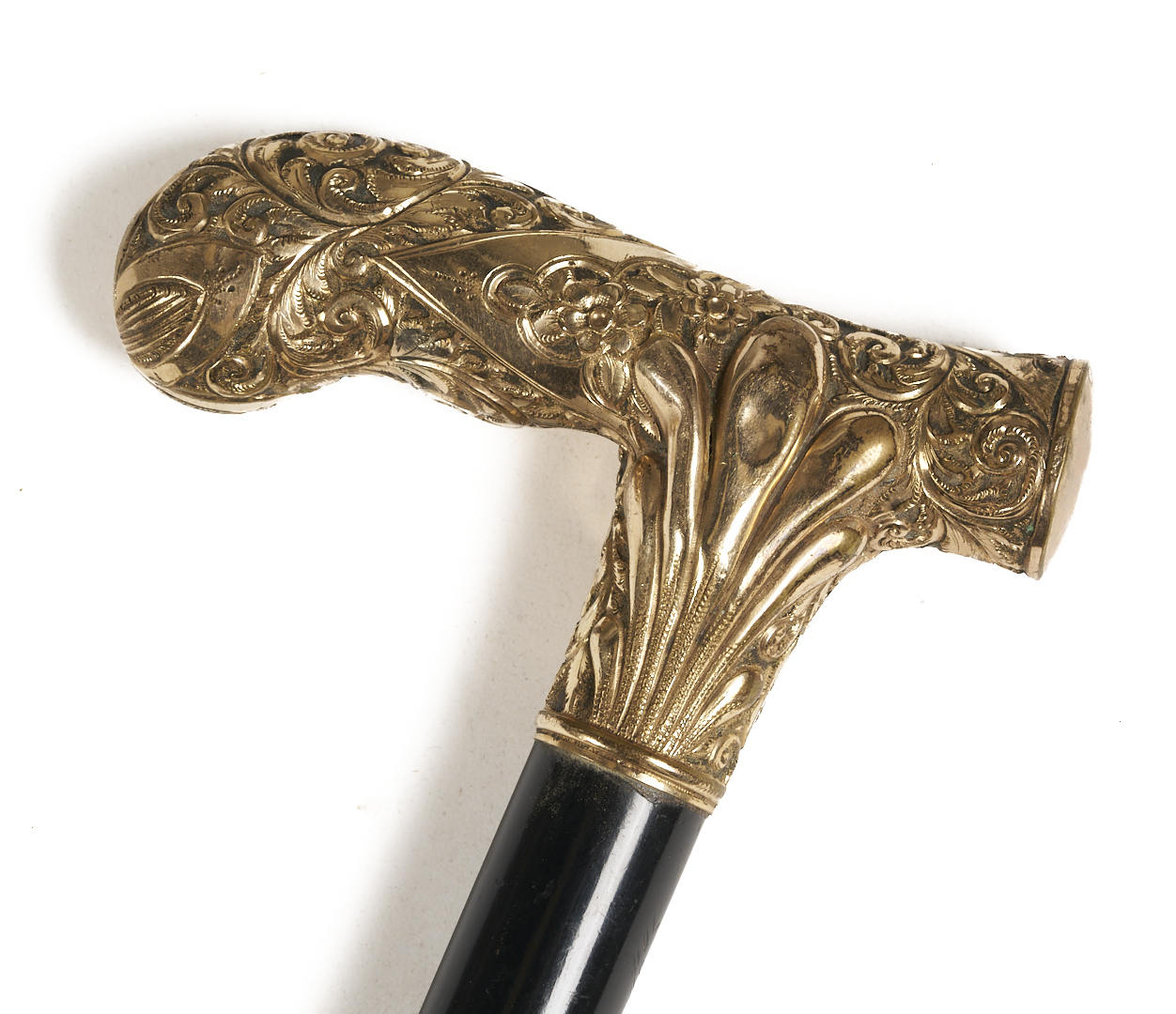
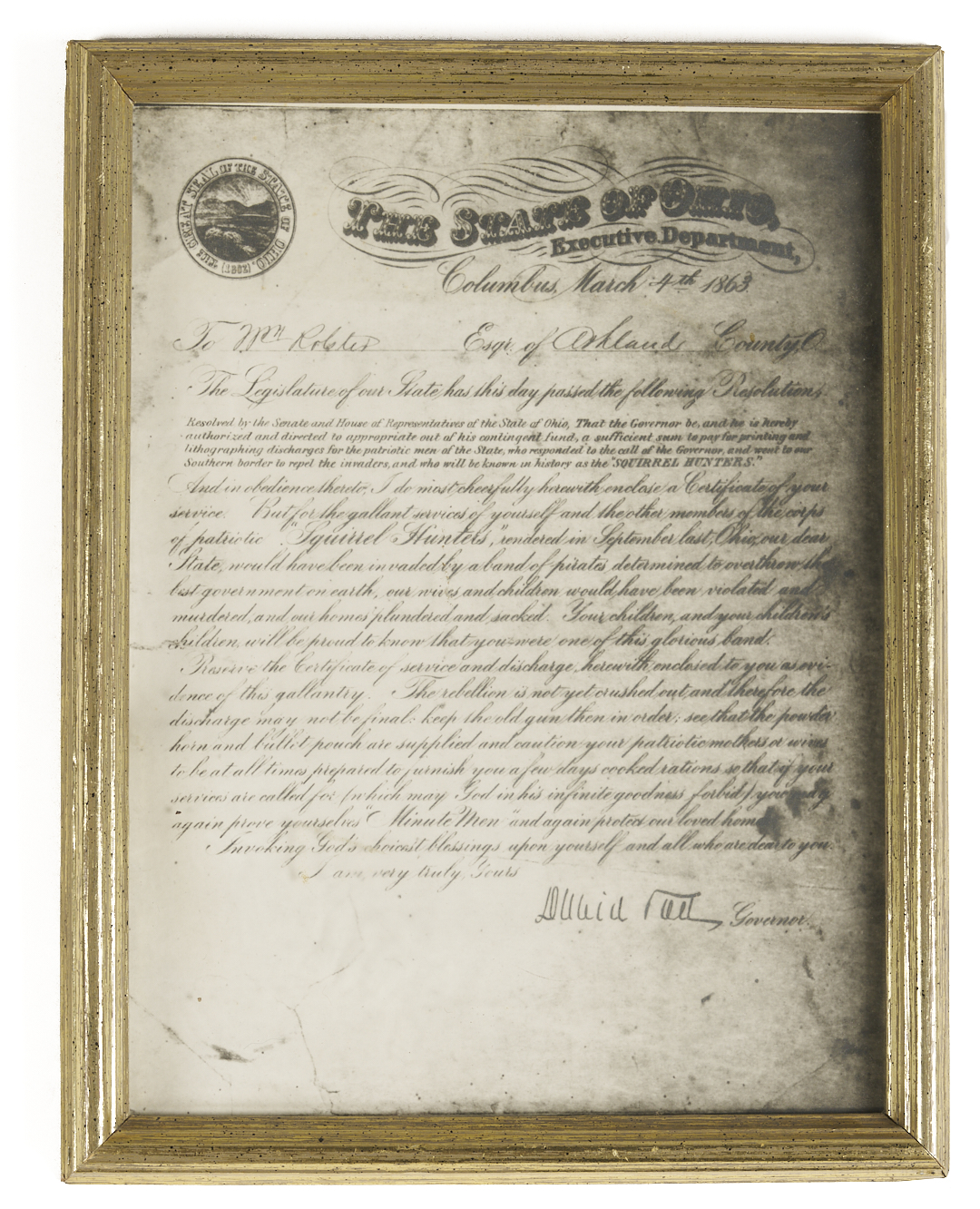
Folk Art Painted Jeweler’s Trade Sign in the form of a gold pocket watch, lettered RALSTON, with painted numerals and hands. Height: 32 in. X 27 in. diameter. Circa 1870. Note: This sign belonged to William Ralston (1824-1914) of Ashland, Ohio, and Fayetteville, Tennessee, a jeweler who also served as a member of the “Squirrel Hunter Militia” during the Civil War. A 10 in. x 13 in. framed copy of Ralston’s 1863 commendation by the governor of Ohio for this service accompanies this lot, along with Ralston’s gold-filled handled walking stick, with engraved presentation inscription from his sons “on his 68th birthday, Dec. 31, 1892.” (36 in. L).
Note: Ralston first appears in the 1850 census in Pennsylvania, working as a clerk. By the 1870 census he was married and living in the Ashland, Ohio area, and listed his occupation as a jeweler. The 1880 census reflects his relocation to Lincoln County, TN, where he continued to work as a jeweler, but by 1900 he listed his occupation as a farmer. He died in Lincoln County and is buried in Fayetteville.
Note about the “Squirrel Hunters”: “In early September of 1862, the Civil War was in its second year, and Confederate forces were on the move northward. Southern troops under General Kirby Smith were able to capture Lexington, Kentucky; Smith then dispatched General Henry Heth to capture nearby Covington, Kentucky, as well as the city of Cincinnati, just across the Ohio River– an effort which, if successful, would be the first invasion of Confederates into Ohio. In response to the fall of the last line of Union defense in the area, Major General Horatio Wright, commander of Union forces in Kentucky, ordered General Lewis Wallace to prepare Covington’s and Cincinnati’s defenses.
Once in Cincinnati, Wallace moved quickly to declare martial law, and at the same time issued a call in Ohio, Indiana, and Michigan for a volunteer militia. Local business owners were ordered to close their shops, and civilians to report for military duty in defense of the Ohio border, preparing defensive features like trenches in order to ready the two towns for attack. Ohio Governor David Tod left Columbus and came to Cincinnati to assist Wallace, ordering Ohio’s adjutant-general to send any available troops not currently guarding Ohio’s southern border, and for the state quartermaster to send 5,000 guns to equip Cincinnati’s militia. A number of Ohio counties offered their men for the defense of Cincinnati as well, an offer which Tod immediately accepted on Wallace’s behalf. He stated that only armed men should report, and that transport should be provided by railroads at no cost. The state of Ohio would later cover the bill.
Civilians from 65 counties converged on Cincinnati as part of a volunteer militia that would soon become known as the “Squirrel Hunters.” Many of these men had no previous military experience, and the weapons they brought were outdated – more suited to small game hunting than combat, and thus the source of their enduring nickname.” However, the reported force of 70,000 civilians effectively and quickly defended the border, repelling the Southern advance without direct conflict or bloodshed. Source: https://ohiomemory.ohiohistory.org/archives/4021 .
PROVENANCE: The estate of Josephine Ralston Binns (Mrs. Douglas Binns), Nashville/Fayetteville TN.
CONDITION: Sign: surface staining and wear throughout; full shrinkage crack across the face and crack to bow. Cane: 1″ dent and some wear to gold handle and shaft. Framed copy of commendation: Wear to gilding.