SOLD! for $4,674.00.
(Note: Prices realized include a buyer's premium.)
If you have items like this you wish to consign, click here for more information:
Selling with Case- Low Estimate: $5,000.00
- High Estimate: $6,000.00
- Hammer Price: $3,800.00
- Share this:
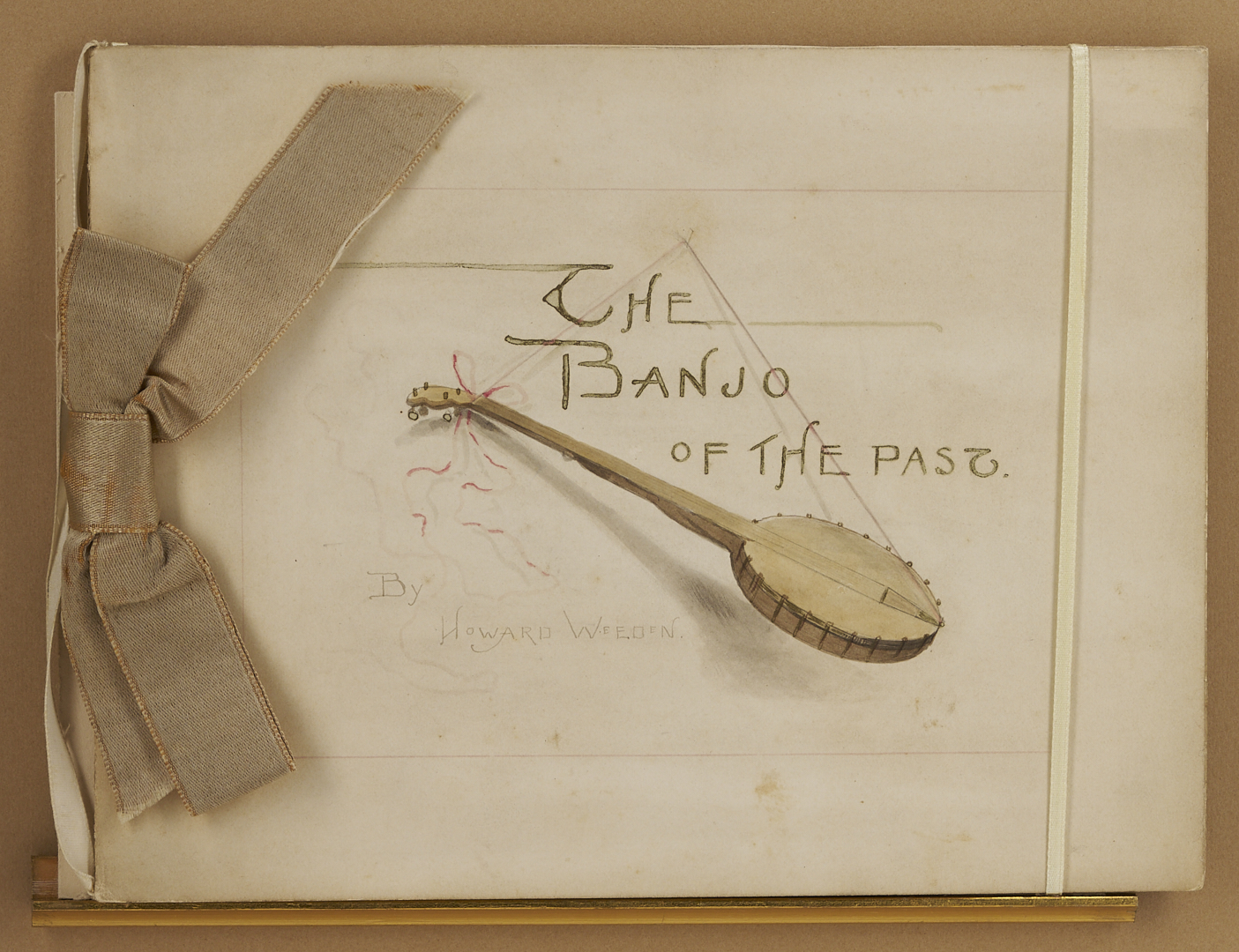
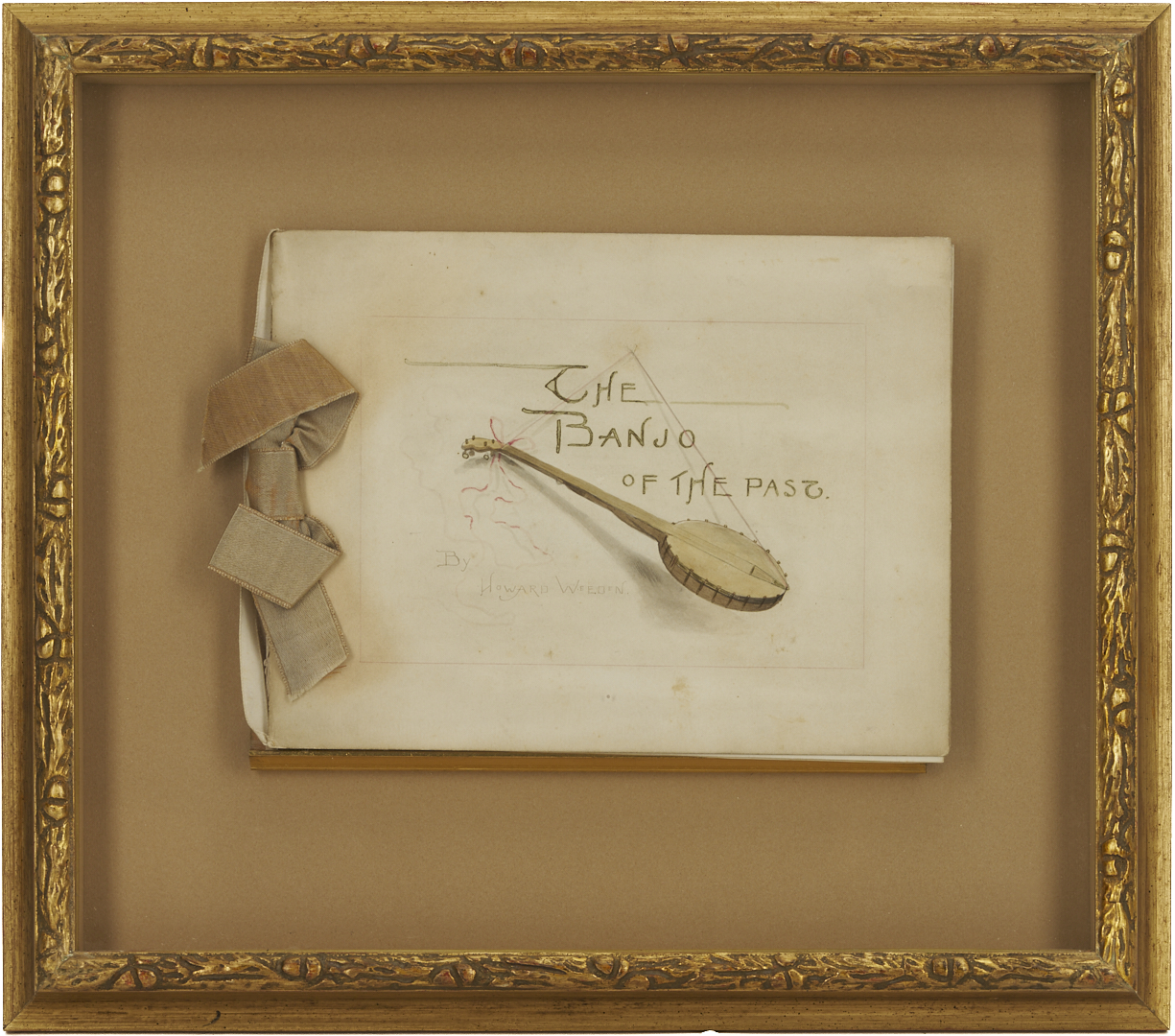
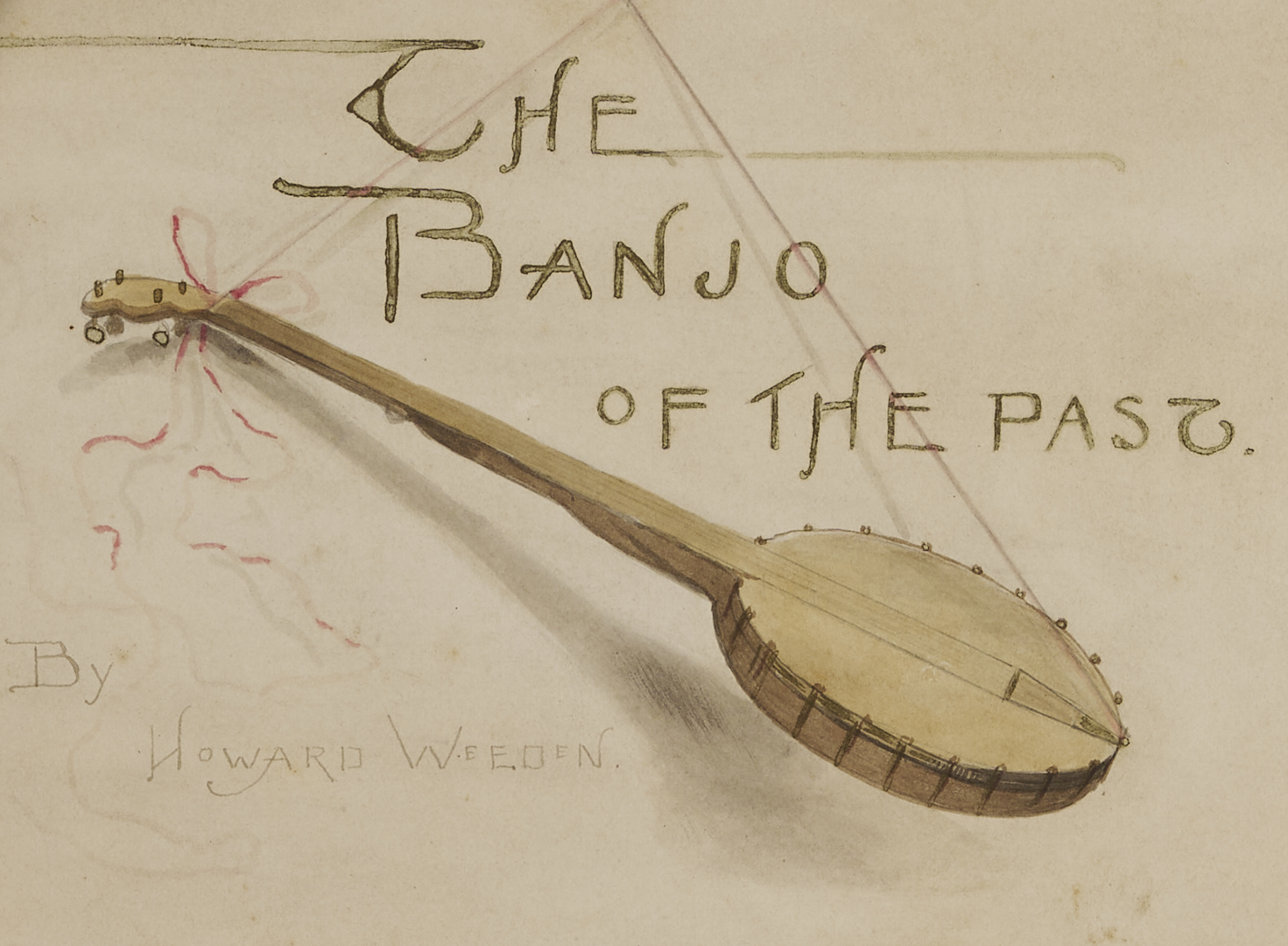
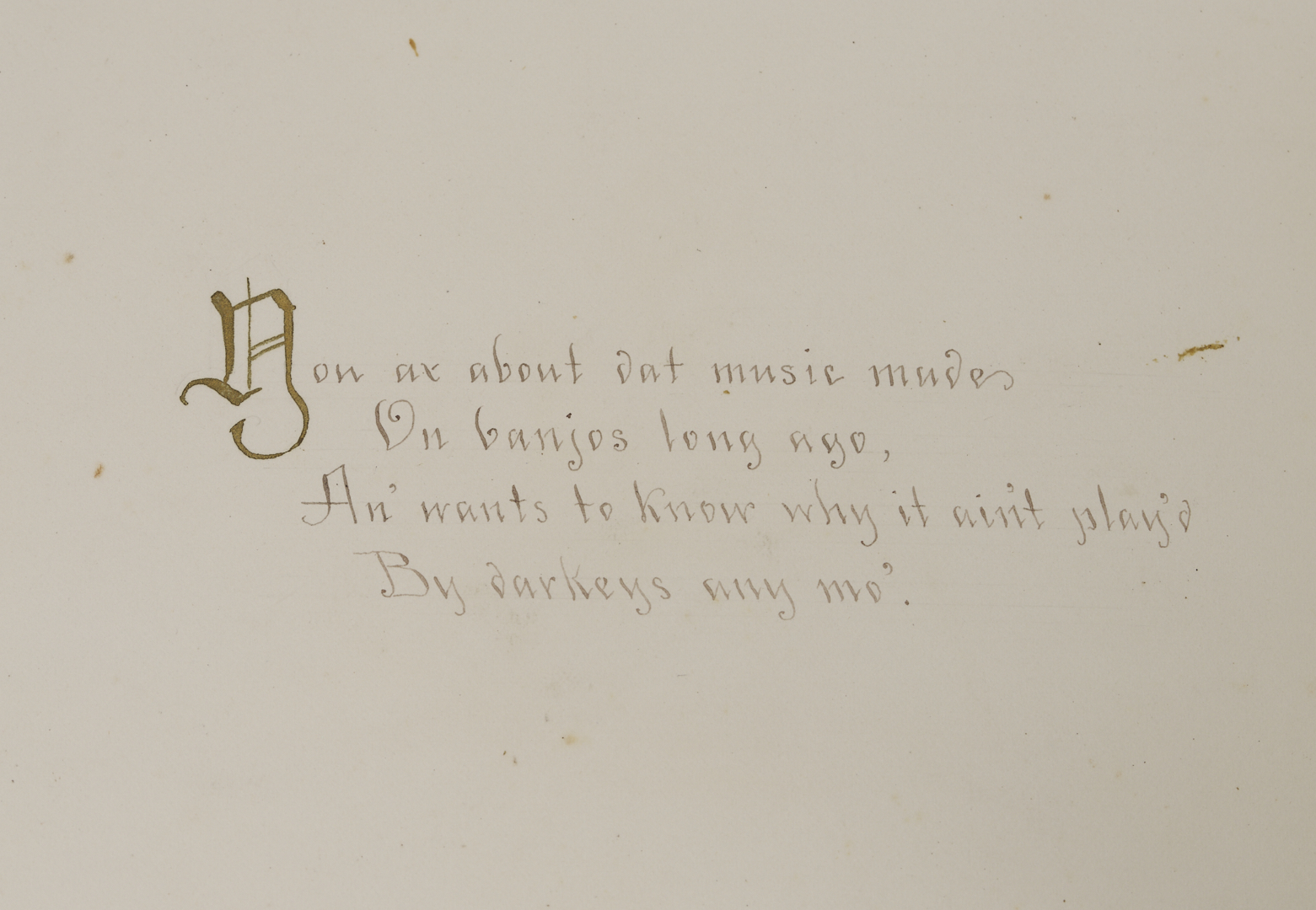
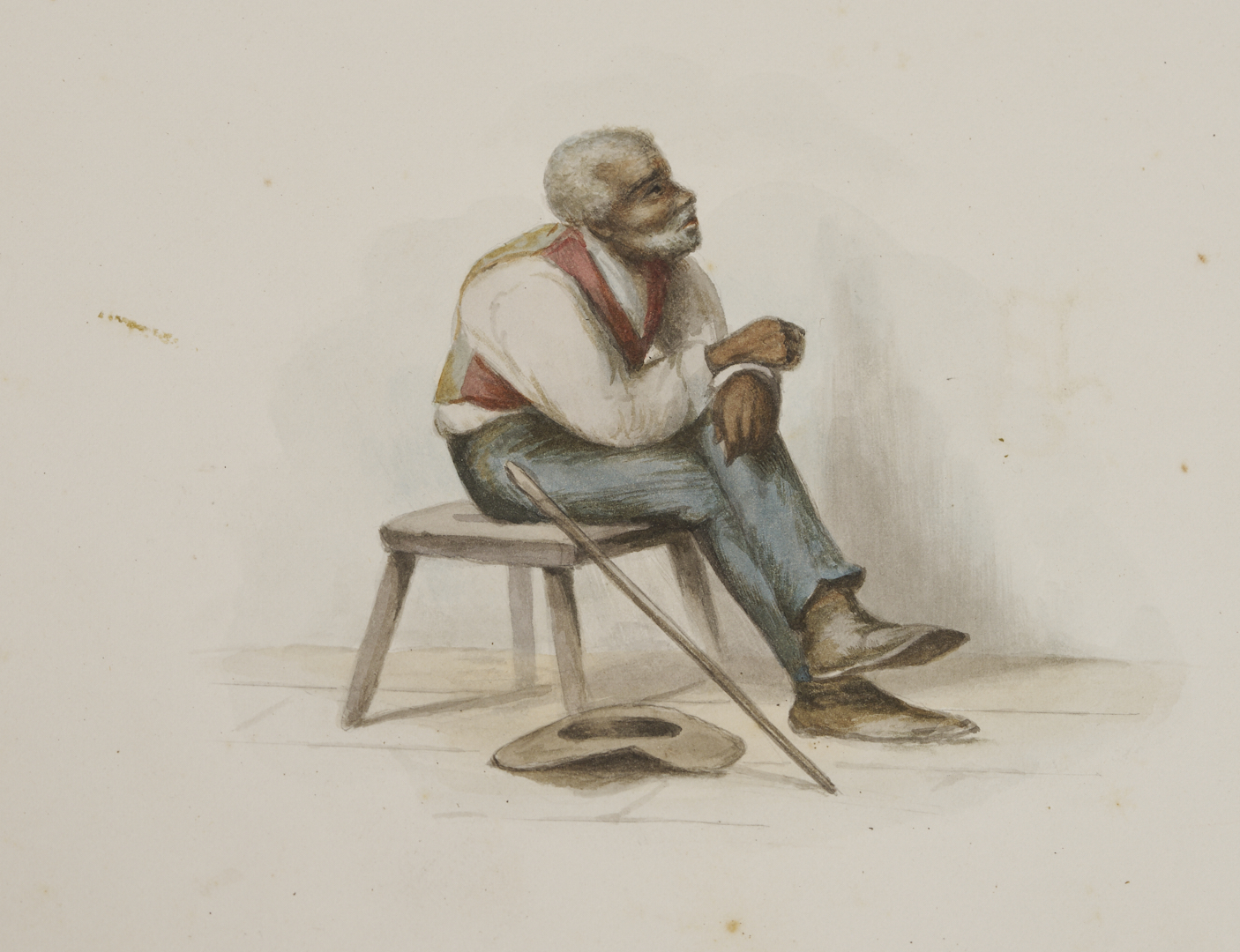
Maria Howard Weeden (Alabama, 1846-1905) original watercolor and pencil artist’s book on two sheets of bi-folded card titled “The Banjo of the Past” with the handwritten text of the poem that would go on to be published in Weeden’s 1899 book of poetry Bandanna Ballads, plus six accompanying original watercolor illustrations, including cover. Cover with illustration that depicts a banjo that hangs on a string, title, and text that reads “By Howard Weeden.”
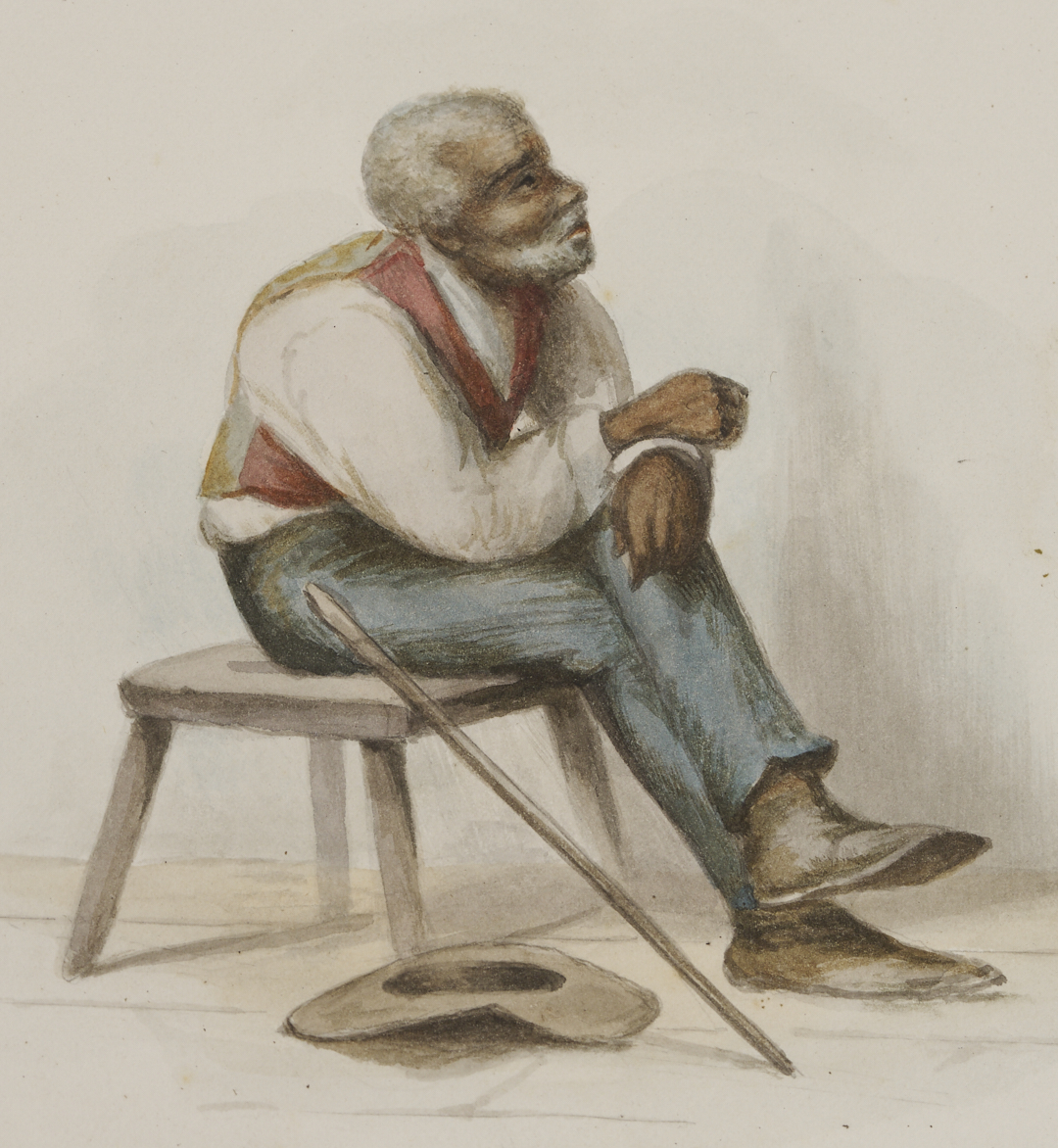
Second illustration depicts an elderly African-American man seated with legs crossed on a stool. A hat lies on the floor and a cane leans against his stool. With the first verse of the poem, written in calligraphic text, on the preceding page. (Note that in the published version of the poem the first verse ends with “By n*****s any mo'” whereas in the present example the text reads “By darkeys any mo’.” Additionally, while the present text includes the correctly-spelled word “tunes” the published version of the poem spells this word “chunes.”)
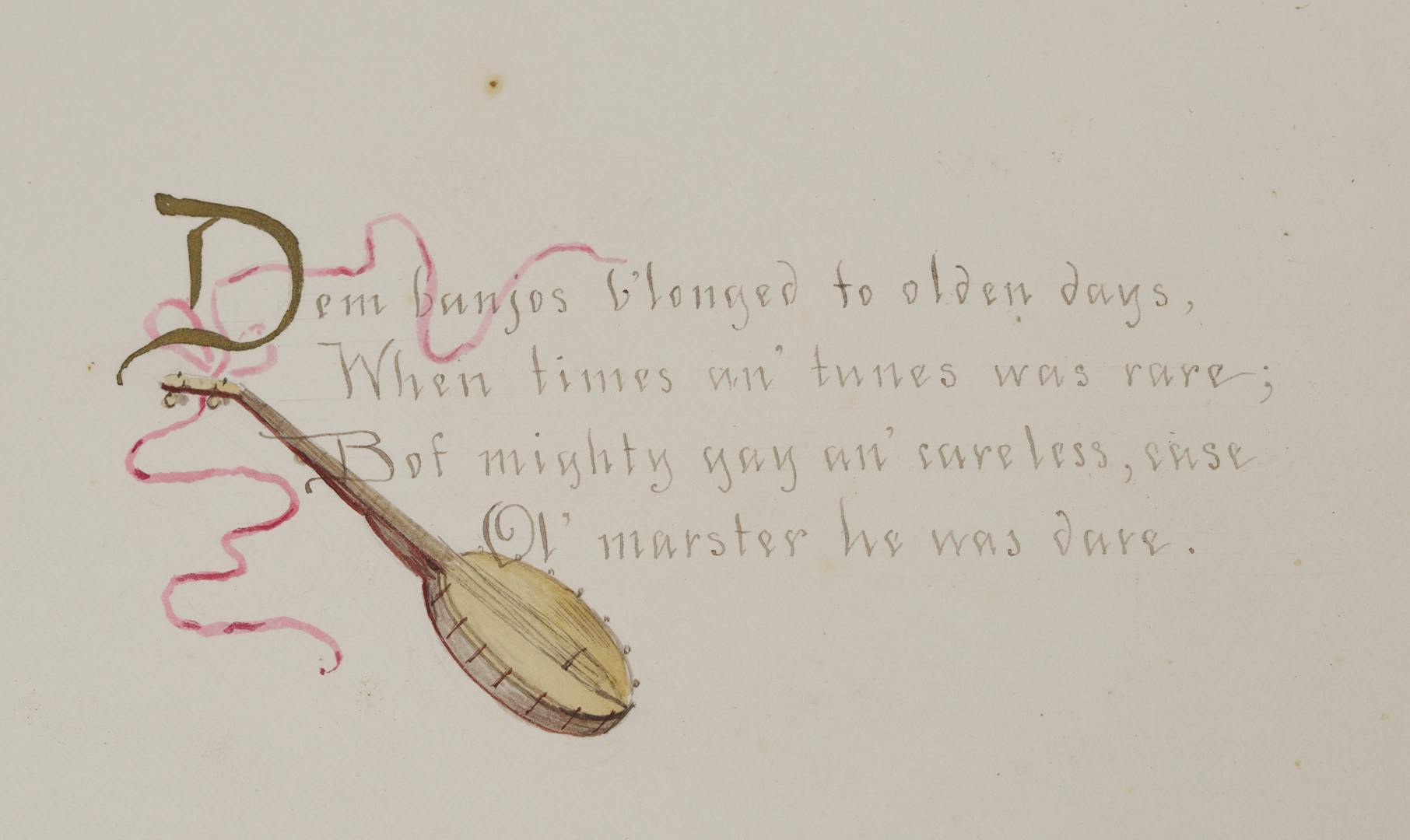
Third illustration depicts a banjo with a red ribbon and accompanies the second verse of the poem. (Note that the final line of the verse as published reads “When we was gay as children–‘case, / We didn’t have a care” while the present text instead reads “Bof mighty gay an’ careless, case / Ol’ marster he was dare.)”
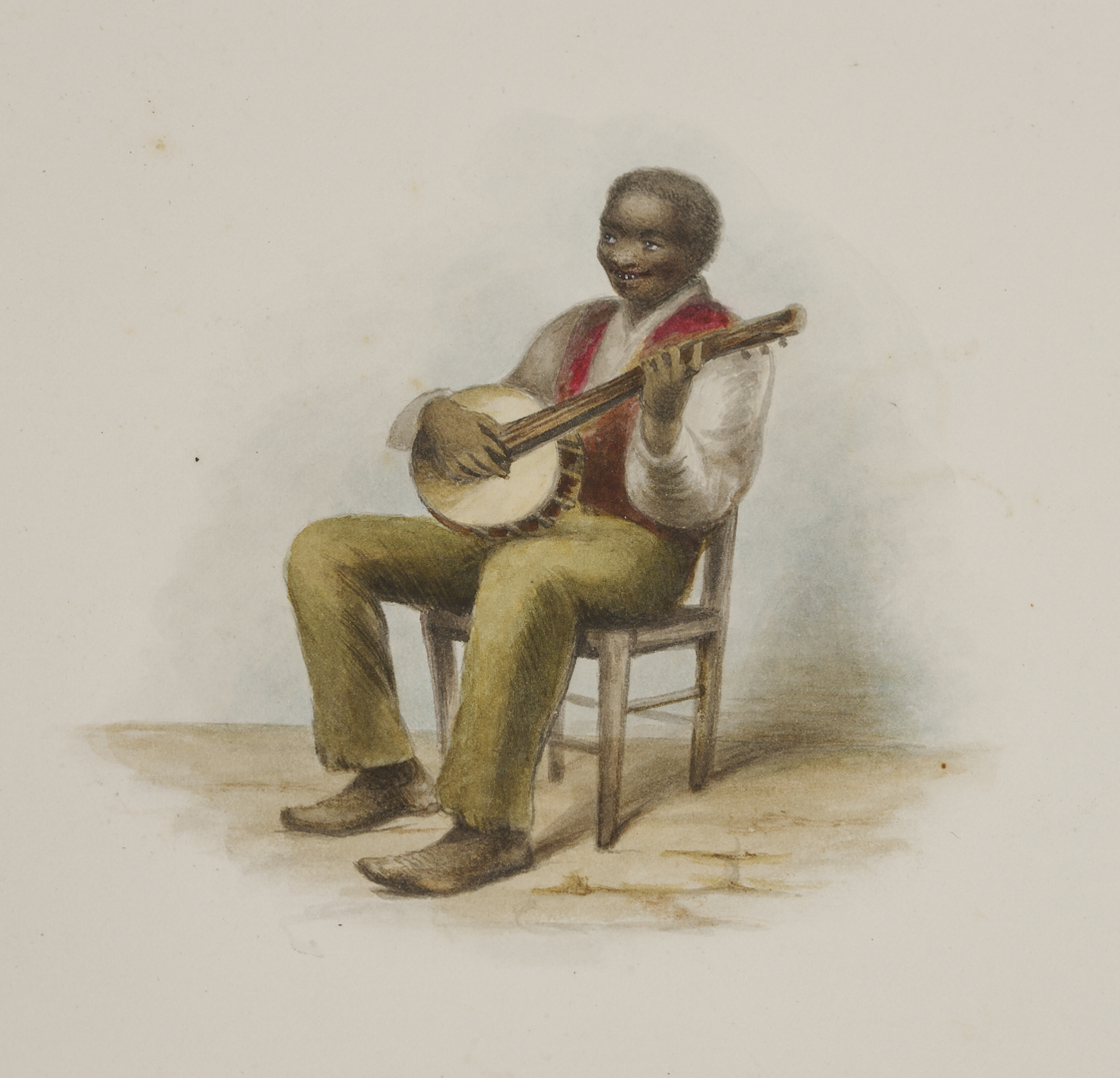
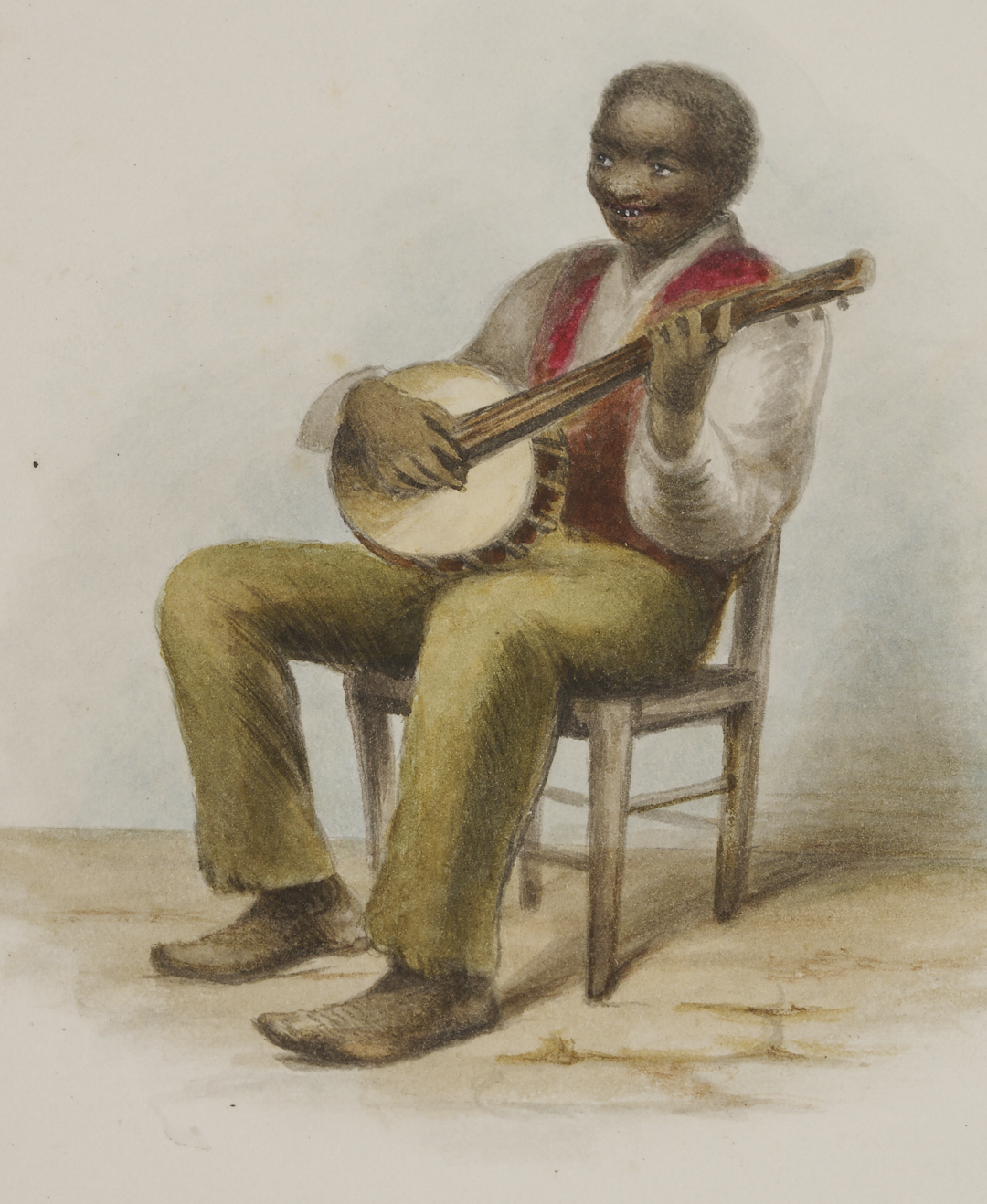
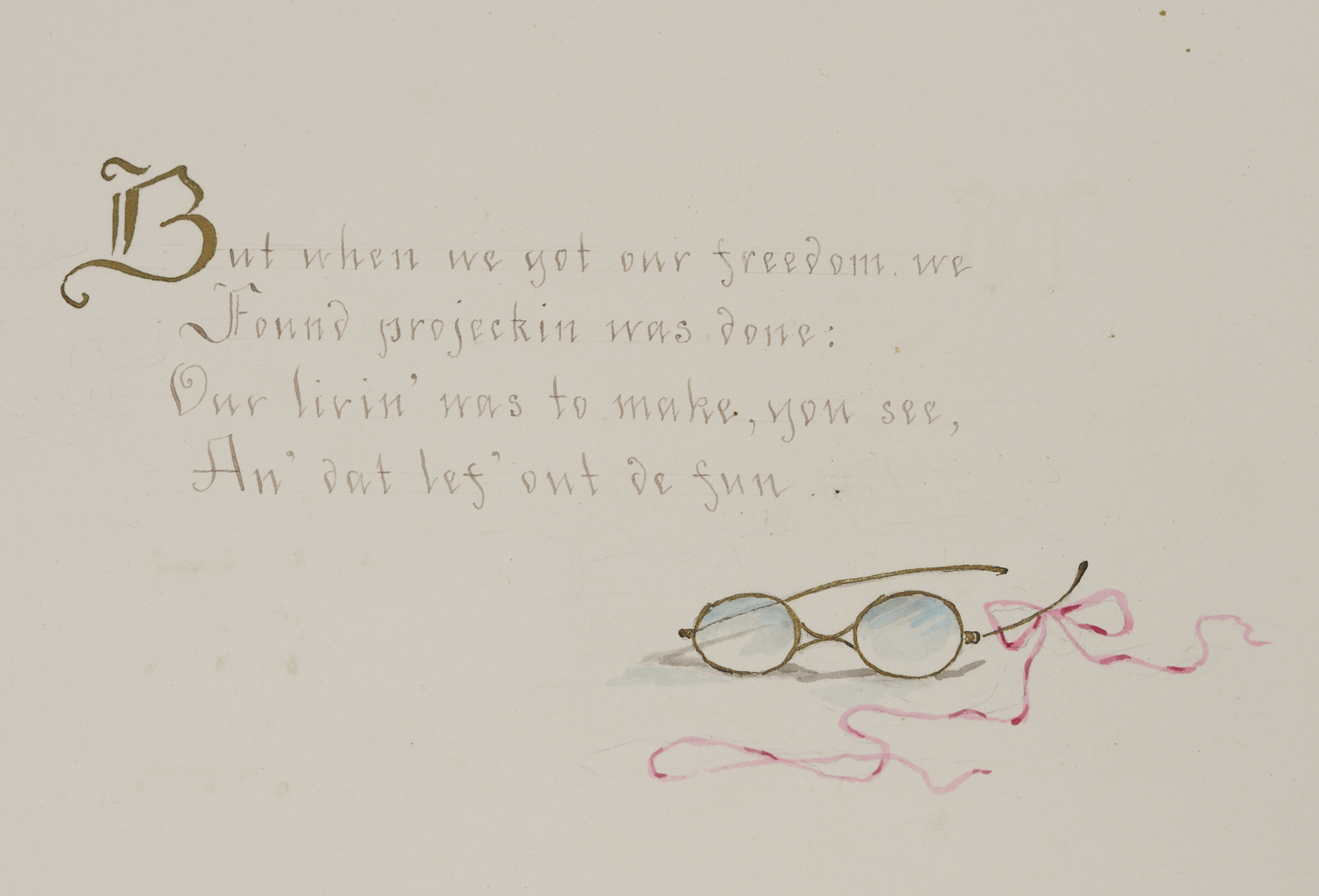
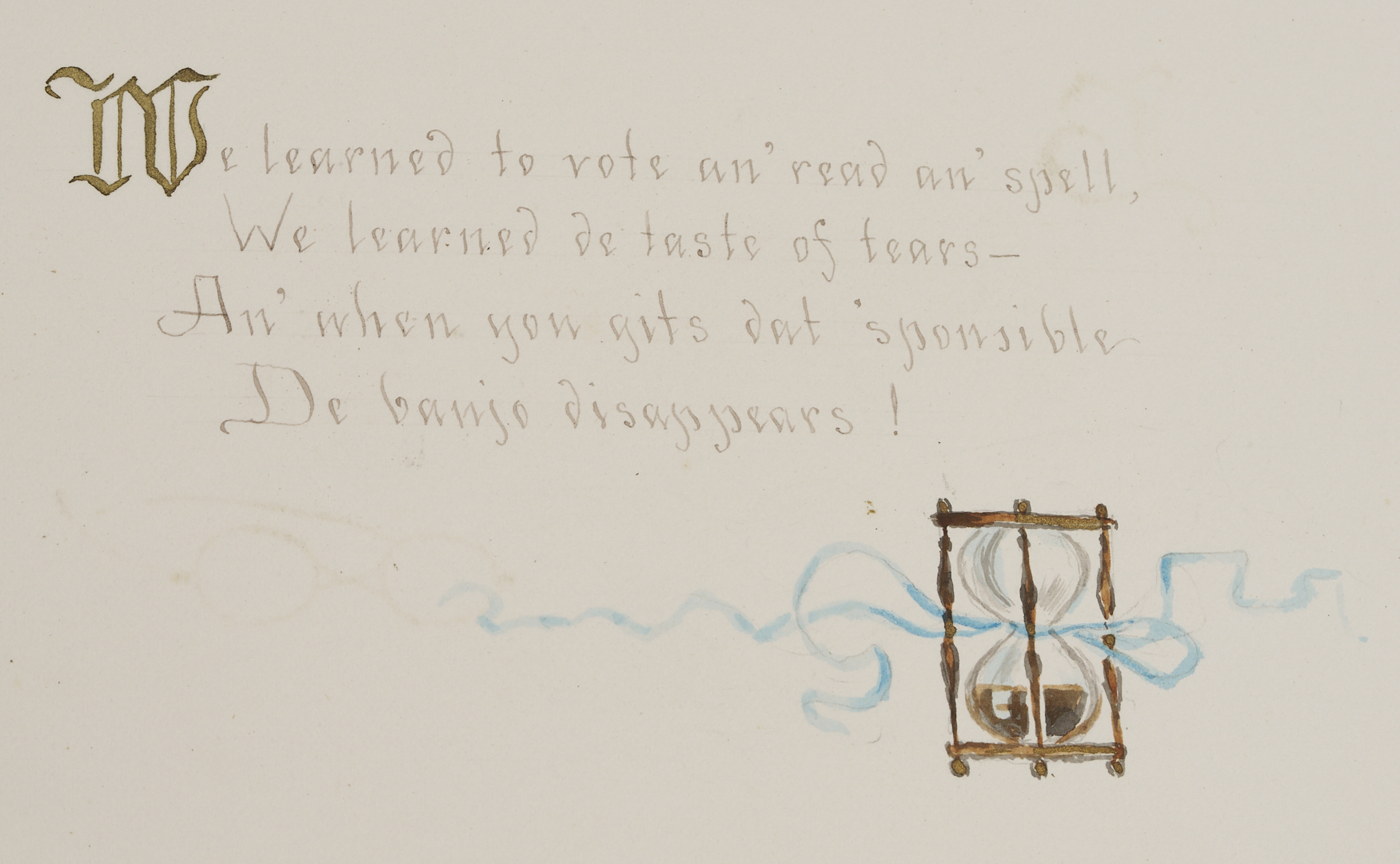
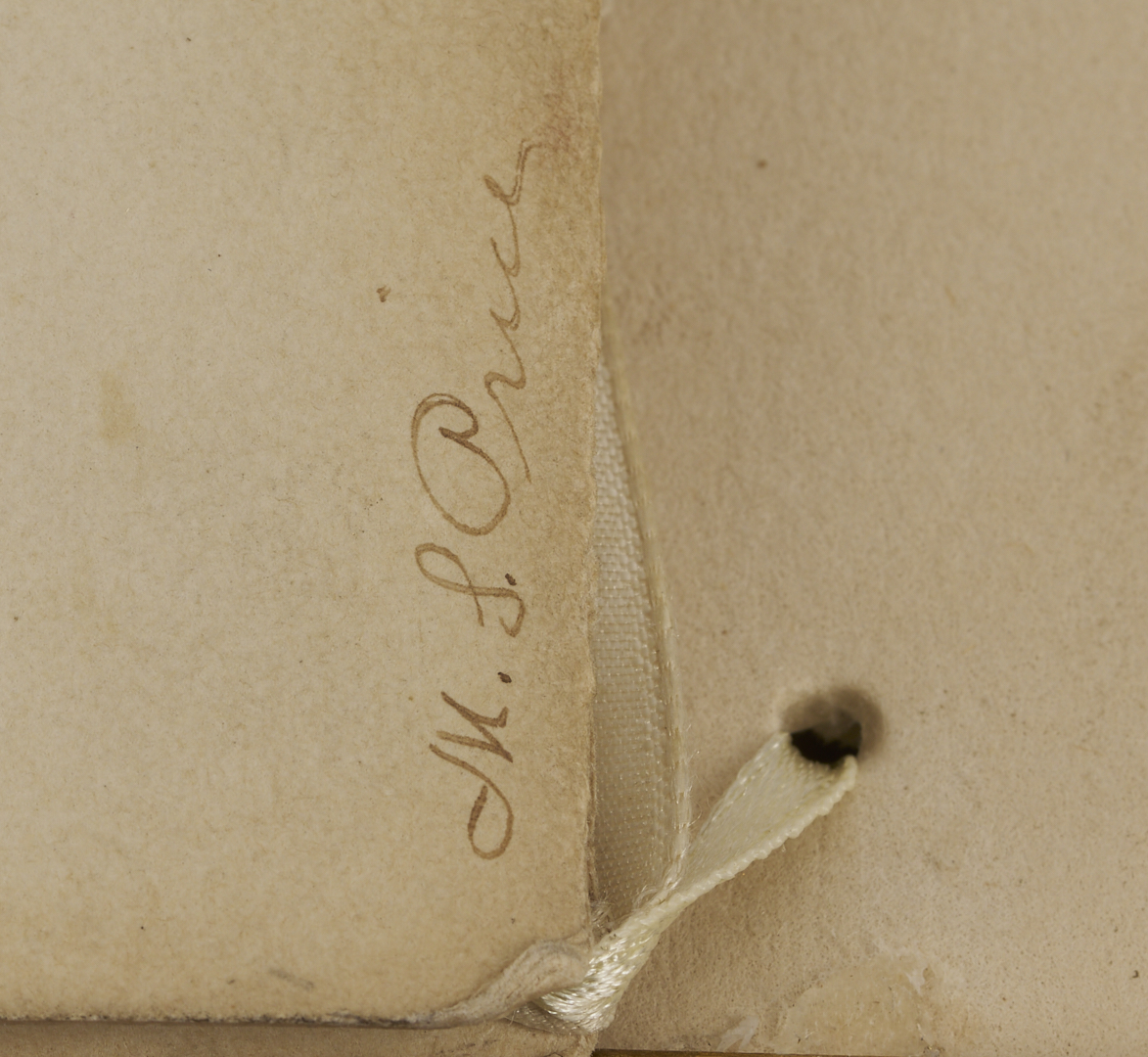
Fourth illustration depicts a young, seated African-American man in a red vest who smiles and plays a banjo. Fifth illustration depicts a pair of glasses with a red ribbon and accompanies the third verse of the poem. Sixth illustration depicts an hourglass tied with blue ribbon and accompanies the text of the poem’s final verse (note that in the second line of this verse the word “of” is correctly spelled, whereas in the published version Weeden spells the word “ob.” Bound with ribbon laced through three holes at left of each page. Book rests under glass on a giltwood support and within a shadowbox giltwood frame. Book: 6 7/8 in H x 9 in. W. Framed: 13 3/4 in. H x 15 5/8 in. W. Late 19th or early 20th century.
Biographical Note: Maria Howard Weeden was born in 1847 in Huntsville, Alabama, the youngest of six siblings. She showed artistic talent at an early age and was encouraged by her mother, who took her to study with William Frye, a well-known Southern portrait painter living in Huntsville at the time. She also studied art at the Huntsville Female Seminary. However, the Weeden family was financially ruined in the wake of the Civil War, and she was unable to pursue more formal training or visit places like Europe to find subject matter.
As Martha Severens writes in “150 Years of Watercolor,” “Her sitters were generally members of her community who were former slaves serving as cooks, nannies, and gardeners. At a time when many artists were caricaturing African Americans, Weeden preferred to render more dignified and uplifting portraits. After visiting the World’s Columbian Exposition in Chicago, where she encountered many caustic images of the Uncle Remus variety, she resolved to pursue a different direction. She later recalled: ‘Then and there I awoke to the realization that right around me was a subject of supremest artistic interest, the old ex-slave, who henceforth became theme for my muse and model for my brush.”
It is said that a combination of her nearsightedness and using brushes with only 3 hairs for painting allowed her to capture delicate details. Weeden did not use her first name on her works, preferring to sign them “Howard Weeden”. Her childhood home in Huntsville is now the Weeden House Museum and contains many of her works. Most of her subjects never commissioned these portraits, so she never found great commercial success. She also published four books of poetry with accompanying illustrations.
PROVENANCE: Living Estate of Paula Brown; Purchased from Robert M. Hicklin, Jr. Inc. Spartanburg, SC, 1989.
CONDITION: Overall very good condition. With minor soiling to front cover plus staining from binding ties to each page and cover at extreme left, outside of images and text. Negligible foxing spots throughout plus minor 1/2 inch-long accretion to illustration of seated elderly man, with related contact accretion to previous page, both outside of images and text.