SOLD! for $4,428.00.
(Note: Prices realized include a buyer's premium.)
If you have items like this you wish to consign, click here for more information:
Selling with Case- Low Estimate: $3,000.00
- High Estimate: $3,400.00
- Hammer Price: $3,600.00
- Share this:
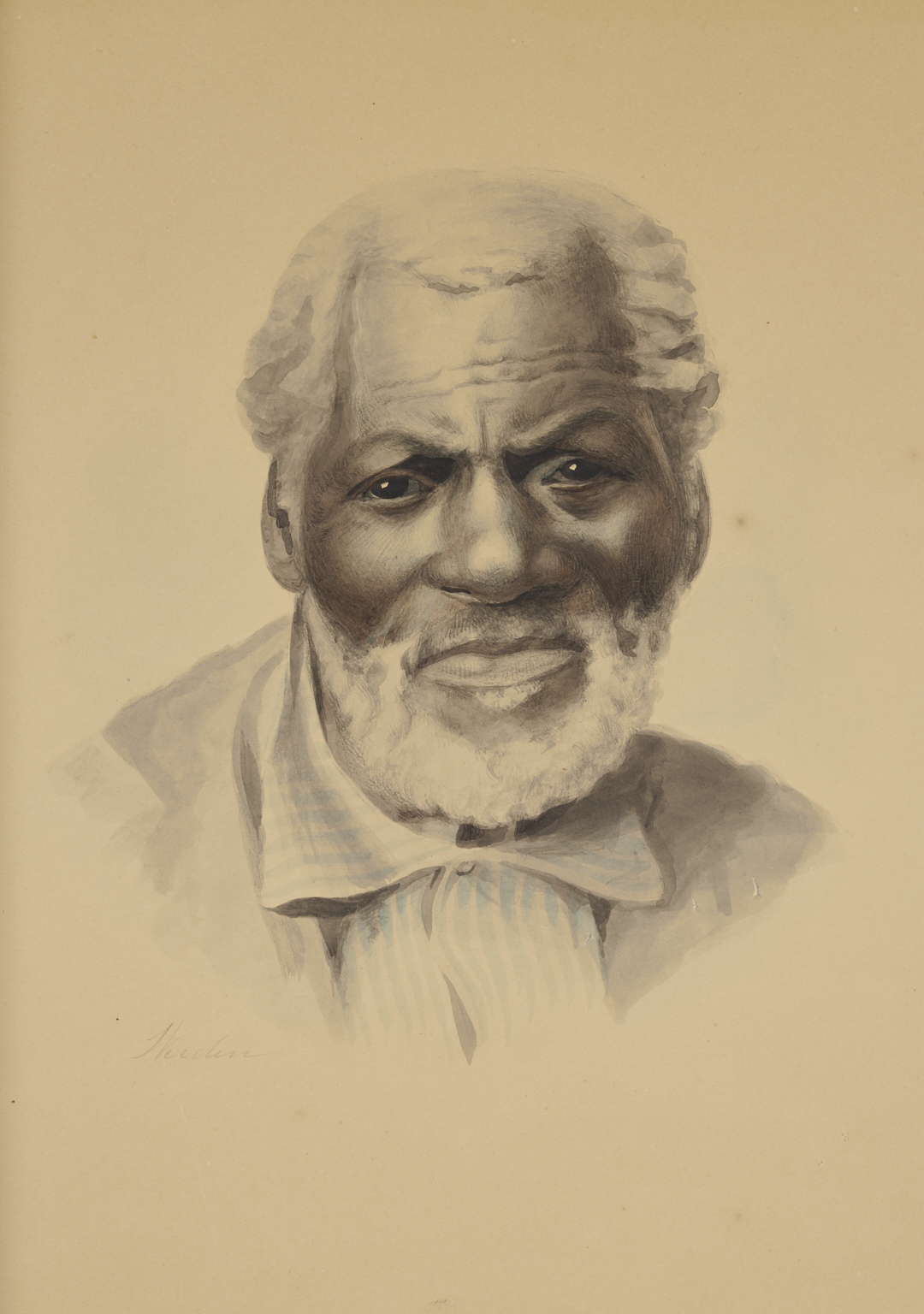
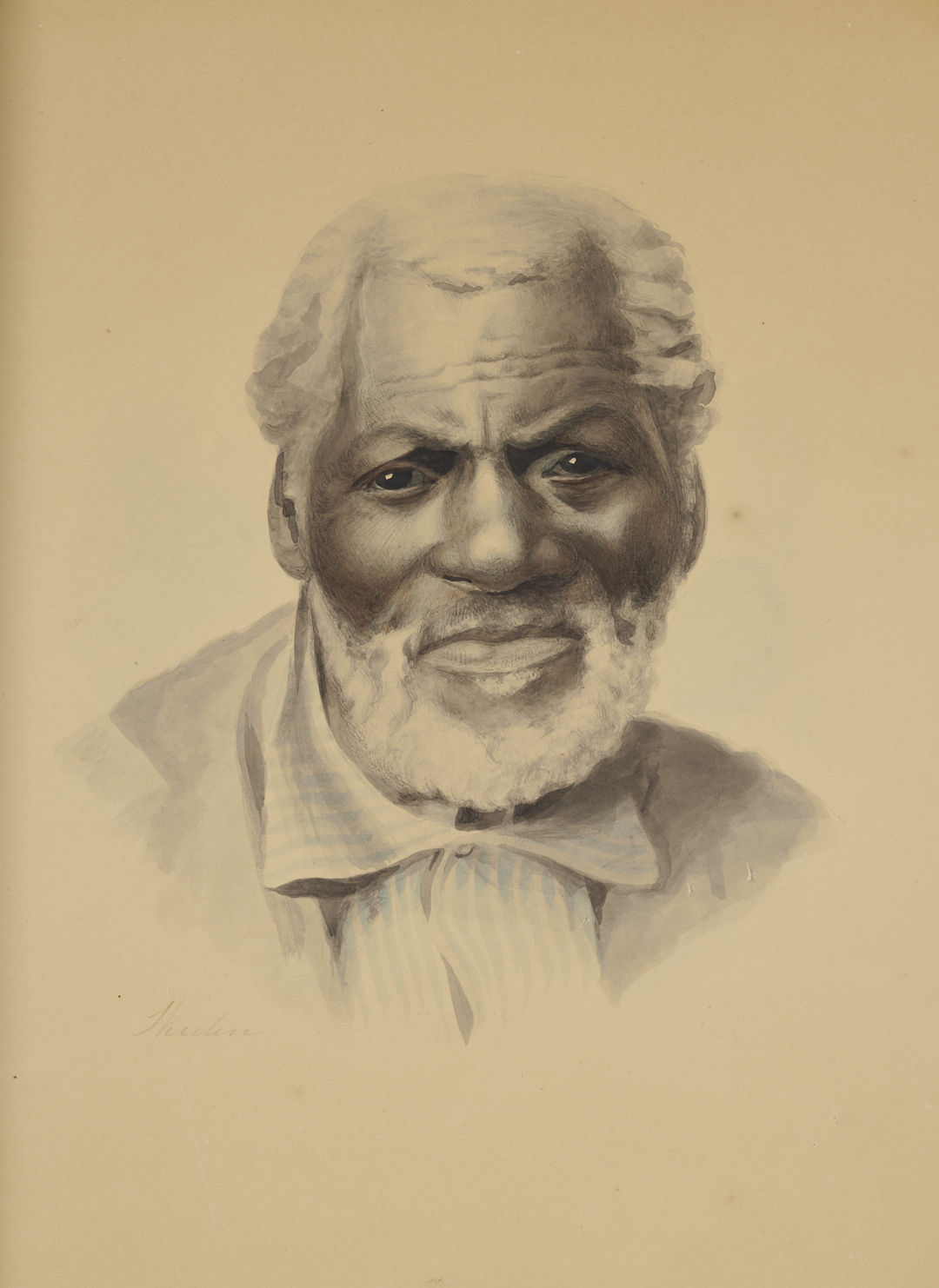
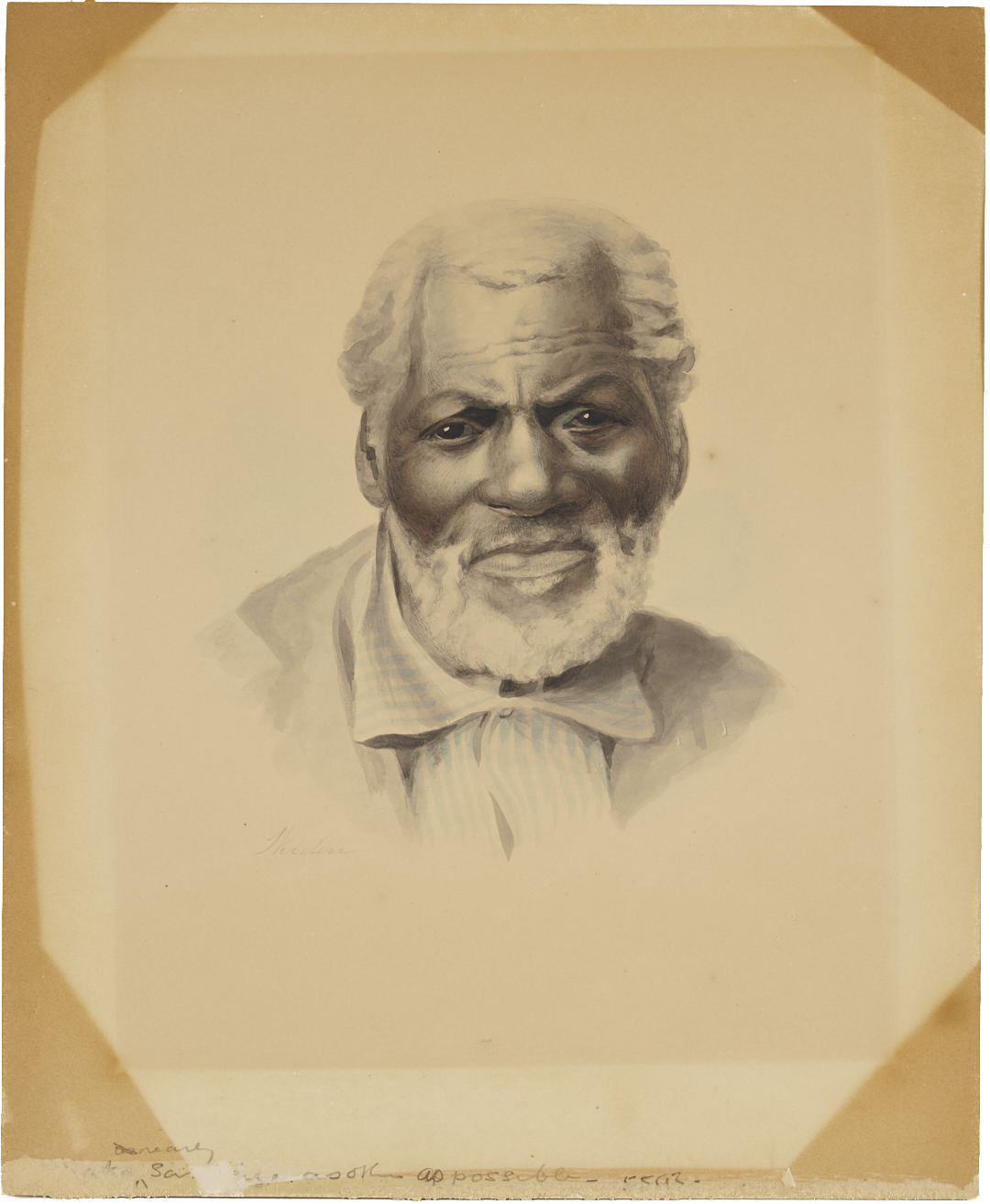
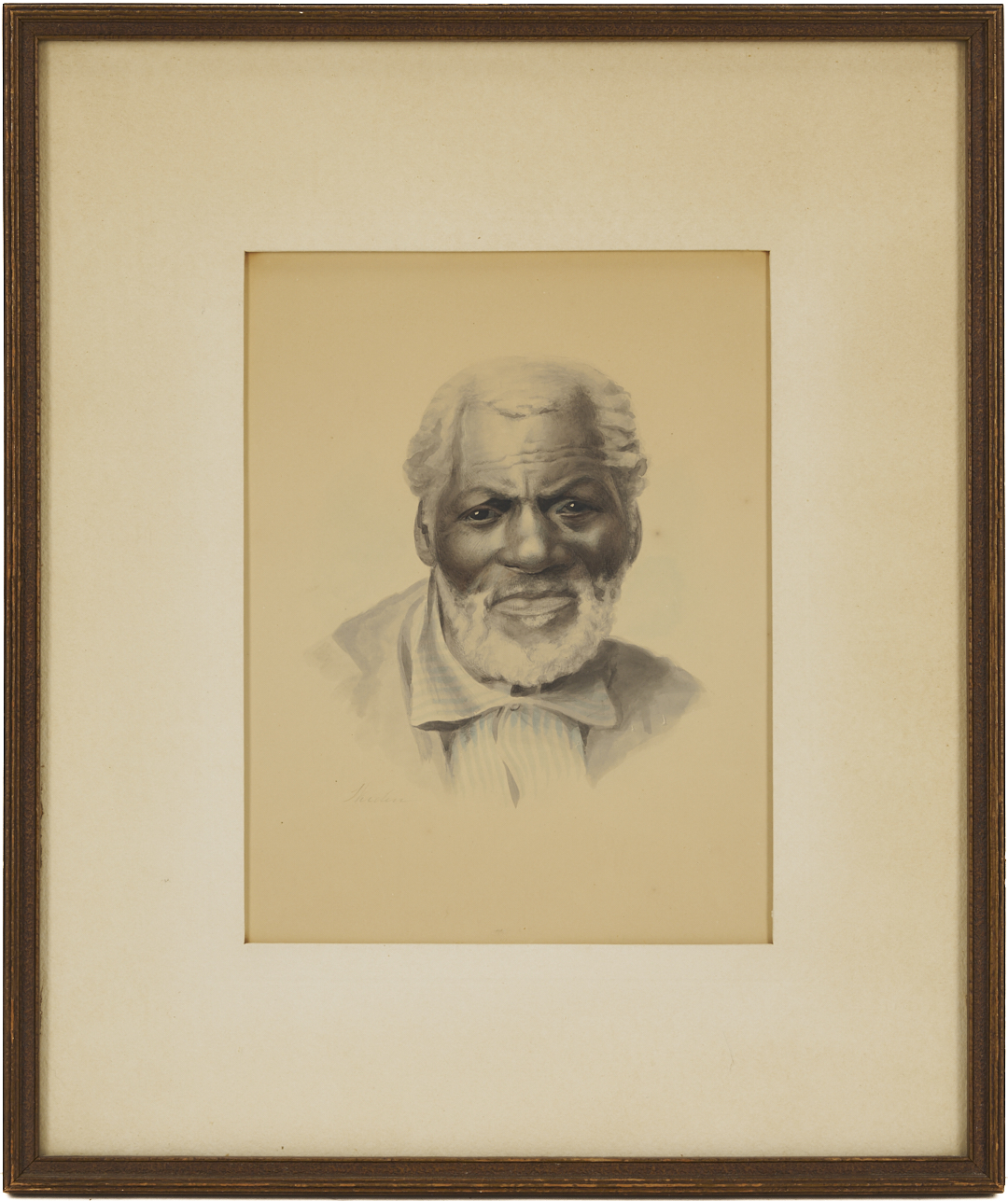
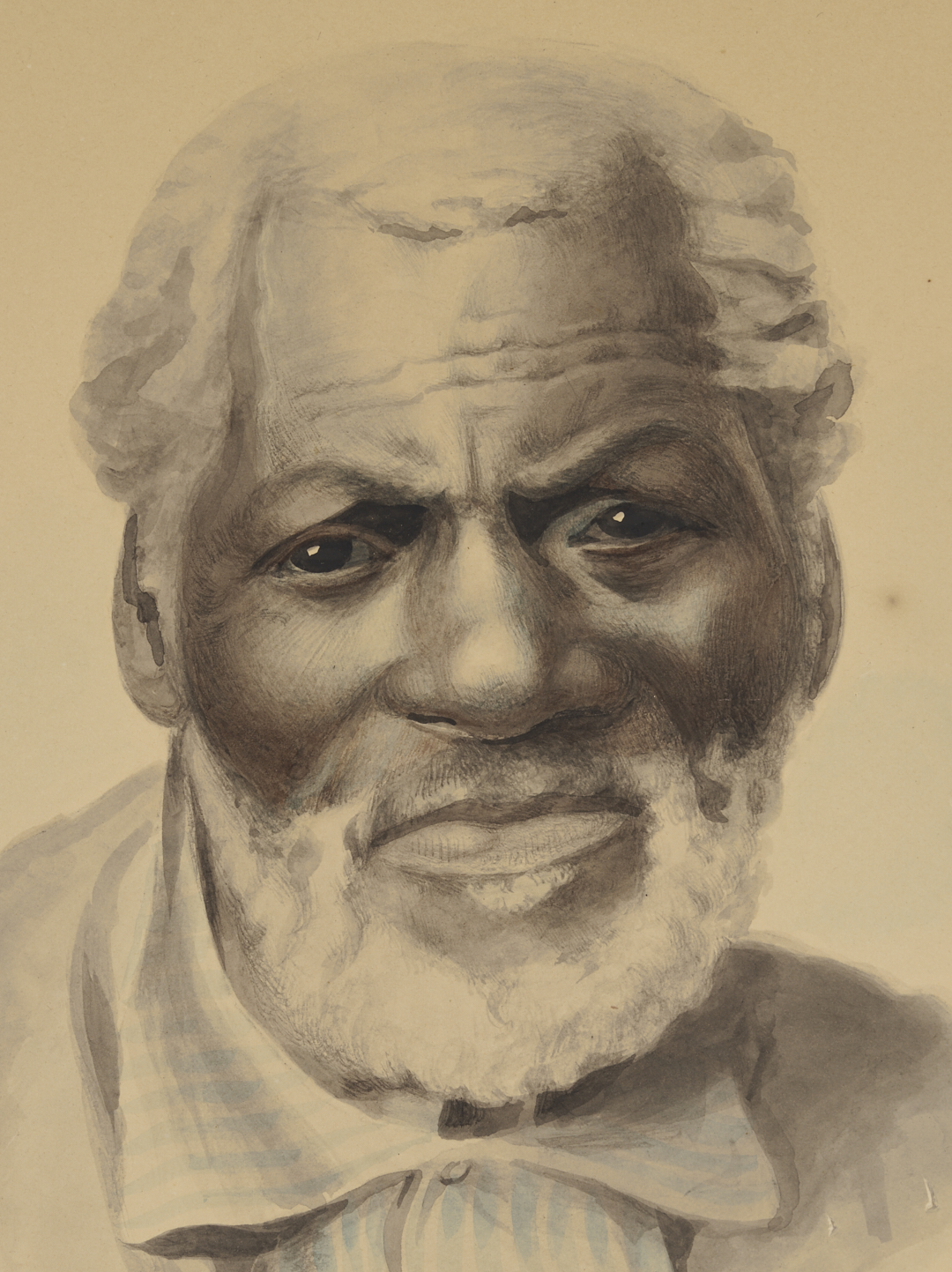
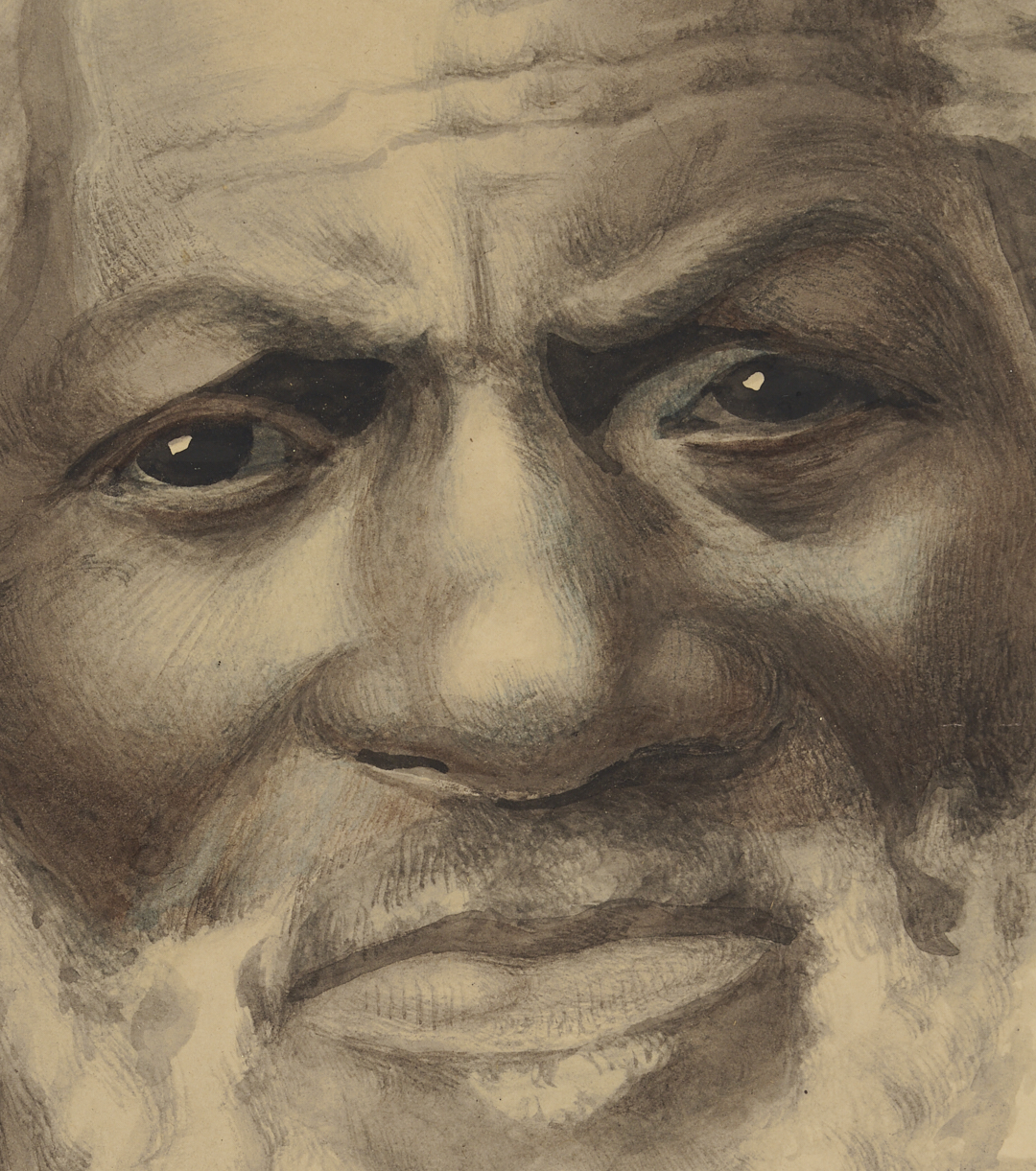
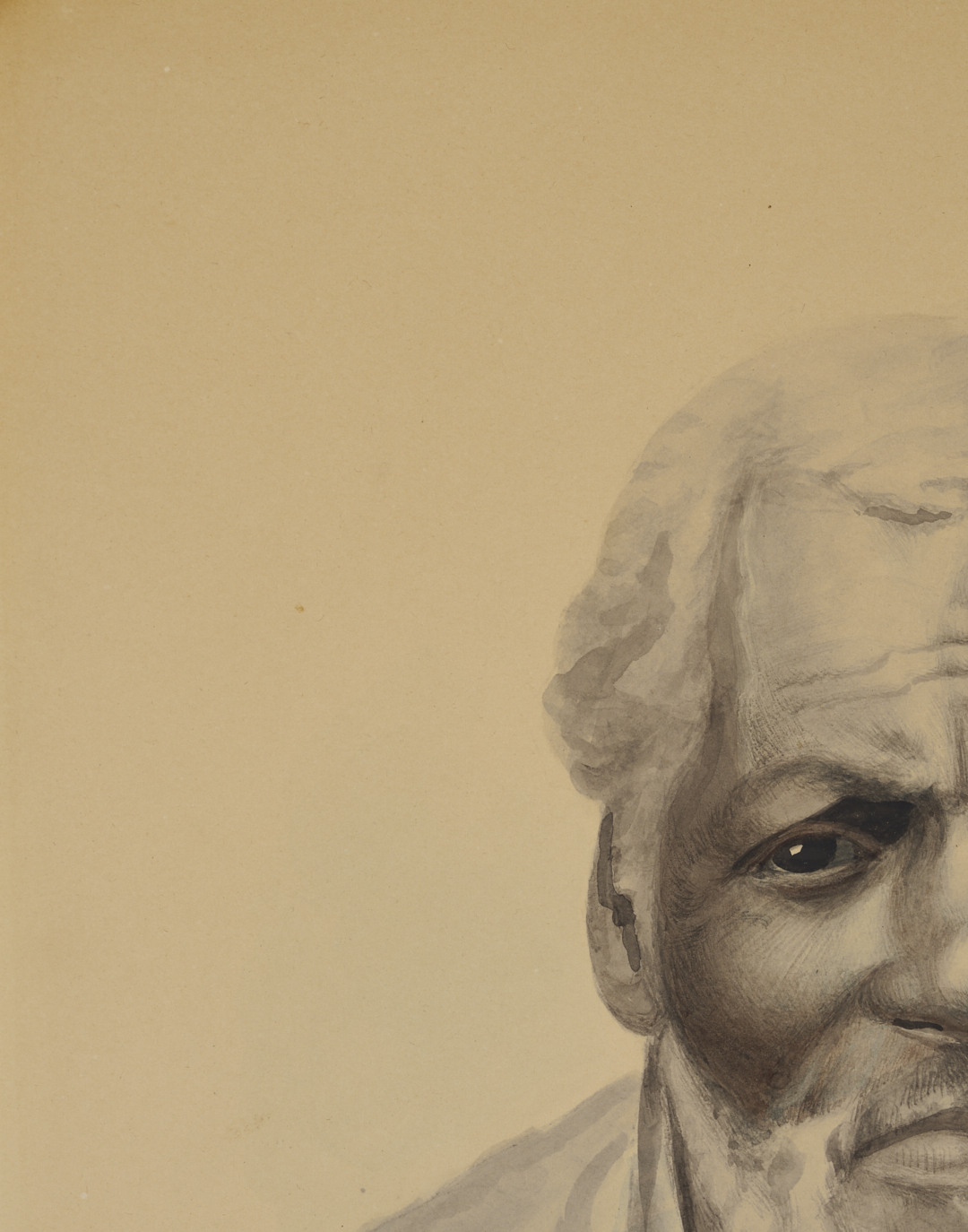
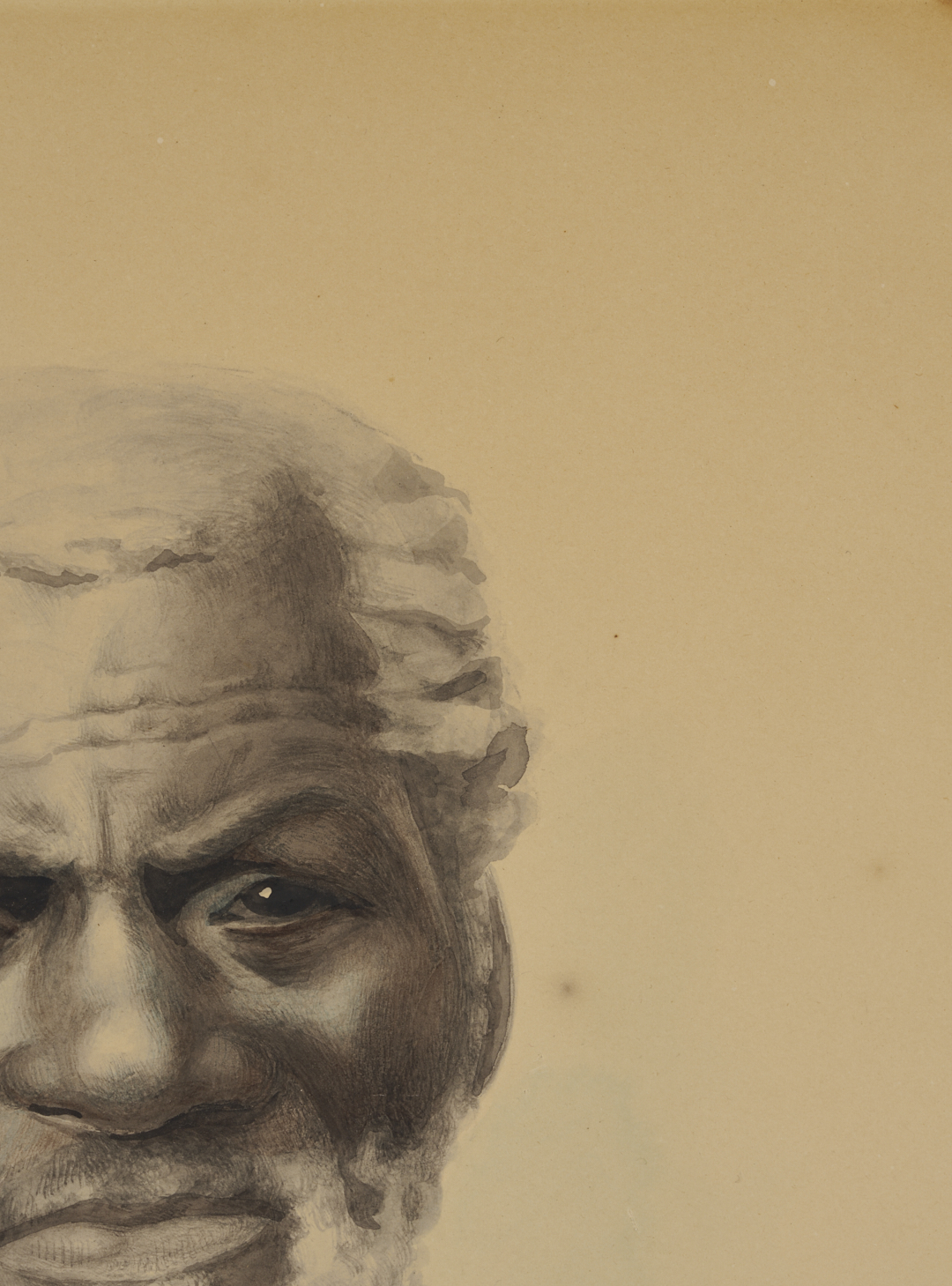
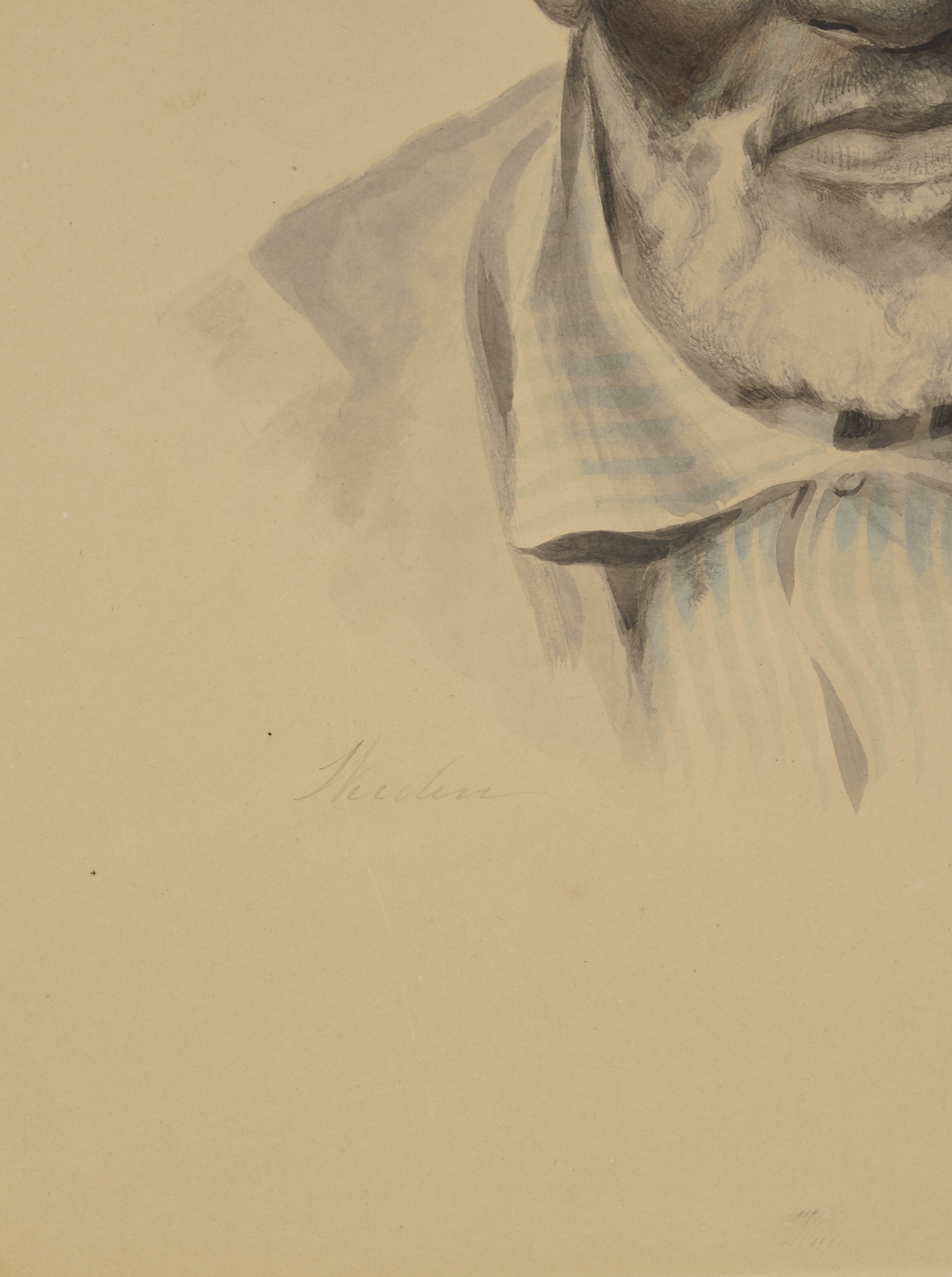
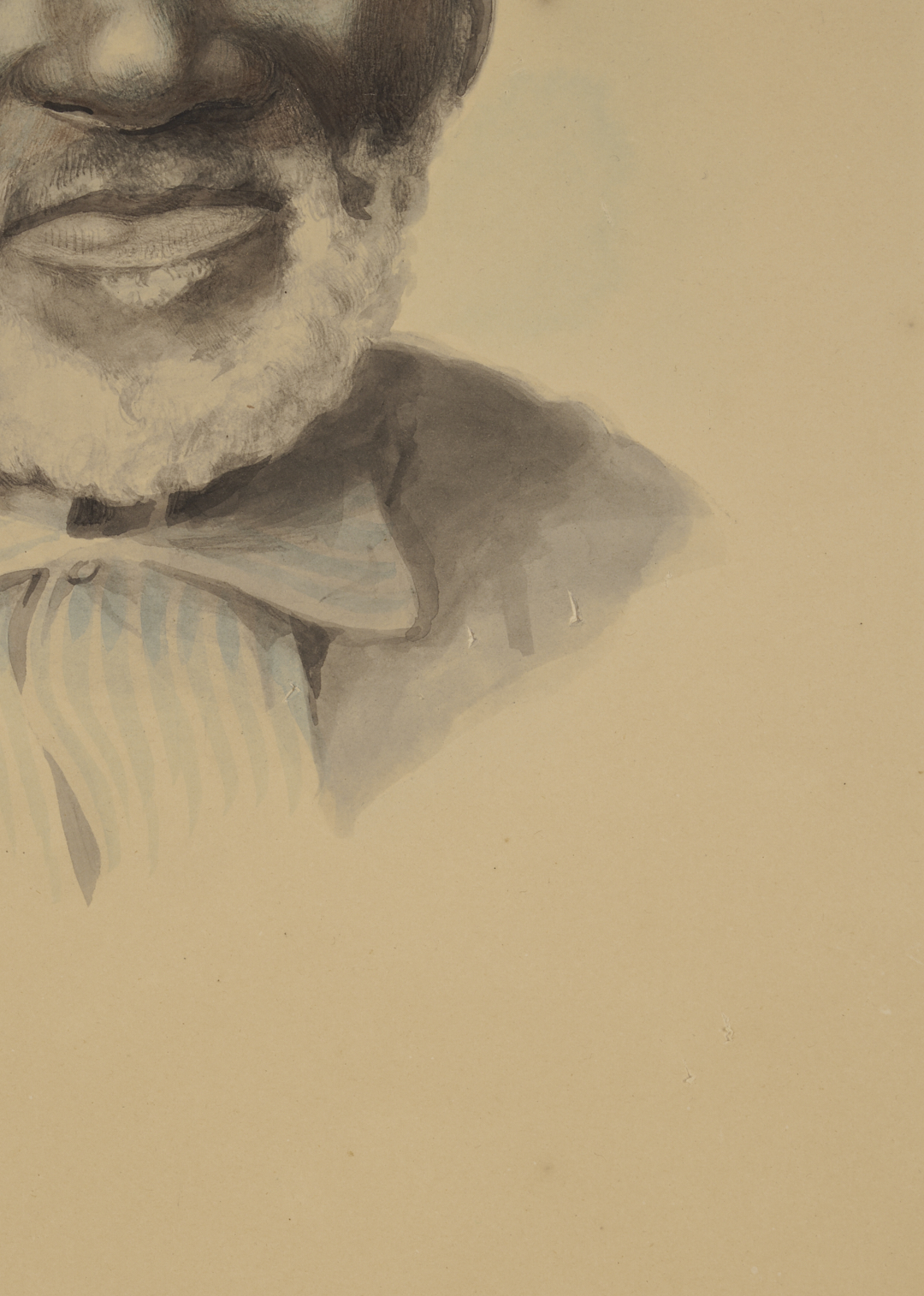
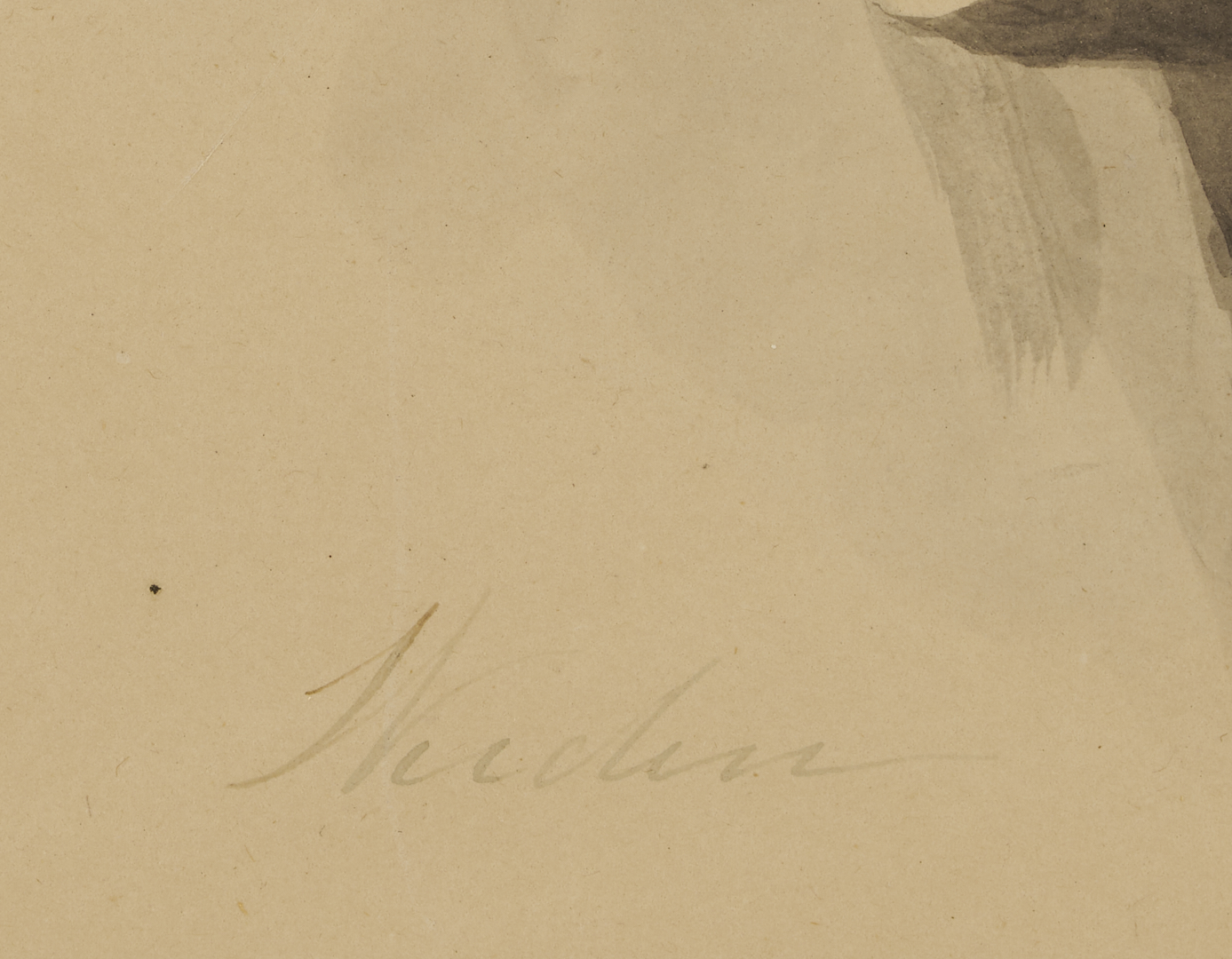
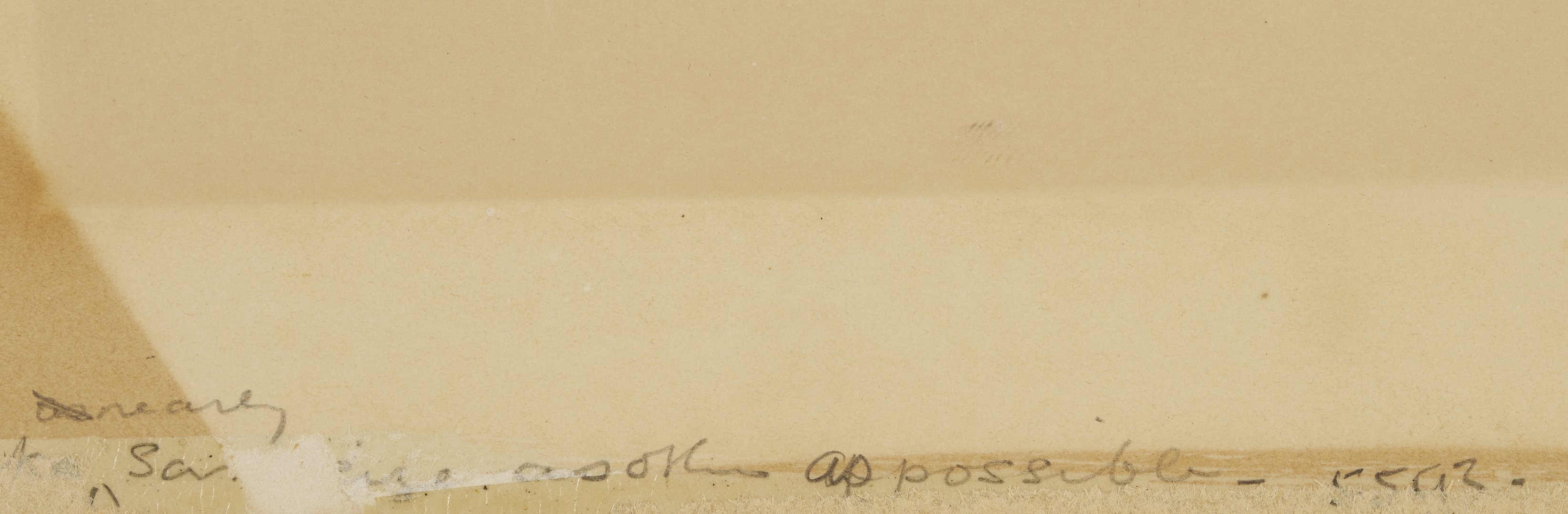
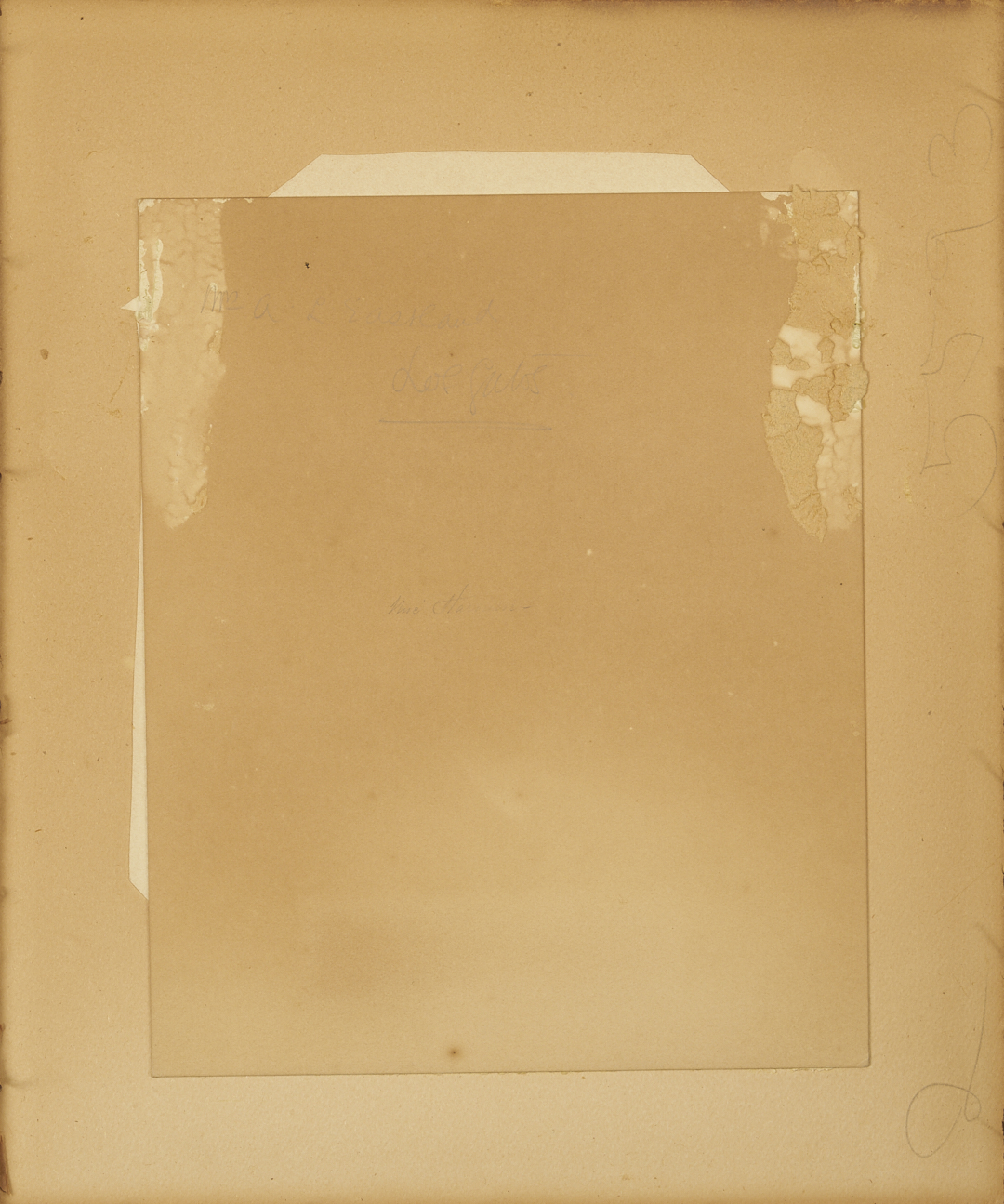
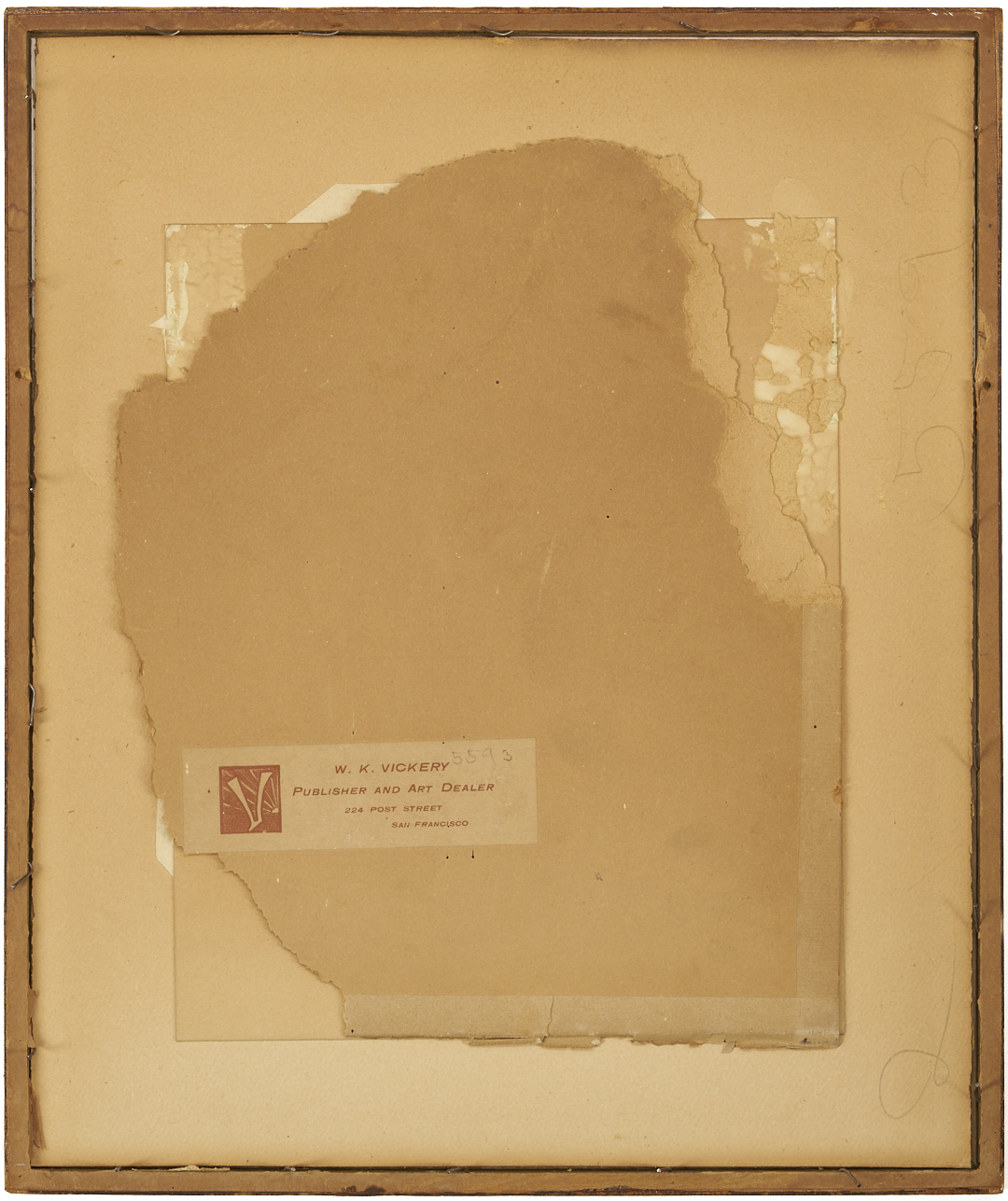
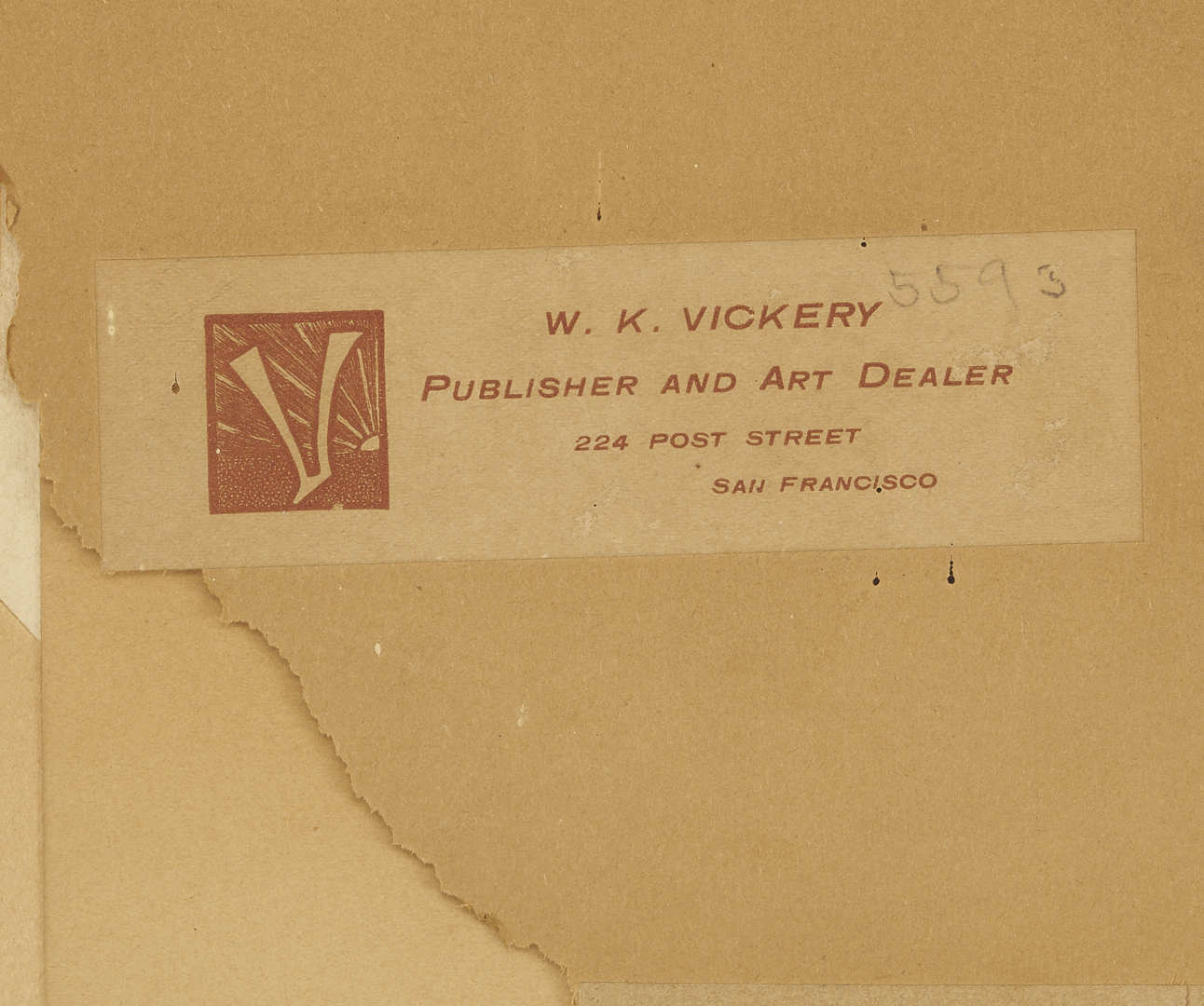
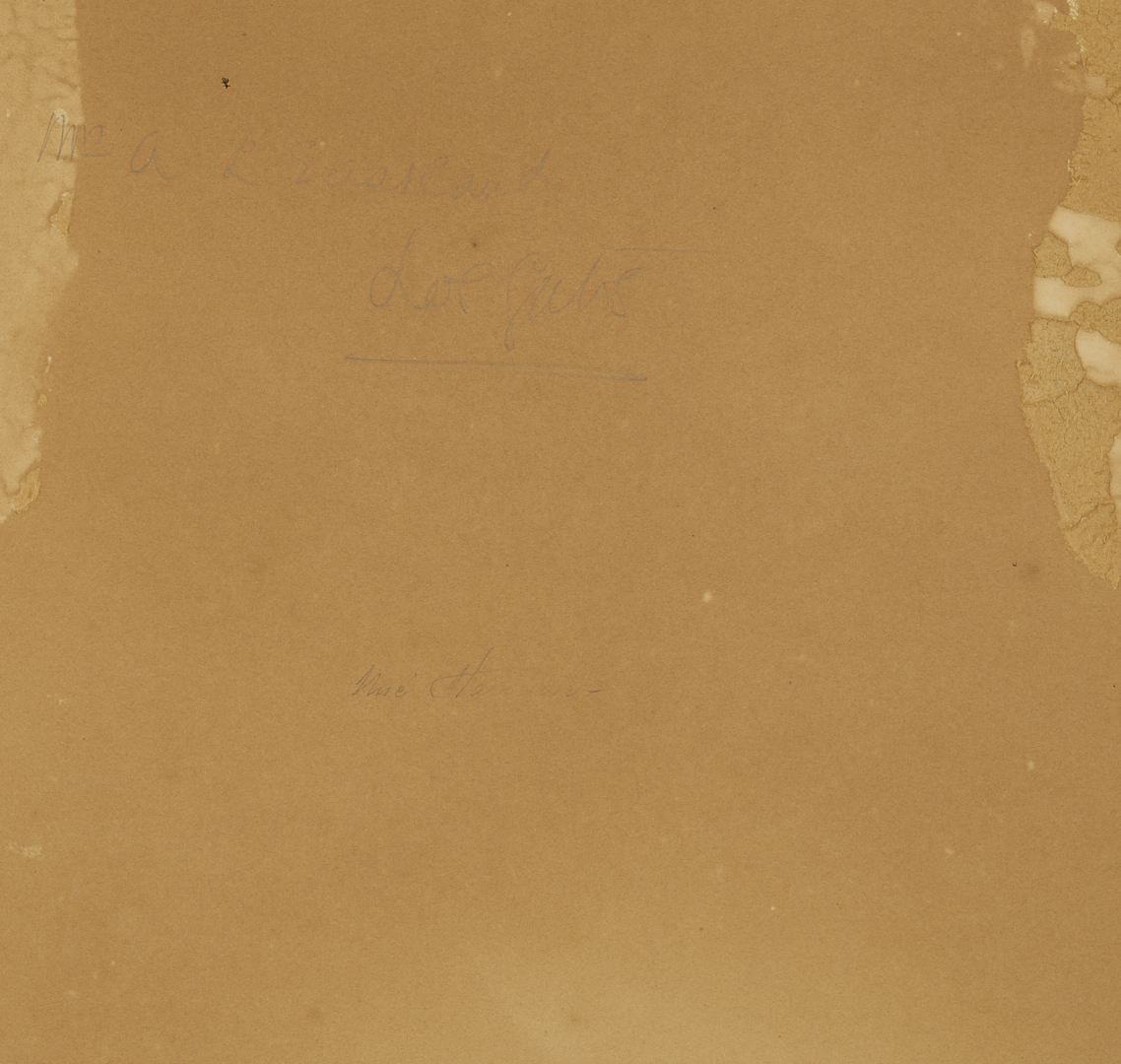
Maria Howard Weeden (Alabama, 1846-1905) watercolor on card portrait of an elderly African American man shown in bust-length. He wears a striped, blue shirt under a jacket and looks directly toward the viewer. Signed “Weeden,” lower left. Inscribed “Mm. A. L. Eastland / Los Gatos” and “Mm. Ha[rrison?]” in pencil to verso. Framer’s note inscribed the lower edge of recto reads “Make nearly sa[me s]ize as [others?] as possible.” “W.K. Vickery / Publisher and Art Dealer / 224 Post Street / San Francisco” gallery label affixed to old backing board (housed behind newer backing board). Gallery label, verso, and mat all numbered 5593. Framed under glass in a giltwood frame with textured cream mat. Card: 11 in. H x 9 in. W. Sight: 9 1/4 in. H x 7 in. W. Framed: 16 in. H x 13 1/2 in. W.
Note: W.K. (William Kingston) Vickery (1851-1925) established his W.K Vickery gallery in San Francisco in the last decades of the 19th century. By 1900, the firm took the better-known name of Vickery, Atkins, & Torrey. The present painting was likely framed or sold by Vickery prior to 1900.
Biographical Note: Maria Howard Weeden was born in 1847 in Huntsville, Alabama, the youngest of six siblings. She showed artistic talent at an early age and was encouraged by her mother, who took her to study with William Frye, a well-known Southern portrait painter living in Huntsville at the time. She also studied art at the Huntsville Female Seminary. However, the Weeden family was financially ruined in the wake of the Civil War, and she was unable to pursue more formal training or visit places like Europe to find subject matter.
As Martha Severens writes in “150 Years of Watercolor,” “Her sitters were generally members of her community who were former slaves serving as cooks, nannies, and gardeners. At a time when many artists were caricaturing African Americans, Weeden preferred to render more dignified and uplifting portraits. After visiting the World’s Columbian Exposition in Chicago, where she encountered many caustic images of the Uncle Remus variety, she resolved to pursue a different direction. She later recalled: ‘Then and there I awoke to the realization that right around me was a subject of supremest artistic interest, the old ex-slave, who henceforth became theme for my muse and model for my brush.’”
It is said that a combination of her nearsightedness and using brushes with only 3 hairs for painting allowed her to capture delicate details. Weeden did not use her first name on her works, preferring to sign them “Howard Weeden”. Her childhood home in Huntsville is now the Weeden House Museum and contains many of her works. Most of her subjects never commissioned these portraits, so she never found great commercial success. She also published four books of poetry with accompanying illustrations.
PROVENANCE: Vickery, Atkins, & Torrey (then called W.K. Vickery), San Francisco, CA.
CONDITION: Overall very good condition, with three minor abrasions to subject’s left shoulder, largest 1/4 in. L, plus two additional, smaller abrasions to lower right of sight area, outside of image. Speck of foxing to right of subject’s head. Minor, even toning within sight area. Marked mat burn to left edge and right corners of card, not visible within sight area. Frame with minor abrasions and losses plus minor toning to mat.