SOLD! for $2,214.00.
(Note: Prices realized include a buyer's premium.)
If you have items like this you wish to consign, click here for more information:
Selling with Case- Low Estimate: $1,800.00
- High Estimate: $2,200.00
- Hammer Price: $1,800.00
- Share this:
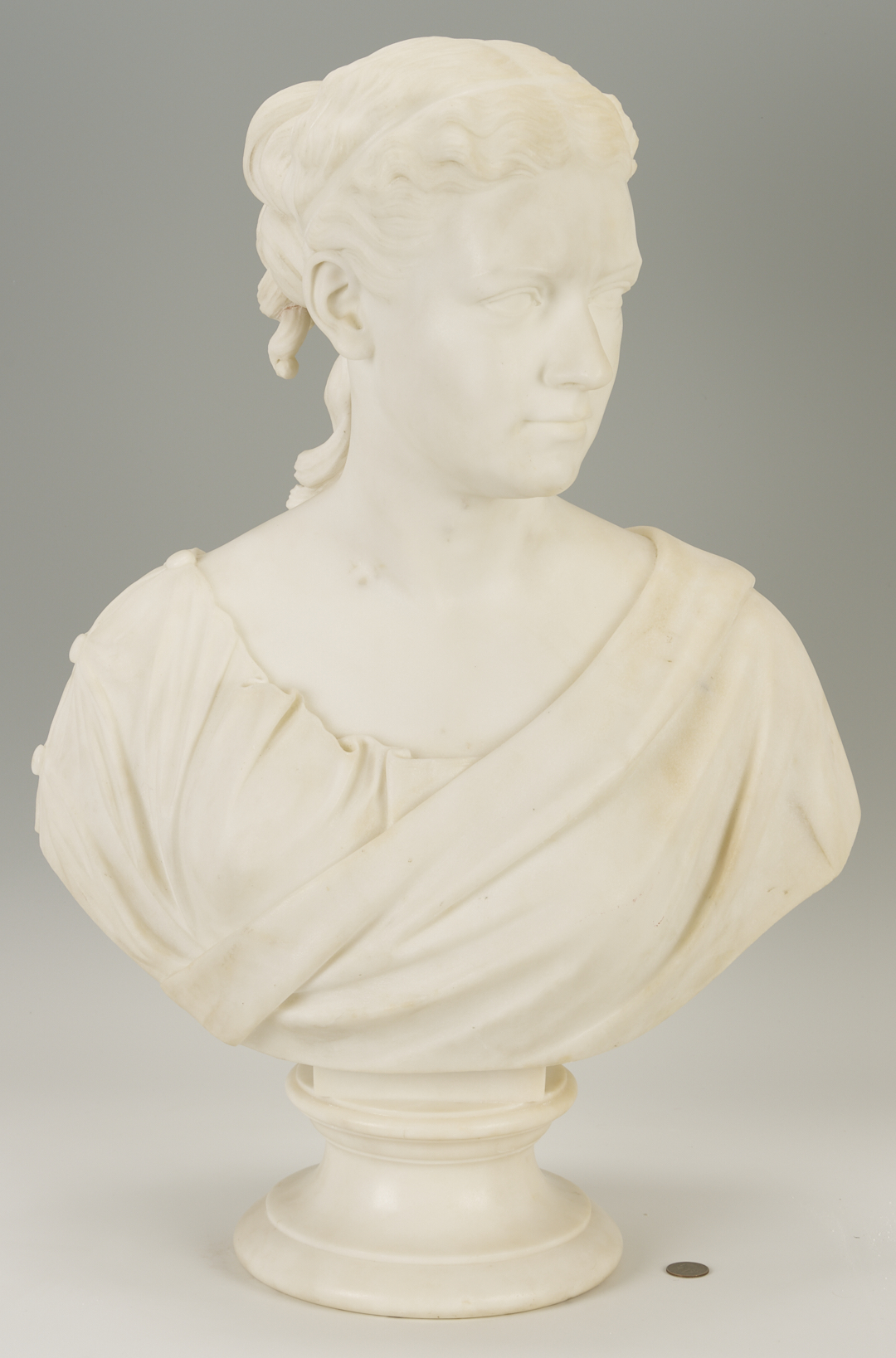
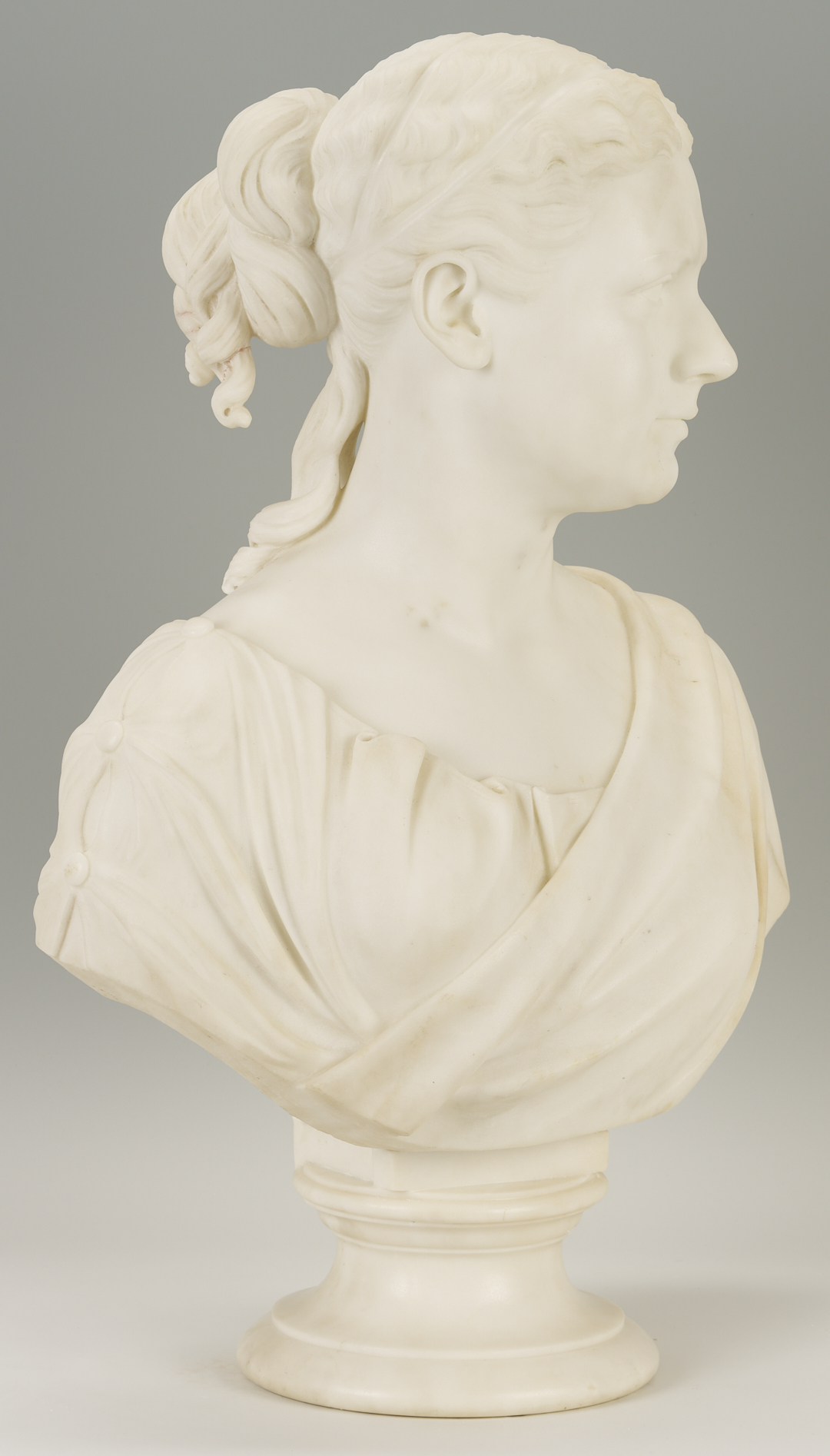
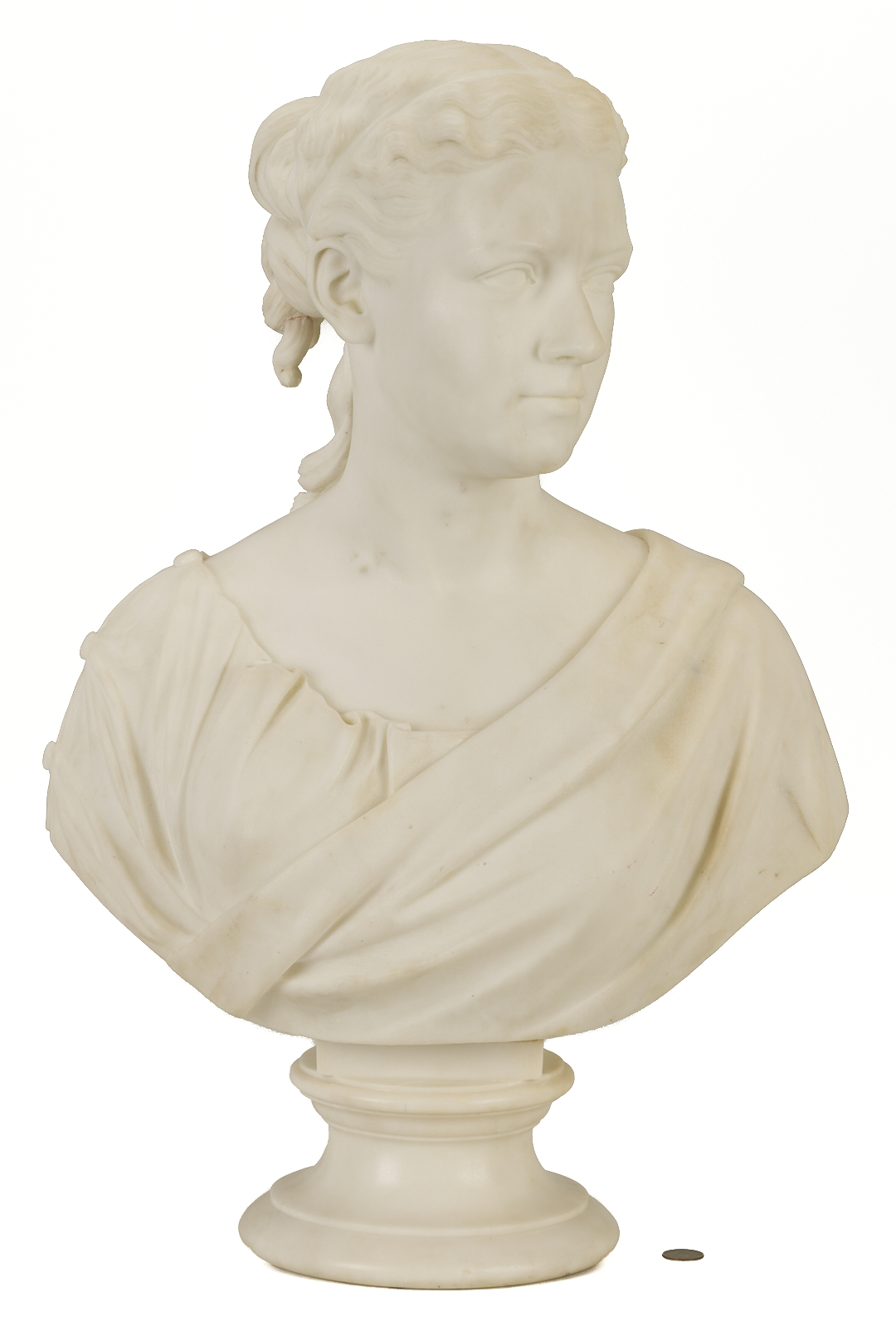
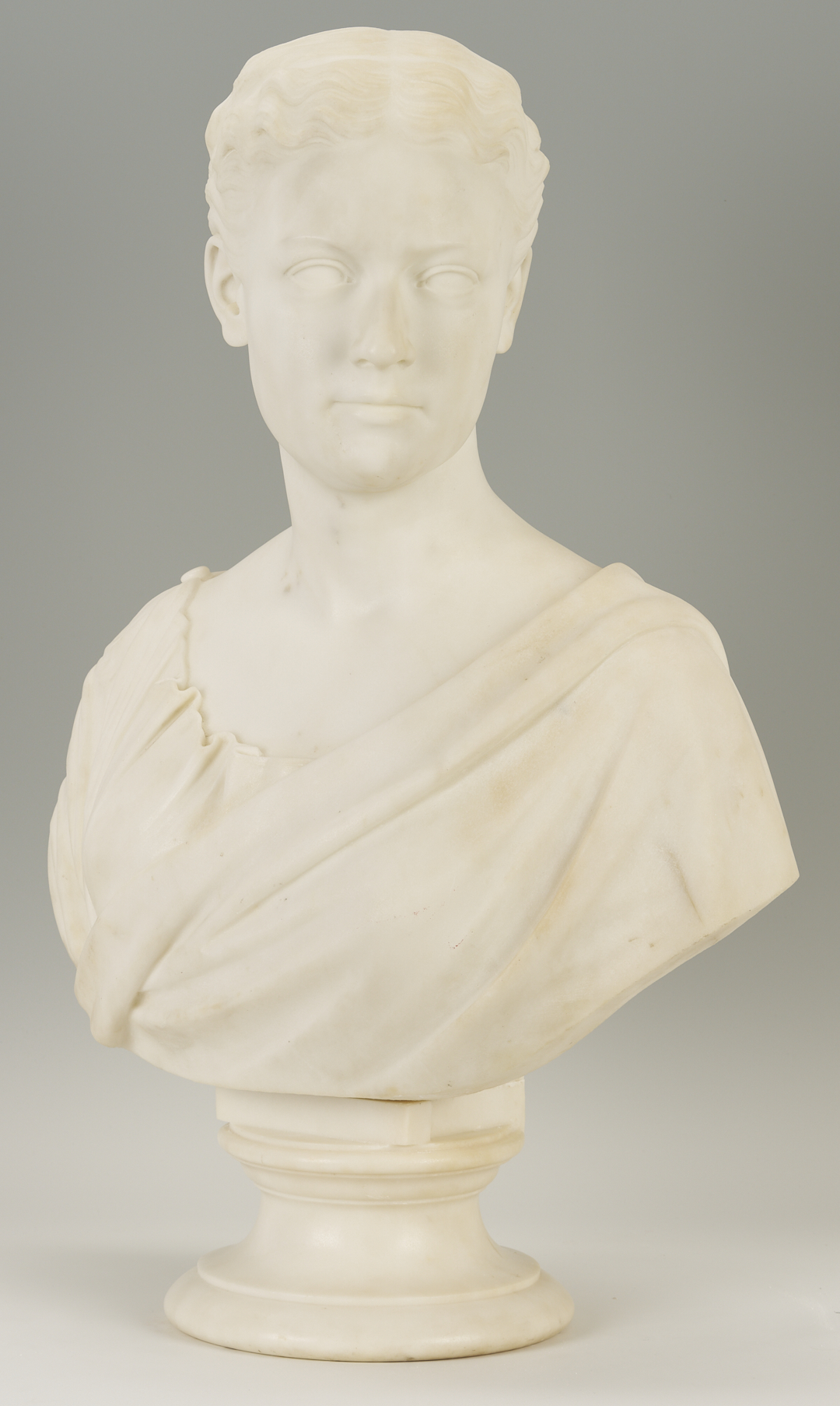
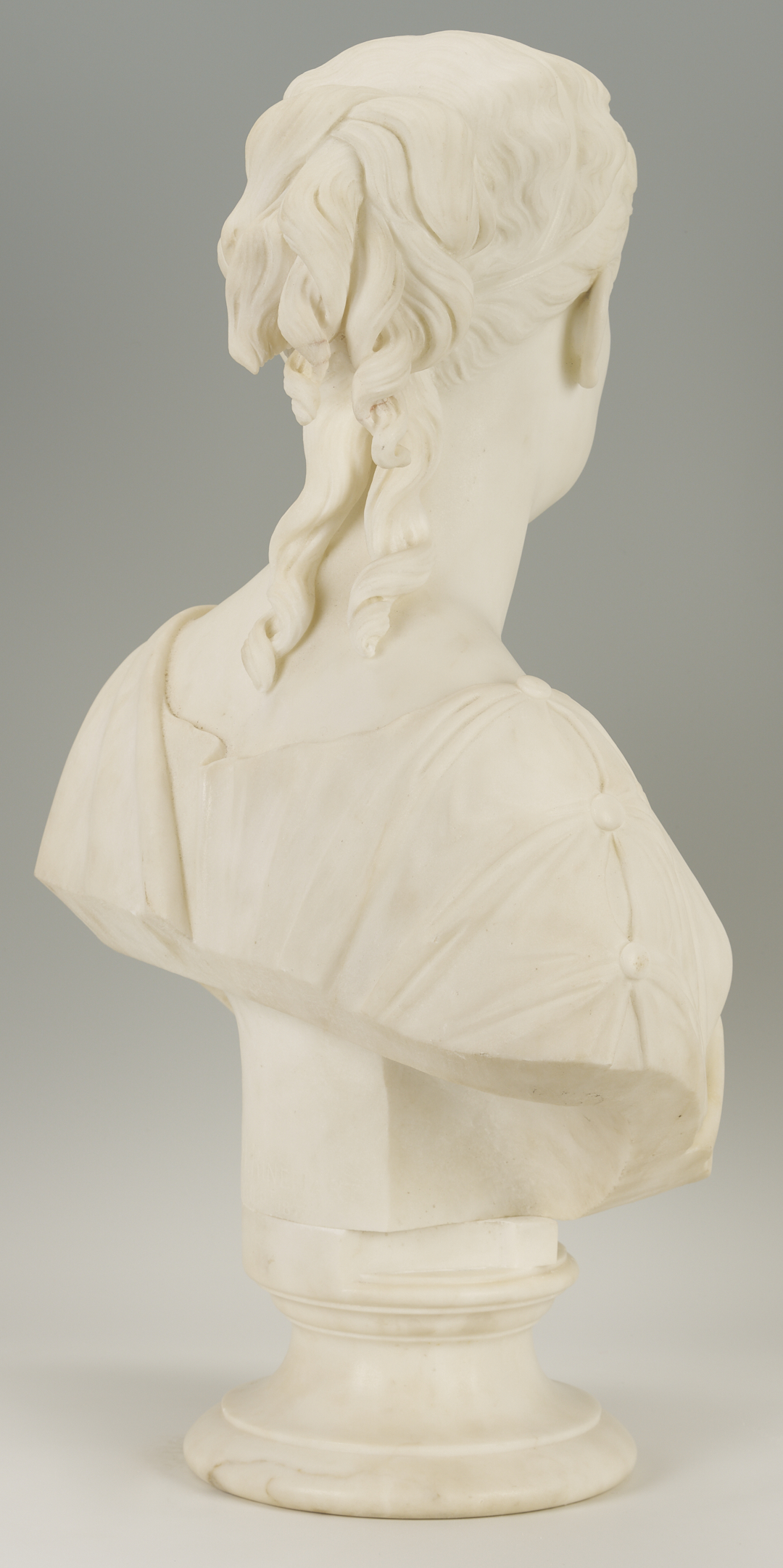
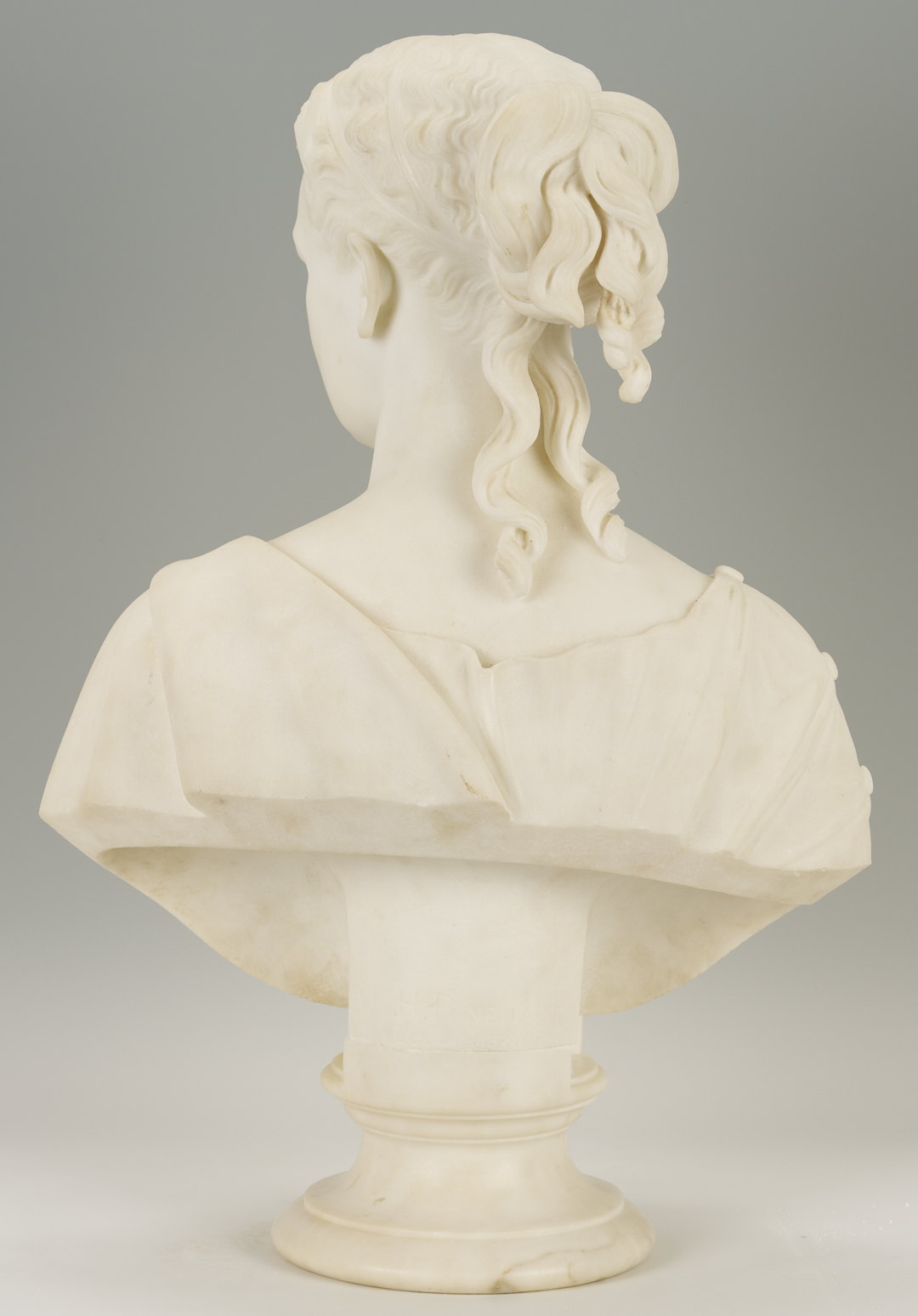
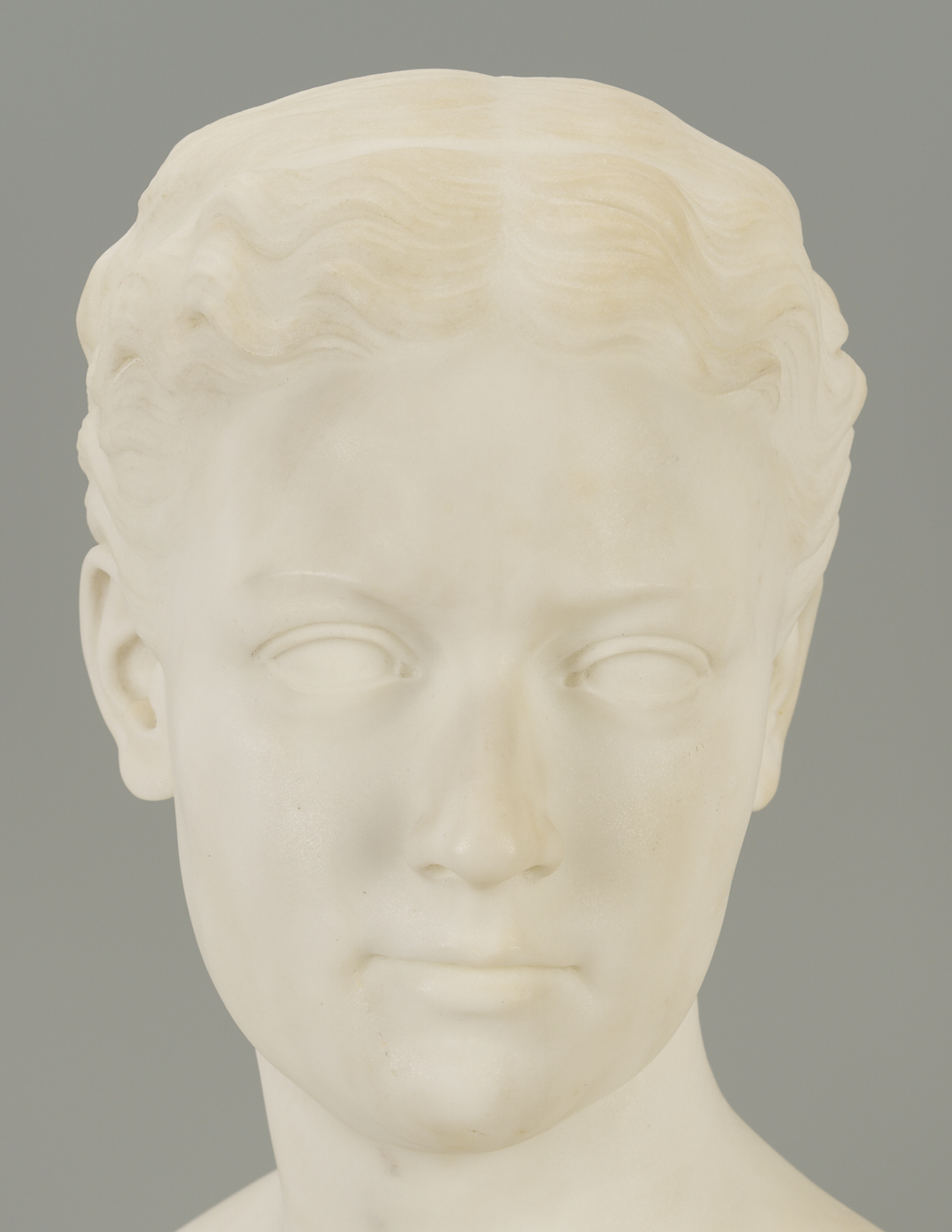
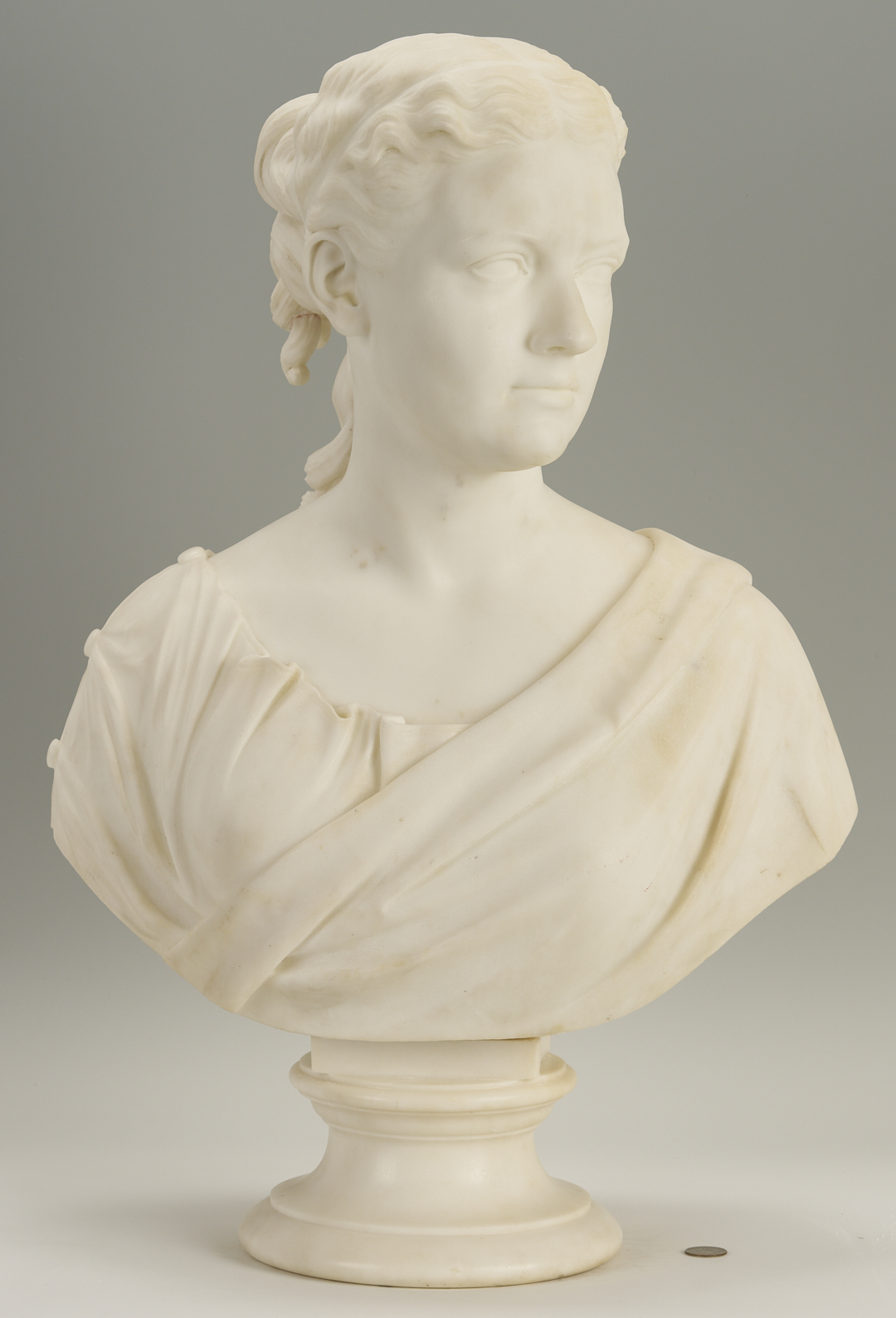
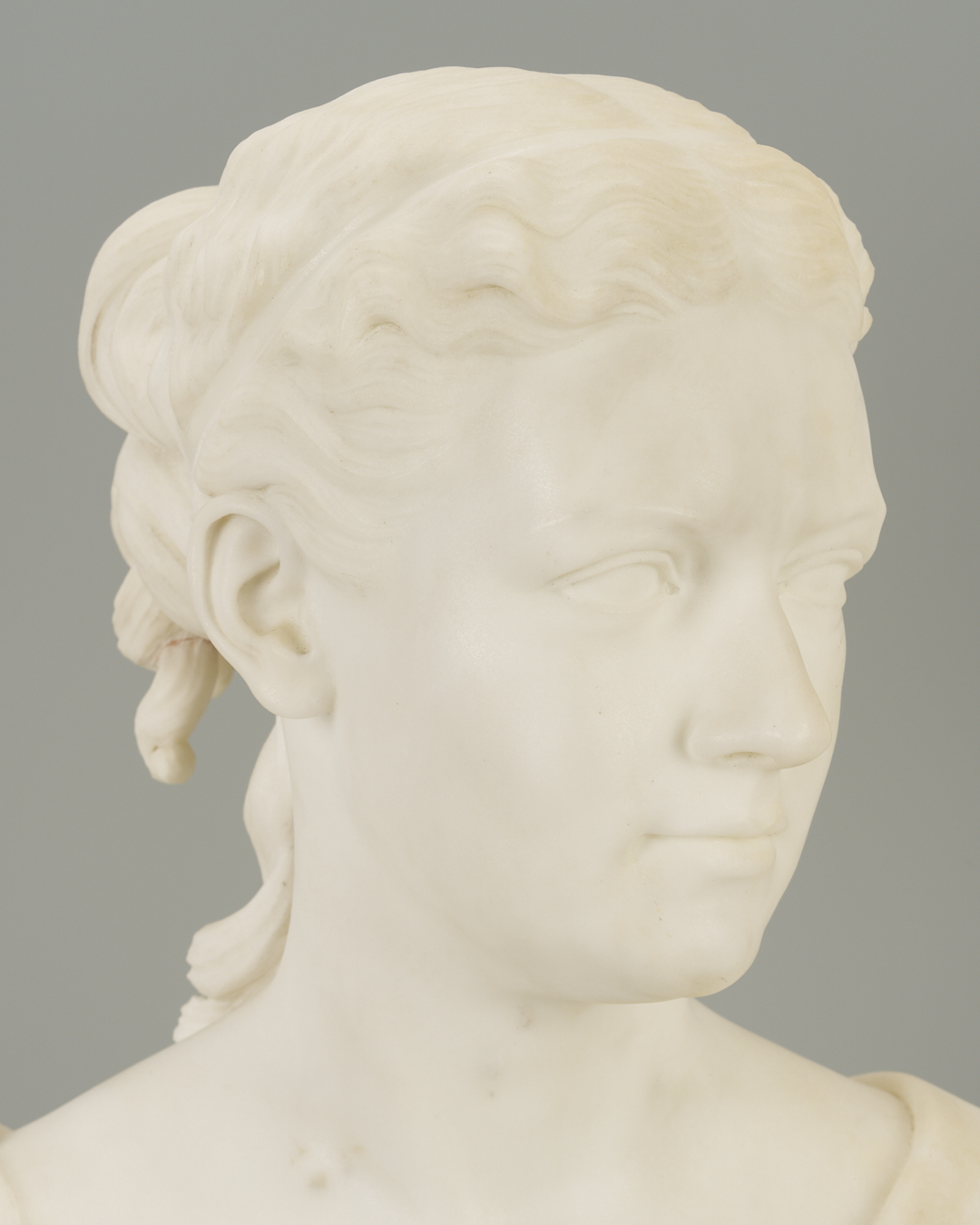
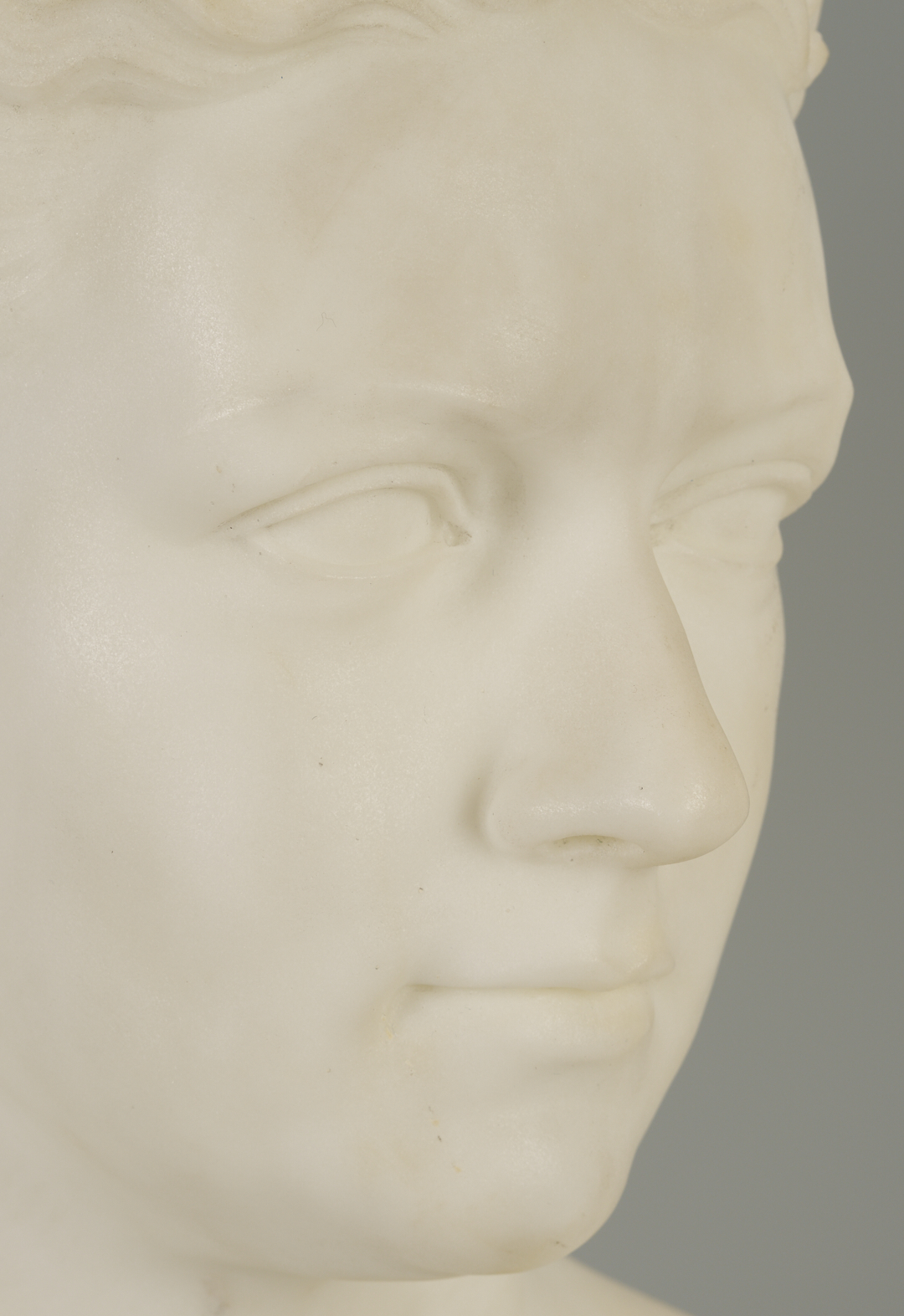
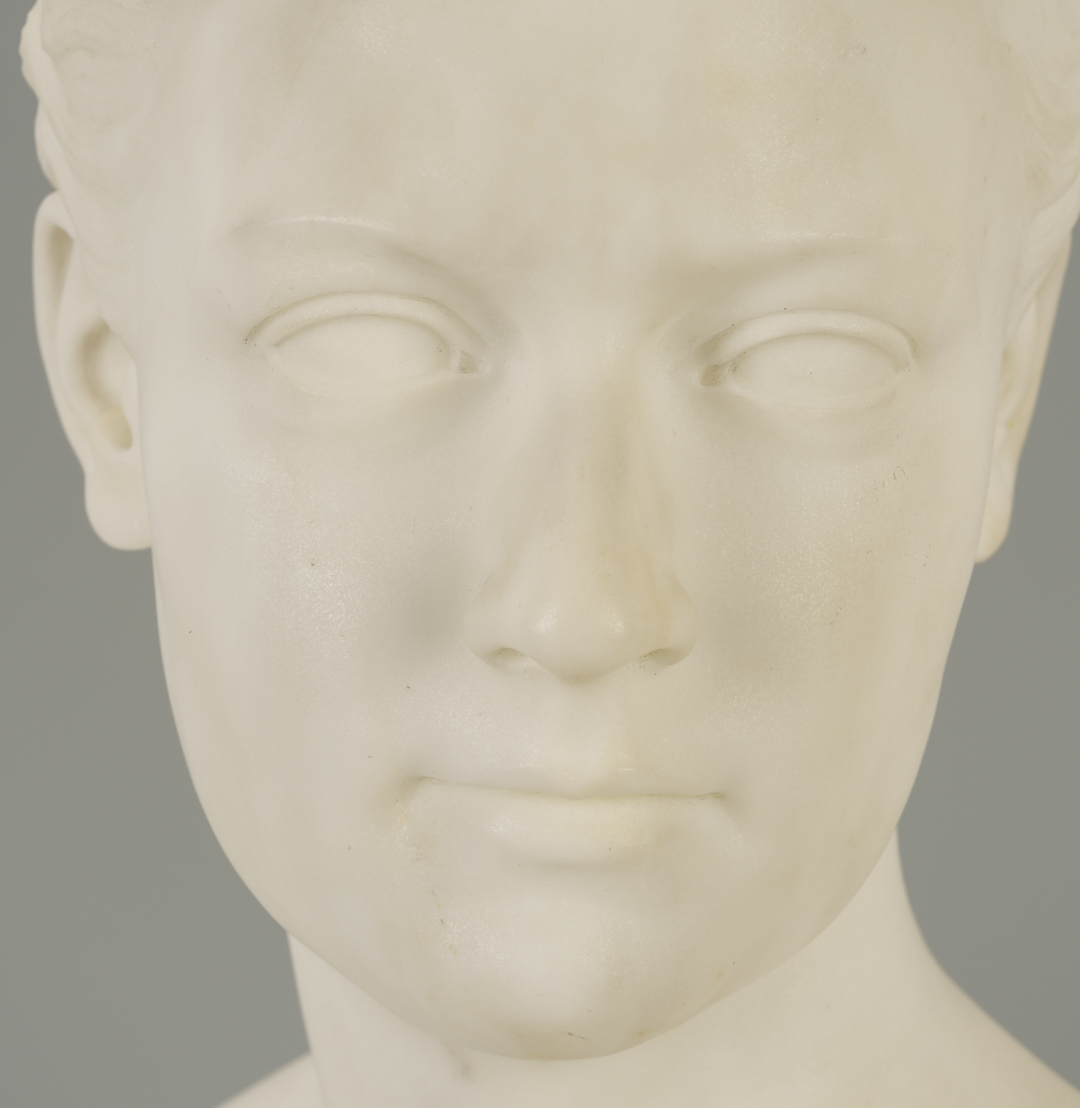
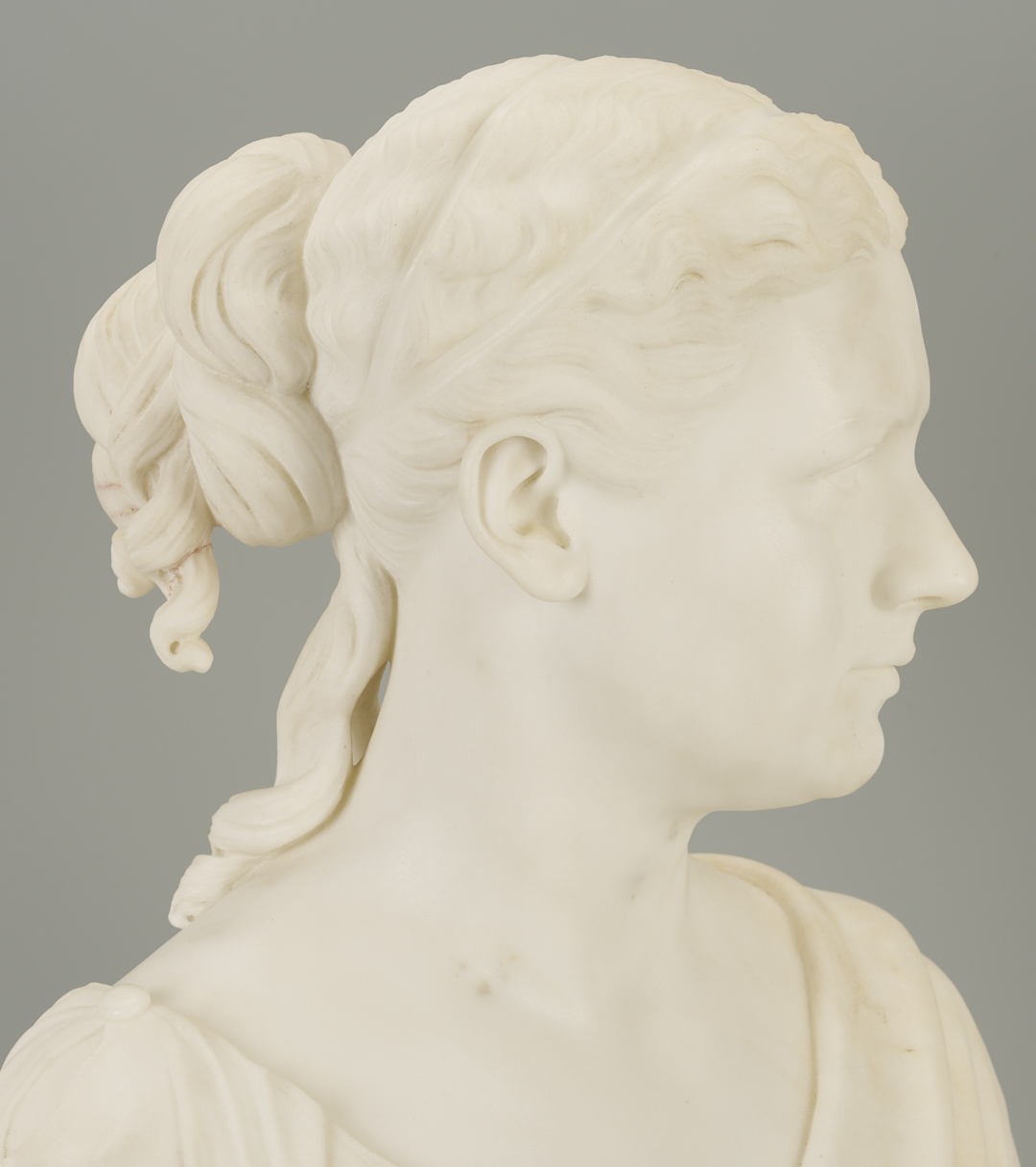
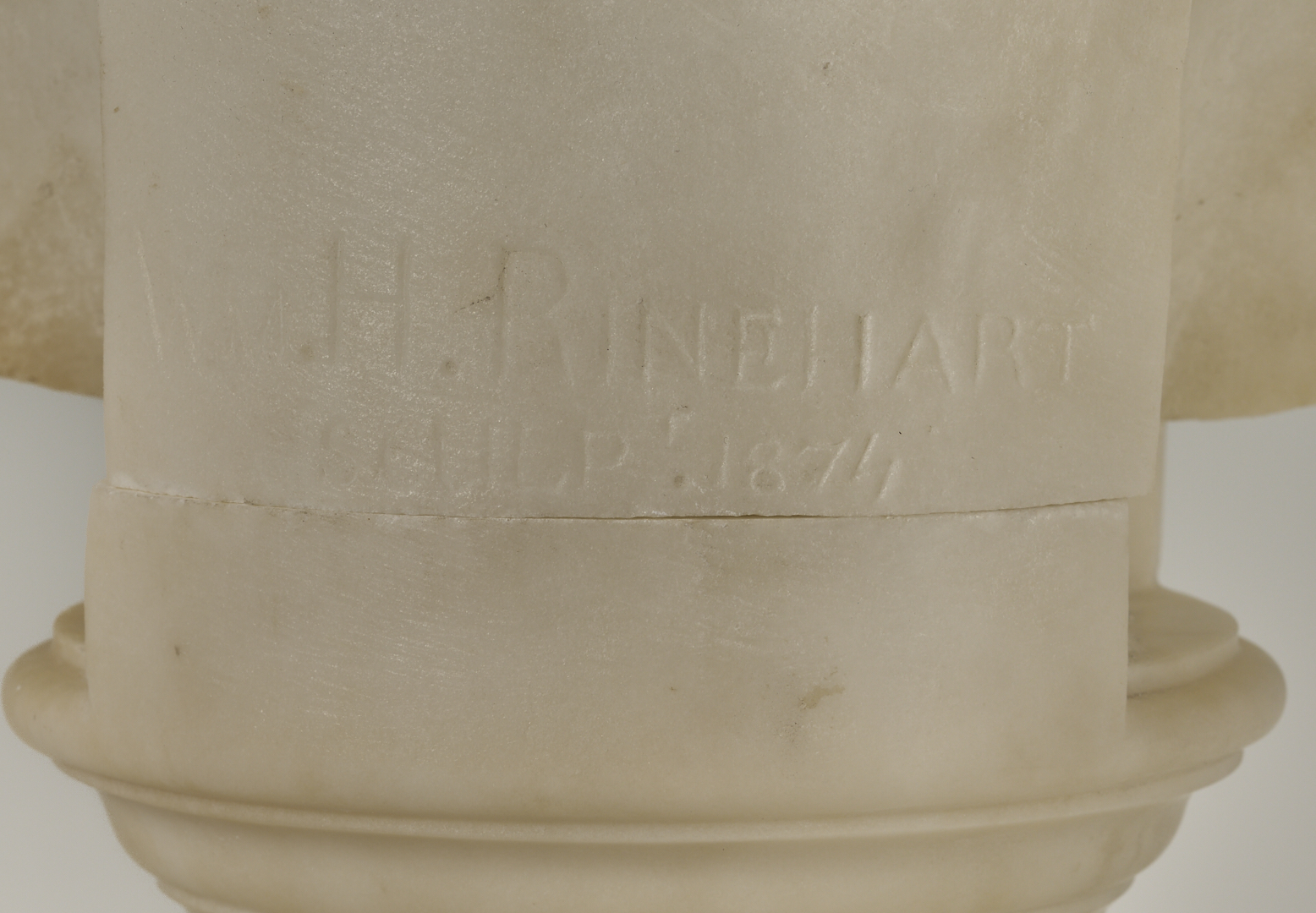
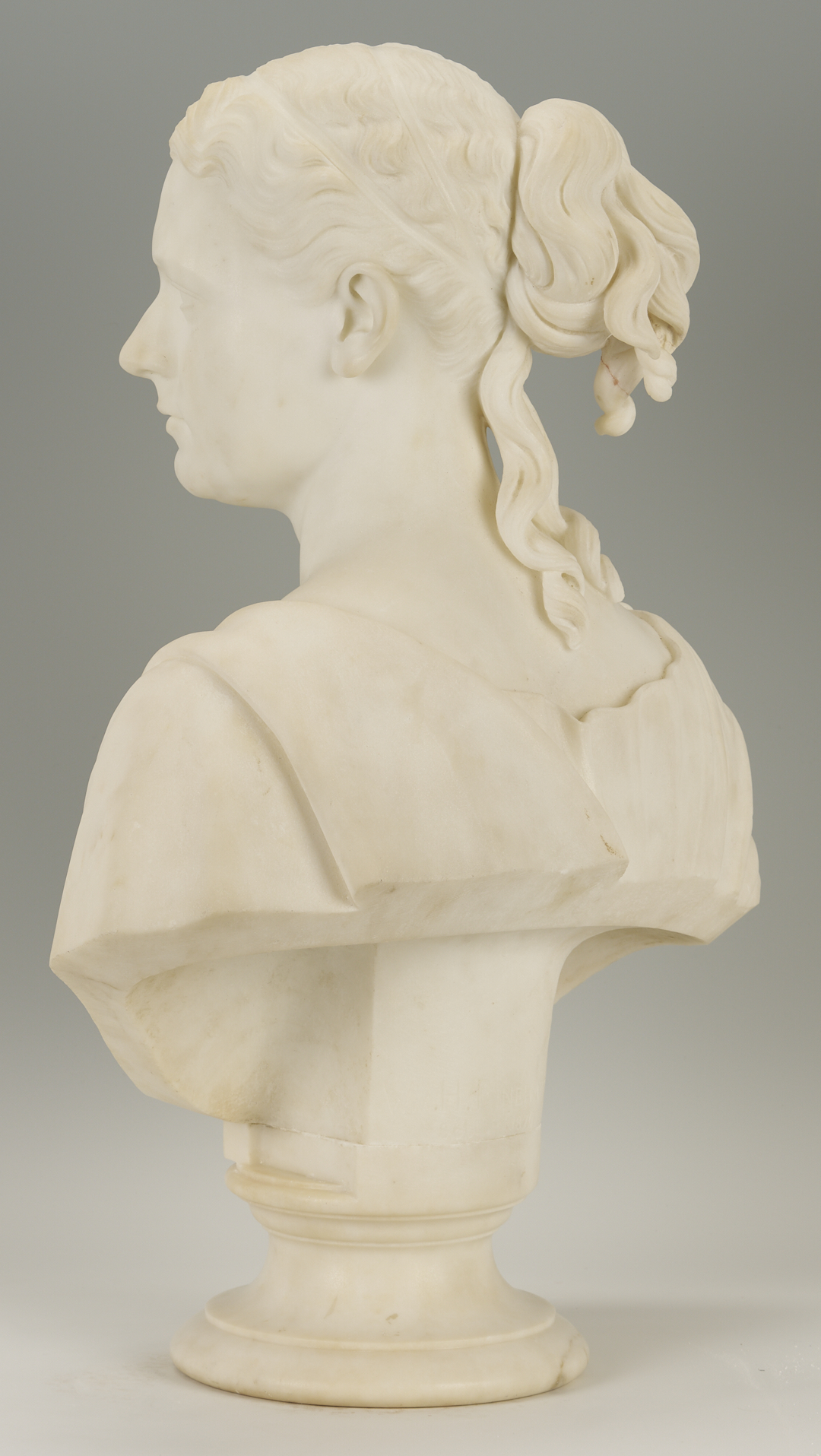
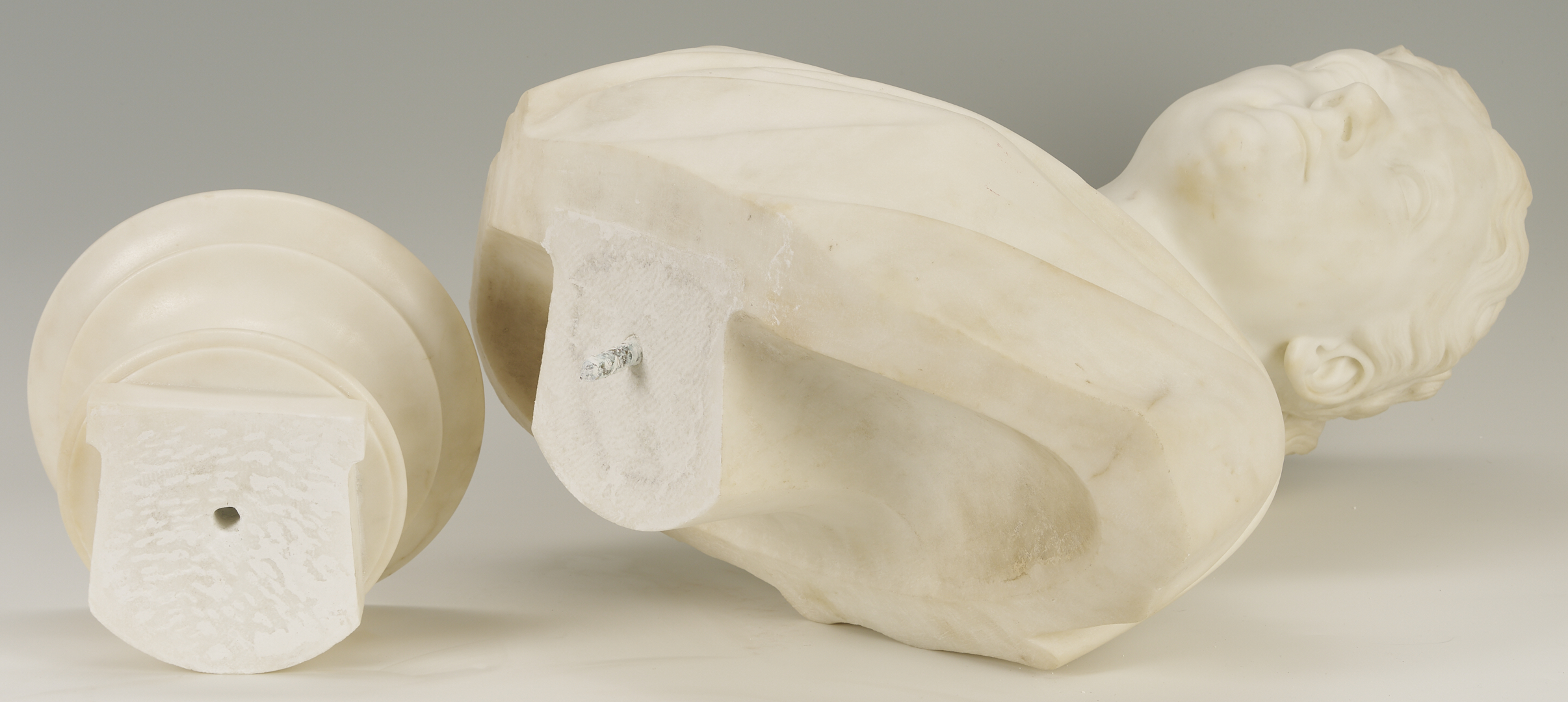
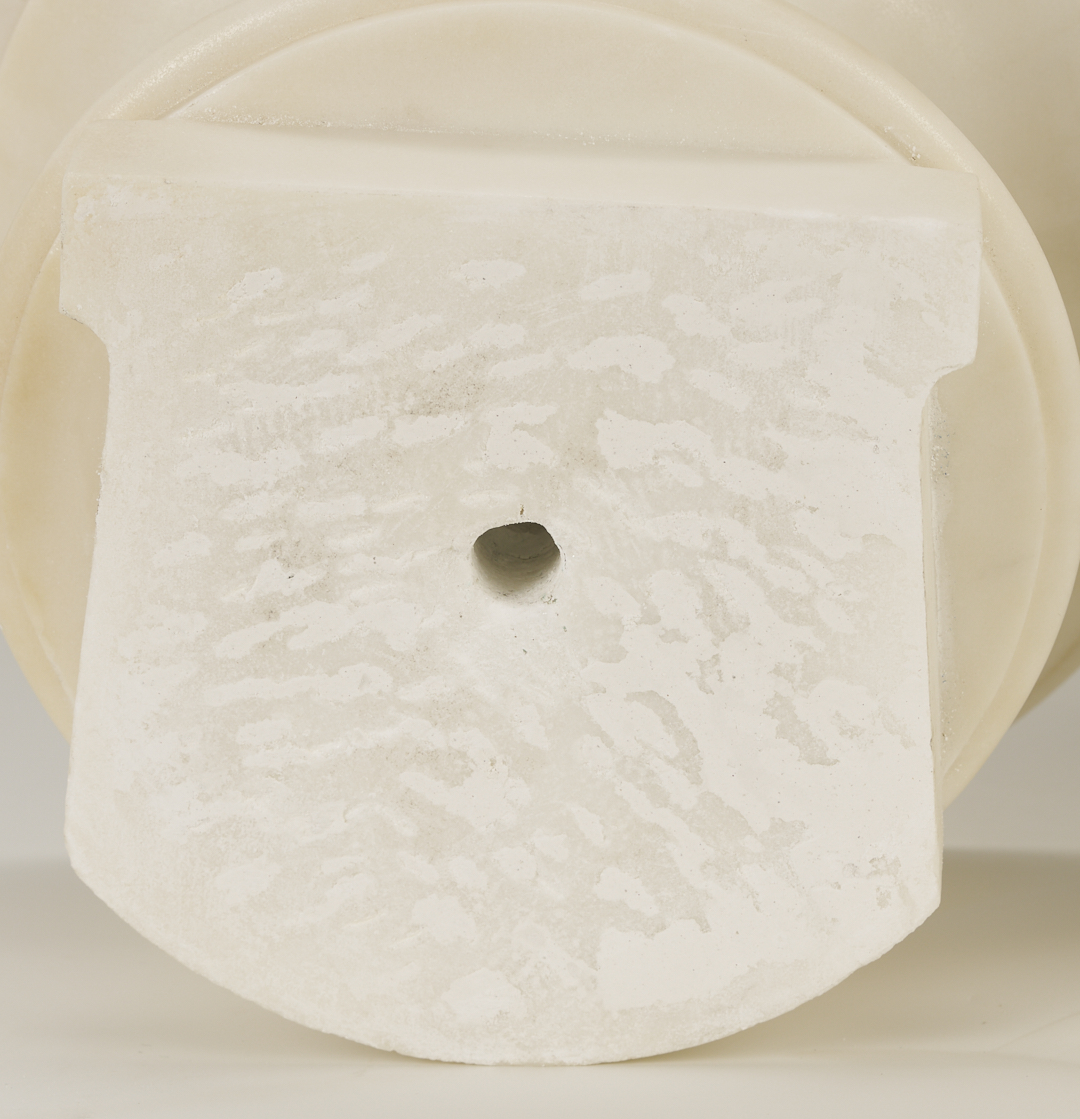
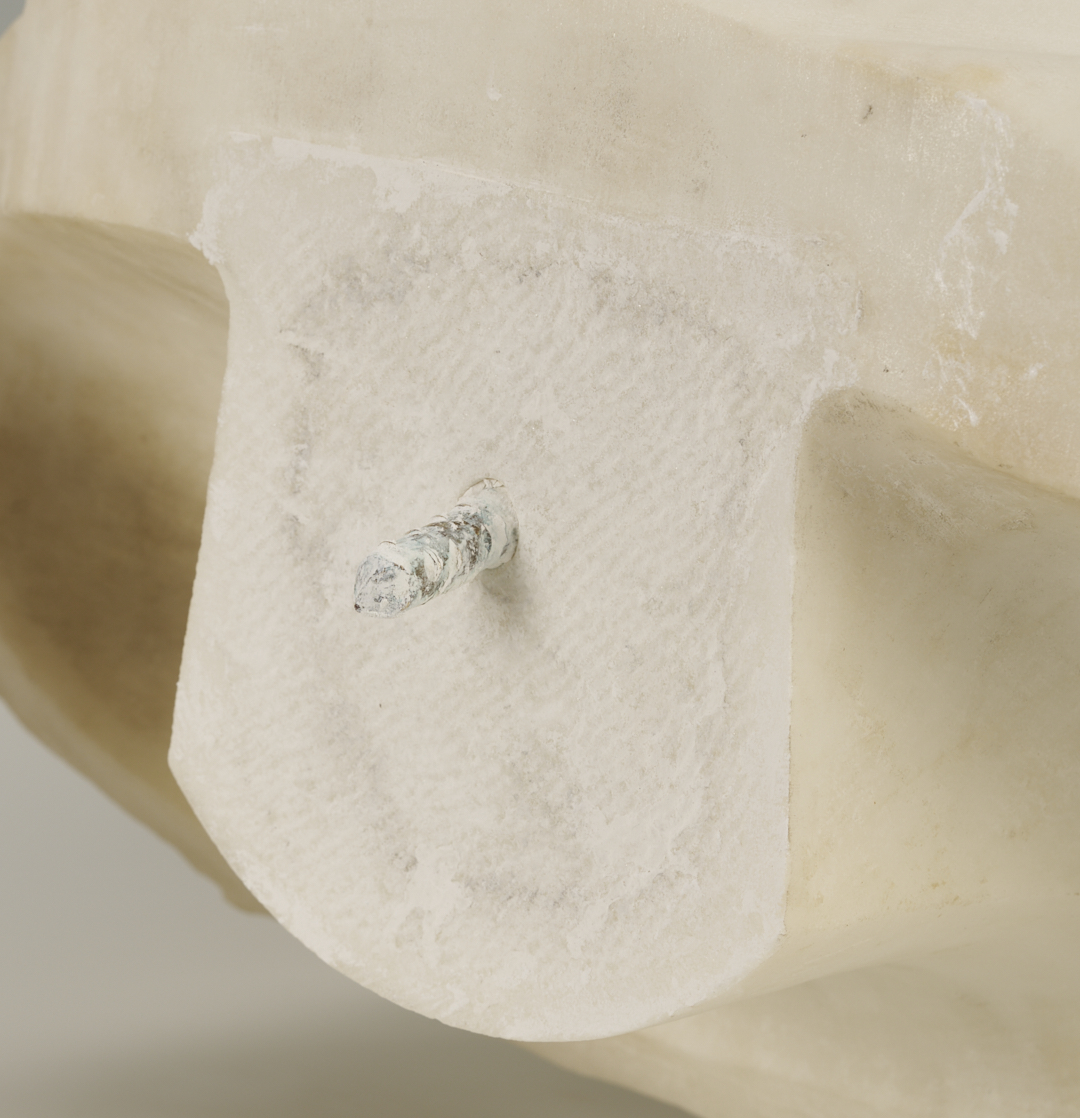
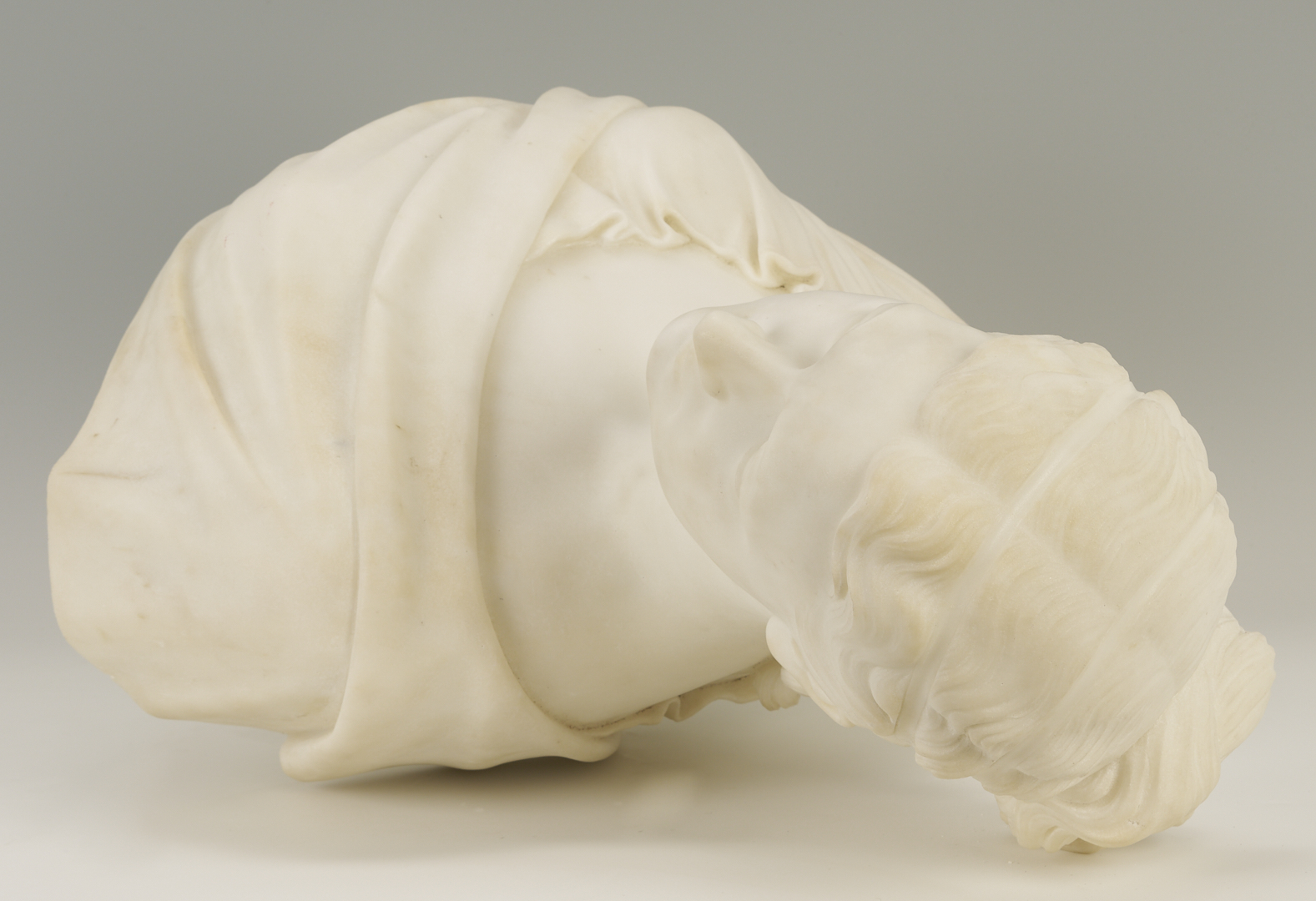
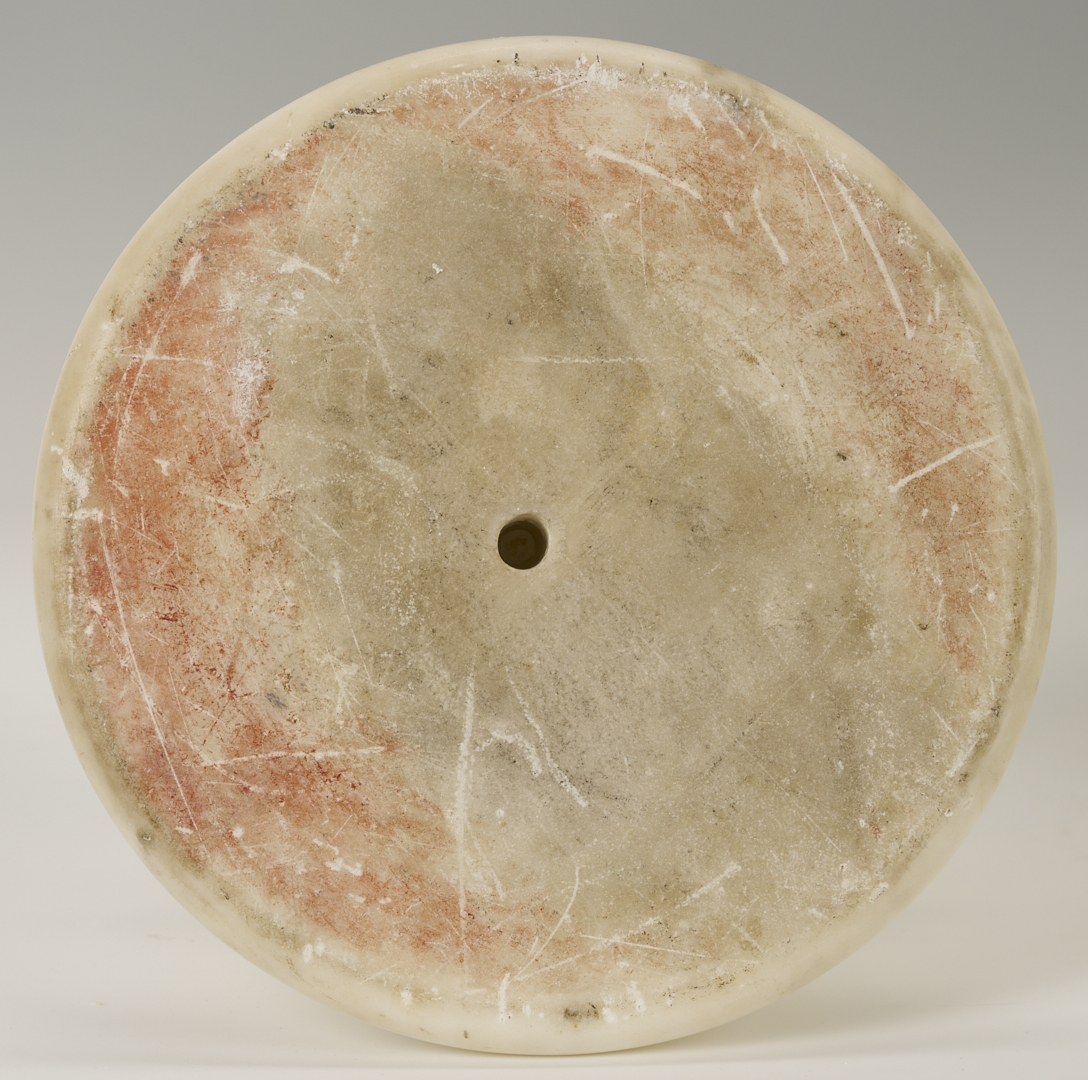
William Henry Rinehart (Maryland/Rome – 1825-1874) carved marble portrait bust of a young female dressed in classical attire, raised on a round socle base. Signed and dated en verso pedestal “Wm. H Rinehart, Sculpt. 1874”. 26 1/2 in. H x 18 in. W x 10 1/2 in. D. 19th century.
Biography: William Henry Rinehart was born on a Maryland farm near Union Bridge. As a young man, he became skilled at stone cutting, and at age 19, he moved to Baltimore where he worked as foreman for Baughman and Bevan, the city’s leading marble yard business. His formal training as a sculptor was minimal, but in 1850, he did study in evening classes at the Maryland Institute of Art*. The next year, he received a Gold Medal at the Institute fair for a marble bas relief titled The Smokers. In 1855, supported by Baltimore merchants, Rinehart went to Italy where he established a studio in Florence for two years. However, he had to earn money from marble cutting because noted American sculptors Hiram Powers, Joel Tanner Hart, and Thomas Ball were already well entrenched for receiving portrait commissions.
Rinehart returned to Baltimore in 1857, established a studio, and developed clientele for portrait busts, funereal monuments, and idealized, allegorical pieces. During the late 1850s, he had federal government commissions including bronze caryatid* figures for the old House of Representatives, which is now the U.S. Capitol Crypt, and a bronze fountain figure for the Post Office Department Building, which now serves as the Office of the Architect of the U.S. Capitol. And he carved bas reliefs for the bronze doors, The History of Justice, of the Senate Chamber in Washington D.C. In 1858, William Rinehart returned to Italy, settling in Rome for the remainder of his life, but returning to the U.S. briefly. Among his commissions were more sculptures for the United States Capitol including two bronze doors for the House and Senate Chambers. He died at age 49 of consumption. Source: Lauretta Dimmick, “William Henry Rinehart”, American Sculpture in the Metropolitan Museum of Art, p. 105.
PROVENANCE: The collection of Mr. and Mrs. David Allen, Springfield, Tennessee.
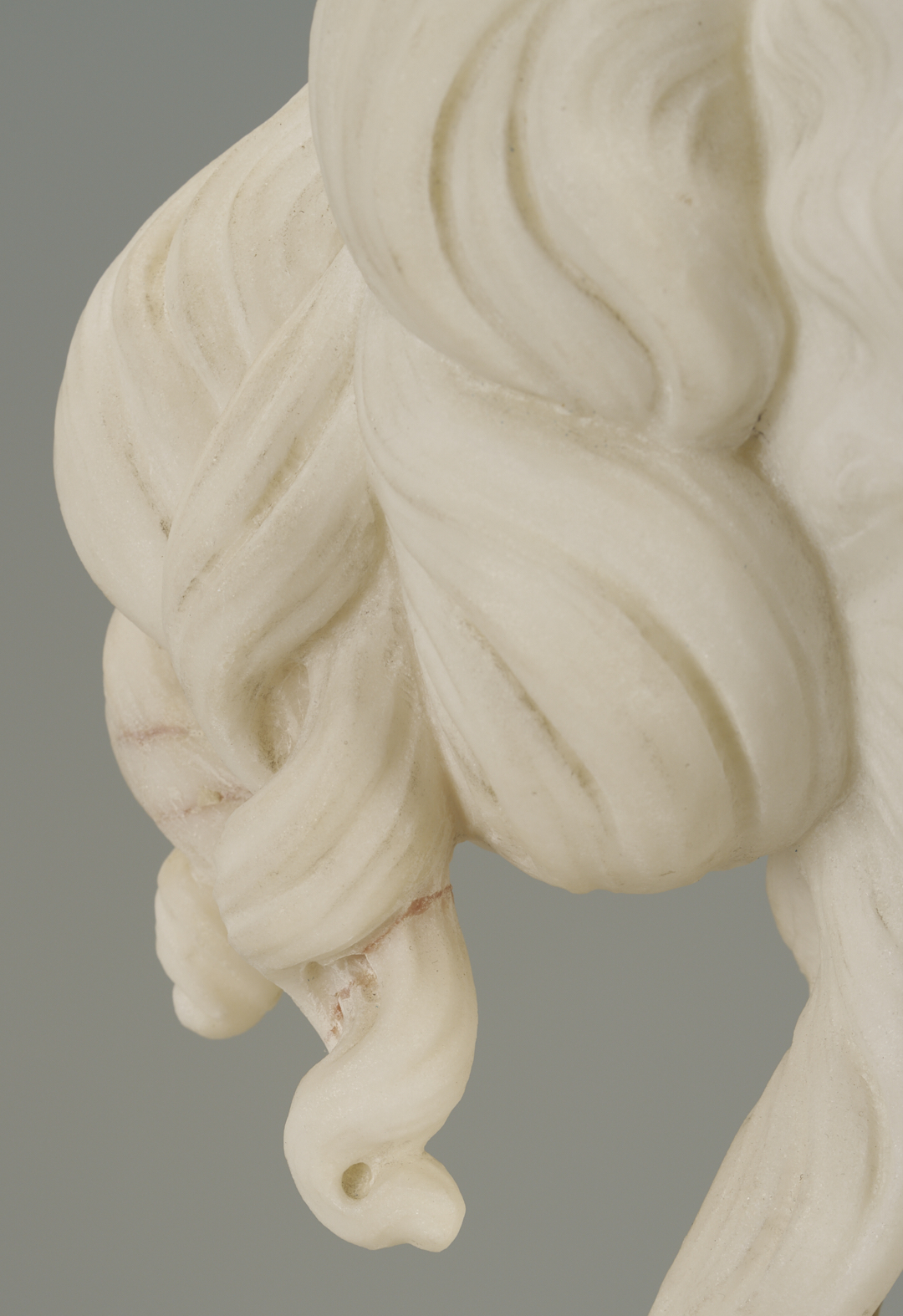
CONDITION: Overall very good condition. One very small chip to the edge of the garment near the left shoulder. Tip of hair curl on the back of the head has been glued.