SOLD! for $1,440.00.
(Note: Prices realized include a buyer's premium.)
If you have items like this you wish to consign, click here for more information:
Selling with Case- Low Estimate: $1,600.00
- High Estimate: $1,800.00
- Hammer Price: $1,200.00
- Share this:
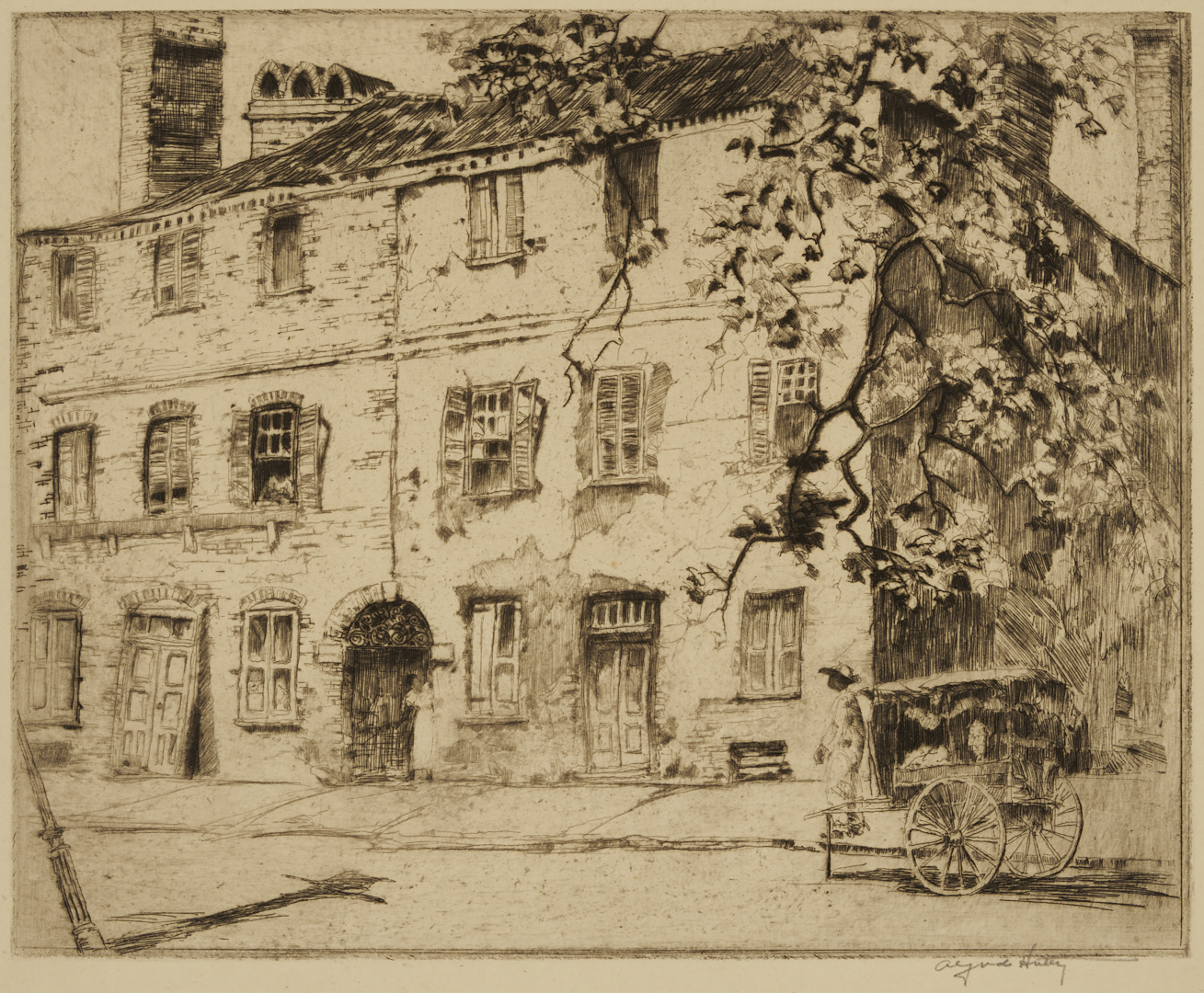
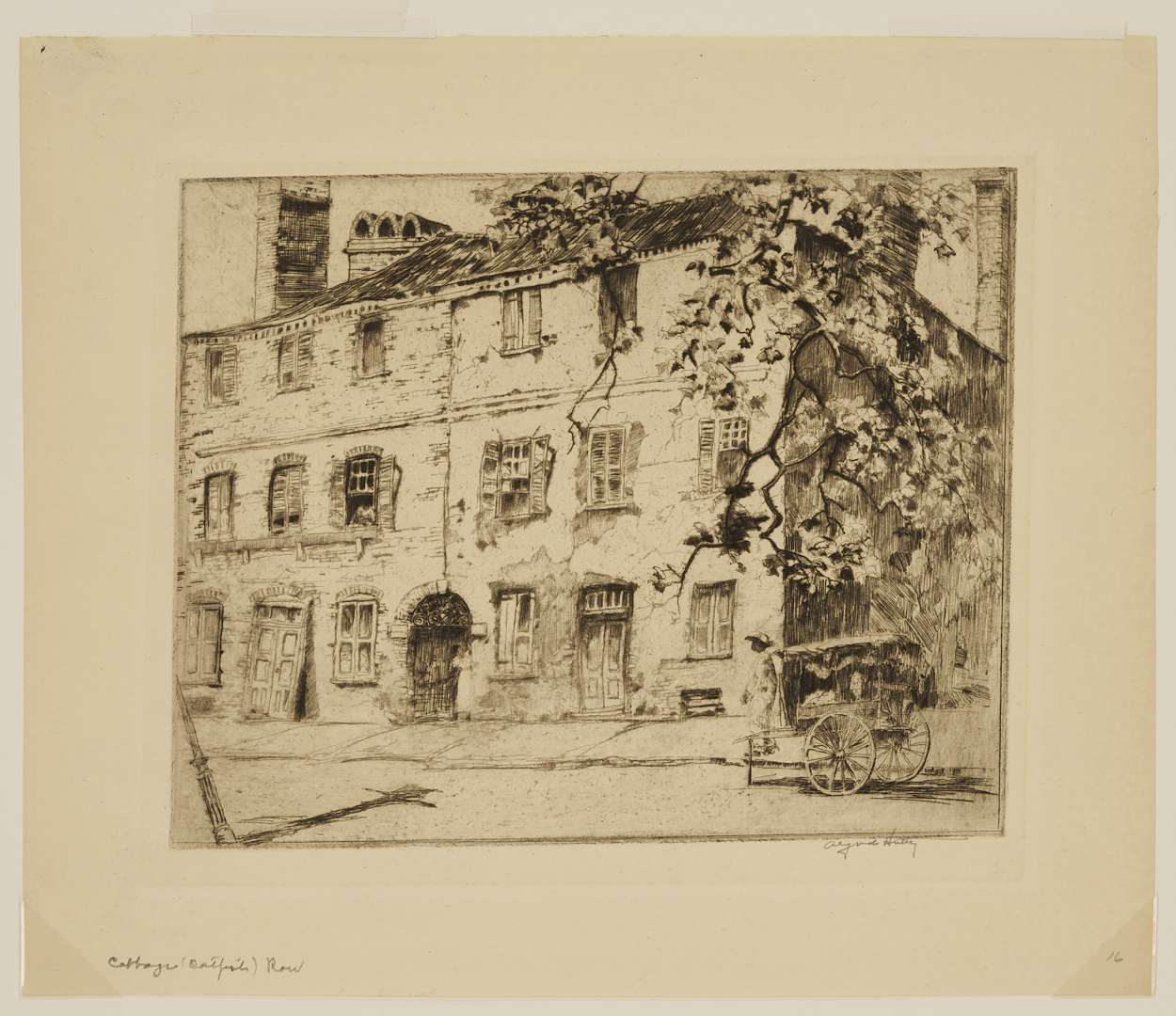
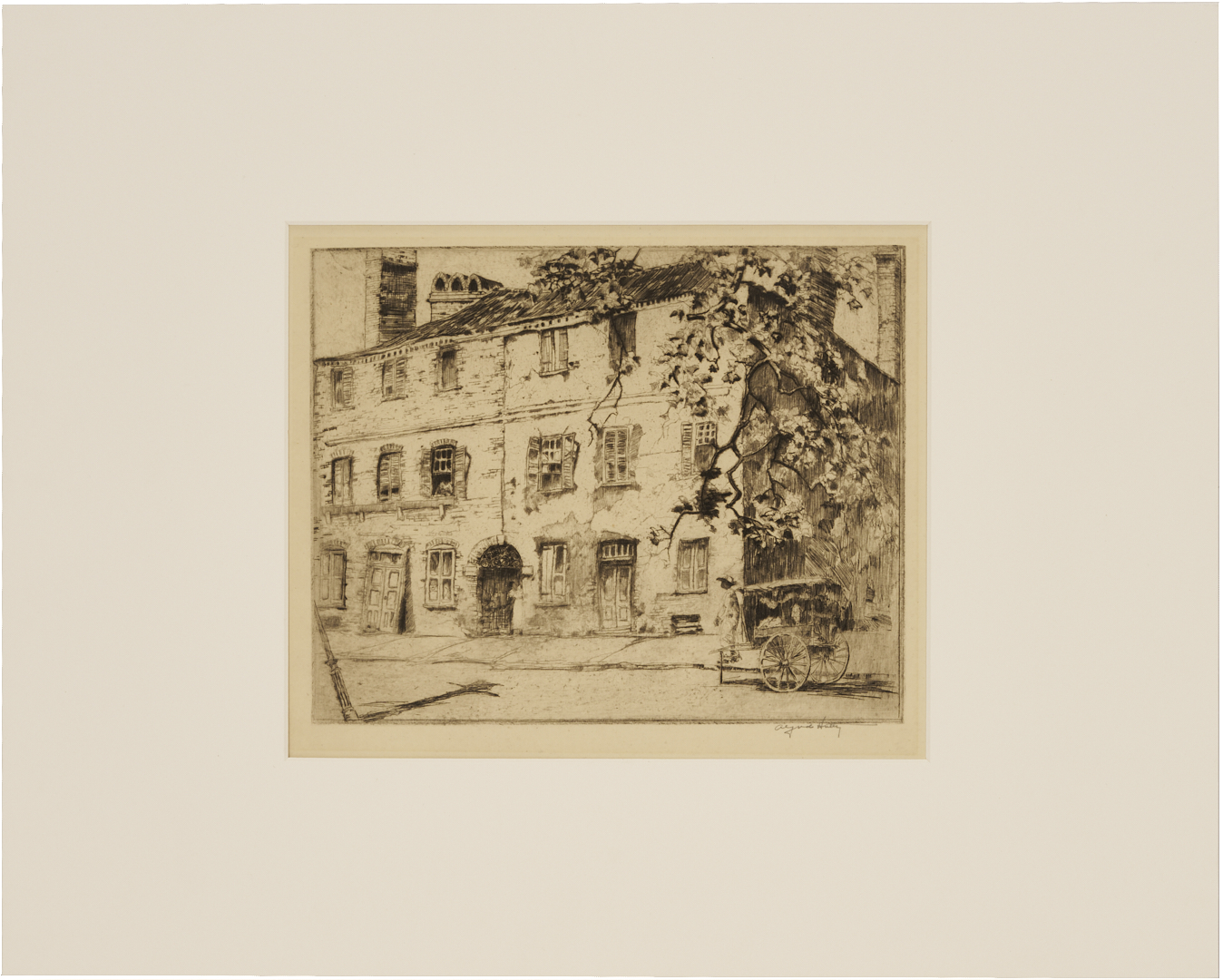
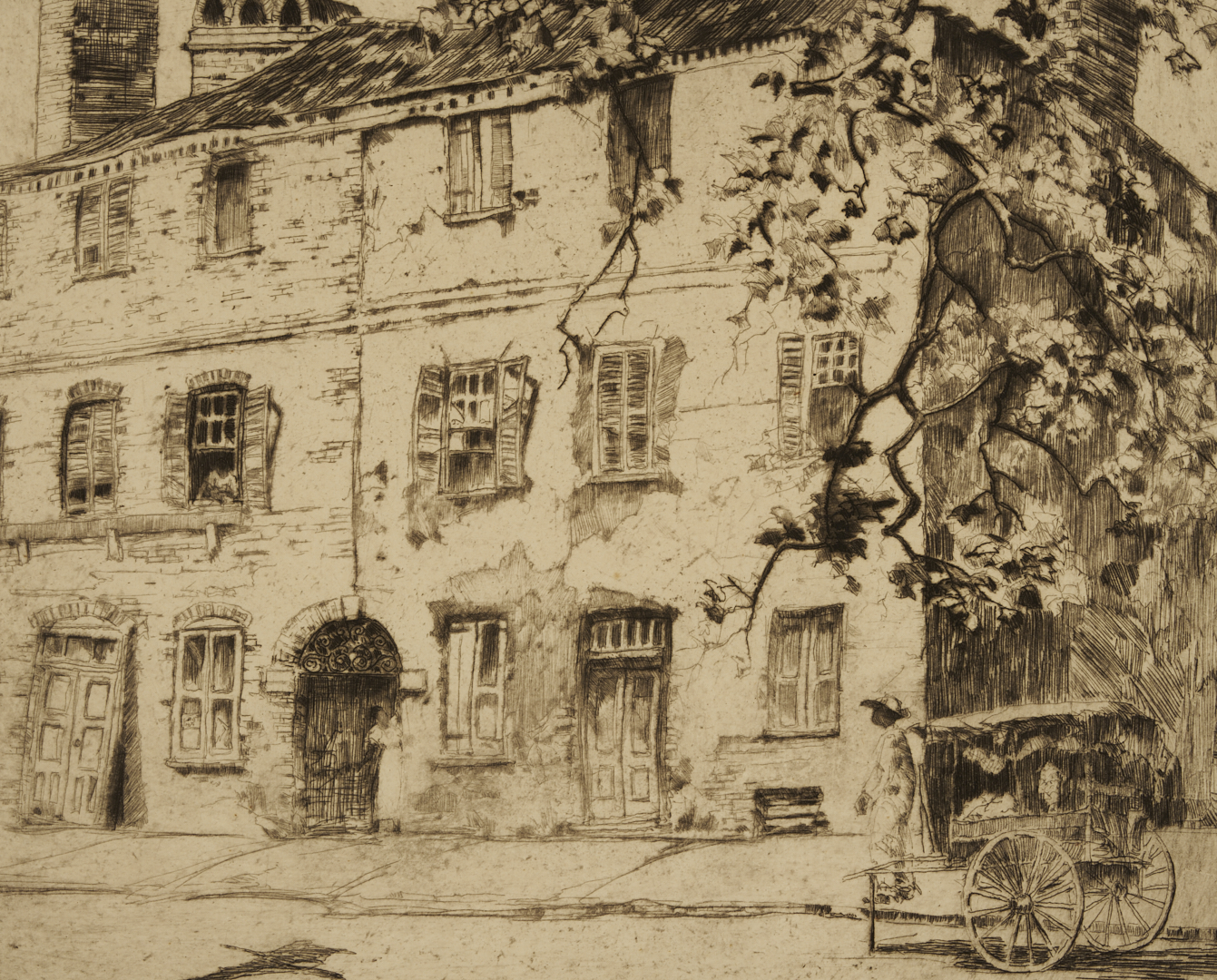
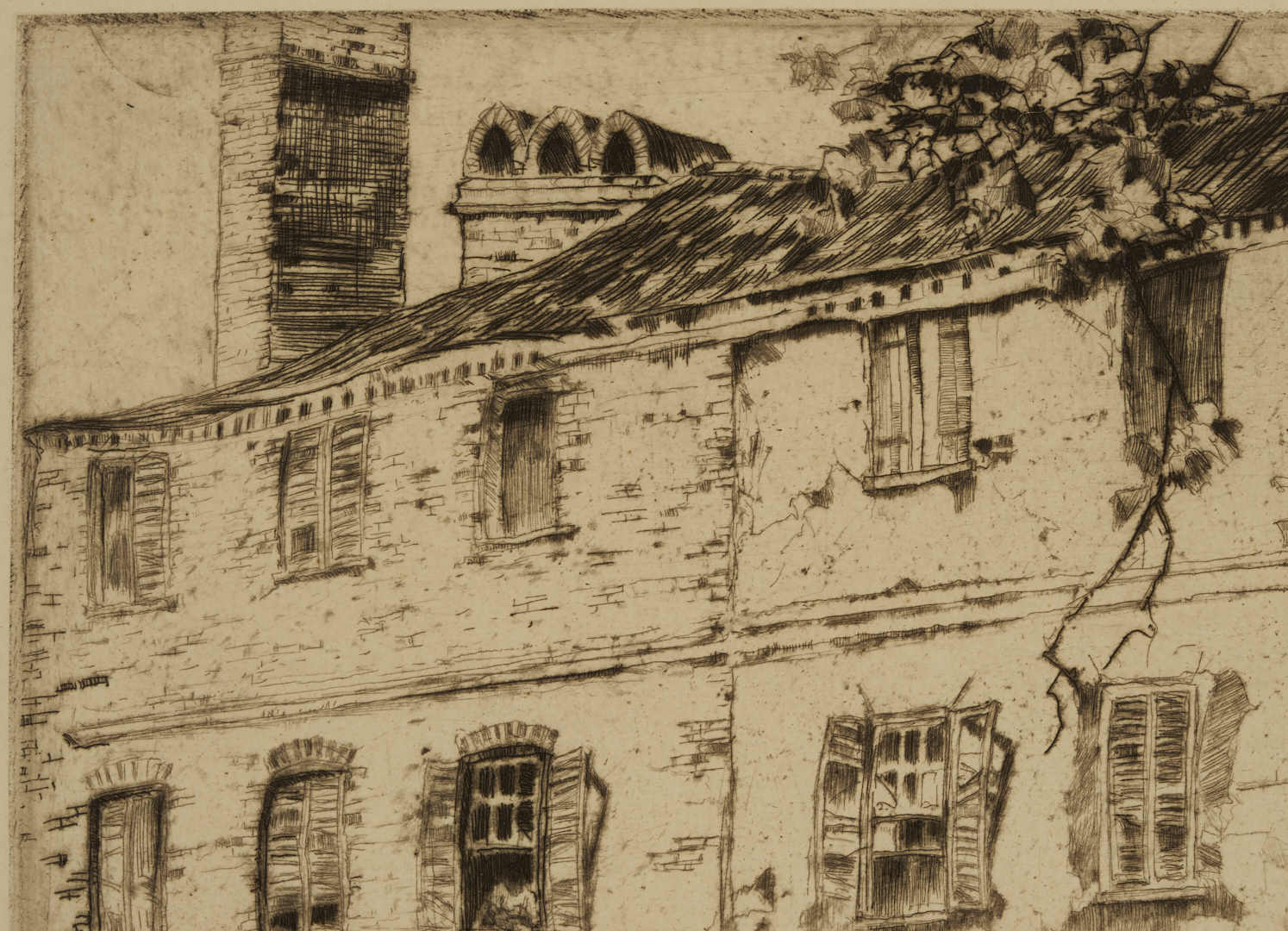
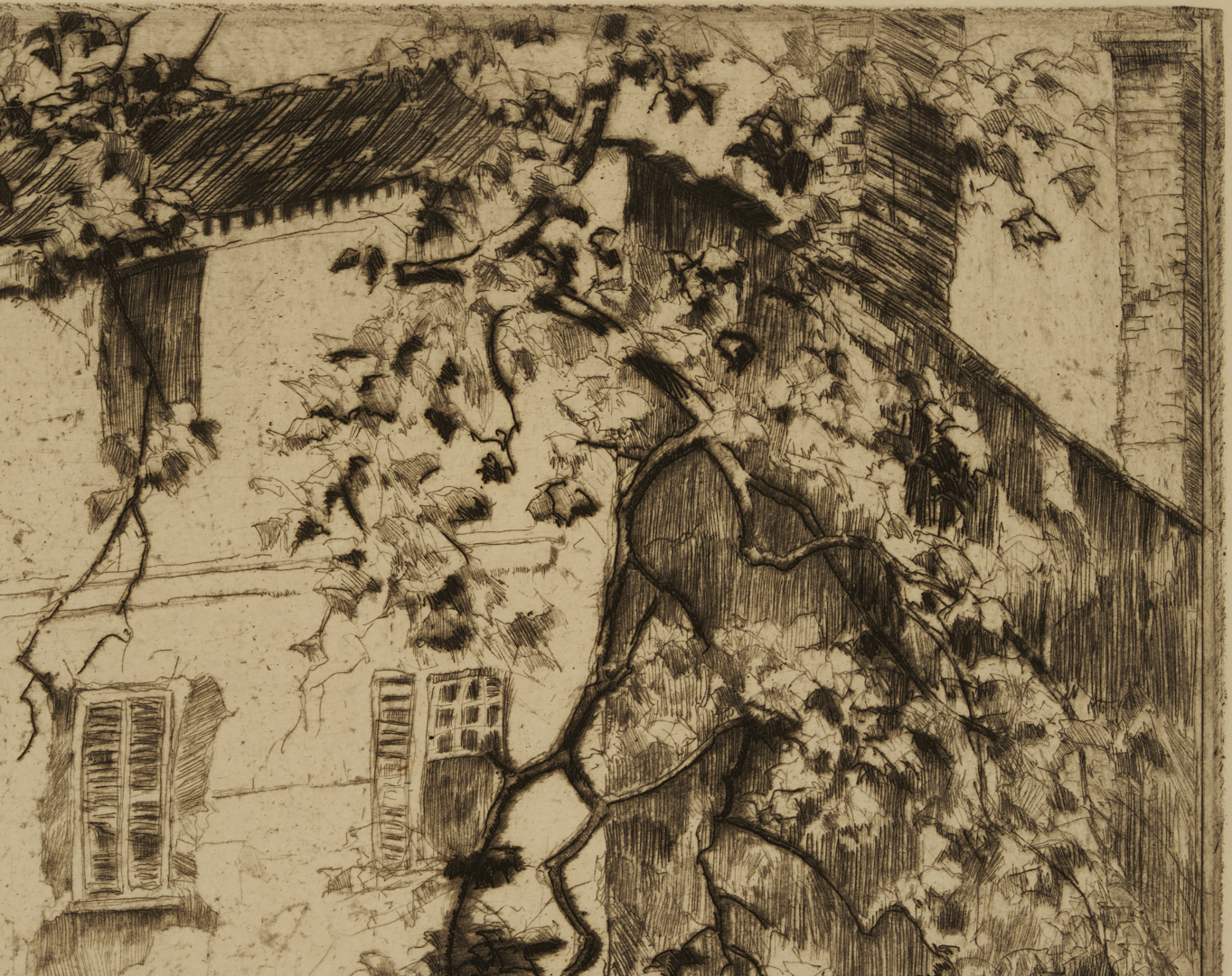
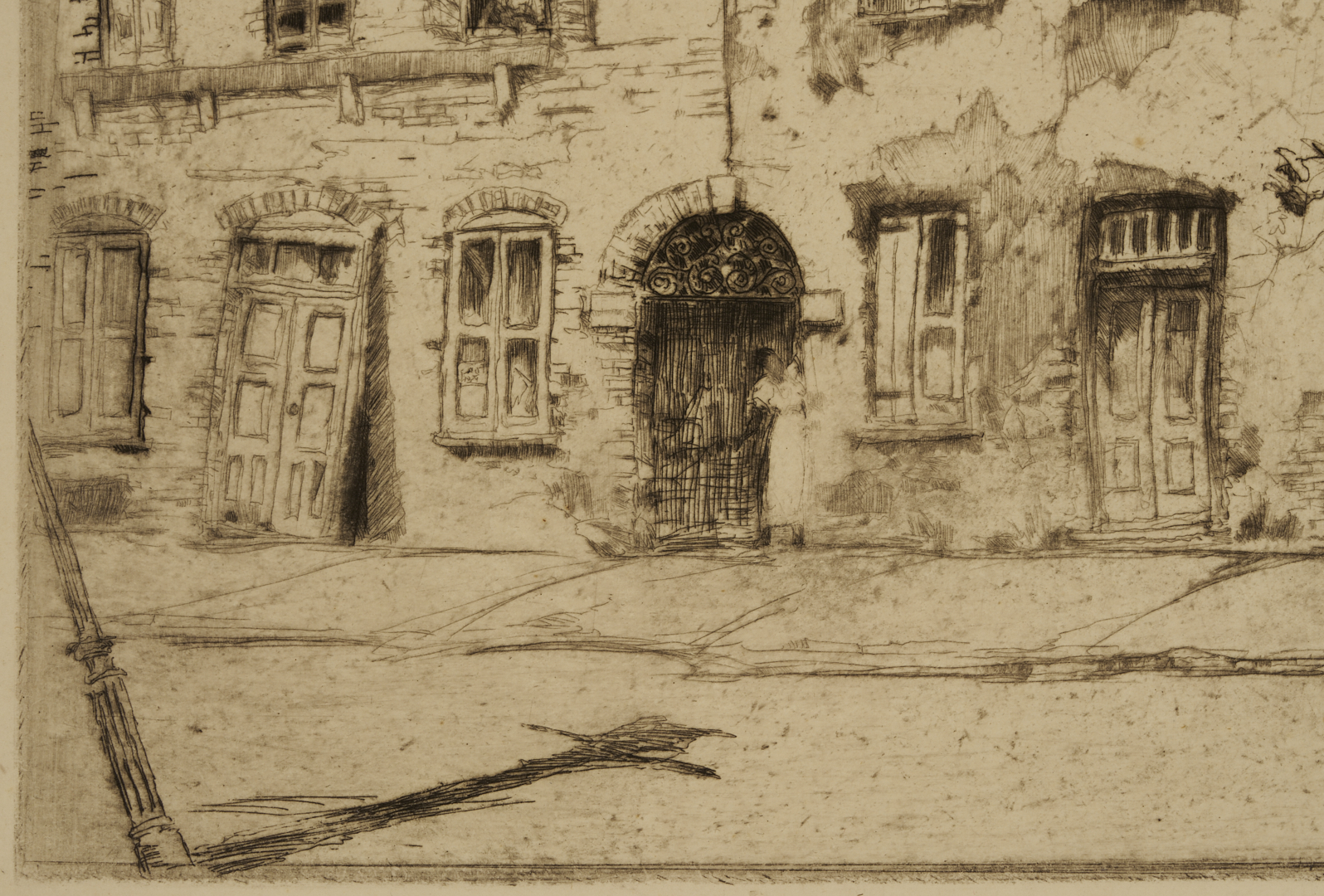
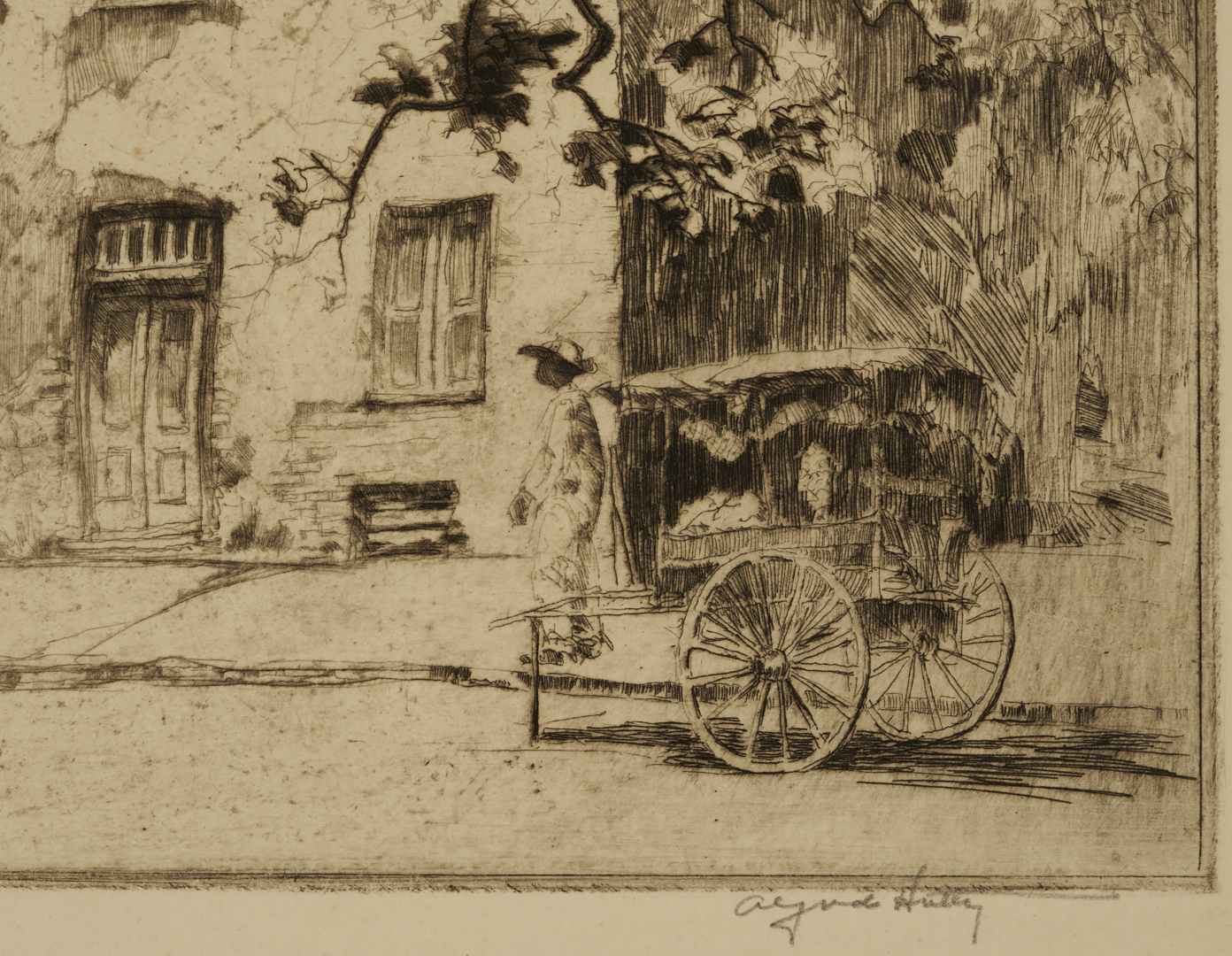
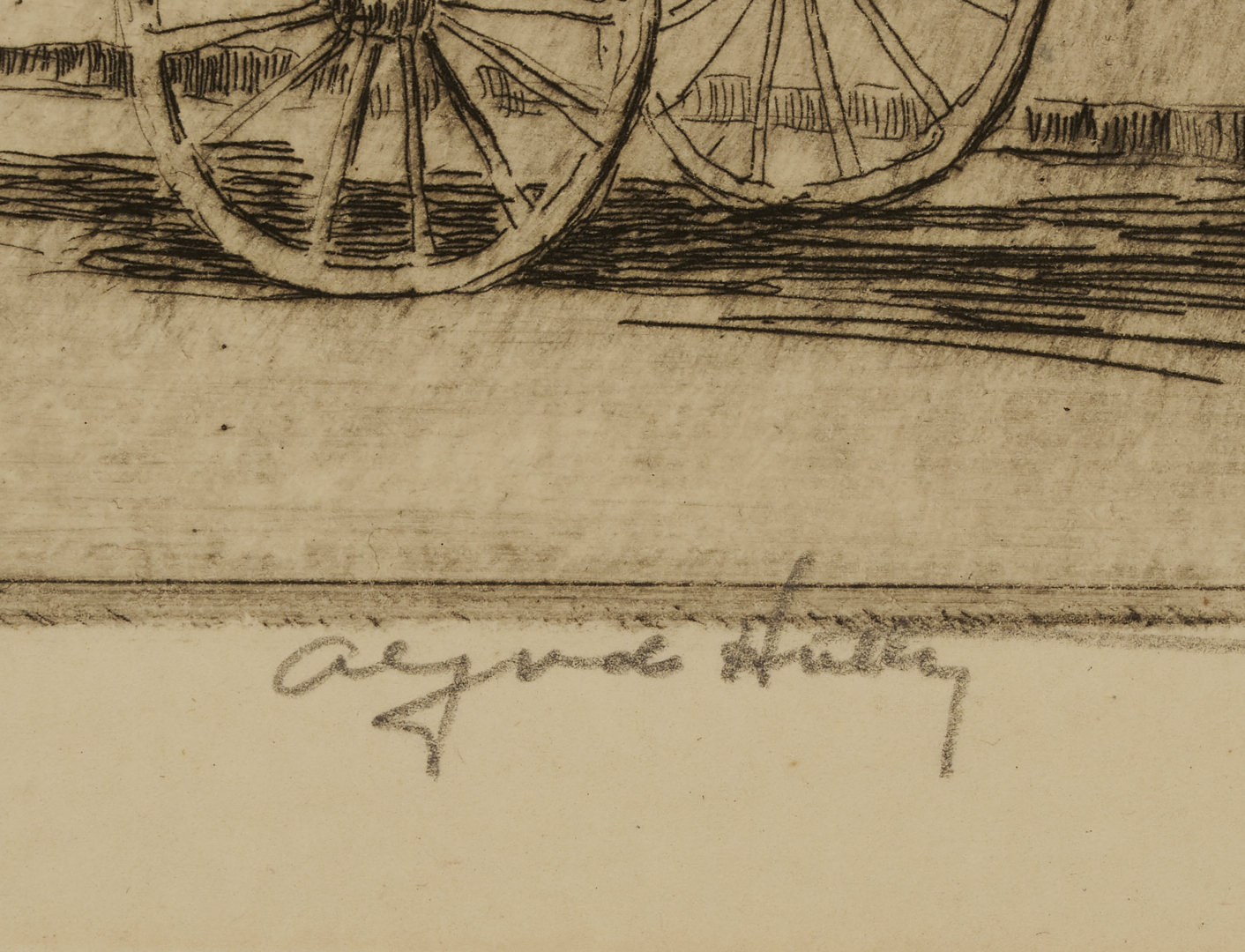
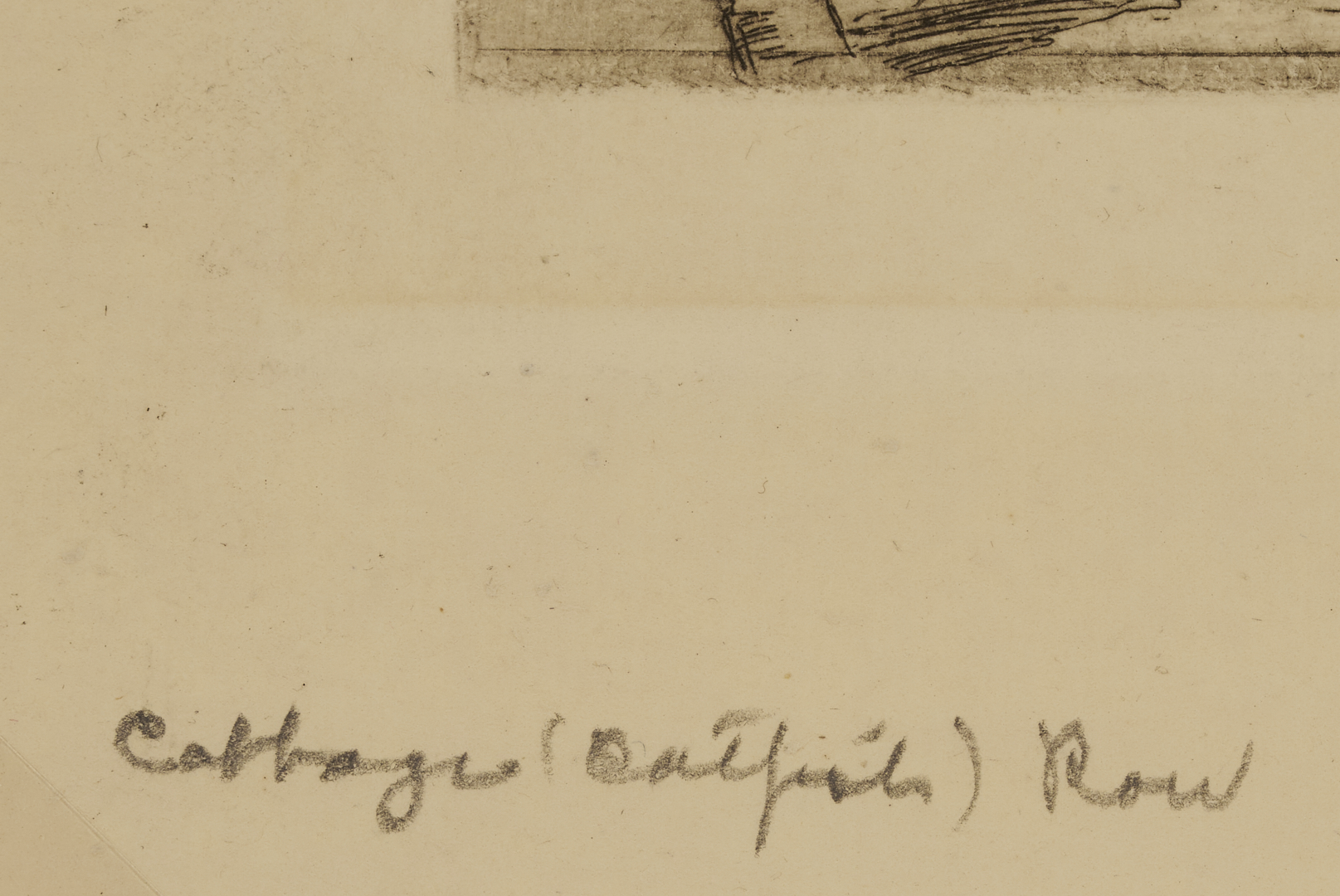
Alfred Heber Hutty (Charleston, South Carolina, 1877-1954) etching and drypoint titled “Cabbage (Catfish) Row.” Two African-American figures stand on the sidewalk before 89 and 91 Church Street, Charleston, known as Cabbage Row. A third figure peers out of a second-story window at left while the branches of a tree descend into the scene from upper right. Signed “Alfred Hutty” in pencil, lower right. Titled and numbered 16 in pencil to lower margin. Housed in a window mat. From the edition of 75. Ref.: Sara C. Arnold and Stephen G. Hoffius, editors, The Life and Art of Alfred Hutty: Woodstock to Charleston, The University of South Carolina, 2012, p. 137, no. 77. Sight: 8 11/16 in. H x 10 7/16 in. W. Sheet: 11 1/16 in. H x 13 3/16 in. W. Mat: 20 in. H x 16 in. W. 1928. Note: The pre-American Revolution buildings at Cabbage Row inspired “Catfish Row” in DuBose Heyward’s 1925 novel Porgy as well as George Gershwin’s 1935 opera Porgy and Bess.
Biographical Note: “One of the principal artists of the Charleston Renaissance, Alfred Heber Hutty was a native of Grand Haven, Michigan. He spent most of his youth in Kansas City. He was employed as a glazier and that led to his pursuit of stained-glass design, initially in Kansas City, later in St. Louis, and finally in New York City, where he was employed by the Tiffany Studios. He studied with Birge Harrison at the Art Students League and at the nascent art colony in Woodstock, New York, where he was among the first artists to settle full time…He began dividing his time seasonally between homes and studios in Woodstock and Charleston and soon became a fixture in Charleston’s art circles. From 1920 to 1924 he was the director of the Carolina Art Association (now the Gibbes Museum of Art), and in 1921 he was a founding member of the Charleston Etchers’ Club. His principal subject, the local scene, naturally led to an interest in historic preservation. The Society for the Preservation of Old Dwellings, among other groups, provided opportunities for artists–among them, Hutty, Alice Ravenel Huger Smith, and Elizabeth O’Neill Verner–to create work that was deeply rooted in Charleston’s past.” (Source: Morris Museum of Art, “Alfred Hutty: Painter, Printmaker, Preservationist”)
PROVENANCE: Private Southern Collection.
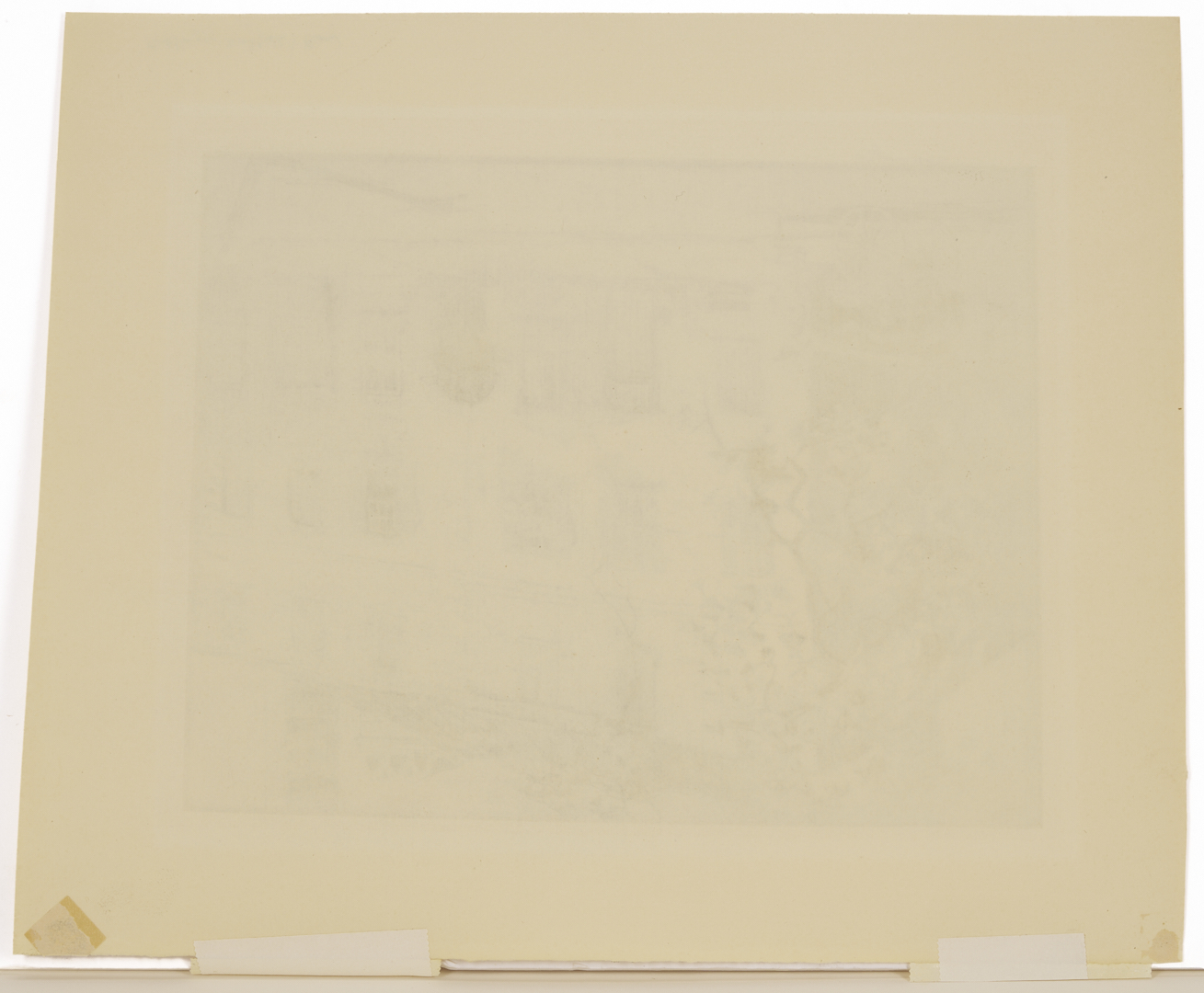
CONDITION: Overall very good condition, with strong contrasts and rich drypoint — especially to darkest areas that include the branches of the tree — plus plate tone throughout, along with inky plate edges. Sheet is hinge-mounted with archival tape affixed to upper edge en verso. Sheet with negligible, even toning to sight area.