SOLD! for $676.00.
(Note: Prices realized include a buyer's premium.)
If you have items like this you wish to consign, click here for more information:
Selling with Case- Low Estimate: $500.00
- High Estimate: $600.00
- Hammer Price: $550.00
- Share this:
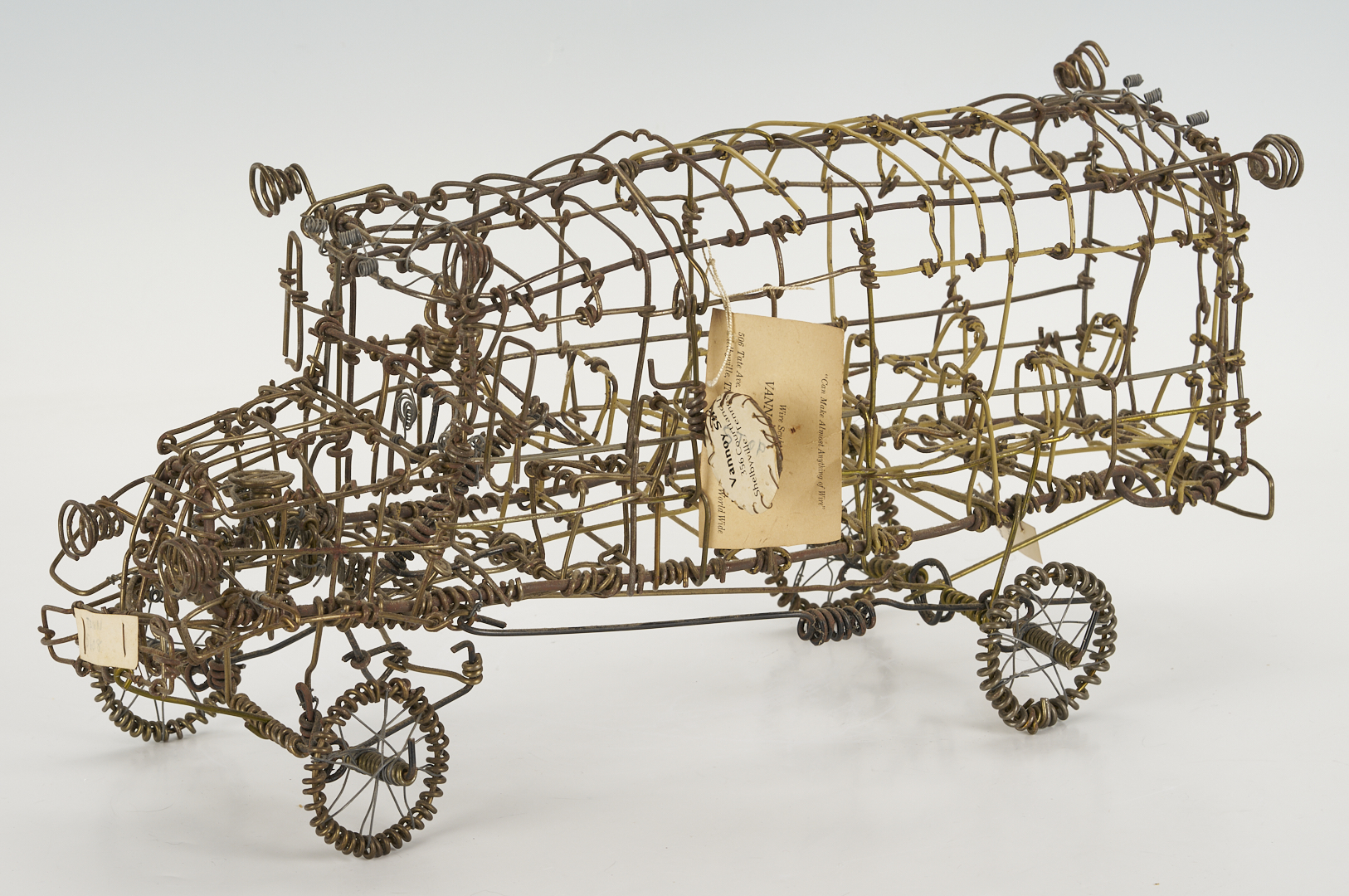
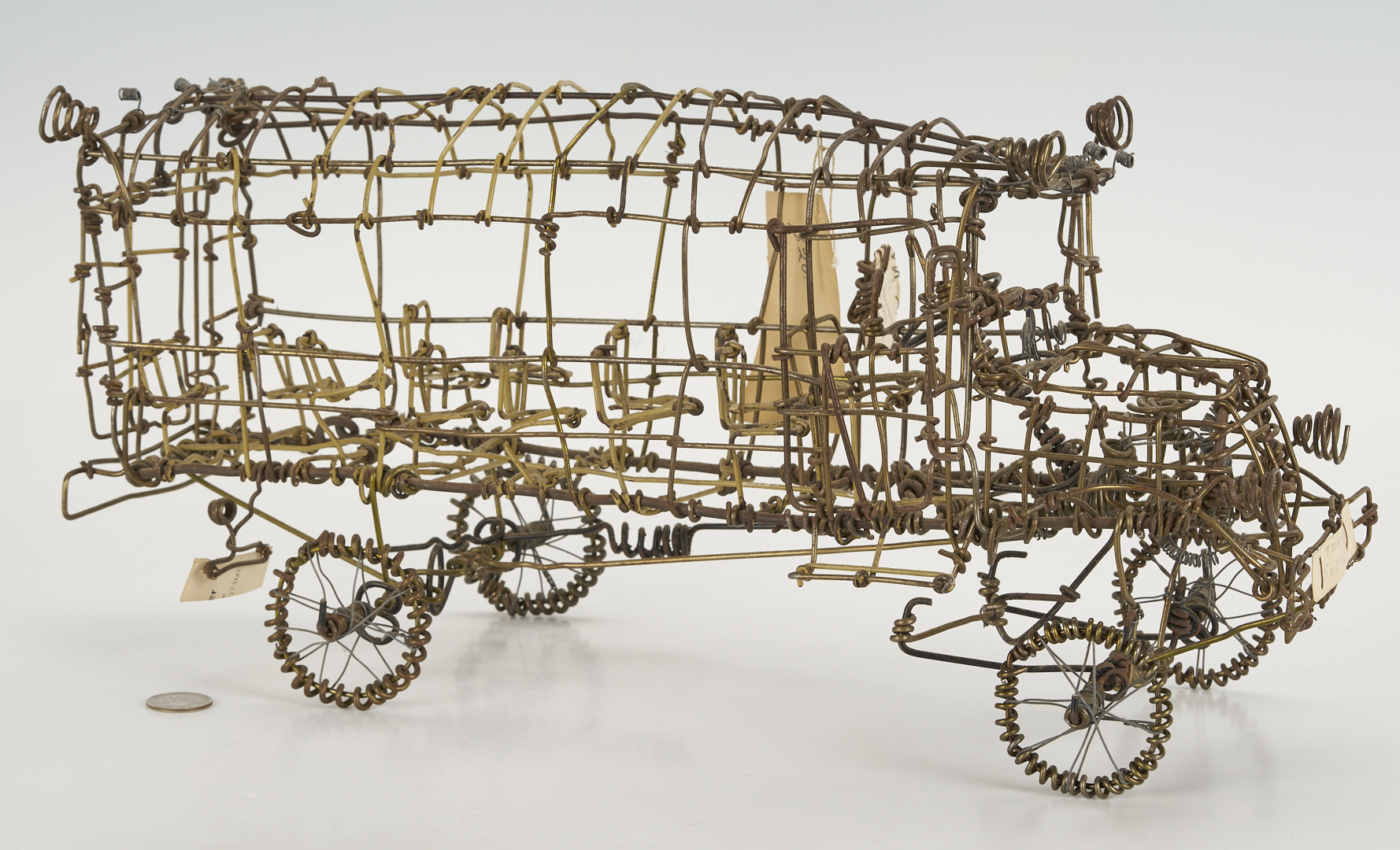
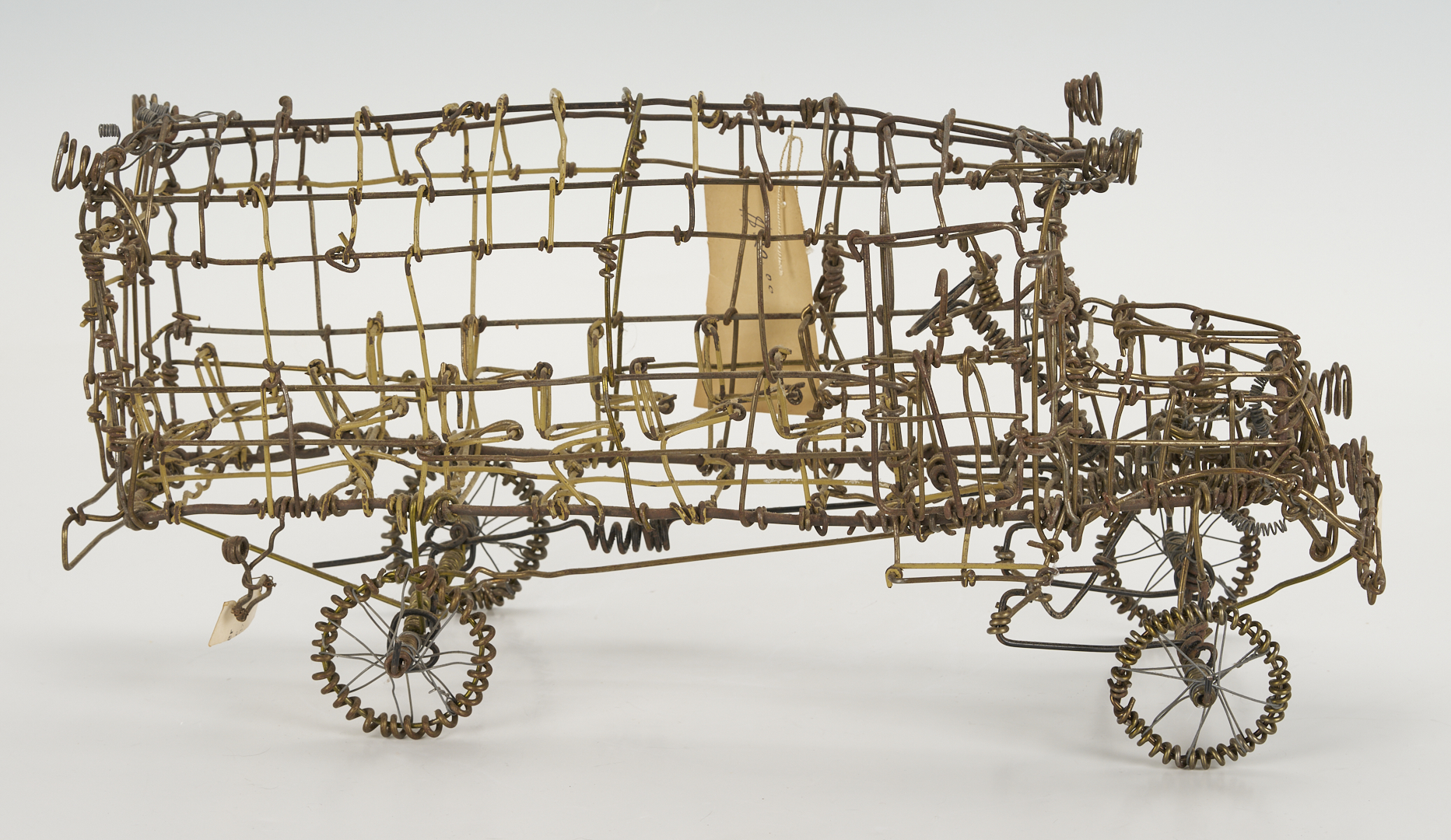
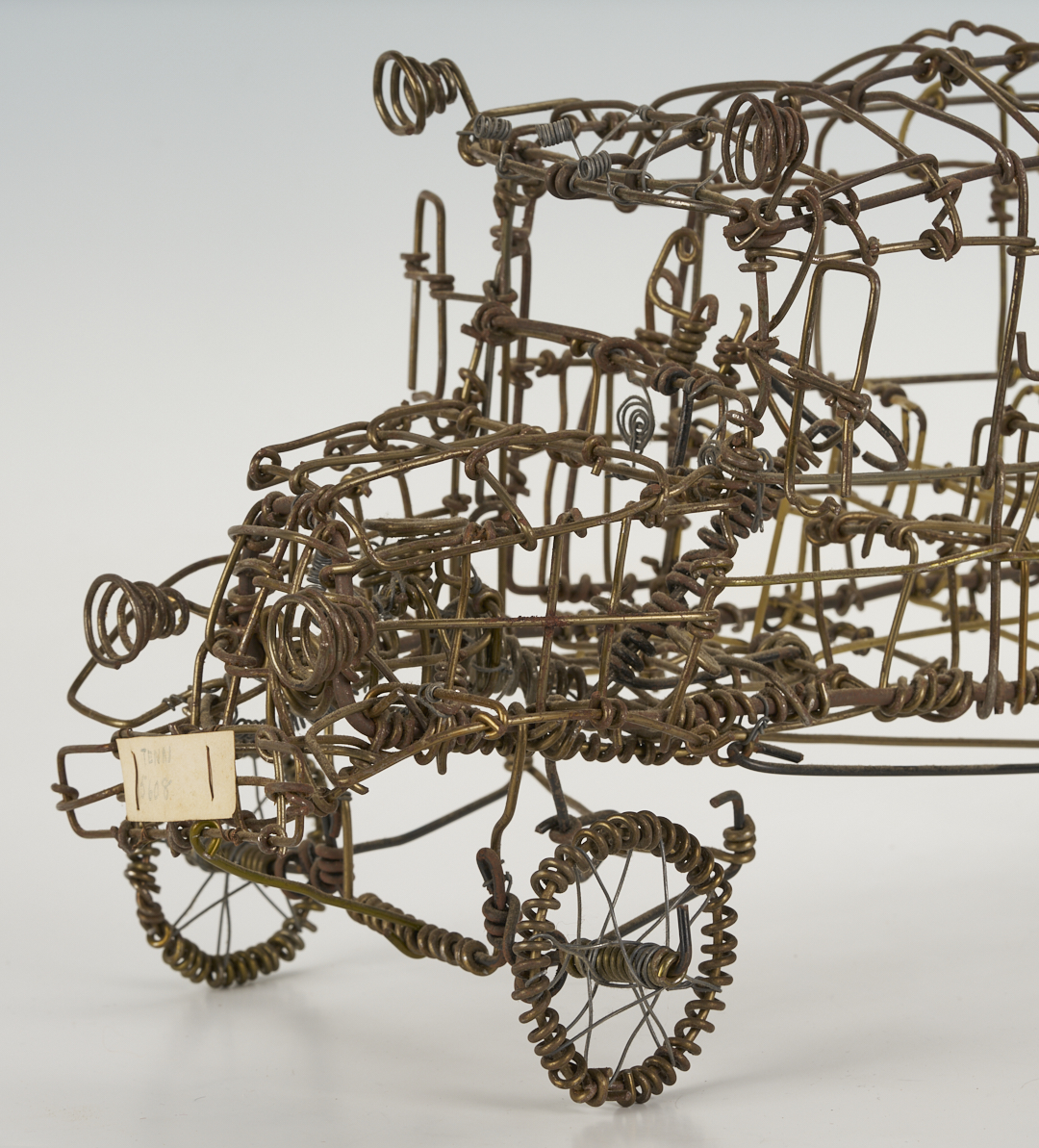
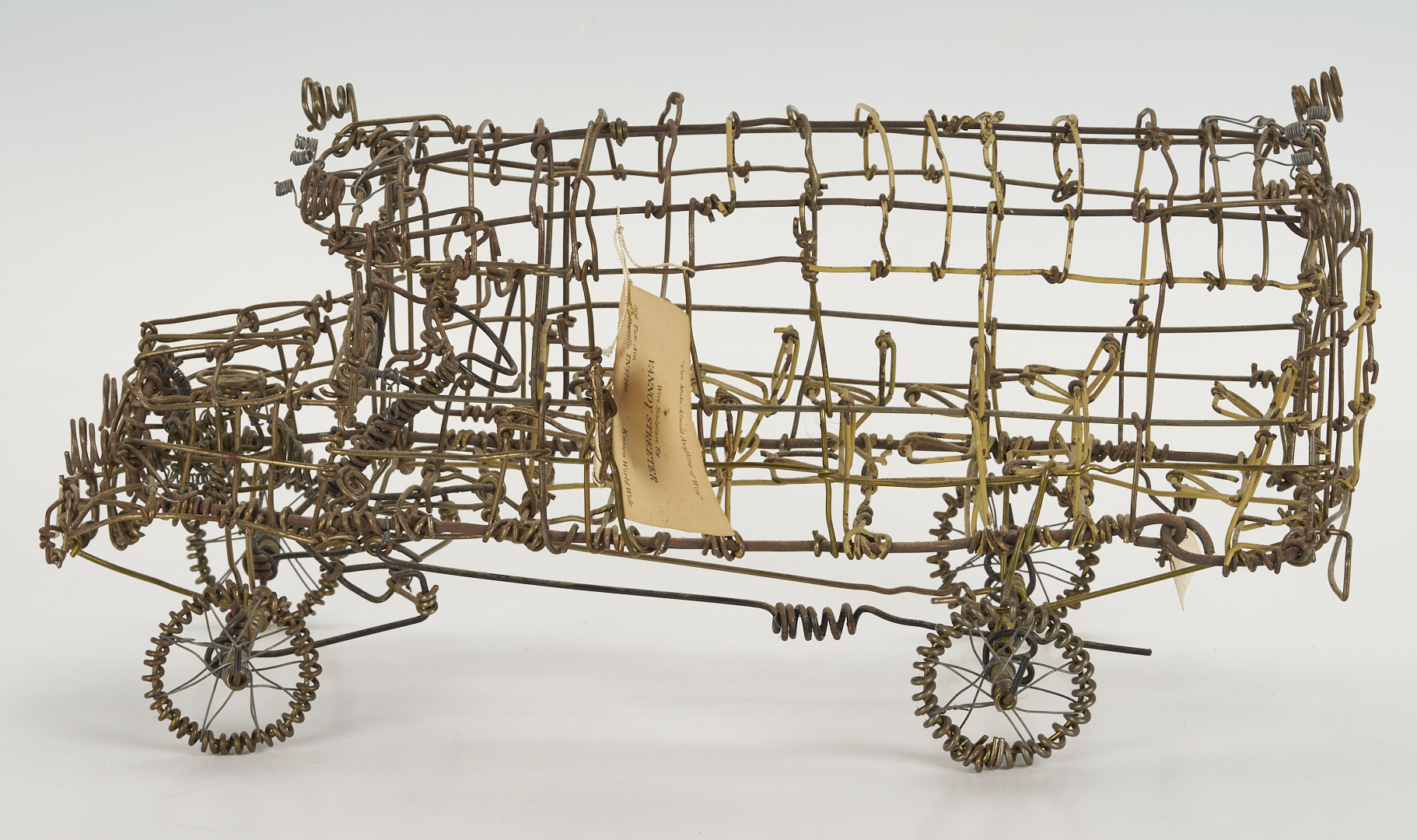
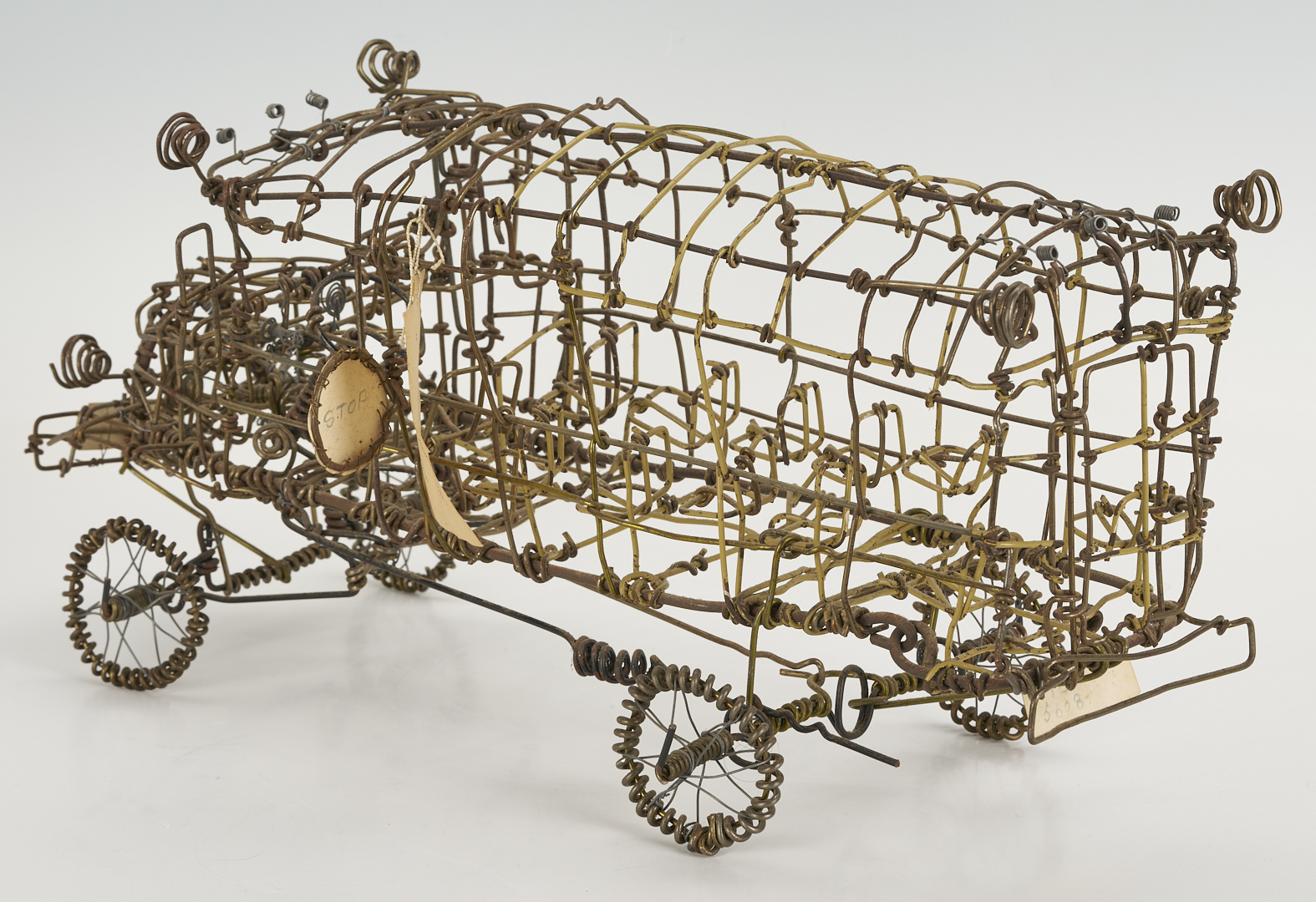
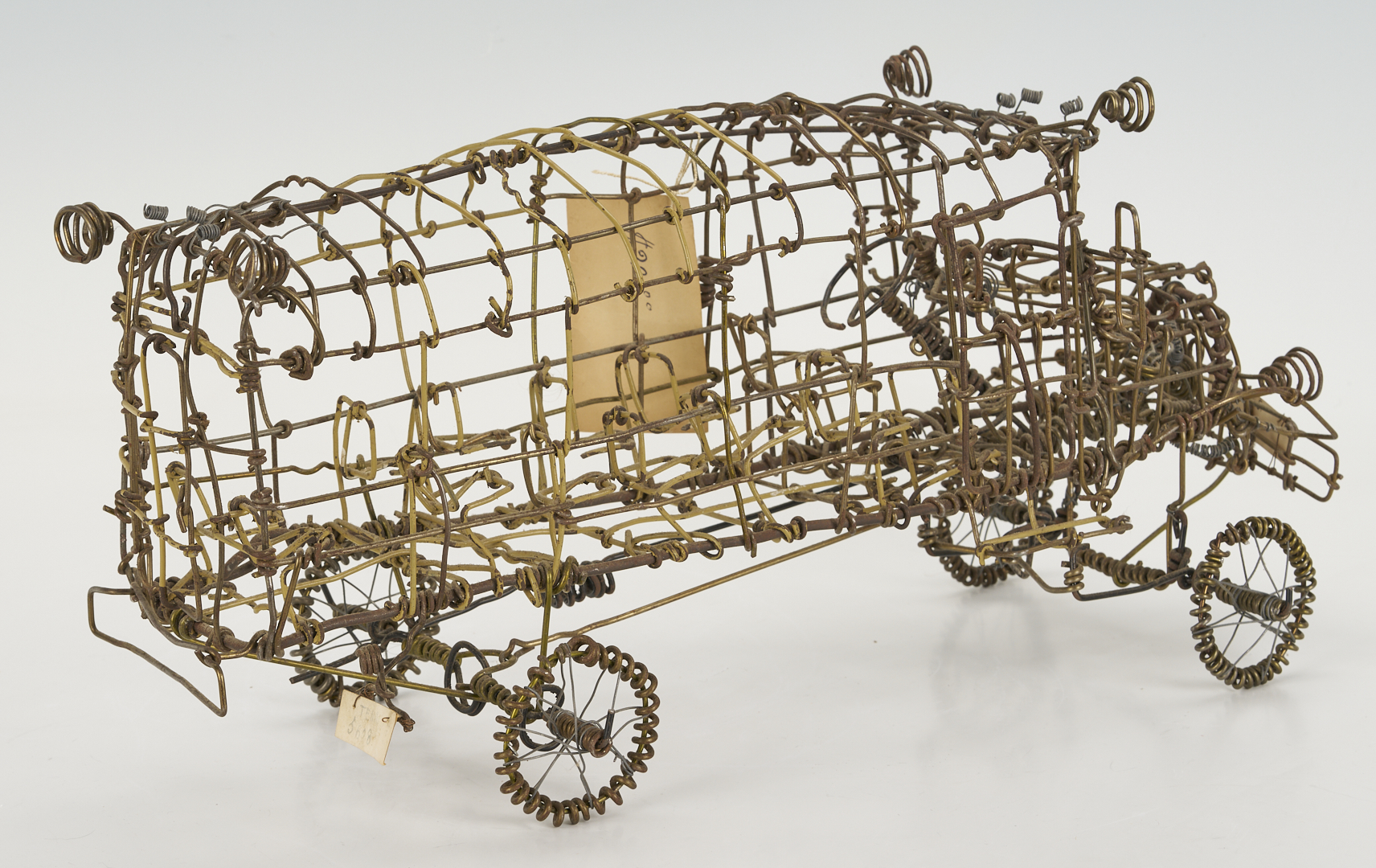
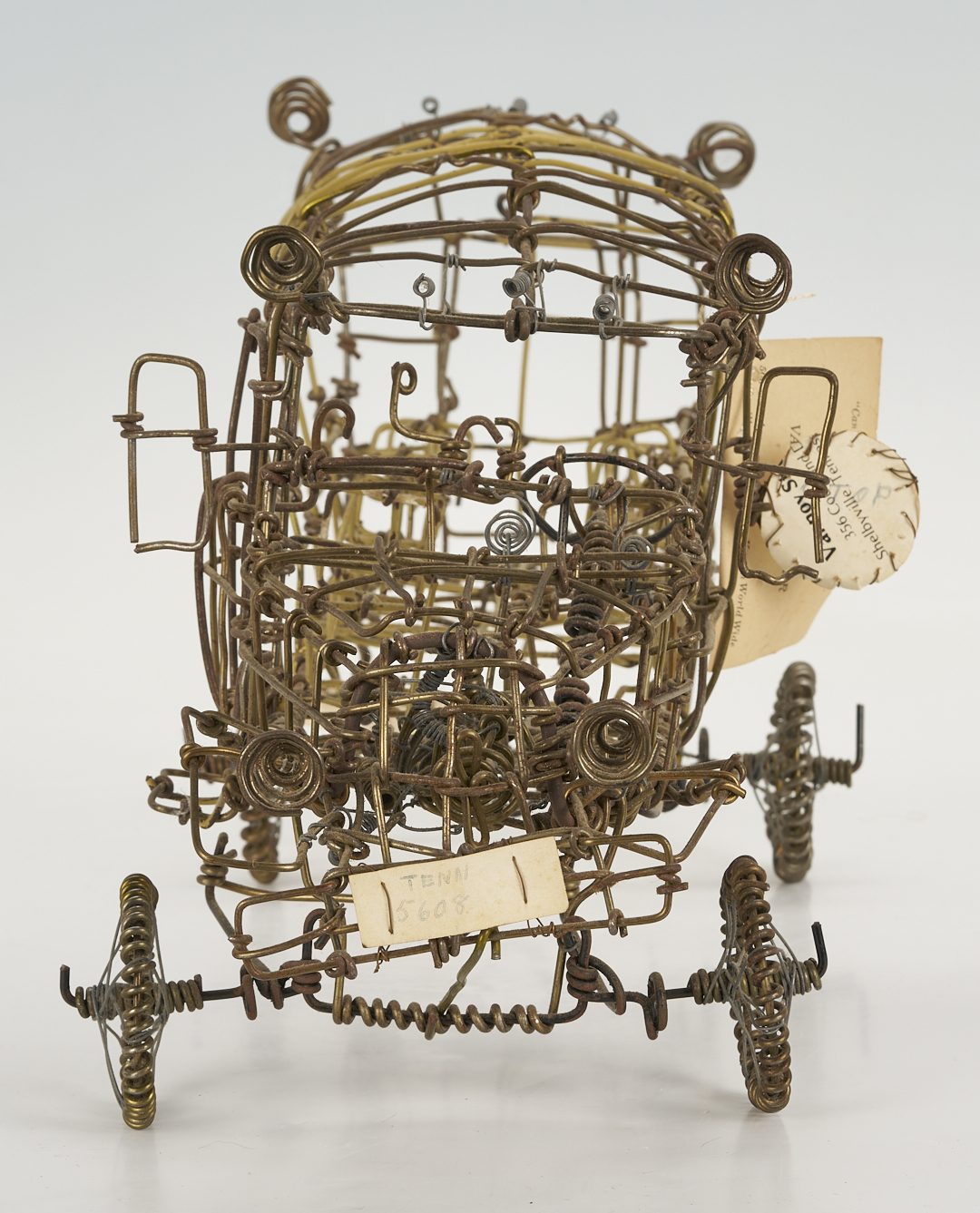
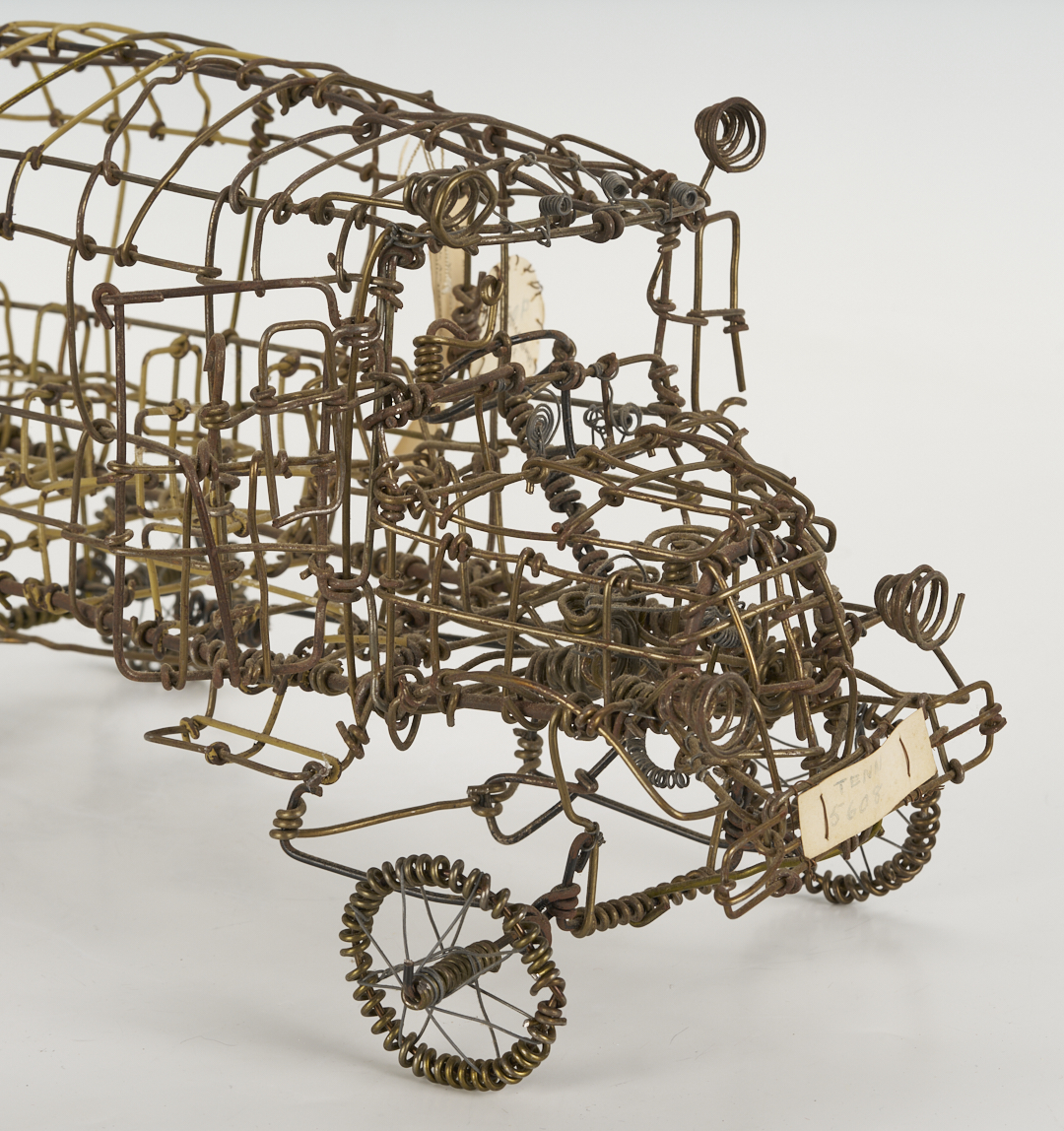
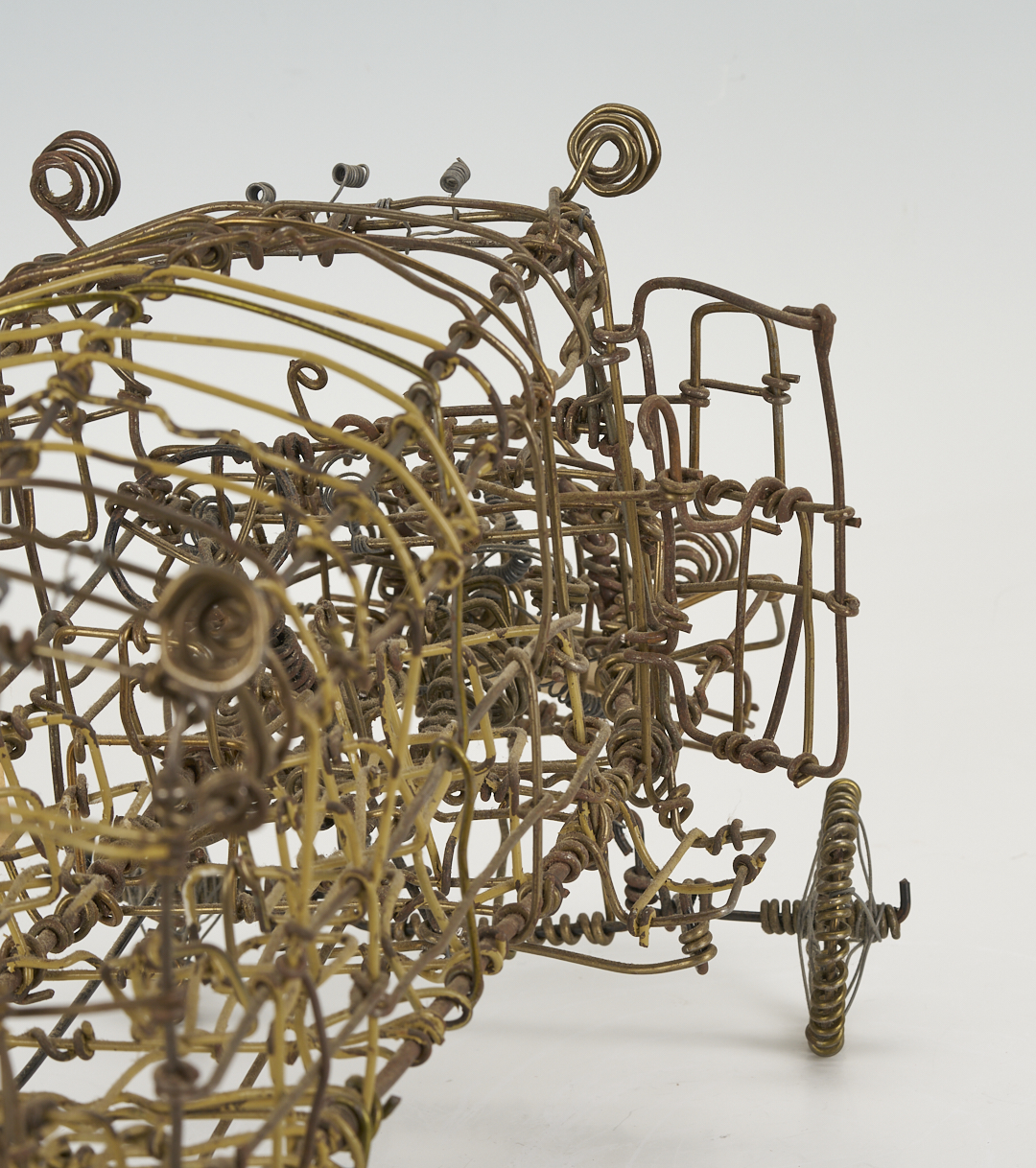
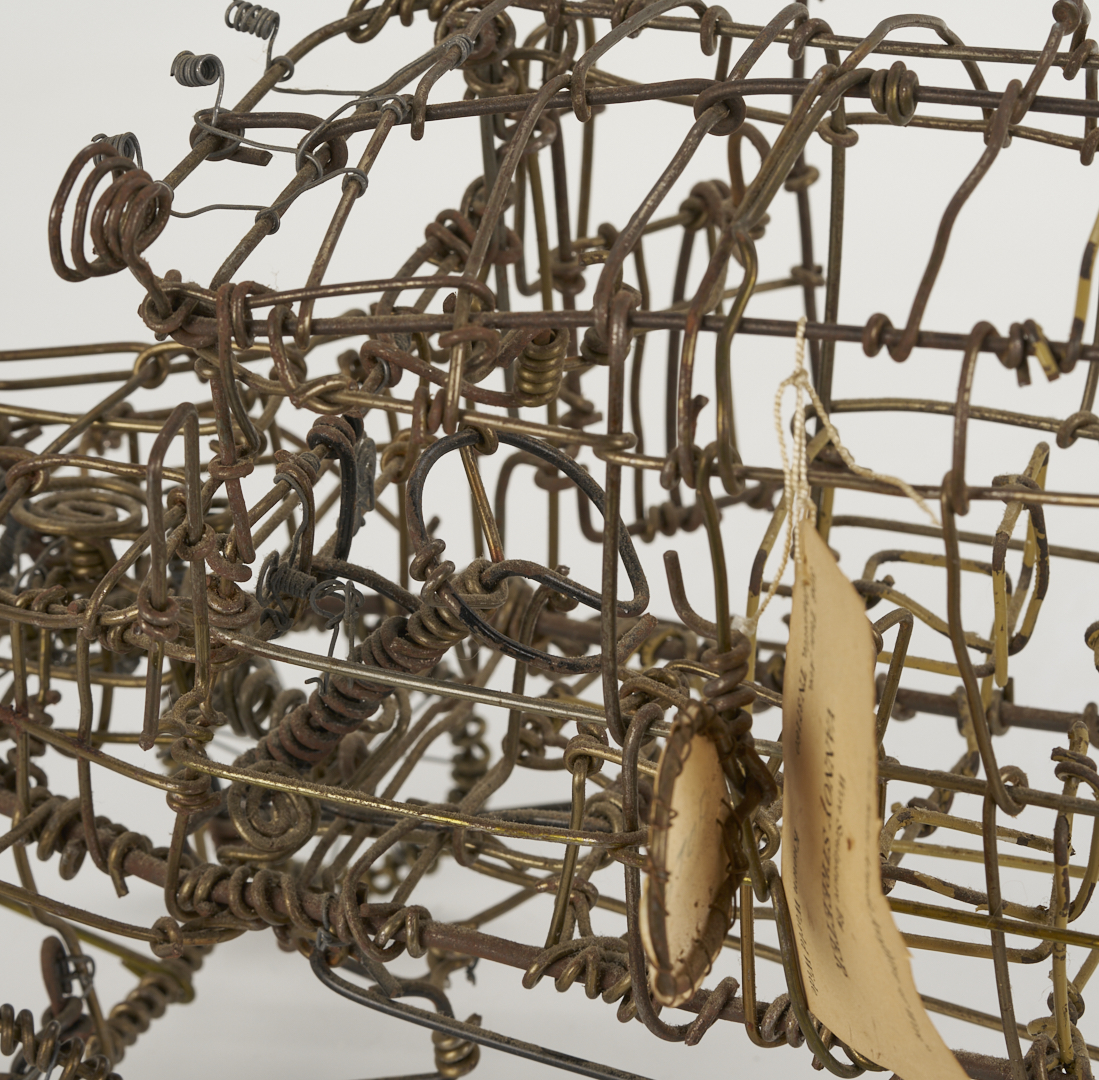
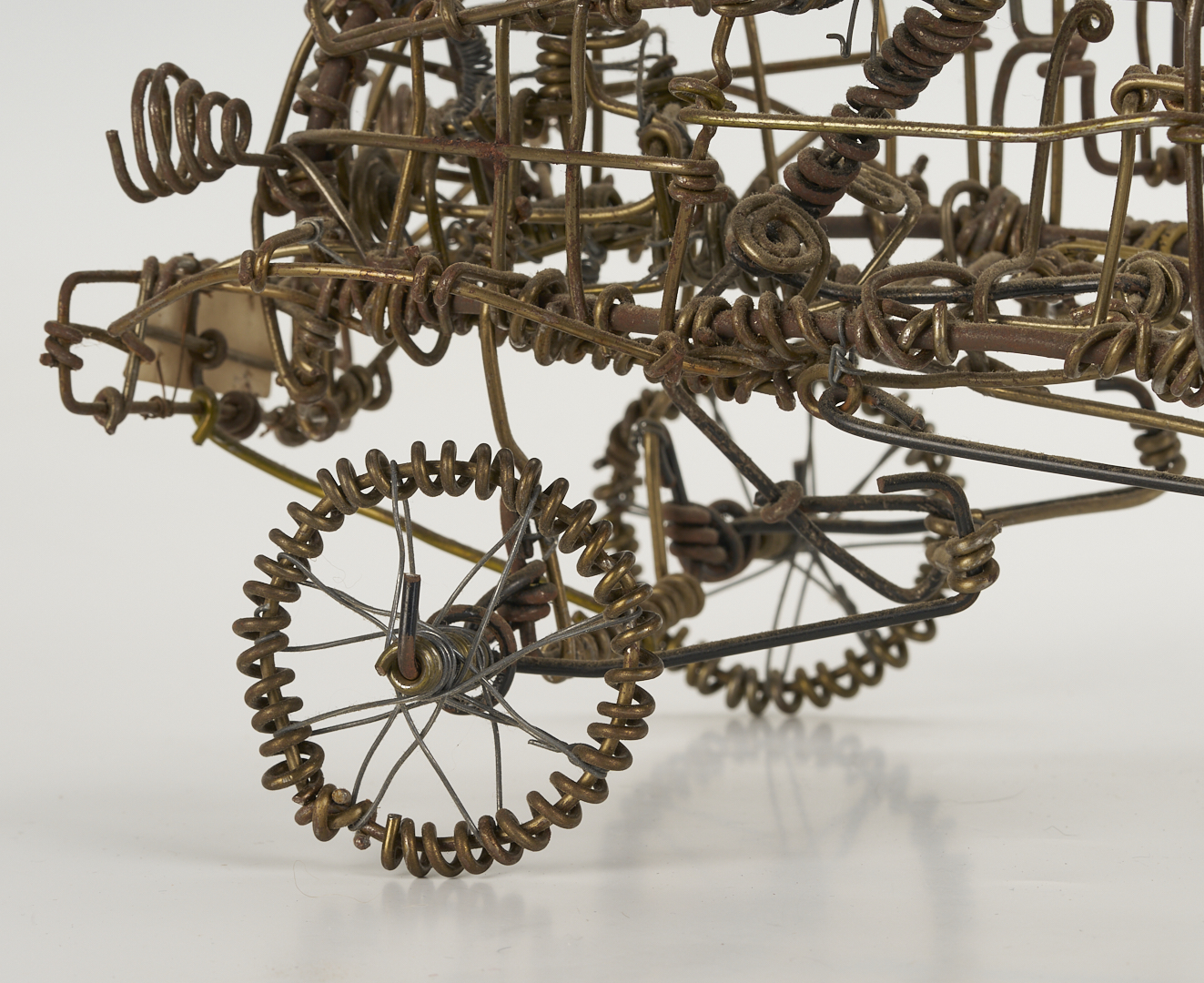
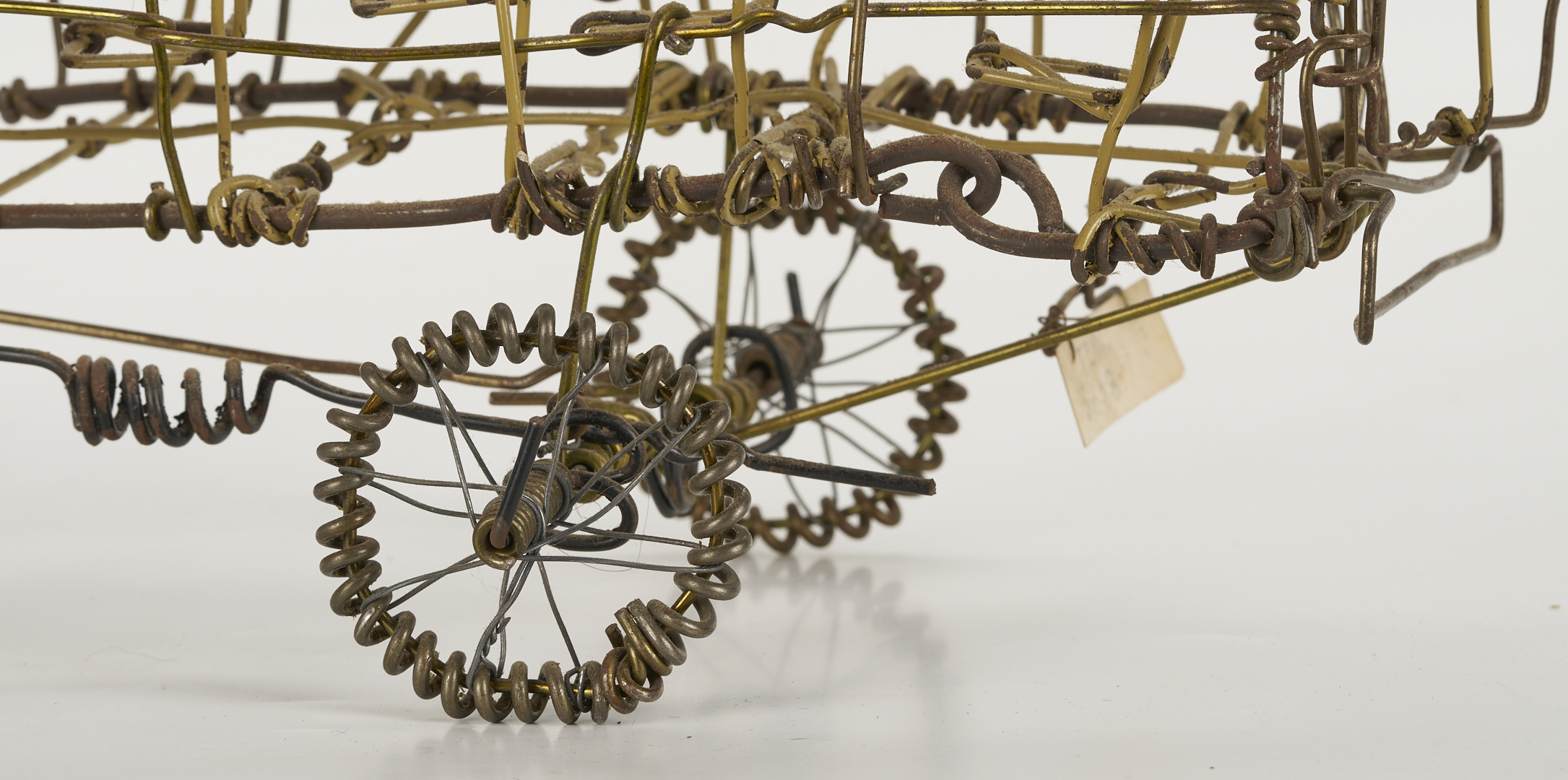
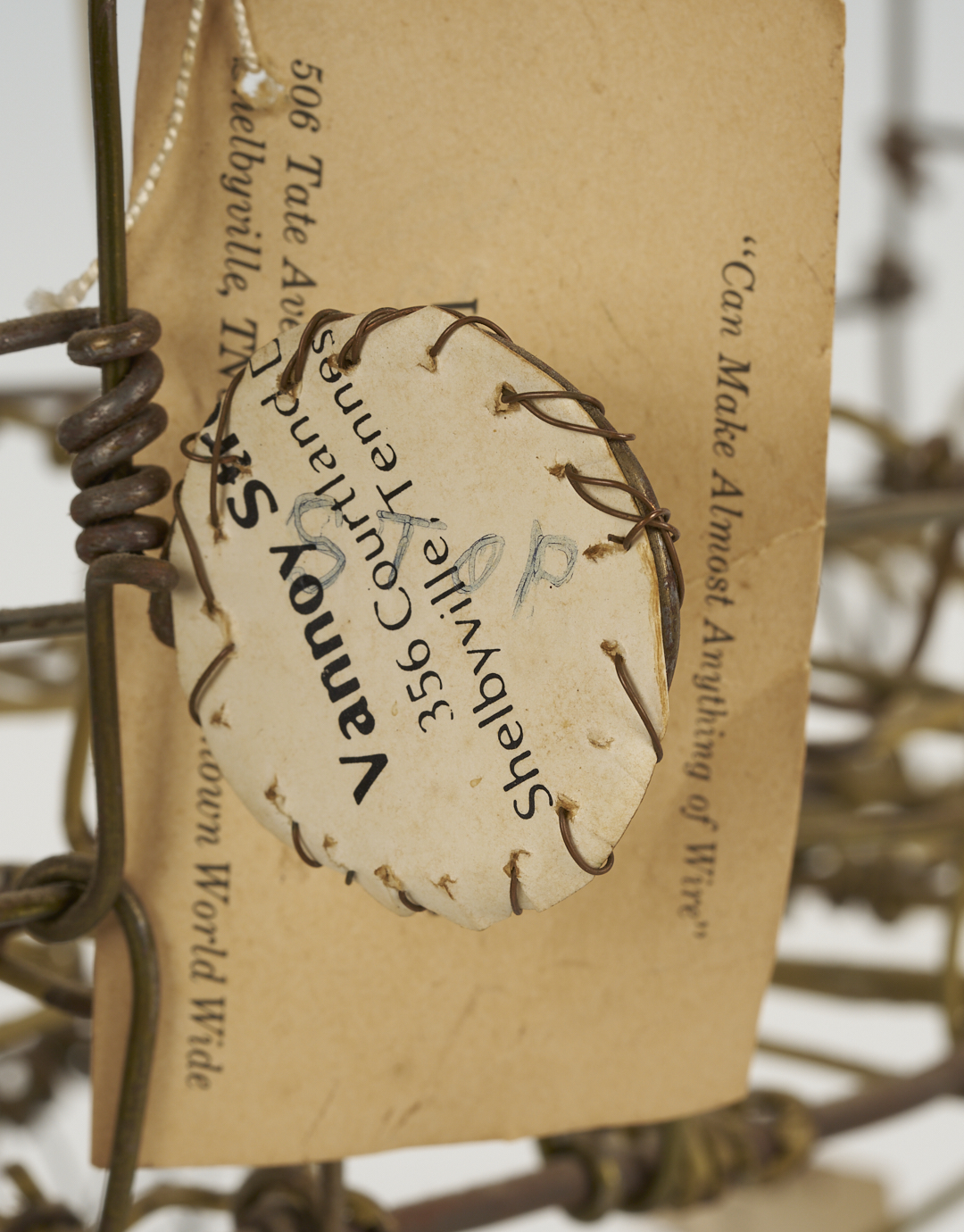
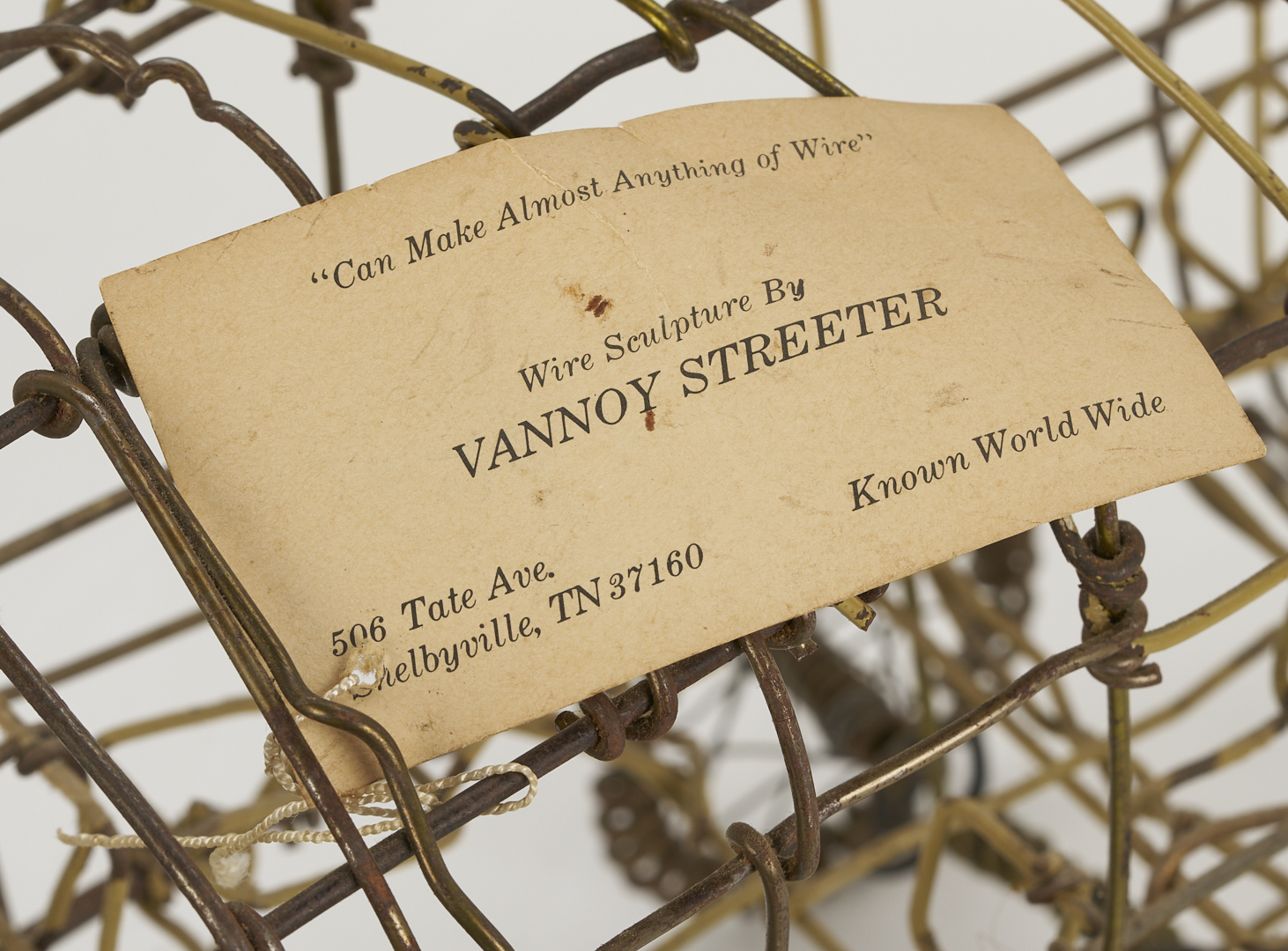
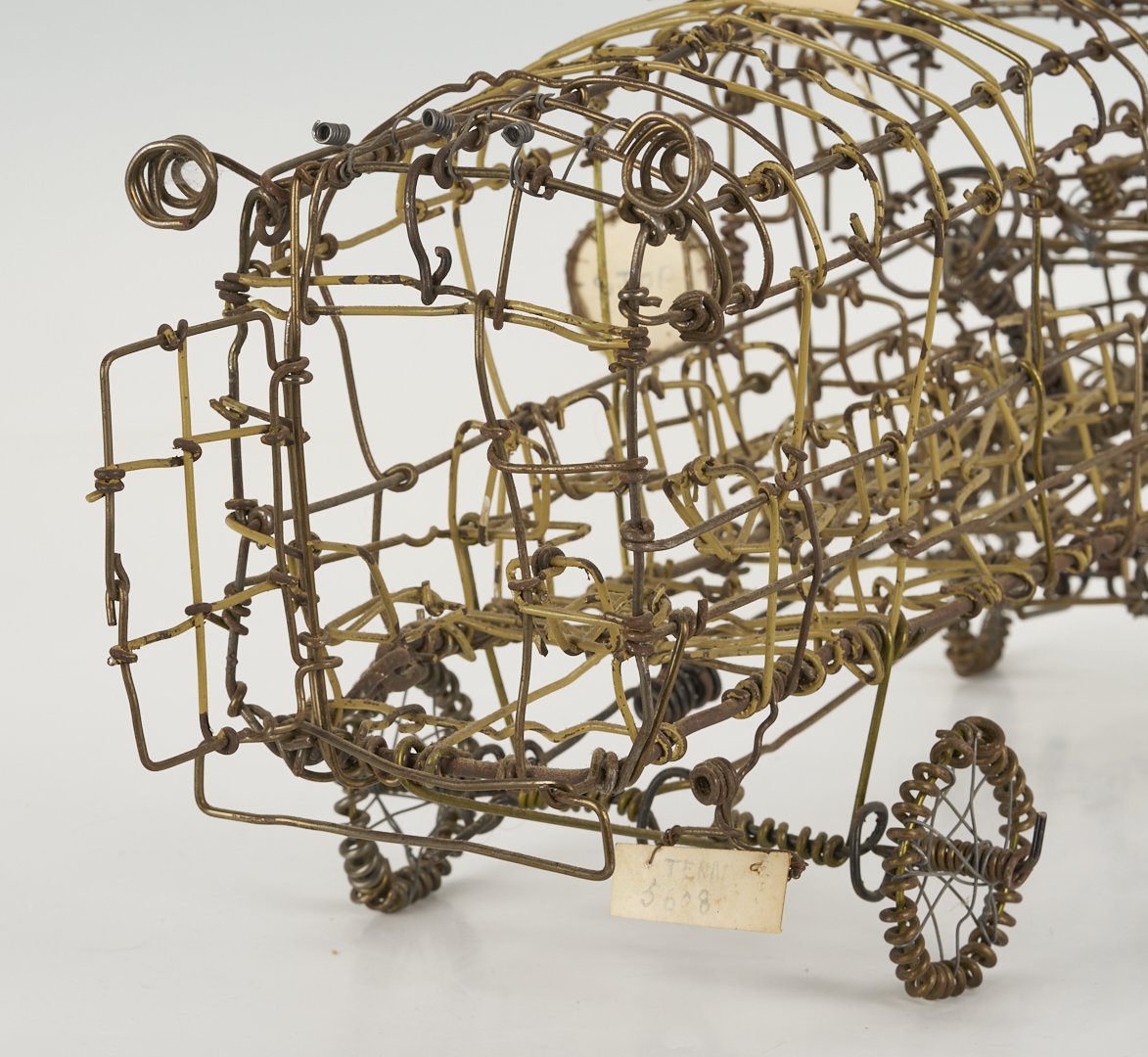
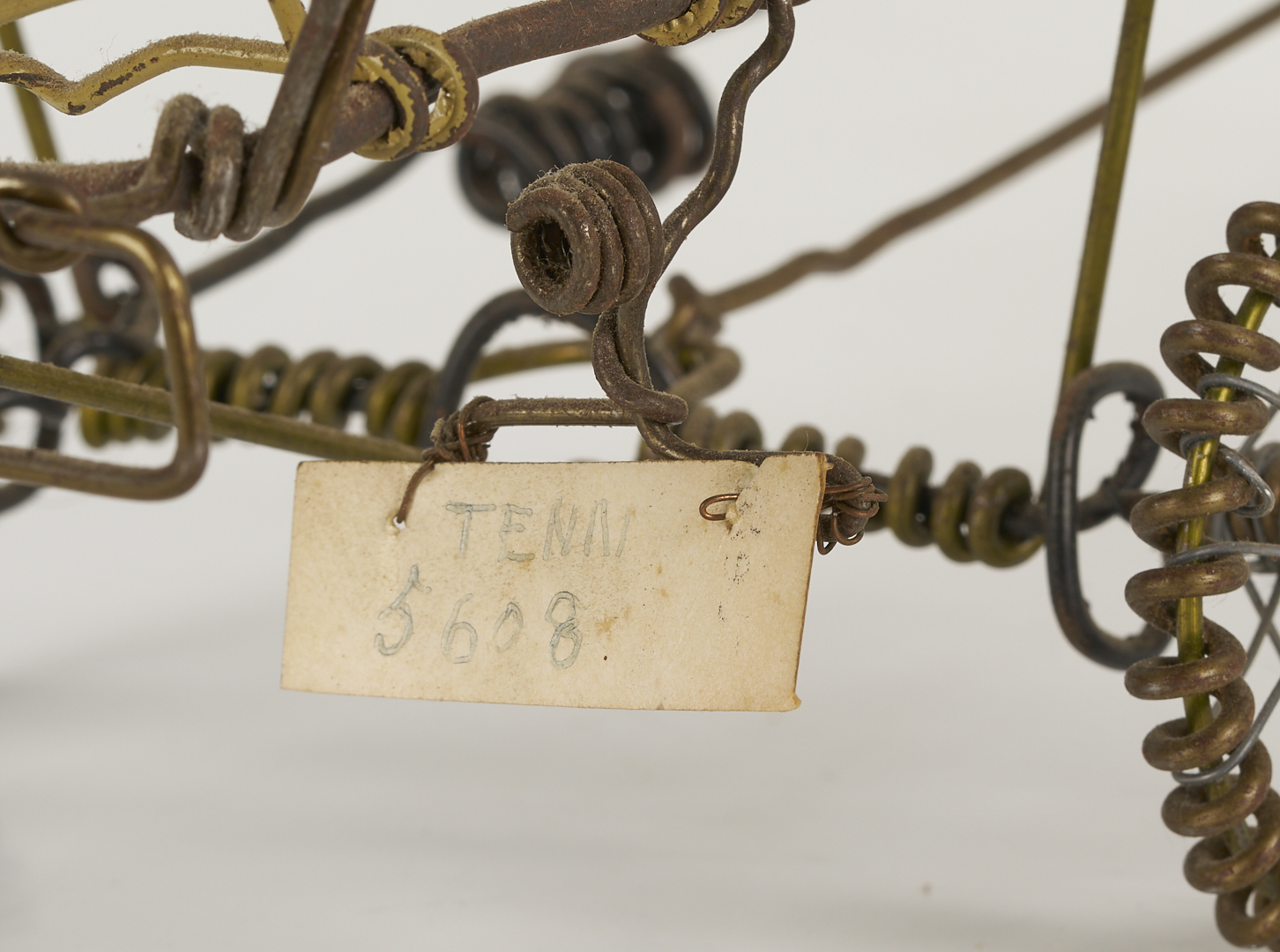
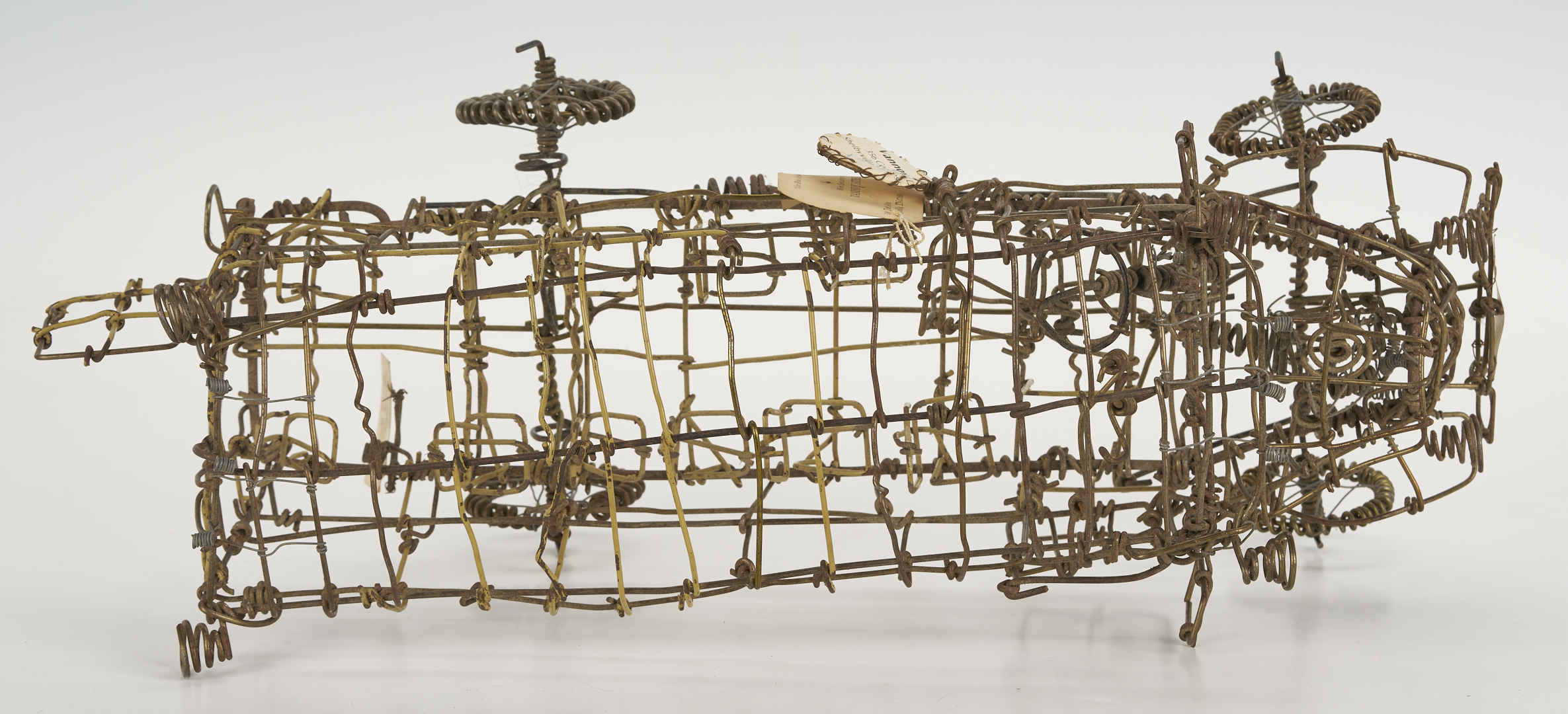
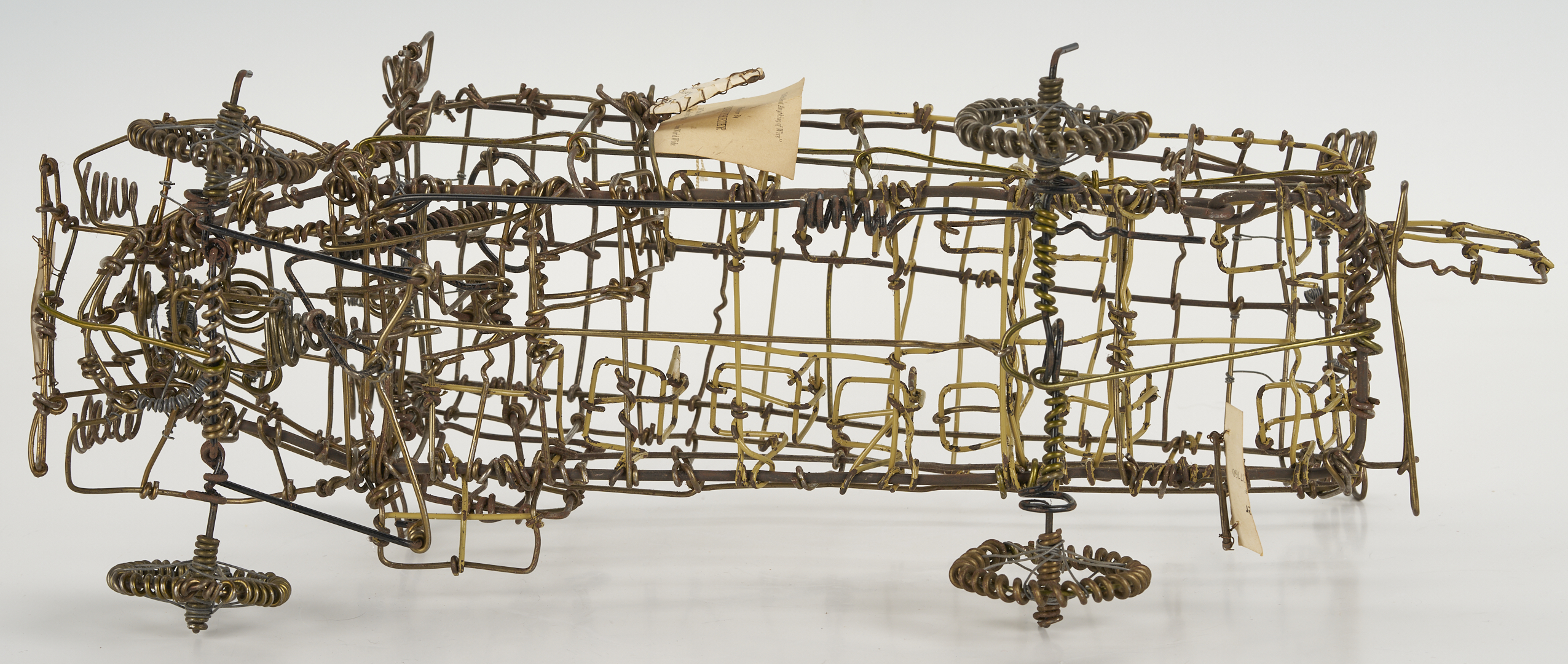
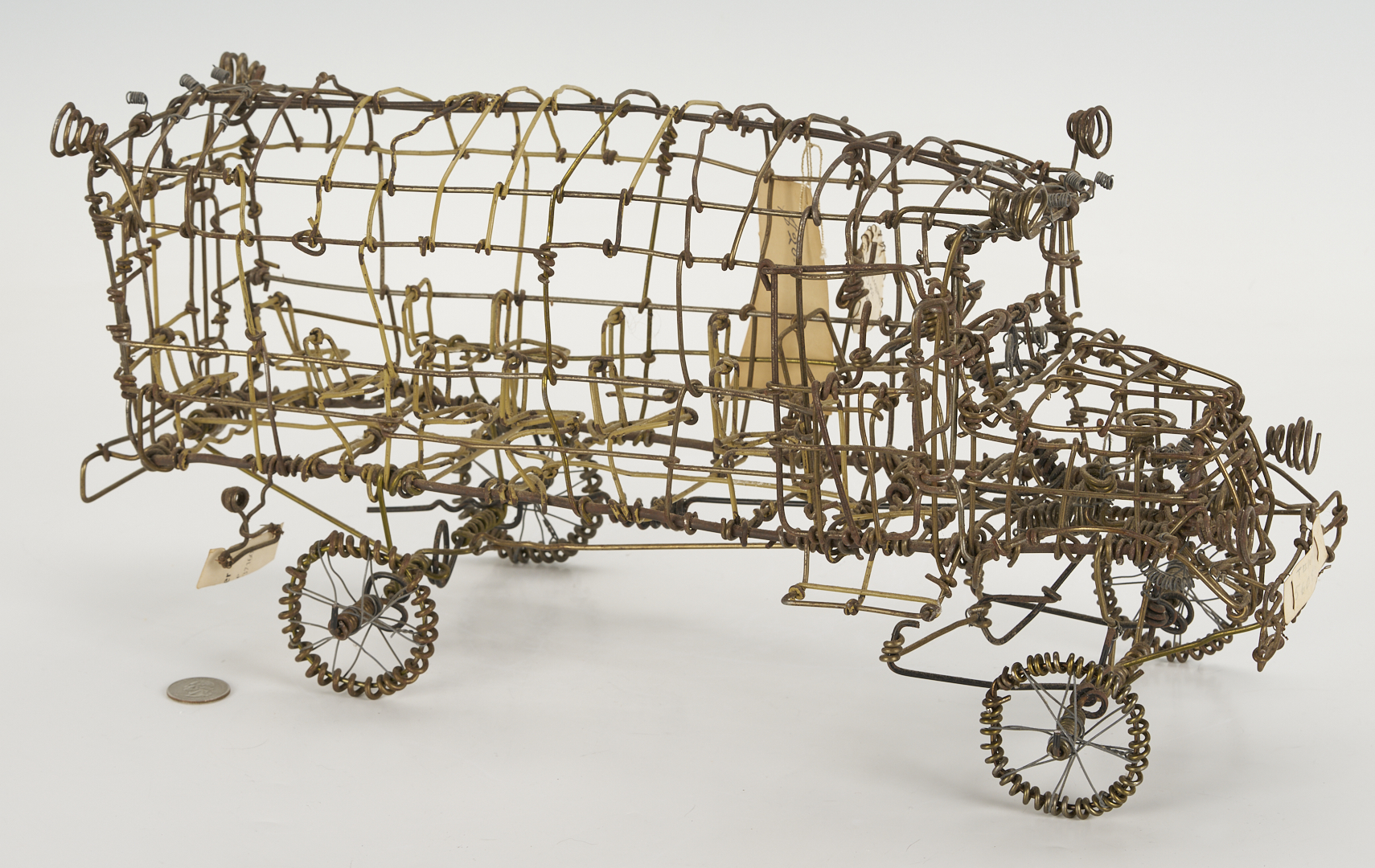
Vannoy Streeter (Tennessee, 1919-1998) folk or outsider wire sculpture depicting a school bus. The hood of the bus lifts to reveal the engine motor, with various gauges of coiled wire representing engine parts and the fan. The side door opens with an articulated lever inside the cab. Cab interior has a wire steering column, floor pedals, a dangling ignition key, driver’s seat, and 11 passenger seats. The steering wheel rotates to turn the front wheels left and right, guiding fully-operational front and back wheels. Front bumper has a paper license plate with “TENN 5608” written in blue ink. Articulated double-sided stop sign is affixed to the driver’s side with wire loops, fashioned from a paper calling card with Streeter’s personal contact information, and “STOP” written in blue ink. Back has a rear-opening emergency exit above the bumper. Paper business card is attached to the top of the bus with string and doubles as a price tag, with “$20.00″ written in blue ink. Approximate dimensions: 18 1/2″ H x 6 1/2” W. 20th century. Biographical note: “Self-taught sculptor Vannoy Streeter was known as ‘Wireman’ because of the fanciful creations he fashioned from coat hangers and metal wire. Best known for his depictions of the Tennessee Walking Horse, Streeter also created scores of other images using wrapped and twisted wire. By the time of his death in 1998, Streeter had gained national exposure. He participated in the National Black Arts Festival in 1990, and his work attracted collectors from around the United States. Born in 1919 in Wartrace, Tennessee, Streeter moved with his family to what would later become a Tennessee Walking Horse farm. At the time, owners were still training their mixed thoroughbreds to prance in front of buggies. The oldest of six brothers, he learned the horse grooming and training business from his father. When the first Walking Horse Celebration was held in Wartrace, Streeter was there to observe the high-stepping front legs and sliding, low-slung back legs that created the characteristic rocking gait. After the Walking Horse Celebration moved to its current home in the county seat of Shelbyville, Streeter took special pride in the fact that African American trainers helped develop the Walking Horse style and that champion horse ‘Strolling Jim’ was from Wartrace.” (Source: The Tennessee Encyclopedia)
CONDITION: Overall good condition with some oxidation to wire and paper.